Posted in Portuguese

🤞

Tendo falado tanto da política, estou quase tão interessado no resultado das legislativas (amanhã!) como estou no resultado da votação no meu país daqui a uns meses.

Segundo as sondagens mais recentes, o PS ultrapassou o AD brevemente mas o AD retomou primeiro lugar logo depois. Ambos os partidos principais têm menos de 30% cada um, e o Chega tem 17%. Falei com uma amiga nas redes sociais (cujo ponto de vista é muito mais esquerdista do que o meu) e ela acha que uma coligação AD/Chega é pouco provável e espero que tenha razão porque aquele gajo é insuportável.

Posted in Portuguese

Gordura é Formosura

Antes do movimento de “positividade corporal”, os portugueses já sabiam que há beleza* num corpo com mais calorias armazenadas. Porquê? Será uma questão de moda? Não, mas é verdade que a nossa perceção da beleza muda ao longo dos anos, como outros aspetos da nossa atitude. Mas a origem da expressão “Gordura é Formosura” é mais específica.

Antigamente, a saúde do povo estava constantemente sob ameaça por causa da falta de medicamentos e vacinas modernas e, em determinados lugares e épocas, por causa da pobreza. Doenças graves, como a tuberculose, causaram mortes e sofrimento, mas antes disso, deixaram as vítimas pálidas, amareladas e cadavéricas.

Portanto, a gordura veio a ser um sinal de saúde: se uma mulher estivesse roliça**, com as maçãs do rosto bem rubras apresentaria mais hipóteses de ter filhos saudáveis***.

O fenómeno tem raízes na nossa evolução, claro, e muitos animais comportam-se de maneira semelhante na seleção dos seus cônjuges. Os sinais do nosso passado como mamíferos vêm à superfície em tempos duros, ainda que sejam abafados por camadas de civismo e cultura. Mas, segundo o cirurgião Gil Faria, esta predisposição tornou-se prejudicial nos dias de hoje porque andamos constantemente rodeados por tentações e acabamos por ficar obesos.

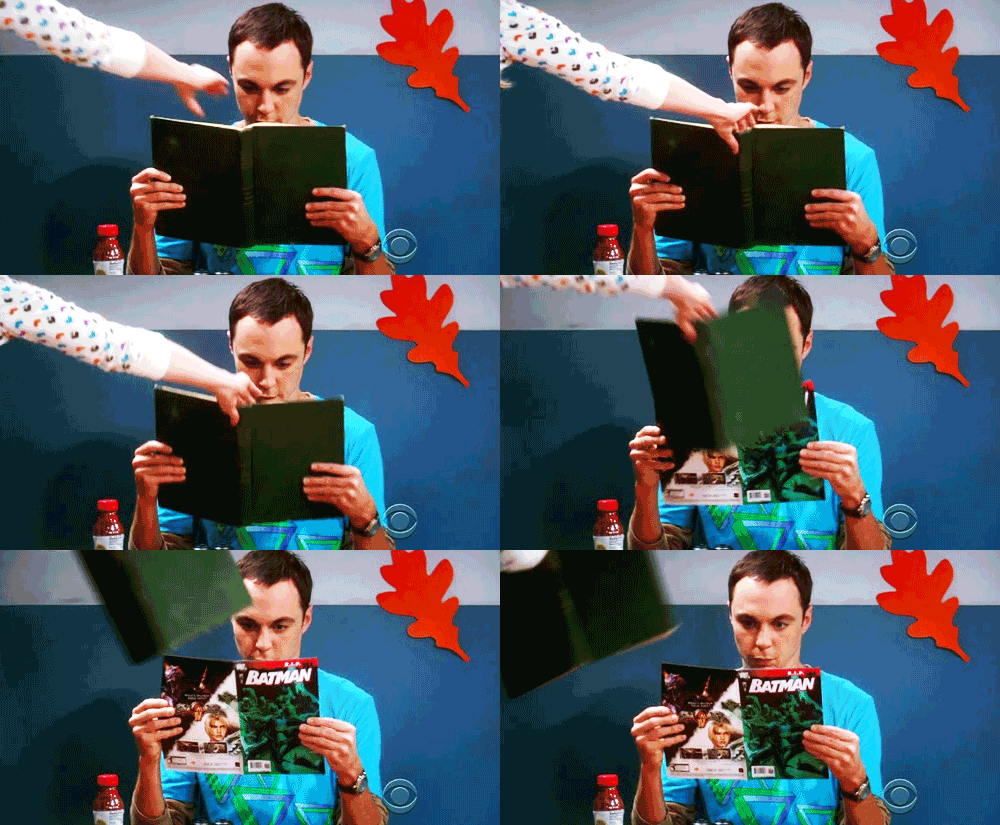
Me, demonstrating my suitability as a supplier of genetic material

*I wrote “uma beleza”, pretentiously trying to copy English sentences like ‘There is a beauty in the world, though it’s harsher than we expect it to be.’ (Michael Cunningham, “The Hours”) but it doesn’t seem to translate well and just came across as a mistake so I guess this is not a thing in portuguese.

**I originally wrote gordinha but roliça was suggested. It means round or plump

***I think I phrased it this way because of how I imagine choice was exercised in the past and thinking it was more likely that it would be women who had to meet certain standards to be chosen, but I guess we’re talking about many classes, many countries and many times so I could probably have opened this out a bit…

Thanks as ever to Cristina of Say it in Portuguese for the help with this text

Posted in English, Portuguese

Com Que Voz

I think this is originally by Amália and based on a poem by Camões, but I like this version a lot. That pianist really needs to sort his posture out though. I’ve never really been that interested in Camané but the Humanos videos I’ve been watching have really made me warm to him.

EnglishPortuguese
Com que voz chorarei meu triste fado
Que em tão dura paixão me sepultou
Que mor não seja a dor que me deixou o tempo
Que me deixou o tempo de meu bem desenganado
De meu bem desenganado
With what voice will I cry my sad Fado
That has entombed me in this hard passion
May the love not be pain that allowed me the time
Allowed me the time of my disenchanted lover
Of my disenchanted lover
Mas chorar não se estima neste estado
Aonde suspirar nunca aproveitou
Triste quero viver, pois se mudou em tristeza
Pois se mudou em tristeza a alegria do passado
A alegria do passado
De tanto mal, a causa é amor puro
Devido a quem de mim tenho ausente
Por quem a vida e bens dele aventuro
But crying isn’t appreciated in this state
Where I never took the time to breathe
I want to live sadly because it turned into sadness
It turned into sadness, the happiness of the past
The happiness of the past
Pure love is the cause of so much evil
Owning to the one who is away from me
For whom I risk life and all its benefits
Com que voz chorarei meu triste fado
Que em tão dura paixão me sepultou
Que mor não seja a dor que me deixou o tempo
Que me deixou o tempo de meu bem desenganado
De meu bem desenganado, desenganado
With what voice will I cry my sad Fado
That has entombed me in this hard passion
May the love not be pain that allowed me the time
Allowed me the time of my disenchanted lover
Of my disenchanted lover
Posted in Portuguese

Night of D’Hondter*

A minha semana política já acabou mas ando a descobrir mais sobre a democracia em Portugal. Falei com uma amiga que explicou o seu raciocínio sobre a votação nas legislativas. Ela não está muito entusiasmada sobre o leque de opções, mas vai votar no PS, principalmente porque ela não quer deixar entrar um candidato do Chega por causa do Método d’Hondt.

Este método é um sistema de votação, inventado por um jurista belga que visa distribuir os mandatos entre os partidos. Tentei ler a página da Wikipédia mas confesso que adormeci após dois parágrafos. Que grande seca! Efetivamente, é uma forma de representação proporcional que é mais limitada do que os outros sistemas disponíveis. Favorece os partidos grandes e as coligações e dá poucas oportunidades aos grupos nas franjas dos sistemas partidários. Se quiseres saber mais, terás de ler o texto na Wikipédia porque falta-me a paciência!

*I can’t tell you how many potential puns I considered before settling on this one “D’Hondt you want me baby?”, “Papa D’Hondt Preach”, “Penny MorD’Hondt” and on and on. In the end, it was the idea of the graphic that swung it for me. If you haven’t seen Robert Mitchum in “Night of the Hunter”, it’s well worth a watch.

Posted in Portuguese

João Sábita (e Nuno Abelha)

O blogue de ontem deu-me a oportunidade de vislumbrar um mundo desconhecido e confuso. Para começar, o homem chama-se João Sábita, certo? (Diz-se “Sa-BI-ta” em vez de SA-bi-ta apesar do acento mas não quero desviar-me do assunto…) Fiz uma pesquisa e encontrei o cantor. Esteve ligado ao carnaval da* Nazaré e trabalha com o artista Nuno Abelha, que também apareceu no vídeo de ontem. Mas… É de facto o mesmo tipo? A cara dele é tão diferente! O aspecto mais óbvio é a sua boca. Os dentes do homem de ontem são dentes de um americano de 20 anos que gastou muito dinheiro no consultório do ortodontista, mas este novo Sábita tem os dentes de Shane McGowan depois de comer uma sandes de pedras. Suponho que terá comprado uma dentadura postiça. Faz sentido. Parece mais saudável em geral mas pode ser resultado das suas bochechas serem mais redondas por causa das dentes. E também deixou crescer os cabelos e rapou o bigode… Está bem, consigo acreditar.

Vendo a página do Nuno Abelha, encontra-se montes de vídeos deste ano com “Marcha (Nome) 2024 Carnaval da Nazaré”. Acho que o Nuno é o produtor/compositor das músicas do carnaval, que possibilita os artistas e as empresas da cidade gravarem as canções para que possam participar nas festividades todos os anos. Não sei… eh pá, adoro a cultura portuguesa mas sou estrangeiro e confesso que estou longe da minha zona de conforto com esta música!

Here are a couple of sample videos. I am loving “Xô Satanás” in the first one!

If you think this is wild, wait till you see the next one
See what I mean?

*As we know, most towns don’t have definite articles but this one does. Normally if a town takes an article it’s when they’re named after a thing: O Rio de Janeiro (the river) or o Funchal (the fennel patch) or O Porto (the harbour). So why is Nazaré an exception? Nobody online seems to know. Nazaré is the same name as the biblical town we call Nazareth though, and I assume the article is there to distinguish this Nazareth from… well… Nazareth. Checking this WIkipedia page, it is mainly described without an article. There are some exceptions though, where it says things like “a Nazaré moderna”, which is quite standard. We would normally use an article for when we’re talking about a specific incarnation of a city, like “a Preston da minha juventude” for example.

Posted in English, Portuguese

José Pinhal (e João Sábita)

Ouvi uma canção recentemente chamada “Tu Não Prendas o Cabelo”. É muito portuguesa. Fiz uma pesquisa para saber mais sobre a origem e por acaso a história é cativante! A canção foi escrita por um compositor chamado José Pinhal. Pinhal não teve grande sucesso na sua vida. Tinha perdido uma perna na guerra colonial. A guerra acabou quando o cantor tinha 22 anos. Que desperdício da vida é a guerra. Durante a sua vida, o Pinhal encontrou pouco sucesso. Editou 3 álbuns em cassete e cantou em espetáculos, romarias e festas regionais. Quando faleceu num acidente rodoviária com 41 anos o mundo esqueceu-se dele.

Mas a história não acabou com a sua morte, porque duas décadas depois, uma fã do cantor carregou as suas músicas na internet e a sua fama espalhou-se boca-a-boca. Em 2016 nasceu um grupo de tributo chamado “José Pinhal Post-Mortem Experience”. A história deste cantor até chegou à imprensa estrangeira (mas confesso que eu não sabia nada disso!) e tem sido assunto de documentários na internet e na RTP.

While I was looking for a video of that (there isn’t one!) I found a version from Canta-me uma história so I decided to translate that instead. This is a cover from João Sábita and he’s changed the bulk of the lyrics to match his personality (which I’ll talk more about tomorrow).

This should be fun. The subtitles are written in dialect and I’m not sure I’m going to be able to transcribe it all. Cover me, I’m going in!

EnglishPortuguese
Tu não prendas o cabelo
Eu gosto de solto vê-lo,
pois te fica bem,
quando nele dá no vento
Don’t tie up your hair
I like to see it loose
Because it suits you
When the wind catches it
Que lindo é o teu cabelo
Que chega até a cintura
És a minha estranha loucura
És lenha da minha fogueira
Tens um sorriso à maneira*
Your hair is so lovely
It goes down to your waist
You’re my strange madness
You’re the wood for my bonfire
You have a smile that’s just right
Tu és o meu arroz de tamboril
Tu és a isca do meu anzol
Tu és os remos do meu candil
Os teus olhos alumiam como o farol
You are my Arroz de Tamboril**
You are the bait on my fishing hook
You are the oars on my fishing boat***
Your eyes lit up like the lighthouse
Tu és o meu bicho de estimação
Tu és o meu gazol**** de gerador
Tu és o cordel do meu estendal
Tu és o meu amor da carnaval
You are my pet
You are the fuel for my generator
You are the cord of my washing line
You are my carnival love

*à maneira is a set phrase

**Just the name of a dish

***Tricky one, this. A candil is a kind of lamp so why the hell would it have oars? Well, the clue is that João Cabita was performing the song at a Carnival in Nazaré and he must have added this in to give it extra colour because a Barco de candil is a very pretty, colourful, traditional boat which… well, information is a bit sparse about it on the internet, but maybe typical to Nazaré specifically(?) According to this guy’s web page, it is maybe called that because they have a lamp attached so you can go fishing by lamplight (“Pesca do candil”).

****Whether he’s referring to Gazol the brand of liquid petroleum gas or it’s just short for gasolina I’m not sure.

Well that was fun. I feel a bit guilty that I haven’t done the original song, but I wanted the challenge of trying to unravel their accents

Posted in English, Portuguese

Estou Além

Two translations in a row? Yeah, fight me!

This is another António Variações cover by Humanos and it’s a banger.

The lyrics are pretty paradoxical: “I only want to be where I’m not, I only want to go where I’m not going”. Even the title is a bit hard to render into english: “Estou Além” means “I am beyond” but that isn’t any good. How about “I’ve gone beyond”. Nah, that sounds like he’s died. Well, he has, but I am pretty sure that didn’t happen till after he wrote it. Maybe something like “I’m far out” or “I’m out there!” Too trippy? “I’m miles away”? Nah, it sounds like he’s just daydreaming. I think I like “I’m elsewhere” best but I’m not sure I could defend that in a court of law. If anyone has any better ideas, let me know in the comments.

EnglishPortuguese
Não consigo dominar
Este estado de ansiedade
A pressa de chegar
P’ra não chegar tarde

Não sei do que é que eu fujo
Será desta solidão
Mas porque é que eu recuso
Quem quer dar-me a mão
I can’t control
This state of excitement
The rush to arrive
To not arrive late

I don’t know what I’m running from
Maybe this loneliness
But why do I refuse
Anyone who gives me their hand
Vou continuar a procurar
A quem eu me quero dar
Porque até aqui eu só

Quero quem quem eu nunca vi
Porque eu só quero quem
Quem não conheci
I’ll keep on searching
For someone I want to give myself to
Because up to now, I only

Want who, who I’ve never seen
Because I only want
The one I’ve never met
Porque eu só quero quem
Quem eu nunca vi
Porque eu só quero quem
Quem não conheci

Porque eu só quero quem
Quem eu nunca vi
Because I only want
who I’ve never seen
Because I only want
The one I’ve never met

Because I only want
who I’ve never seen
Esta insatisfação
Não consigo compreender
Sempre esta sensação
Que estou a perder

Tenho pressa de sair
Quero sentir ao chegar
Vontade de partir
P’ra outro lugar
This insatisfaction
I can’t understand
Always this sensation
That I am missing out

I’m in a hurry to leave
I want to feel at the departure
An urge to leave
For somewhere else
Vou continuar a procurar
O meu mundo
O meu lugar
Porque até aqui eu só

Estou bem aonde eu não estou
Porque eu só quero ir
Aonde eu não vou
I’ll keep on looking
My world
My place
Because up to now I only

I am on my way to where I am not
Because I only want to go
To where I am not going
Porque eu só estou bem
Aonde eu não estou
Porque eu só quero ir
Aonde eu não vou

Porque eu só estou bem
Aonde não estou
Because I’m only OK
When I’m where I’m not
Because I only want to go
Where I’m not going

Because I’m only OK
When I’m where I’m not
Esta insatisfação
Não consigo compreender
Sempre esta sensação
Que estou a perder

Tenho pressa de sair
Quero sentir ao chegar
Vontade de partir
P’ra outro lugar
This insatisfaction
I can’t understand
Always this sensation
That I am missing out

I’m in a hurry to leave
I want to feel at the departure
An urge to leave
For somewhere else
Vou continuar a procurar
A minha forma
O meu lugar
Porque até aqui eu só

Estou bem aonde eu não estou
Porque eu só quero ir
Aonde eu não vou
I’ll keep on looking
My form
My place
Because up to now I only

I am on my way to where I am not
Because I only want to go
To where I am not going
Porque eu só estou bem
Aonde eu não estou
Porque eu só quero ir
Aonde eu não vou

Porque eu só estou bem
Aonde não estou

Estou bem aonde eu não estou
Porque eu só quero ir
Aonde eu não vou
Because I’m only OK
When I’m where I’m not
Because I only want to go
Where I’m not going

Because I’m only OK
When I’m where I’m not

I am on my way to where I am not
Because I only want to go
To where I am not going
Porque eu só estou bem
Aonde eu não estou
Porque eu só quero ir
Aonde eu não vou

Porque eu só estou bem
Aonde eu não estou
Porque eu só quero ir
Aonde eu não vou
Because I’m only OK
When I’m where I’m not
Because I only want to go
Where I’m not going
Because I’m only OK
When I’m where I’m not
Because I only want to go
Where I’m not going
Porque eu só estou bem
Aonde eu não estou
Porque eu só quero ir
Aonde eu não vou

Porque eu só estou bem
Aonde eu não estou
Porque eu só quero ir
Aonde eu não vou
Because I’m only OK
When I’m where I’m not
Because I only want to go
Where I’m not going

Because I’m only OK
When I’m where I’m not
Because I only want to go
Where I’m not going
Posted in English, Portuguese

Raízes

Mais uma tradução! Após de mergulhar no mar de política, mereço uns dias de diversão não achas? Esta cancão é incrível. Por um lado, lembra-me daquela colaboração entre Dulce Pontes e os Moonspell: Um homem de barba a rugir no palco e depois a mulher abre a boca e rebenta com tudo. Por outro lado, também tem letras interessantes com umas expressões idiomáticas úteis.

PortuguêsInglês
Eu não nasci em berço d’ouro
Felizmente há quem pense no amor e no apreço como um bem mais valioso
E o preço que eu penso que valha
Aos olhos de muita gente nem um terço calha
Tenho o passado presente, com meu futuro na mente
Perguntam se sou vidente ou mais um canalha
Mas venha só um que tente meter-se na minha frente
Derrubar tudo o que penso só pra ver que falha
I wasn’t born with a silver spoon in my mouth*
Luckily there are those who think of love and appreciation as a more valuable good
And the price I think it’s worth
It isn’t worth a third in the eyes of others
I have the past present with my future in mind
They ask if I’m a visionary or just another lowlife
But just let one person get in my way
To tear down everything only to see that he fails
Vivo como antigamente, alguém que represente
Porque eu baixo a cabeça quando a mãe me ralha
Se pra ti eu sou diferente, então fica ciente
Que esta vida te deu tudo e tu só comes palha
Fui forjado p’rá batalha, eu tenho um compromisso
Fiz-me homem de vontades e a fome nem deu por isso
Se queres ouvir verdades então fica submisso
Não venhas para aqui com frases só p’ra encher chouriço
I live like back in the day, someone who respresents
Because I hang my head when my mother tells me off
If I’m different from you, then be aware
That this life gave you everything and you only eat straw
I was forged for battle, I have a commitment
I made myself a man of will and the hunger didn’t even notice
If you want to hear truths then
keep quiet
Don’t come round here with phrases just to pass the time of day**
E é assim que guardo a meu lado
Os olhos de quem me ama
As vozes de quem chama por mim
E quando tudo chegar ao fim
Direi adeus sorrindo
And that’s how I keep at my side
The eyes of those who love me
The voices of those who call for me
And when everything comes to an end
I’ll say goodbye, smiling
Puto mimado, beijocas das tias e vias nos olhos do meu pai babado
Lágrimas frias entre as melodias sempre que me ouvias a cantar o fado
Todos os dias vos tive a meu lado minha raíz que foi presa sem nós
Vivi feliz porque não sabia as saudades que iria ter dos meus avós
Ouçam a minha voz, vós aí em cima eu fiz esta rima pra vos ver sorrir
Se há coisa que a vida ensina, é que a dor em si
É ter de aceitar a sina de vos ver partir
Mas assim não, não dá p’ra não sentir
A cicatriz é grande e marca o tempo que os perdi
Protegem-me a cada passo que dou e eu agradeço
Beijando sempre o meu braço quando vou dormir
Spoiled child, kisses from the aunties and you used to see in the eyes of my doting father***
Cold tears among the melodies whenever you hear me sing fado
Every day I had you at my side my root that was trapped without us
I lived happy because I didn’t know how much I would miss my grandparents
Listen to my voice, you up there, I made this rhyme just so I could see you smile
If life teaches us anything its that pain itself
Is having to accept the inevitability of seeing you go
The scar is deep and marks the time I lost them
They protect me every step I take and I thank them
Always kissing my arm when i go to sleep
Nem tudo foram favas contadas
Se achavas que eu vinha queixar das minhas amarguras
De portas fechadas e cartas rasgadas de amor acreditem há vidas mais duras
Eu fico grato pelo facto de ter no momento exacto
Histórias de vitórias pelos meus actos
E há que ver que só vivo a vida se for destaque
Vim para tapar os fracassos sem me enterrar em buracos
It wasn’t all preordained****
If you thought I was coming to complain about my bitterness
of closed doors and torn up love letters, believe me there are harder lives
I’m grateful for the fact of having at the exact moment
Stories and victories of my actions
And you have to see I only live life if I’m at the forefront
I came to cover the weaknesses without burying myself in holes
E é assim que guardo a meu lado
Os olhos de quem me ama
As vozes de quem chama por mim
E quando tudo chegar ao fim
Direi adeus sorrindo
And that’s how I keep at my side
The eyes of those who love me
The voices of those who call for me
And when everything comes to an end
I’ll say goodbye, smiling
E é assim que guardo a meu lado
Os olhos de quem me ama
As vozes de quem chama por mim
E quando tudo chegar ao fim
Direi adeus sorrindo de obrigado
And that’s how I keep at my side
The eyes of those who love me
The voices of those who call for me
And when everything comes to an end
I’ll say goodbye, smiling thank you

*Actually, “Nascer em berço de ouro” means to be born in a golder cradle, but this is the nearest english equivalent

**Encher chouriço(s) is another expression: busy-work, filling up time by talking or doing something without any real purpose. In brasil they would say encher linguiça.

***I’m not sure this is an expression as such, but pai babado sounds like it should mean drooling father. Seems like a weird choice of words, but it’s actually a way of saying doting father, and that makes a lot more sense in context!

****Favas contadas is an expression meaning something inevitable