Posted in English

Airlearn Grifters

I posted a video on here of someone crying while trying to pronounce Portuguese. I realised later that she was just doing viral marketing, hyping up an app called Airlearn.

Since then, I’ve had loads more videos of people doing the same kinds of viral shenanigans. The best known is am American woman who has an elaborate story about how she went to visit her Portuguese boyfriend’s family and could tell they were being rude about her, even though she couldn’t speak Portuguese. LOL, yeah, because colloquial European Portuguese is soooo easy for an outsider to understand! The denouement is that she uses Airlearn to become fluent in Brazilian portuguese. Why Brazilian? Well, because she knew they would hate that because they are so racist. Not because Airlearn doesn’t even teach European Portuguese, oh no no no. Then a few weeks later she goes back and cusses them out in their own language. There were loads of aspects of the story that just didn’t make sense, and it also seemed like an infuriating slander on the Portuguese and their hospitality. Some people were saying she was native Brazilian anyway, so the whole thing was a con, and the video seems to have been deleted now.

So I was really happy to see this Instagram reel and even shared it on my own story… But then I clicked on her profile and I found out she’s an Airlearn shill too. This is a whole other dimension – the inception of rage bait marketing.

Anyway, this is all by way of saying I think we should just agree amongst ourselves to ignore Airlearn because they are a bunch of unscrupulous twats. If you’re looking for an app, start here instead.

Posted in English, Portuguese

Ol´ Heron-Tits is Back

One more thing about Inês de Castro before I change the subject: She is often referred to in poetry as “colo de garça”. A garça is a heron, and colo is a funny little word that doesn’t have an exact match in english. The first and third meanings given by Priberam both refer to the upper part of the bust, but there are others indicating the upper part of the chest below the neck, and also the lap… It often comes up when talking about babies – they are “no colo”, in other words cradled in a pair of arms or sat in someone’s lap, being held by a parent – and it has a bunch of figurative senses too, relating to being welcomed with open arms, cared for, looked after and protected.

Colo de Garça

But being me, after a brief period, I asked reddit

Porque é que vários poetas chamam Inês de Castro de “colo de garça”? Uma garça=uma ave, não é? E colo de garça é um elogio porquê? Fiz uma pesquisa (ou seja googlei) e nesta página existem 3 teorias:

Tinha um pescoço esbelto como uma garça (adoro mas nunca antes ouvi alguém a dizer “colo” para referir ao pescoço)

Tinha seios brancos como o peito de uma garça (mais natural mas se alguém chamasse um inglesa de “heron tits”, garanto-vos que não seria um elogio)

Era vista como uma prostituta pelos nobres (provável, mas como origem da expressão, é duvidoso na minha opinião)

Será que alguém sabe mais? Ou tem uma teoria ainda mais rebuscado?

Recebi poucas respostas mas ao que parece a primeira versão – pescoço esbelto – é muito acreditável.

Posted in English

Crónica: Tradução

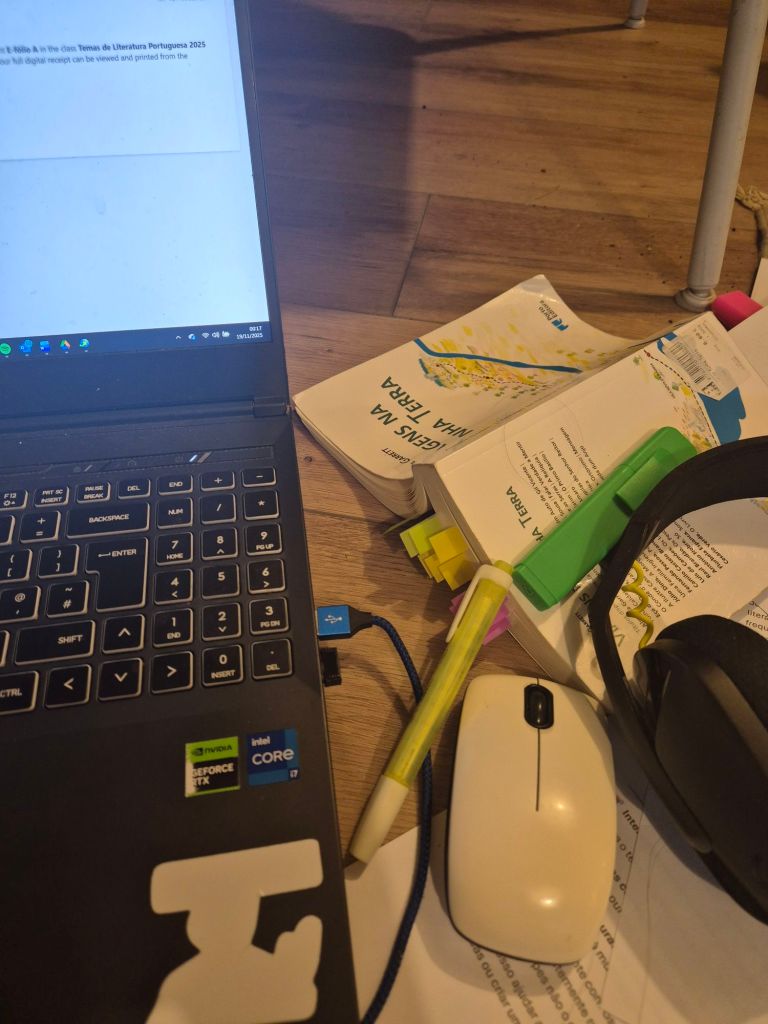
I’m having trouble focusing on this poem, which I mentioned in yesterday’s post about Pedro and Inês, and holding it in my head while translating, long enough to take it all in so I’m going to write out a translation of the five pages I have in English. I can’t find a version of it online other than this which only really allows you to see a tiny piece at a time so if you want the original you’ll need to buy it like a decent upstanding citizen.

CAPÍTULO XXVII

COMO ELREI DOM PEDRO DE PURTUGAL DISSE POR DONA ENES QUE FORA SUA MOLHER REÇEBIDA E DA MANEIRA QUE ELLO TEVE

How I predicted the night. How many times.
How many times I rested on the deep darkness
Or your sleep only noticing one or another small sound
By night I search for your earthly now
That tiny god-space* like those ships ate deserted
Like everything is strange to anything that lives. Under the night here
I enclose the secret of these rites,
Taking apart this, my bodily landscape
Feeding an ancient glow
Hair I understood. I say nothing, this time must be valued
Little by little I renounce the sun
For the water of your eyes

I have to wait so long. This death happens slowly
I have no hunger, thirst or desire
I just come back by another road
These ships are ours
The little greyhound that sits here
Was the one that was born out of the cold we learned about

Tonight I lost myself in your fingers
I repeated your steps walking not
as fast as you wanted
that before the sunrise we would say it

See how the landscape changes. I don’t even find despair
and how many times I say I don’t have anyone here
Only this ship, undoubtedly the most beautiful
To show you.

Apparently nothing changed but in truth everything changed
A wind passed me by like the wake
of gulls on the surface of the sea
These stones in place, these arches covered in limes
Your absence drawn by a stone
Walking toward me

I don’t remember any more
My memory has swept itself clean of your face under the work of hands
And however many times I say
You can’t bear alteration

It’s late. The moon is dying. I let myself sleep.

COMO ELREI DOM PEDRO DE PURTUGAL DISSE POR DONA ENES QUE FORA SUA MOLHER REÇEBIDA E DA MANEIRA QUE ELLO TEVE

The day on which the arrival of summer was announced
The month of June, I tried to hear, drom the valley
The singing and the shouts that say the arrival of the traveller
By words of the present

Maybe I won’t find you again while this body
Stays until the time of your death
There won’t be movement. How will I be able? If
I have to separate destruction in myself

You will have to set out to find me. By the road and in the course of centuries
Those who will come to life, what part of them will come to be the same,

We are alone. Without a third person let alone more
While the night is what we alone open – that
By night you wait, seeming like earth, the earth itself in the nighttime still

Over time I will bring as much as you need. A long time ago
Chance had no part in our meeting, searching for the
Most distant, the thing that grows. It’s what I want to tell you
Far from trying at each step the beginning or the reliable piety
For sustenance over the years. The lack of response will never
Cease to pursue me. Reply to me.

We feel the pain, the knowledge the causes the forms
The things break like everything and what remains stands out
The difference, the meaning among the innovation
The inception in the act and in the wanting. The wise
finality of existence.
The end is to know you. Nothing else. I see you watching me
Even in the mirror of the sword blades, eroded
By rust, by so much

The sun still hasn’t set

There are men who think a lot. I don’t know if they bring a joyful heart to their work with the stone. They greet us and offer consultations. Nobody contradicts them. They don’t have the one thing I need to win: Your praise.

Nothing erases it from my memory. Because
I imitated the acts. I bring them with me. I guard them.
It’s a small thing.

Please, repeat with me the song:
The eyes are light
And anyone who stares into them
Has the rain, the sun,
That he requires

The current emphasises
the green, the green of your eyes.

* “esse mínimo espaço deus” – sounds like it should mean something but I’m not sure what! Deus isn’t capitalised so I am taking it as him meaning the space has some sort of godlike power, rather than it being some sort of space for God

Oof. I probably could have written a lot more footnotes for that one because there are lots of lines that make little sense to me.
Posted in English

I See Tiago Bettencourt is Coming to the Jazz Café Soon!

Tickets here. Definitely going. My wife is working and my daughter (who really enjoys his version of “Cancão de Engate“) will be in Dundee so I’ll be in my own. I see I’ve done a couple of translations of his songs before but one was a cover version (the aforementioned Canção de Engate) and one was sort of mid, as the young folk say (Morena). I must do one of his really good ones – maybe Laços or Carta from when he was in Toranja. Yeah, Carta seems like I need to look at it because the video has a slightly kidnapper vibe about it and I want to reassure myself that poor girl is OK.

Tiago Bettencourt
Posted in English, Portuguese

Inter-City Rivalry

This song was released a year ago but I haven’t got around to translating it. It was written by Capicua, who says on Instagram that Ana Bacalhau had challenged her to write a sort of “Let’s Call The Whole Thing off” based on different ways of speaking between Lisboa and Porto.

Hm, I thought it would be fun to translate but now I think it might be a struggle. It’s mainly giving words that mean the same in the two cities, so the translations will all be like “cheese is cheese” won’t they? Oh god… oh well, let’s see how it goes.

In the orange corner, representing Lisboa, Ana “I used to be in Deolinda, you know” Bacalhau and in the green corner, representing Porto, Cláudia “I made a forgettable Eurovision song” Pascoal.

Imperial é Fino

PortuguêsIngês
Ah, e quê?
Ah, então?
Ah, o quê?
Que algo se perde na nossa tradução?
Ah, e quê?
Ah, então?
Ah, o quê?
Ó bacalhau, eu vou-te explicar
Hum, conta!
Ah, and what?
Ah, so?
Ah, what?
That something gets lost in our translation
Ah, and what?
Ah, so?
Ah, what?

Hey, Bacalhau, I’m going explain to you
Er… bill please!
Dizes que não tens qualquer sotaque
Isto não é um ataque, mas tens falta de noção
E depois dizes
Pra não ser de surpresa
Eu tufono-te às dezoito pra marcar a reunião
Olha quem fala, tu dizes à minha beira
Com pronúncia da ribeira quando estás ao pé de mim
Dizes pega em vez de toma
Dizes bufa em vez de sopra, olha a lana, gola ialta e coisa assim
You say you don’t have an accent
This isn’t an attack but you’ve no clue
And then you say

For it not to be a surprise,
I should “tuphone” you at 6PM to arrange the meeting
Look who’s talking, you say “à minha beira”
With your ribeira accent when you’re next to me
You say grab instead of take
You say puff instead of blow, “look at IAna
, “gola ialta”* and things like that
Imperial é fino, tênis é sapatilha
Bica é cimbalino, chicla é pastilha
Aloquete é cadeado, e capuz, carapuço
Estrugido é refogado, chapéu de chuva é chuço
Se trolha é pedreiro, bueiro é sarjeta
Sertã é frigideira e cabide é cruzeta
Beer is beer, Trainer is trainer
Espresso is espresso, chewing gum is chewing gum
Padlock is padlock, Hood is hood
Fried is fried, umbrella is umbrella
Stonemason is stonemason, gutter is gutter
Saucepan is saucepan and hatstand is hatstand**
Ah, e quê?
Ah, então?
Ah, o quê?
Que algo se perde na nossa tradução?
Ah, e quê?
Ah, então?
Ah, o quê?
E mais te digo!
Oh pá!
Ah, and what?
Ah, so?
Ah, what?
That something gets lost in our translation
Ah, and what?
Ah, so?
Ah, what?

And another thing
Oh blimey!
Já tu dizes são quaise treuze
E já ouvi várias vezes tira o téni do sófá
O lisboeta come letras
Tira o u pra dizer pôco, diz óviste, é muita lôco
Assim não dá!
Tretas, pra ti mãe tem cinco letras
Dizer cumo é o cúmulo e tu sabes que assim é
Tu dizes testo e eu tampa
Eu digo coxo e tu manco e quando dizes tótil, eu bué
You just say it’s arlmust thorteen
And I’ve heard a few times take your shoe off the sófá
Lisboetas swallow letters
Takes the U away t say pôco, say óviste and very lôco
It’s no good like that
Rubbish! For you, mum has 5 letters
To say “cumo” is the accumulation and you know that’s how it is
You say lid and I say lid
I say lame and you lame and when yiou say tótil***, I say bué
Imperial é fino, tênis é sapatilha
Bica é cimbalino, chicla é pastilha
Aloquete é cadeado, e capuz, carapuço
Estrugido é refugado, chapéu de chuva é chuço
Se trolha é pedreiro, bueiro é sarjeta
Sertã é frigideira e cabide é cruzeta
Beer is beer, Trainer is trainer
Espresso is espresso, chewing gum is chewing gum
Padlock is padlock, Hood is hood
Fried is fried, umbrella is umbrella
Stonemason is stonemason, gutter is gutter
Saucepan is saucepan and hatstand is hatstand
Contigo o tão vira tom, contigo o são vira som
E depois bom vira bão
Pra mim o v vira b, para ti lesboa é com e
Oblá e então?
Ouve, não sou eu que falo torto, toda a gente me entende
Não é meu o defeito
S’eu falo à porto é meu direito e se o teu ouvido é mouco
O meu sotaque é perfeito
Se digo fala bem é pra tu seres meiguinha
Como eu sou também, no meu jeito alfacinha
E quando eu digo “bem” eu tou-te a dizer para “bires”
E eu até te falo bem, só é pena não me ouvires
E quando eu digo vem eu tou-te a dizer para vires
E eu até te falo bem, só é pena não me ouvires
With you, tão becomes tom, with you são becomes som
And then bom becomes bão
With me, the V becomes a B, for you Lesboa is with an E
Oblá so what?
It’s not me that talks weird. Everyone understands
It’s not my problem
If I speak Porto-style, it’s my right
And if your ear is deaf
My accent is perfect
If I say speak properly it’s just to make you more amenable
Like me, with my Alfacinha style
And when I say well, I’m just doing it to make you come to me****
And I speak really well. It’s just a shame you can’t hear me.
And when I say come I’m saying you should come.
And I speak really well. It’s just a shame you can’t hear me.
Ah, e quê?
Ah, então?
Ah, o quê?
Que algo se perde na nossa tradução?
Ah, e quê?
Ah, então?
Ah, o quê?
Imperial é fino, imperial é fino
Imperial é fino, imperial é fino, fino, fino-
Ah, e quê?
Ah, então?
Ah, o quê?
Que algo se perde na nossa tradução?
Ah, e quê?
Ah, então?
Ah, o quê?
Ah, and what?
Ah, so?
Ah, what?
That something gets lost in our translation
Ah, and what?
Ah, so?
Ah, what?

Beer is beer, Beer is beer
Ah, and what?
Ah, so?
Ah, what?
That something gets lost in our translation
Ah, and what?
Ah, so?
Ah, what?

*I couldn’t work out what was going on here so I asked about it on Insta and Capicua herself answered my question! Apparently in Porto if one word ends in A and the next word starts in A, they put an I in between so Olha a IAna = Olha a Ana, Gola Ialta = Gola Alta (a polo neck or turtle neck). I like Portugal. I’m pretty sure an equivalently famous person in Britain wouldn’t take time out to explain linguistic quirks to old farts on Instagram!

**Did somebody say hatstand?

***How have i never seen this word before?

****Not sure about this, My reasoning is that it’s vires (personal infinitive of vir) with the v changed to a b. I don’t know if the next-but-one line confirms or refutes the theory though!

Posted in English, Portuguese

Witches! Part 2

(Scroll down for an english translation of this one)

Este texto é o segundo sobre As Bruxas de Portugal. Veja o primeiro aqui se não te lembras o motivo

A nossa bruxa semanal é a bruxa lavandeira, nativa à região Trás-os-Montes. A imaginação popular é uma maravilha. Quando inventamos legendas sobre mulheres com poderes sobrenaturais, não conseguimos imaginar nada mais interessante para elas fazerem senão trabalho doméstico. O mais normal é o uso da vassoura como modo de transporte, mas neste caso as controladoras da força mágica focam os seus poderes em fazer lavandaria. Hum,’tá bem avó.

We’re going to be seeing a lot of this scene in this series of posts, aren’t we_

Nas lendas, as bruxas percorrem as aldeias com luzes na mão. São capazes de voar até aos telhados. Por vassoura? Não. Claro que não, seu panhonha. Transformam-se em patos (ah ah ah! patos, á sério!) ou gansos (isso sim, não me admira de todo. Não confio nunca num ganso).

Como o nome implica, estas feiticeiras surgem nas margens dos rios onde gostam de lavar roupas. Ai, Jesus nos protege das servas do diabo que querem (leio as minhas notas) limpar camisas, vestidos e meias.

🇬🇧 English Version (with a bit of help from GTranslate)

Our weekly witch is the washerwoman witch, native to the Trás-os-Montes region. Popular imagination is amazing. When we invent legends about women with supernatural powers, we can’t imagine anything more interesting for them to do than housework. The most common thing is the use of a broom as a means of transport, but in this case, the controllers of magical forces focus their powers on doing laundry. Hmm, okay, Grandma.

In the legends, the witches roam the villages with lights in their hands. They are able to fly to the rooftops. By broom? No. Of course not, you fool. They transform into ducks (ha ha ha! ducks, seriously!) or geese (actually, that one doesn’t surprise me at all. I never trust a goose.)

As the name implies, these witches appear on the banks of rivers where they like to wash clothes. Oh, Jesus protect us from the servants of the devil who want (checks notes) to clean coats, dresses, and socks.

Posted in English, Portuguese

As Meninas da Ribeira do Sado

This jumped out at me on Instagram yesterday. I didn’t know the song so I googled it and I think I like the drag version better than the original. It’s Sincera Mente, who I mentioned a few days ago, with another drag queen who was on a talent show, I think…? I don’t know, I haven’t seen it. Anyway, they both have good voices and I thought I’d translate it because why not? The video only has the first verses and the chorus, but I’ll include the other two verses from the original

🇵🇹🇬🇧
Estrala a bomba
E o foguete vai no ar
Arrebenta e fica todo queimado
Não há ninguém que baile mais bem
Que as meninas da ribeira do Sado
The bomb explodes
And the rocket goes up
It bursts and burns up
Nobody dances better
Than the girls of the Sado valley*
As meninas da ribeira do Sado é que é
Lavram na terra com as unhas dos pés
As meninas da ribeira do Sado
São como as ovelhas
Têm carrapatos atrás das orelhas
The girls of the Sado valley are the ones
They plough the earth with their toenails
The girls of the Sado valley
Are like sheep
They have ticks behind their ears.
Era um daqueles dias bem chalados
Em que o sol batia forte nas cabeças
As meninas viram que eu estava apanhado
E disseram: Nunca mais cá apareças
It was one of those crazy days
The sun was beating down on our heads
The girls saw I was caught
And said “Don’t come around here again”
Mas voltei e entretive-me a bailar com três
Queriam que eu fosse atrás no convés
Mas não fui e mandei-as irem dar banho ao meu canário
Que bateu as botas com dores num ovário
But I returned and entertained myself, dancing with three of them
They wanted me to go to the back of the deck
But I didn’t and told them to bathe my canary
Who had died of pain in the ovary**

*I’m going to translate “Ribeira do Sado” as “The Sado Valley” because even though Ribeira is a smallish river, saying they’re the Sado river girls makes them sound like mermaids. I think it’s more like the area around the river, so that’s what I’ve gone with.

**Er… well, it was going well until the end there. What the hell happened in the last verse? I asked around and the consensus seems to be that going “atrás no convés” was a euphemism for going somewhere quiet to canoodle, but it was far from certain. In the next line, telling someone too go and give the dog a bath is like telling them to go and comb monkeys or go and bother Camões, Go away in other words. But they changed it to a canary and a terminal illness just to make it more silly.