This was a new one on me. Presumably it’s because they play in red…
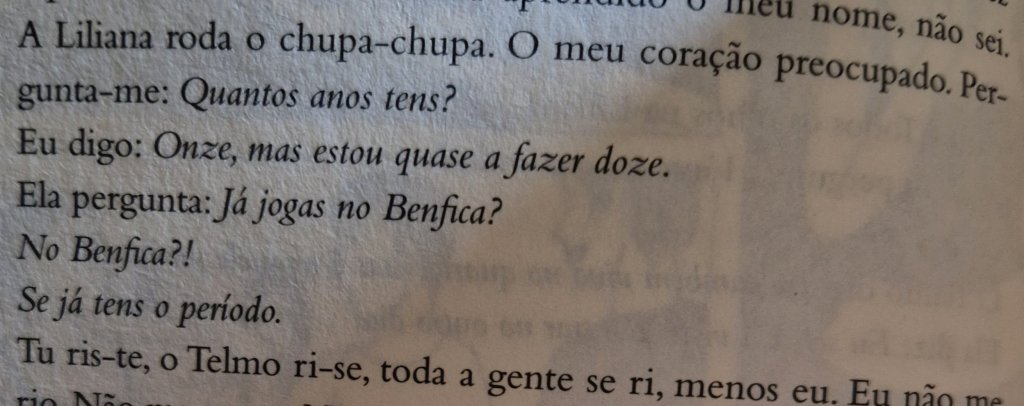
(From “Mary John” by Ana Pessoa)
This was a new one on me. Presumably it’s because they play in red…
(From “Mary John” by Ana Pessoa)
I found the passports, fam, so no need to cancel the visit to Madeira!
Translation time! This one is a classic fado, which is mentioned in the book I reviewed the day before yesterday. It also gives us some insight into the Portuguese language’s radical commitment to singular verb endings for collective nouns. The video is majestic and well worth watching, even with the sound off, for the glances between the guitarist and the guy on the guitarra portuguesa. I’d love to know what was going on between them. The song itself is written by Amália but it is really more of an adaptation of a longer poem called “Povo” by Pedro Homem de Mello.
First of all, I think we’re meant to envision people washing their clothes in the river, rather than skinnydipping, in case that’s not obvious! But let’s focus in on how she refers to the noun “povo” here. I’ve highlighted the relevant words in the first verse. As you can se, she’s addressing the “povo” (the people – especially the simple, common people) as “Tu”. In other words, she’s addressing them all, collectively, using the form normally reserved for one singular person who’s familiar to the speaker.
This was really jarring to me. Of course, it’s not that hard to find people referring to “a gente” using third person singular pronouns – I wrote about this a couple of months back – and the portuguese generally take a firmer line on treating the collective as one singular entity (as opposed to using words like eles/them) than we would in english. But to see her speaking directly to the people like this and just address the whoel population like it was her little sister is quite a cultural leap, at least for me.
| Povo que lavas no rio | People who wash in the river |
| Povo que lavas no rio Que talhas com teu machado As tábuas do meu caixão Povo que lavas no rio Que talhas com teu machado As tábuas do meu caixão Pode** haver quem te defenda Que compre o teu chão sagrado Mas a tua vida não | People who wash in the river Who cut with your axe The boards for my coffin* People who wash in the river Who cut with your axe The boards for my coffin There might be people who defend you Who buy your sacred land But not your life |
| Fui ter à mesa redonda Beber em malga que esconda Um beijo de mão em mão Fui ter à mesa redonda Beber em malga que esconda Um beijo de mão em mão Era o vinho que me deste Água pura, fruto agreste Mas a tua vida não | I ended up at the round table*** To drink from a bowl that hides A kiss from hand to hand I ended up at the round table To drink from a bowl that hides A kiss from hand to hand It was the wine you gave me Pure water, wild fruit But not your life |
| Aromas de urze e de lama Dormi com eles na cama Tive a mesma condição Aromas de urze e de lama Dormi com eles na cama Tive a mesma condição Povo, povo eu te pertenço Deste-me alturas de incenso Mas a tua vida não | Scents of heather and dirt I slept with them in the bed I was in the same condition. Scents of heather and dirt I slept with them in the bed I was in the same condition. People, people, I belong to you You gave me moments of incense**** But not your life |
| Ai, povo que lavas no rio Que talhas com teu machado As tábuas do meu caixão Povo que lavas no rio Que talhas com teu machado As tábuas do meu caixão Há-de haver quem te defenda Quem compre o teu chão sagrado Mas a tua vida não | People who wash in the river Who cut with your axe The boards for my coffin People who wash in the river Who cut with your axe The boards for my coffin There might be people who defend you Who buy your sacred land But not your life |
*=Could this be more emo?
**=Some versionf oe the lyrics use “ha-de” in place of “pode” but this seems to be teh version she’s singing in the video above. I’m pretty sure the há-de version is taken from Dulce Pontes’ rendition.
***=What’s the word “ter” doing here? According to priberam “ir ter a” is a compound verb meaning the same as “ir dar a” or “ir parar a” – um… OK, I’m none the wiser… but according to the Guia Prático de Verbos Com Preposições, that means “terminar em” or “desembocar”. So basically, to lead to something, to end up at something. Hence “ended up at”
****=I must admit, I got confused about this since the incense reference seemed a bit random, and I was trying to make sense of it by looking at alternative meanings of that word. Figuratively, it can mean praise or subservience, but I think I was overthinking it because it looks like she’s just referring to the smells at the top of the verse. OK, right, that makes sense!

Short text about Madeira. Thanks to Talures for the corrections.
Perdi o meu passaporte. Tem de estar em casa mas não o encontrei. Acho que o escondi subconscientemente, porque vamos de férias à Madeira daqui e a duas semanas, mas há uns dias ouvi um homem a descrever a aterragem, no aeroporto da ilha, do avião em que viajou… Valha-me Deus.

Actually I don’t even know why I said I heard someone say this. I read it in a book: Past Caring by Robert Goddard, which is… Perhaps not his best work but still pretty good. He knows how to spin a yarn. The action begins and ends in Madeira, which is why I fancied rereading it, but most of the meat of it is in Britain and the accents of the few portuguese characters who appear in the audio version have accents midway between Speedy González and Mario the Plumber.
(Regra geral, sempre reescrevo os meus textos quando corrigidos e agradeço os professores logo depois, mas estou tão fora da minha rotina que perdi a noção de quantos textos estão por corrigir. Muitos, acho eu. E há tantos que quase me sinto assustado pelo tamanho da tarefa…)
I’ve finished now though. I’m all caught up. Let’s hope I keep it that way.
I was chatting to a fellow learner on Reddit the other day and mentioned the site which I now realise has been going for more than 7 years. Holy Moly! I must say I thought I’d be a lot more fluent now, and making far fewer errors, but I’m obviously daft, so here we are.
Anyway, it made me think about some of the high points in the evolution of the site. A lot of the posts are just me doing my homework, but I think I might try and make it a bit more accessible to people who might want to look through it without having to skip past the bits where it’s just me describing the potatoes on my allotment or whatever.

Part of that is going to be making a list of the most useful posts and adding it as a menu item. In fact, I’ve already started! There’s a menu on the right hand side (if you’re on a laptop) or bottom (on a phone) called “Favourite Posts” and I’ve added a few that I find myself constantly referring other learners to. It’ll probably grow over the next few days.
If anyone reading this has a favourite post of mine that they’ve found helpful and they think I should highlight, I’d love it if you could drop me a note in the comments.
My daughter turned eighteen yesterday and I am, as the kids say, shook. I mentioned it on reddit on the first of June
Daqui a 101 minutos a minha filha faz 18 anos. Transformar-se-á instantaneamente numa mulher. Eu nunca mais verei a minha menina a partir de agora. 😭
…which is probably not really right. The corrections changed the meaning to “I’ll never again see her as my little girl”, but I was really trying to be dramatic with “I’ll never see my little girl again”, I’m too shook to even try and parse it back into decent portuguese, so for a change I’ll leave it uncorrected here. She is a lovely girl, and although any parent is bound to have a funny feeling seeing their baby suddenly standing there, old enough to vote, time marches forward, and I’m just as proud of her now as I was when she was taking her first steps in the hall.
A friend sent me a message, congratulating her, and included an intriguing phrase: their own filho had turned 40 on the same day and “pass(ou) dos intas para os entas”. I’d never heard that before, but seems pretty obvious what it means: going from the vINTA and trINTA to quarENTA, cinquENTA, sessENTA. It doesn’t seem to be used loads, judging by the results of a google search, but you can see a few examples in the wild. This guy for example.
I love things like this.
I fancied doing another translation, and there’s a song I saw a while ago and mentally filed under “What the hell did I just see?” so here I am, coming back to give it a more thorough treatment.
I’ve definitely mentioned Joaquim de Magalhães Fernandes Barreiros before and I think described him as Portugal’s Benny Hill. He does smutty, innuendo-laden songs and he’s well-liked by many and perhaps a source of embarrassment to others. He’s well-known enough that Netflix chose him to promote its series Sex Education in Portugal – and here’s the result.
OK, well this is going to be fun. *Cracks Knuckles*
The first thing to point out is that a few times in the lyrics he addresses the listeners directly and he does this using the vós form of the imperative tense. This is pretty uncommon. In fact, the first time I saw it I almost had an aneurism becaue I thought it was a new tense that I’d never seen before. I’ll highlight it in the portuguese text for anyone who doesn’t recognise it.
| Educação Sexual | Sex Education |
| Rapazes e raparigas Ligai o computador Vamos todos aprender Como é que se faz amor | Boys and girls Turn on the computer We’re all going to learn How to make love |
| É hora de despertar Para a vida sexual Uns vão gostar de banana Os outros de bacalhau | It’s time to wake up To sexual life Some people like banana The others, cod |
| Seja homem ou mulher Não importa a orientação A realidade é sempre Melhor que a fricção | Whether man or woman It doesn’t matter the orientation The reality is always Better than friction* |
| Falai abertamente De sexo sem timidez Está na hora de começar Aguentas oito de uma vez? | Speak openly About sex, without shyness It’s time to start Can you handle eight at once? |
| Para cima, para baixo Está no ir, está no quente Enfiai devagarinho E gozai suavemente | Up and down It’s on the go**, it’s in the warm Put it in slowly And have fun***, gently |
| Para cima, para baixo Está no ir, está no quente Enfiai devagarinho E gozai suavemente Aguentas oito de uma vez? Aguentas oito de uma vez? Aguentas oito de uma vez? | Up and down It’s on the go, it’s in the warm Put it in slowly And have fun, gently Can you handle eight at once? Can you handle eight at once? Can you handle eight at once? |
* Reality is better than f(r)iction is obviosuly a pun. There are a few ways of expressing the equivalent of “truth is stranger than fiction” in portuguese, but this is legitimately one of them – see this TSF Rádio Notícias article, for example.
**Not sure about the translation here. “Está no ir” isn’t a phrase that comes up a lot if you google it, but it does seem to mean what you’d think if you translated it literally “It’s on the go”
***Gozar usually means to enjoy something in european portuguese – “gozar de férias” (enjoy the holidays) is an example given on priberam, so I’ve just translated it like that. However, the fact that in brazilian portuguese it also means “have an orgasm” is pretty obviously going to be relevant, given what he’s singing about!
Another translation today: it’s a rap, but it’s surprisingly easy to translate. Or rather, I didn’t have any impossible slang to deal with. I daresay a professional translator would laugh at it, but that’s OK.
| Dialectos de Ternura | Dialects of Tenderness |
| Yoo Ela diz que me adora quando a noite vai a meio Eu sinto-me melhor pessoa, menos fraco, feio Passa o dedo na rasta com a mão bem suave Encosta o lábio no ouvido e diz-me: Queres que a lave? Vamos para o chuveiro e ela flui com a água Lava-me a cabeça, a alma e qualquer resto de mágoa Diz que o meu amor lhe dá um certo calor na barriga É aí que eu sei que quero ser para sempre aquele nigga Que lhe mete a rir, rir, quando eu lhe faço vir Da terra até à lua mano, é sempre a subir E somos grandes, gigantes com dez metros de altura Falamos vinte línguas, dialectos da Ternura Tipo Uhh, uhh! Yeah, yeah! Faz, faz! Dá, dá | Yo! She tells me she adores me in the middle of the night I feel like a better person, less weak, ugly She runs her finger over my dreadlock* with her soft hand Puts her lips to my ear and says “Do you want me to wash it?” We go to the shower and she flows with the water She washes my head, my soul and any remaining pain She says my love makes her warm in her belly It’s then that I know that I want to be that nigga That makes her laugh, laugh when I make her come From earth to the moon, man, she’s always rising And we’re big, giant, ten metres tall We speak twenty languages, dialects of tenderness. Like Uhh, uhh! Yeah, yeah! Do it! Do it! Give it! Give it! |
| Água morna em pele quente poro aberto não perfura A minha alma já tá nua e eu faço-lhe uma jura, jura Para sempre teu depois da noite volvida Um segundo ao teu lado já preenche uma vida O conceito de tempo não entra na sensação Aquilo que vivemos tá gravado no coração Segura na minha mão e continua a canção É a melhor que já ouvi reinventaste a paixão Ela diz que me adora quando o dia vai a meio O copo passa de meio vazio para meio cheio A palavra ganha vida e fala à minha frente Sigo calmo atrás dela deixo crescer a semente E Diz-me Uhh, uhh! Yeah, yeah! Faz, faz! Dá, dá | Warm water on hot skin, open pore, doesn’t pierce My soul is already naked and I swear to her, I swear Forever yours, after the night has passed One second by your side is a full lifetime The concept of time doesn’t enter the senses What we’re living is carved on our hearts Hold my hand and continue the song It’s the best I’ve ever heard, you’ve reinvented passion She tells me she adores me in the middle of the night The cup grows from being half empty to half full The word comes to life and speaks in front of me I follow her calmly and let the seed grow Uhh, uhh! Yeah, yeah! Do it! Do it! Give it! Give it! |
| Em cada beijo há uma frase, em cada frase há um verso Em cada verso há um lado do lado inverso De uma história que assombra a memória Da leveza irrisória de uma conquista notória Faço V de vitória, porque hoje eu sou rei Ao lado da rainha com que sempre sempre sonhei Foi por isto que esperei, em cada noite que amei Ou pensei que amei porque é agora que eu sei A razão da palavra consagrada Que tanta gente dá à toa em troca de quase nada Ela não tá espantada, pelo contrário, relaxada Revê-se na expressão da expressão enamorar E diz-me Uhh, uhh! Yeah, yeah! Faz, faz! Dá, dá | In each kiss, in each sentence there’s a verse In each verse there’s another page on the opposite side Of a story that overshadows the memory Of the ridiculous lightness of a notorious conquest I make the V for victory because today I’m the king By the side of the queen I’ve always, always dreamed of It was this I was hoping for, every night I loved Or thought it loved, because now I know The reason for the sacred word That so many people give thoughtlessly in exchange for almost nothing She’s not shocked, on the contrary, relaxed It shows in the expression, the loving expression Uhh, uhh! Yeah, yeah! Do it! Do it! Give it! Give it! |
According to Priberam, Rasta can be a rastafarian and by extension can also refer to dreadlocks as worn by rastafarians.
New Music Discovery Alert! I have gone down a bit of an Expensive Soul rabbithole today. They’re sort of funky, souly… something. That’s not really my kind of music, but I really like this. I especially like “O Amor é Mágico”, so I thought I’d break it down a bit. I’m not expecting profundity: it’s a love song, so you know what you’re getting.
There are quite a few versions of it online, including this blockbuster live orchestral medley, but I’ll keep it simple and stick with this acoustic version because it’s easier to hear. OK, here we go, it’s a translation day. Strap in.
It’s good isn’t it? The main guy has a really good voice and the instruments are all tight even though this is (I think) a very different arrangement from what they usually do. My favourite bit is between 1:15 and 1:20 when the rapper guy starts messing about waving his arms goofily and then looks a bit sheepish and stops as if he’s a bit embarrassed to have got carried away with the moment. Bless!
| O Amor é Mágico | Love is Magic |
| Não dei por começar Mas aconteceu Como da primeira vez Baby isto sou eu Era só olhar Batia perfeito Gelas* como o mar Como ‘tar sem jeito Tentei mudar-te um pouco Mas agora sei Que não devia Tentei mostrar-te o louco Que sou por ti Desde esse dia Não me deixes mais Nesta situação Quero ‘tar contigo P’ra ter a noção E o amor é rápido (yeeeah) Sádico (uuuh) Às vezes é trágico (yeeeah) Mágico | I didn’t notice it starting But it happened Like the first time Baby, this is me It was just a glance It felt right You freeze like the sea, Like being lost I tried to change you a little But now I know That I shouldn’t I tried to show you how crazy I am for you Since that day Don’t leave me again In this situation I want to be with you To get the idea And love is fast Sadistic Sometimes it’s tragic Magic |
| É mágico É mágico É mágico É mágico É mágico É mágico É mágico É mágico | It’s magic It’s magic It’s magic It’s magic It’s magic It’s magic It’s magic It’s magic |
| Podia dizer Que fiquei sem chão E o que tu me deste Foi uma lição Acredito ter Aquilo que queres Mas depois de teres Aí não desesperes Tentei mudar-te um pouco Mas agora sei Que não devia Tentei mostrar-te o louco Que sou por ti Desde esse dia Não me deixes mais nesta situação Quero ‘tar contigo Pra ter a noção E o amor é rápido (yeeeah) Sádico (uuuh) Às vezes é trágico (yeeeah) Mágico | You could say That I don’t have any grounds And what you gave me Was a lesson I believe I have What you want But after you have it You won’t despair I tried to change you a little But now I know That I shouldn’t I tried to show you how crazy I am for you Since that day Don’t leave me again In this situation I want to be with you To get the idea And love is fast Sadistic Sometimes it’s tragic Magic |
| É mágico (repeat) | It’s magic (repeat) |
| Yo, é de loucos o que sinto por ti Sinto falta de ti Desejava tanto que ‘tivesses aqui E me desses o devido valor Porque acredito que a vida não é nada sem amor Não, sei que não sou perfeito Nem nada que se pareça mas eu respeito O que vai na tua cabeça Que te gramo, que te adoro, que te amo Que te quero, que te venero, que te sinto, que te espero Não me deixes mais nesta posição Nada é em vão tudo tem a sua explicação E eu sei a minha Quando te vejo, falo, toco, Arrepio na espinha E agora vai ser tudo de bom Quero ver a tua cara quando ouvires este som Ah e vou tentar ser mais coração mole Vou ligar-te para irmos ver o pôr do sol E o amor é rápido Sádico Às vezes é trágico Mágico | Yo, what I feel for you is crazy I miss you I wanted so much for you to be here And value me like I deserve Because I believe life is nothing without love No, I know I’m not perfect Nor nothing that even looks like it, but I respect What goes on in your head I really like you**, I adore you, I love you I want you, I worship you, I feel you, I hope for you Don’t leave me in this position Nothing is in vain, everything is because of you*** I know, my dear When I see you, speak to you, touch you I get shivers in my spine And now everything is going to be all right Ah, I’m going to try and be more soft-hearted I’ll call you and we’ll go and watch the sunset And love is fast Sadistic Sometimes it’s tragic Magic |
| É mágico (repeat) | It’s magic (repeat) |
* In the original lyrics. it said “Jaz” in place of Gelas but I don’t hear it that way. This is the version given on Sapo.pt and sounds more plausible to me.
**Apparently there’s an informal meaning of “gramar” which is “gostar muito de” which is a reliefe because all its other meanings are weird. I dunno. Maybe he does mean “I grow grass on you” but I think probably not.
**Everything has you as an explanation, literally


 Luso
Luso 