Category: English


Bumped into this lad on our travels today

We don’t really get birds like that in the UK so I asked. He’s a tentilhão. Except that just means chaffinch, as far as I can tell. The one he looks most like is tentilhão-dos-Açores but I don’t know how he’s made it as far as Madeira! There were quite a few there too. Them and andorinhas.

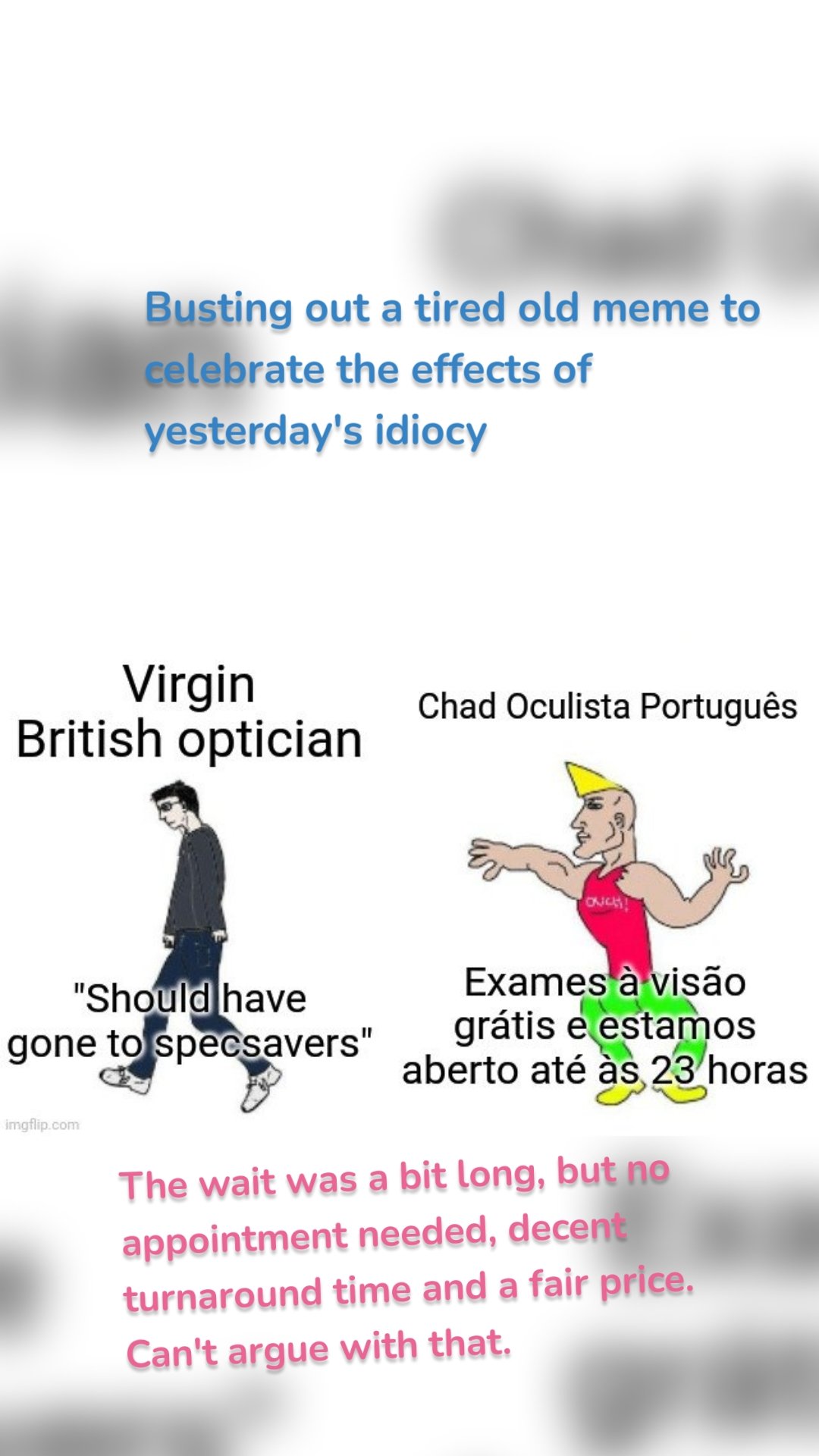
I must say, I was pretty impressed with the optician I saw today
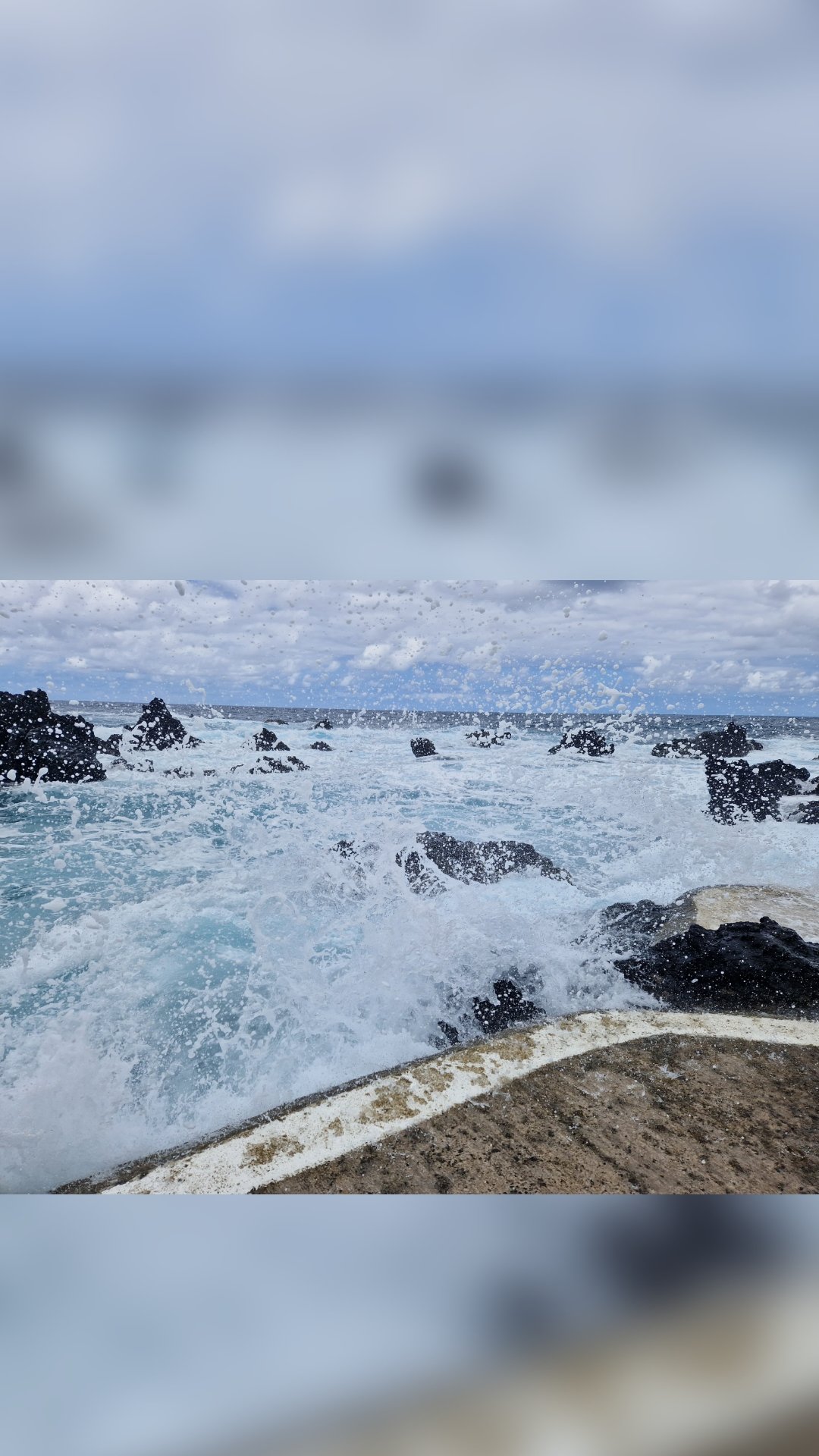
As Ondas ao Lado da Piscina Natural no Porto Moniz.
A Tempestade e o Aguaceiro
This is a short little text that got marked by both Talures and Dani Morgenstern who both pointed out some interesting mistakes in my sloppy way of talking about the weather, spawning a further post to try and straighten it out:
Amanhã, planeamos em dar um passeio até ao centro da cidade e depois para um parque onde um filme que gostamos foi realizado. Infelizmente amanhã haverá um aguaceiro. ☔
So what’s wrong with this? Well, it probably stems from the fact that I had been thinking of aguaceiro as being equivalent to “downpour”. It’s not. It’s a short, sharp downpour, no more than 30 minutes. The shortness is part of the definition. So weather forecasts usually predict the likelihood of heavy showers (“para amanhã prevê-se aguaceiros”) rather than one specific cats-and-dogs event at a specific time/place. That was the first discordant note. The singularity. But beyond that, there’s the idea that aguaceiros were “storms”. One of the correctors joked that the met office were covering all bases: if it rained a lot, it was a storm, if it didn’t rain much it was just “aquaceiros”.
On top of that, “haverá um aguaceiro” sounds too definite, as if the met office knows for a certainty what the weather will be. Colloquially, “dá aguaceiros para amanhã” tells you that there are likely to be some. Weather is notoriously hard to predict, after all!
So I had to ask for clarification…
Há uns dias, escrevi um texto sobre “um aguaceiro”, mas não entendi os comentários todos (não me admira: regra geral, entendo pouco) Este texto é uma forma de pensar em voz alta sobre os significados de duas palavras. Escrevi-o nos comentários ao texto original mas acho que é comprido o suficiente para ser um texto em si.
……

Está claro que há alguma coisa aqui que não entendi bem. Achava que “um aguaceiro” significava “um período de chuva forte”, portanto “se chover pouco foi um aguaceiro” deixou-me confuso, mas depois de estudar a definição no Priberam com mais atenção, é forte *mas também passageiro*. Então é uma incidência de chuva que começa e termina de forma brusca. Em Inglaterra, não temos uma palavra específica para isso. Existem algumas semelhantes, mas não existe um sinónimo exato.
Então… Depois de ter lido mais, um aguaceiro é uma chatice que encharca a roupa* de alguém que não tem guarda-chuva, mas, se se tratar de uma tempestade, a chuva virá sob a forma de uma chuvada ou pelo menos uma sequência de aguaceiros… e ventos e trovões e granizo do tamanho de ovos de avestruz e a lua a transformar-se em sangue e o anjo da morte a reclamar as vidas dos primogénitos e aí por diante.
É mais ou menos isto?
And yes, yes it is.
* =singular not plural
Benfica Mais Uma Vez
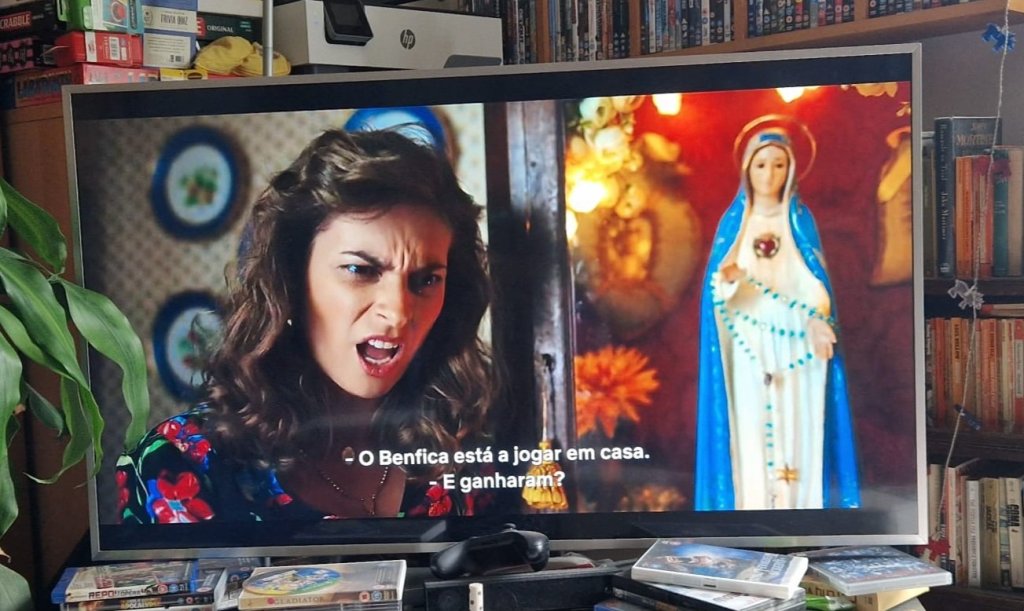
Delighted to see this delightful euphemism from the book cropping up.ok TV the very same week!
Wook – New Kids on the Audio-Block

Wook seem to have launched themselves in the audiobook market with a few interesting-looking titles. I’ve added a section about them on my Audiobooks Page. If you’re an audio fan, especially if you yearn for more audible Saramago in your life, now is your moment!
Sorely Tempted…

…to buy this game. I wonder if I can convince someone to play it with me.
As Fresh as a Lettuce.

This sentence, from Mary John, a no by Ana Pessoa, is one of those idiomatic ways of saying something that doesn’t make sense unless you know. The “que nem” is just doing the same job as the word “como”. It’s used in compairons of the kind that in English would be rendered as “As strong as an ox” or “as fit as a fiddle”
“Eu estava fresca que nem uma alface”. They think she’s dead but she’s “as fresh as a lettuce.
Quero Ser Um Ecrã
It’s time for another translation! This isn’t your avô’s fado, it’s a bit noisier and punkier than most of theportuguese music I’ve heard. “Quero Ser Um Ecrã” by Baleia Baleia Baleia
This is obviously about screens, and it could be any time of electronic screen, but I think it’s mostly used for handheld devices – which is presumably why they’ve got all the spectators in the video to film the whole thing and view it through their screens instead of just watching the performance. Screen is “Ecrã” in this sense. Masculine, despite the a at the end. I gather if it was a PC screen, that would be “monitor”, but tela and visor are also in use for similar kinds of surfaces – I just don’t hear them so often (Brazilian? Slang?). There’s also the word “biombo” which is the kind of screen you might find in a doctor’s surgery for example, for people to have privacy during procedures. Anyway, none of that – we’re thinking social media, mobile phones – all that stuff – happening on a screen.
| Quero Ser um Ecrã | I want to be a screen |
| E a vida, a morte, em fotos no ecrã Os dias compridos e os olhos no ecrã O mundo perdido, achado no ecrã Quero ser um ecrã E os sonhos dos outros cumpridos no ecrã O monstro do visível escondido do ecrã Quero ser um ecrã, quero ser um ecrã | And life, death, in photos on the screen The short days and the eyes on the screen The lost world, found on the screen I want to be a screen And other people’s dreams, accomplished on the screen The monster of what’s visible, hidden on the screen I want to be a screen, I want to be a screen. |
| E as balas que nunca passam do ecrã A força dos gritos, regulável no ecrã As lendas e os mitos, imortais no ecrã Quero ser um ecrã Medos e incertezas no armário do ecrã Celulite e flacidez no ginásio do ecrã Quero ser um ecrã, quero ser um ecrã | And the bullets that never pass through the screen The force of the screams, adjustable on the screen The legends and the myths, immortal on the screen I want to be a screen Fears and uncertainties in the closet of the screen Celulite and flabbiness in the gymnasium of the screen I want to be a screen, I want to be a screen |
| [Ponte] E é sempre verão no ecrã E os corpos estão sempre nús E há tantos gatinhos no ecrã E sushi E bolinhos E coisas boas | [Bridge] And it’s always summer on the screen And the bodies are always naked And there are so many kittens on the screen And sushi And little cakes And good things |
| [Hook] Quero ser um ecrã (x13) | [Hook] I want to be a screen (x13) |
 Luso
Luso 