Posted in English

Gender Wars 4: The Pronoun Menace

I’ve been working on this post since I was in primary school and this is now the fourth incarnation. The last version, written 3 years ago, was given the once-over by my teacher (Cristina of the excellent Say it in Portuguese podcast) who has fine-tuned it, adding some tweaks, and suggesting a few exceptions other than the ones on my original list.

OK, so if you’re a new learner, you’ve probably come across a few explanations of how gender works in Portuguese, and how to work out if a given word is masculine or feminine just by looking at it. Different teachers have slightly different rules so I sat down to road-test them and see which versions were reliable and which had so many exceptions that they weren’t worth bothering with. I used a list of the 1000 most popular portuguese nouns (details in Appendix 3 below) and used excel formulae to see what rule *should* apply vs what gender it actually has.

How To Use The Rules

More specific rules nearer the top override more general ones further down. So for example, Avó is feminine because it meets the “Male and Female people” rule even though it ends in an O and “Programa” meets the “Greek words” rule so doesn’t need tobe referred to the ending-in-A rule. Sorry about the colour-scheme, but… well, you know… just trying to harness my cultural stereotypes in a way that makes it easier to follow.

Rule Examples Exceptions
Dependent:
Male and Female animals/people depend on individual’s sex*
  • o touro / a vaca
  • o irmão / a irmã
  • o dirigente/a dirigente
  • o autor/ a autora
  • o rapaz/ a rapariga
  • o socialista/ a socialista
  • o alemão/ a alemã
  • o chefe
Dependent:
Ordinal numbers depend what’s being counted, because they are effectively adjectives!
  • o primeiro (dia)
  • a segunda (noite)
 
Masculine:
Nouns ending in
-o (but not -ão though)
-r
-l
-u
  • o lugar
  • o amigo
  • o chapéu
  • o papel
  • o final
  • a tribo
  • a dor
  • a cor
  • a flor
Masculine:
Names of Lakes, Rivers, Mountains etc
  • o Tejo
  • os Himalaias
  • o Brasil
  • o Atlântico
  • o Tamisa (despite the -a ending!)
 
Masculine:
Compass points
  • O Leste
  • O Oeste
  • O Norte
  • O Sul
 
Masculine:
Car brands** & types of wines
  • o Madeira
  • o Ferrari
  • a Mercedes (but only the brand. The car is “um Mercedes”)
Variable:
The seasons obey their last letter rules o=masculine, a=feminine
  • o verão
  • o inverno
  • o outono
  • a primavera
Variable:
Week days obey their last letter rules o=masculine, a=feminine
  • o sábado
  • o domingo
  • a segunda feira
  • a terça feira
 
Masculine:
Words from greek, usually ending -a: most usually in
-ema
-grama***
-eta
  • o programa
  • o problema
  • o sistema
  • o poema
  • o cometa
  • o planeta
  • o mapa
  • o telefonema
  • o drama

Fake greekery:

  • a gorjeta
  • a gema
  • a alfazema
  • as algemas
Masculine:
Letters
  • o a
  • o p
 
Masculine:
Cardinal numbers
  • o um
  • o cento
  • o milhão
  • a dezena
  • a centena
  • o avo
Feminine:
Words ending in
-ção
-são
-ião
  • a acção
  • a actuação
  • a administração
  • a alteração
  • a aplicação
  • a aprovação
  • a associação
  • a atenção
  • a avaliação
  • a canção
  • a classificação
  • a colecção
  • a comissão
  • a competição
  • a composição
  • a comunicação
  • a concepção
  • a conclusão
  • a condição
  • a constituição
  • a construção
  • a criação
  • a decisão
  • a declaração
  • a definição
  • a designação
  • a dimensão
  • a direcção
  • a discussão
  • a disposição
  • a distribuição
  • a divisão
  • a edição
  • a educação
  • a eleição
  • a emoção
  • a estação
  • a evolução
  • a excepção
  • a expansão
  • a explicação
  • a exploração
  • a exportação
  • a exposição
  • a expressão
  • a extensão
  • a federação
  • a formação
  • a função
  • a fundação
  • a geração
  • a impressão
  • a inflação
  • a informação
  • a instalação
  • a instituição
  • a intenção
  • a interpretação
  • a intervenção
  • a investigação
  • a ligação
  • a manifestação
  • a missão
  • a nação
  • a negociação
  • a obrigação
  • a observação
  • a ocasião
  • a opção
  • a operação
  • a opinião
  • a oposição
  • a organização
  • a orientação
  • a paixão
  • a participação
  • a população
  • a posição
  • a preocupação
  • a pressão
  • a prisão
  • a privatização
  • a produção
  • a profissão
  • a protecção
  • a publicação
  • a reacção
  • a realização
  • a redução
  • a região
  • a relação
  • a religião
  • a representação
  • a resolução
  • a reunião
  • a revisão
  • a revolução
  • a secção
  • a selecção
  • a sensação
  • a sessão
  • a situação
  • a solução
  • a televisão
  • a tradição
  • a transformação
  • a união
  • a utilização
  • a variação
  • a versão
  • a visão
  • a votação
  • o avião
  • o coração
Masculine:
Other words ending in
-ão
  • o alcatrão
  • o algodão
  • o balcão
  • o cão
  • o capitão
  • o cartão
  • o chão
  • o cidadão
  • o escaldão
  • o feijão
  • o órgão
  • o padrão
  • o pão
  • o patrão
  • a gestão
  • a mão
  • a questão
  • a razão
Feminine:
Most words ending in
-a
  • a dúvida
  • a água
  • a palavra
  • a terra
  • o clima
  • o dia
Feminine:
Words ending in -ez
  • a estupidez
  • a gravidez
  • a viuvez
  • a surdez
  • a vez
  • o xadrez
Feminine: 
Words ending
-dade
-ie
-tude
-gem
-ice
  • a cidade
  • a viagem
  • a garagem
  • a juventude
  • a espécie
  • a velhice
  • o índice

Vaguely Feminine:
Cities**** 

  • Londres bela
  • Lisboa antiga
 Places specifically named after things:
  • O Rio de Janeiro
  • O Porto
Feminine:
Names of the Academic Arts and Science subjects*****
  • a medicina
  • a matemática
  • a biologia
  • a física
  • a geografia
 

*=Note that some of these change their endings but some – like dirigente, cientista, keep the same ending.

**= Jeremy Clarkson would love this, I’m sure

***= Some guides say anything ending in -ama, but loads of portuguese words ending in -ama are red herrings and not from greek: chama, cama, lama, fama, ama and on and on.

****= “Vaguely” because they don’t take articles. Some sources say this means they have no gender. At the risk of claiming to know more about portuguese than Ciberdúvidas, or my own teacher, I don’t really agree with this though. OK, I know the lack of article makes it less obvious, but if you have to apply an adjective, you’re going to have to commit to an A or an O on the end of it. As near as I can tell, this usually seems to be an A, maybe because the word “cidade” itself is feminine, and I think if I was in an exam situation I would try and phrase it in such a way that I was saying “Coimbra is a beautiful city” instead of “Coimbra is beautiful” to avoid any ambiguity. 

*****= It might be redundant, this one: virtually all of them end in -a, apart from a  few -ção words, so they would all be feminine anyway.

Rules I Have Deleted in this Version

à – There used to be a rule here about -ã words being feminine, but after seeing a list of exceptions, I did a little digging and I reckon it’s more-or-less fifty-fifty. It might not matter very much because they’re quite rare (there are zero in the top-1000 list) and I think the only reason it’s a rule at all is that most of the words you come across day to day are words like alemã, capitã, irmã, anfitriã, cidadã: in other words feminine forms of words that would normally have -ão on the end and be masculine! I’ve already got this covered with the very first rule in the list so I don’t think the rest of the rule is needed

Countries – Countries are a special case, and rather than list them, it’s probably best to point you to this map on WIkipedia.

Z – Like Ã, Z-endings are fairly rare, but it seems like there are so many exceptions that I can’t really treat it as a reliable rule. 

Appendix 1: Not-So-Easy E

A few of the rules in the table have endings like “-ice” or “-ade”, but what if the word ends in an e and none of the other rules apply?

Some teachers say that nouns ending in E are split between abstract and concrete. However, as you can see, contrary to the textbook rule, it’s mixed pretty evenly on both sides. Conclusion: the rule is bollocks, I’m afraid, and we’ll just have to learn these the hard way.

Masculine Feminine
In theory, these should all be concrete (things you can see and touch) In theory these should all be abstract (ideas, emotions)
o acidente
o ambiente
o ataque
o barrete
o breve
o clube
o combate
o continente
o controle
o corte
o costume
o crime
o debate
o dente
o destaque
o empate
o exame
o filme
o gabinete
o golpe
o horizonte
o instante
o interesse
o legume
o leite
o limite
o mestre
o monte
o nome
o nordeste
o padre
o parque
o peixe
o príncipe
o regime
o romance
o sangue
o telefone
o teste
o transporte
o vale
o volume
a análise
a arte
a árvore
a ave
a base
a carne
a chave
a classe
a corte
a crise
a estante
a face
a fase
a fome
a fonte
a frase
a frente
a gente
a gripe
a hipótese
a mãe
a metade
a morte
a noite
a parede
a parte
a pele
a ponte
a posse
a rede
a saúde
a sede
a sorte
a tarde
a torre
a vontade

(NB Corte appears in both sides because it can mean either “The court” or “The cut”, both reasonably common but having differing genders just to be bloody awkward)

Apprendix 2: Mistakes, Mis-Shapes, Misfits

When I’d counted all the words that fit the rules and the exceptions, there was a short list left over of words that met none of the rules. The majority seem to be masculine, apart from fé, lei, ordem and nuvem.

  • a fé
  • o fim
  • o gás
  • o jardim
  • a lei
  • o mês
  • a nuvem
  • a ordem
  • o país
  • o pé
  • o som
  • o tom

Appendix 3: the List of 1000 Most-used Portuguese Words

I got the list from a site called Hackingportuguese (now defunct) but I took out a couple of words that I saw that were Brazil-specific and a couple that looked like they were (at least in European Portuguese) only used as adjectives, and replaced them with random nouns from a Memrise deck, to bulk it up to a thousand again. I subjected the survivors to extreme torture in an excel spreadsheet in order to see how many exceptions there were, using Excel formulae to check the ending against the supposed rule. My version of the list is available as a spreadsheet here in case you want to play with it and check my work.

Appendix 4: Twinsies

Here are a few words that can have different genders but their meanings change depending on the gender:

o rádio – that device on your kitchen counter 

a rádio – the radio station

o moral – morale

a moral – morality

o capital – the stuff that keeps capitalism working

a capital – where the politicians are busy running capitalism

o polícia – a copper (a female police officer is a mulher-polícia)

a polícia – the cops.

Appendix 5: Notes for People Who Are Insufficiently Confused

There are a few words that are a bit ambiguous and change between regions. I don’t have a definitive list but if you follow the comments under this reddit post you’ll get a few different opinions. Ignore the bloke who says the AO has eliminated all differences between PT-BR and PT-PT, he seems to be high on crack.

Genders can change a little over time. If you ever have an urge to be unhappy, here is a paper you can read about that.

Finally, you might like to check out a series of three texts I wrote about some weird edge-cases for grammatical gender, and especially about gender neutral pronouns. The most recent one is here but it’s a bit short. Probably the best, most informative is this one

Posted in English, Portuguese

Faluas Do Tejo

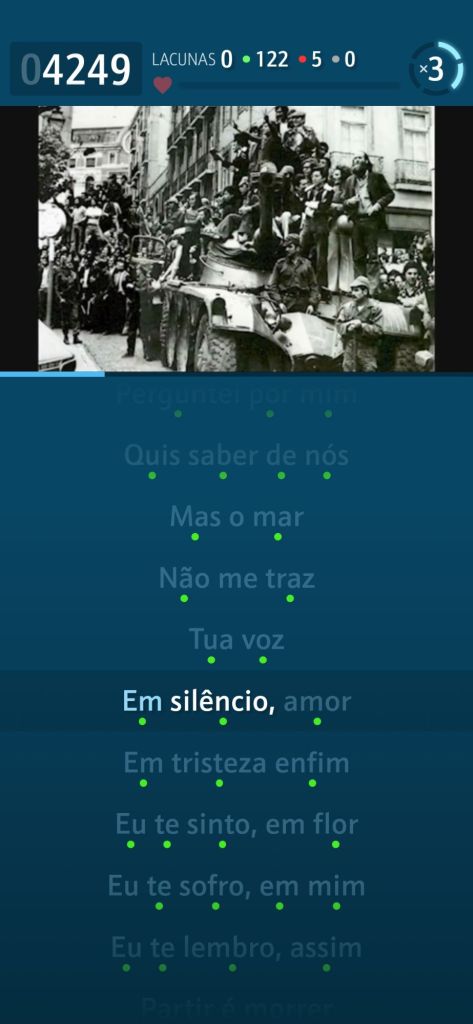
It’s been a while since I did a translation. Here’s Madredeus doing “Faluas do Tejo”. I’m not even going to translate the title because Falua is a kind of cargo-boat used on the Tejo and we don’t really have a word for that and I think writing “Cargo Boat Used on the Tejo” in the lyrics would be clunky.

The name comes from the arabic word Felucca, apparently.

PortuguêsInglês
Faluas,
Vaga lembrança
Qu’eu de criança
Guardei pra mim
Faluas,
Vague memories
That I as a child
Kept for myself
Se as vejo ainda
Às vezes no Tejo
Revivo a alegria
Do tempo em que as via no rio a passar
If I see them still
At times on the Tejo
I relive the happiness
Of when I saw them passing on the river
Faluas do Tejo
Que eu via a brincar
E agora não vejo
No rio a passar
Faluas vadias
Que andavam ali
Em tardes perdidas
Qu’eu nunca esqueci
Faluas of the Tejo
That I used to see playing
And now I don’t see
Passing on the river
Lost Faluas
That used to go around there
On lost afternoons
I never forgot
E era tanta beleza
Que essas velas ao sol vinham criar
Belo quadro da infância
Que ainda não se apagou
And there was so much beauty
That those sails created
Beautiful painting of infancy
That still hasn’t been wiped away
E eu tenho a certeza
Que as Faluas do Tejo hão-de voltar
Outra vez a Lisboa
And I am sure
That the Faluas of the Tejo will return
Again to Lisboa
Posted in English

Michel Thomas on Spotify

That’s it really, that’s the whole post: The Michel Thomas Method Portuguese course, which I’ve talked about before as an excellent place for newbies to start, is now available on Spotify premium, so if you have that, and you’ve never really attained lift-off with your portuguese, I can recommend it as a place to start.

Posted in English, Portuguese

Doing my homework online

Shamelessly just doing my homework on here because I am short of time and shorter of ideas: synonyms from a passage from “Casa do Beco das Sardinheiras”, whose author, Mário de Carvalho seems like someone who likes to use interesting words, making him a challenging read.

I’m going to go above and beyond and do everything that I don’t already know, or am a bit vague about. If the word has multiple meanings I’ll use the one i think is closest to the original meaning in the text.

(Update – Quite a few corrections…)

Farejar => Caçar pelo olfato

Precaver-se => Ter cuidado

Precatar => Acautelar

Gaiato => Miúdo

Tareco => Traste, objeto de pouco valor (e também pode ser um gato doméstico, informalmente)

Eriçado => Levantado, ouriçado

Patorra => Pata grande

Avantajar => Ultrapassar

Surdir => Emergir

Poiso => Esconderijo

Escanifobético => Esquisito

Lá ser é => Isso é verdade

Taludo => Robusto (Pode ser “gordo” também, mas no fundo da página 61, a mulher do chefe da família diz “lá que o Gigas está magrinho par o tamanho)

Alforria => Libertação

Amarrotar => Amachucar

Alvoroço => Agitação

Estraçalhado => Despedaçado

Fera => Criatura feroz

Medonho => Terrível

Algazarra => Tumulto

Arribar => Chegar

Agastar-se => Ficar irritado

Temo-la armada => Vamos ter problemas

Para Cascos de Rolha => Para um lugar afastadíssimo

Notívago => Noturno

Espavento => Assombrado

Prontos! => Combinado!

Quite => Desobrigado *

Lamúria => Lamento

Polícias de Giro => Polícias que andam a pé?**

Botar => Lançar para fora***

Amanhar-se => Adaptar-se

*interesting one, this. It’s plural in the passage: “quites” and I thought it was borrowed from English, like “we’ll call it quits”. It seems not. There must be some common ancestry there though, because it’s too specific to be a coincidence. It’s quite a hard one to come up with a synonym. I’ve gone with Desobrigado but we’re really looking at an “I have now scratched your back after you scratched mine and further backacratching is no longer required”

**Esta frase é poço usada e existe um “Grupamento de Intervenção Rápida Ostensiva” (GIRO) no Brasil mas acho que não tem nada a ver com isto.

*** Os significados desta palavra são muitos e fazem parte nesta canção humorística. “A bota a gente calça e a calça a gente bota” (TW: Brazilian Portuguese)

Posted in English

She’s Sending Me Confusing Stuff Again

M’wife sending me snatches of Madeiran text to baffle me. I didn’t find it anything like as challenging as the last one though. What’s interesting about this is that they use “há” for “à” and “hás” for “às”. These kinds of mistakes are mentioned in a few guides to good portuguese aimed at native speakers but nobody bothers explaining them to learners. Why? Because they’re the kinds of mistakes you make if you learned the language by hearing it as a baby. Those of us who learned it from books might make a lot of mistakes but I don’t think we’d make this specific one because our brains absorbed these different words visually first. This sort of thing is super interesting to me.

Oh and just to be clear, I think this person knows it’s wrong and is writing in that way for effect, but it happens IRL too, I believe.

Posted in English

A Mathematical Interlude

I saw a maths puzzle today that seemed like it doubled as a good language lesson

Se tenho 5 gatos vendo 4 gatos e ganho mais 5 gatos, com quantos gatos fico?

(a) 5 (b) 6 (c) 14 (d) 10

My answer was (b) but I was wrong, the answer is (d), he ends up with 10.

He’s playing a little trick because you read it as him staring with 5, selling 4 and getting another 5. And if it had a comma after the first “5 gatos” that would be right, but it doesn’t. So reading it as it is, that “vendo” is not the first person singular present tense of vender it’s the gerundio of Ver. He has five cats but he can only see four of them when he gets the other five and now he has ten.

Posted in English

Learning From My Mistakes

So I wrote this silly post a few days ago and Marco Neves himself popped by to comment on it, which was nice. And then a couple of days later I realised I’d made a ridiculous typo in it and written “patroa” in place of “pátria”

*facepalm*

But it’s OK, because an eagle-eyed reader who spotted the mistake told me it still worked because patroa, the feminine form of “patrão” can also mean “wife“, just as in english you might hear blokey blokes refer to “the boss” or “she who must be obeyed” or whatever. And I’m married to someone who speaks a língua portuguesa, albeit with an accent the mainlanders sometimes affect not to understand, so I’ll just point to the publication date, 1 Abril, and pass it off as a joke. Yes, I am clever and funny and I never, ever make typos.

And I learned a new thing!

Posted in English

Miss, Mistreated

Signing into the Avanti Trains Wi-Fi the other day, I had to enter my personal details, including my title – you know, Mr, Mrs, Miss, etc. As usual, since my phone is in portuguese, the site delivered the portuguese version of the page and this was the list I got.

My first thought was that this was some sort of data quality error – maybe they had included a couple of department names (Perda=lost property? And Recuperação de desastres= Disaster Recovery) in their list of titles and that whoever had been given the job of translating it had just translated them without thinking.

But in reflection, how would that even happen? After a couple of minutes, I realised the original list was OK, it was just a spectacularly terrible bit of AI translation.

So starting from the top:

Senhor/a Deputado/a refer to members of parliament and since that would just be one item in an English list, I assume they started out as “lord” and “lady” or something

Perda is my favourite: Miss. One of the meanings of perda is a miss or a loss.

MS must be Ms. MS does exist in Priberam as the abbreviation for a Brazilian province called Mato Grosso do Sul.

Recuperação de Desastres is the biggest leap, but since there isn’t a “Doutor” in the list, my guess is that this one started out as “Dr”, so the AI read it as “DR” and since DR stands for Disaster Recovery in management speak, it’s translated it as Recuperação de Desastres

Rev isn’t translated. Boring.

Then you’ve got Mr and Mrs and the unpronounceable Mx that a few people were trying to make happen in about 2020, much to the annoyance of everyone else.

I wonder how much the consultant charged them for this load of crap. It’s a brilliant example of what happens if you cut corners!

Posted in English, Portuguese

Fado da Idanha

Here’s a translation of a relatively upbeat, but very traditional Lisbon Fado written by Ricardo Borges de Sousa in the early years of the twentieth century and sung here by Maria Teresa de Noronha. It is well-enough regarded to be the subject of a whole episode of “A Trilogia do Fado” on RTP, but it isn’t the only version of the song; there seem to be lots of variants each with their own set of lyrics.

🇵🇹🇬🇧
Quem me dera que voltasse
O doce tempo de além
Sentada junto à lareira
A ouvir cantar minha mãe
If only you would came back
The sweet, far-off time
Seated together at the fireside
Listening to my mother sing
Ó tempo, tempo ditoso
Da vida eterno sorriso
Que tornas em paraíso
Um mundo tão enganoso
Quando à minha mãe, choroso
Após um beijo na face
Lhe pedia que cantasse
Uma trova de bonança
Esse tempo de criança
Quem me dera que voltasse
Oh time, happy time
Eternal smile of life
That turns in paradise
Into such a deceptive world
When my mother, tearful,
After a kiss on the face
was asked to sing
A soothing song**
That time of childhood
If only it would come back
Tempos que não voltam mais
Da nossa infância ridente
Em que eu vivia contente
Correndo atrás dos pardais
Das paredes dos casais
Que a nossa aldeia contém
Branquinhas como a cecém
Mudas como a gratidão
E recordam com paixão
O doce tempo de além
Times that will never come again
Of our laughing childhood
When I lived happily
Chasing sparrows
From the walls of couples
That lived in our village
White as lillies
Mute with gratitude
And they remember with live
The sweet far-off time

*I really struggled to make sense of the first four lines when I was following the lyrics on letras.com because it has the word “ternas” in place of “tornas”, and fair enough, it does sound like that, but I couldn’t make it make sense. Why is it feminine and plural? is he talking about herself and her friends? But how does that follow on with the line before and after? It was definitely fishy but it could make sense if she was talking about that idyllic scene turning into a deceptive world, so maybe “torna-se”, but that would have the “se” in front of the verb because it’s after que. Tornasse? But why would it be subjunctive? I had a look around but most online sources seem to have screen-scraped letras.com so they had the same word. Then I found a site that used “terras”. I hate that less, but I still don’t buy it. And then finally I came across this site that uses “tornas” and I am absolutely ready to believe that!

**I wasn’t sure about this one, but when you look up trova and bonança, it makes sense. I tried the whole line in gtranslate and it said “a thunderous bonanza” which doesn’t really fit the mood.

Posted in English, Portuguese

The Road at Preposition… I mean “to”… Yes, as I was saying, The Road to Preposition.

Annoyed to find I got about a third of these wrong. Even after two more attempts at guesses I was still two short of a full house. Maddening! How can prepositions be so completely hatstand? So I’m putting the whole exercise up here and writing up the reason for each one in a way that will probably make the whole thing illegible but hopefully should pound the message into my brain. The original text is from Visão, I think, but it doesn’t seem to be online so I can’t link to the original – it’s cited in Português em Foco.

A fellow preposition non-understander in action

Green is for the prepositions themselves

Pink is for the explanations

Cresce a moda dos treinadores que vão a (I put à, but they’re visiting clients “at home”, not “at the house”) casa, mas só para (straightforward “for”) quem pode pagar‑lhes e detesta ginásios!

Duas da (“de tarde” would be in the afternoon, but adding the article indicates something like “the afternoon in question”) tarde. Equipada a (I used “com” which Linguee seemed to think was the most likely option but equipada a rigor seems to be a set phrase for “in your gym kit”) rigor, Maria João recebe o treinador que, durante uma hora, lhe puxará pelo (puxar pelo físico is another expression and it just means “work out”. I had no idea and just guessed some old rubbish) físico, sem (straightforward “without”) sair de casa. Os ensaios no Teatro Infantil de Lisboa não roubam à (extremely counter-intuitive for english-speakers, but “roubar a” means “steal from”) atriz, de (straightforward “of” – because she is 40 years old) 40 anos, as duas ou três horas semanais de treino com o Paulo, responsável pela (responsável por / responsible for) sua boa forma. Maria João explica a opção doméstica: a sua profissão é muito exigente e a deslocação a (“deslocar(-se) a” means to go to relocate – or just go somewhere, really) um ginásio é tempo perdido. Além de (além de just means “aswell as”) que as aulas em (straightforward “in”) grupo raramente correspondem às (straightforward “to the”) necessidades particulares de (straightforward “of”) cada um.

Paulo, o treinador privado, diz dominar uma técnica especial. Os exercícios dele exploram a funcionalidade do corpo humano, o que quer dizer que obrigam a pessoa a (straightforward “to” – which you need after “obrigar”) trabalhar os músculos da (unexpected use of “of the same way” where in english we would say “in the same way”) mesma forma que os usa no dia a dia. Um colchão, uma bola suíça, uma bola medicinal, bandas elásticas com pegas e uma plataforma instável destinada a (straightforward “to”) treinar o equilíbrio do aluno são os apetrechos que leva consigo para as casas dos clientes. De (De is used to indicate “wearing a…”) camisola preta, com (striaghtforward “with”) Treinador Pessoal escrito a (counter-intuitive use of “a” where translating literally from english would make you want to write “em” because it’s written in white) branco nas costas, ele incentiva Maria João a (a-infinitive = “contracting”) contrair os abdominais, a (a-infinitive = “relaxing”) relaxar os braços, a (a-infinitive = “lifting”) levantar a perna esquerda e a (a-infinitive = “offering”) oferecer resistência ao movimento do elástico.
Os treinos individuais ao (straightforward “at the”) domicílio custam entre (straightforward “between”) 30 e 70 euros por (straightforward “per”) sessão e duram de (straightforward “from”) 60 a (straightforward “to”) 90 minutos.

Embora as condições em casa não tenham comparação com (straightforward “with”) os equipamentos, os estúdios ou as piscinas dos ginásios, há vantagens na (straightforward “in the”) opção doméstica, sobretudo para (straightforward “for”) figuras públicas que querem fugir de (I put “aos” and then changed it to “a” and actually I don’t think I was on the wrong track. “fugir a” and “fugir de” both mean to escape from, as opposed to “fugir para” which is escape to”) olhares alheios, em recintos sobrelotados.

Maria Duarte, de (…she was 30 years old…) 30 anos, gestora, outra cliente de Paulo, só vê benefícios no treino caseiro. Além de (além de again: aswell as) ter dois filhos pequenos, já andava desmotivada por (straightforward “from” or “by” or “as a result of”) ir ao ginásio, porque durante um ano não conseguiu obter os resultados que pretendia. Agora dá‑se por (According to the invaluable Guia Prático, “dar-se por” means “julgar-se”, “considerar-se”, “sentir-se”) satisfeita. As duas horas que perdia no (straightforward “in the”) ginásio a fazer máquinas equivalem a (straightforward “to”) 30 minutos de exercício em casa, com os equipamentos que o Paulo traz.

O professor alerta para (straightforward “for” although I went for “a” and I think it feels like a more direction-y “to” than I would intuitively expect because even when it told me I was wrong I tried “de” and “com” and this ended up being one of the two that I were still wrong at the end) os esforços exagerados que poderão ocorrer nos ginásios. É preciso dividir o nosso corpo em partes e trabalhar uma de (um(a) de cada vez just means “one at a time”) cada vez, em sessões diferentes.
Deve‑se dar descanso ao (straightforward “to the”) físico e manter uma alimentação saudável prescrita pelo (straightforward “by the”) dietista. Paulo aconselha, no (counter-intuitive use of “no” when a literal translation would push me towards “ao” for “at least”) mínimo, três meses de trabalho para (straightforward “for” in the sense of “in order to”) se obter resultados concretos. O negócio parece correr‑lhe de (de feição is an expression meaning “de forma favorável ou propícia”) feição!