Posted in English

Português em Foco

Another mildly annoying example of terrible design here – the PeF online course doesn’t allow enough space in the box to fill in all the missing words. Buuuu

Posted in English

What the hell is this?

Esta gente nova não tem ponta por onde se lhe pegue! Francamente!

This sentence flummoxed me for two reasons. Firstly because the overall gist didn’t seem to make any sense and secondly the grammar was baffling. I had to ask an expert to explain some it to me.

It’s from Uma Aventura nas Férias da Pascoa, and the lady who’s speaking is exasperated that some kids are making a lot of noise outside her door. The “Francamente!” is there to underscore her disapproval.

Let’s do the grammar first.

So firstly, obviously, we have the usual anglophone confusion of “gente” meaning people but it’s a singular word because of course it is. That’s pretty basic though, so didn’t throw me too badly.

“Pegue” is subjunctive present. Why? Good question. It seems to be a statement about the general qualities of something, nested in a dependent clause, but it doesn’t fit neatly into my subjunctive flowchart, even though it’s recognisably the same kind of sentence structure as sentences that do. I think that’s because “por onde” (“at where”) is doing the job that would normally be done by “que”. [Caveat – I’m pretty sure I’m right about this but didn’t specifically ask so I might be misunderstanding why they’ve used this tense]

And finally, the pronouns, se and lhe right after each other. Lhe means “them” but it is singular because – again – it’s referring to gente, and se is present as an indefinite pronoun*, which is a hard concept to grasp in English. I’ve had a stab at it in this post, but I’m sure it wouldn’t hold up to much scrutiny from an expert.

So if you were to translate it word-for-word in the most literal way possible, the whole sentence is something like “These young people don’t have a place at which one might get hold of them”. Well, that could refer to something that’s so dirty that we’re afraid to touch it for fear of getting our hands dirty, but here it’s referring to people so it must be some sort of expression, right?

The expression “não ter ponta por onde se lhe pegue”,  or “estar sem ponta por onde se pegue” or variations of either, seem to be translated as “to be utter nonsense” on bab.la, and I can see it used in roughly the same way in a few places around the interwebs.

What would be an equivalent expression in English? Since it’s talking about getting a hold of something, I guess something like “I can’t get a handle on it” would be pretty close. It’s not an exact equivalent though, since if you “can’t get a handle on” something in English, you’re leaving open the possibility that you just aren’t clever enough to understand, whereas this is more in the direction of “it can’t be understood, because it doesn’t make any sense”.

More than anything else, what impressed me is that it has been ages since I have come across a sentence that has caused me this much puzzlement, and yet this is a book written for children!

Well done, you’ve made it this far. Reward yourself with this music video.

*I has a query about this so here’s a bit of self-justification! First of all, I wrote “impersonal” in the first draft of this which isn’t quite the right word so I’m sorry I got that wrong. “One” is an indefinite pronoun and in very correct, posh english you use it… ahem… or rather “one uses it” as a neutral pronoun when one wants to use a verb in a very general way, without having anyone specific in mind. I think that’s the closest analogue of what “se” is doing here. Priberam defines it as a “pronome indefinido” (4th and 5th definitions here) and this page gives more detail although confusingly refers to it as a partícula (particle) which I think is incorrect. Or at least in english a pronoun isn’t a particle, but maybe portuguese grammarians have a slightly different taxonomy…?

Posted in English

Atabalhoadamente

Oof, it’s a bit of a mouthful, this, isn’t it? I had to have about 5 attempts to get it.

It means hurriedly and carelessly. They’re yanking out ceiling tiles in a rush and I’m a disorderly way.

Another one from Uma Aventura nas Férias de Páscoa, and no, I don’t know why I’m writing in English either.

Posted in English

Tallinn Calling

So I think I mentioned I’ve been doing map and flag quizzes in portuguese to try and boost both my knowledge of geography and to familiarise myself with the names of countries in portuguese. One of them is Worldle, which has one daily map for users to guess, and then asks follow-up questions about language, flag, capital etc. Today’s happened to be a country that looked familiar.

I have questions though.

First of all, have the Açores and Madeira drifted a lot since I last checked? What are they doing just off the coast there? Could you swim from Coimbra to Funchal?

But the language round was even weirder. The first language is easy enough, obviously, but the second?

As you can see from the screenshot, I tried Galego and Mirandês as the two other native languages. Actually I think I might have wrong to choose Galego because I think it’s spoken on the Spanish side of the border, but Mirandês has a proper linguistic community in the North-East of Portugal and I think has a claim to be the second language of Portugal.  The other two languages given on Wikipedia are Barranquenho and Minderico, neither of which I’d even heard of.

As for non-native languages, I’d probably have guessed English, French or Spanish. There’s been an upsurge in refugees recently (eg from Ukraine – roughly 60000) and economic migrants (probably mainly from other lusophone countries like Brasil and Angola) but I’m pretty sure if you added together the British immig… er sorry “expats” (50000), Americans (10000) and people from various other anglophone countries, plus the fact that the portuguese education system seems to be doing an amazing job of teaching English as a second language, English must be pretty high on the list. Then there are quite a few Italian, French and Spanish migrants, and a few years ago there was a massive uptick of venezuelans, descendents of Portuguese migrants, returning home to escape the benefits of that socialist utopia, so I ended up guessing Spanish as my third and final option.

The answer they give is Estonês. I was estonêsed… er… I mean astonished, but I didn’t want to write it off so I did a bit of research to see if there really was a huge Estonian diaspora in Portugal.

Nope. Estonians are 86th on the list of immigrants by country according to the chart on this page. So what’s going on?

My first guess was that the person who made the pages picked from a list of languages and espanhol and estonês were just next to each other alphabetically, so maybe he just clicked on the wrong one. However, my brother does the same quiz in English and he was surprised to see Estonian pop up as the second language of Portugal too. Estonian and Spanish definitely aren’t next to each other in an alphabetical list of English language place names, so my theory looked shaky.

Digging further, languageknowledge.eu reckons 1.89 percent of the population of Portugal speak Estonian, which is the same percentage as the quiz gives. Does 1.89% sound plausible? The population of Portugal is about ten million and Estonia less than one and a half million, so for this to be true you’d need about fifteen percent of the population of Estonia to emigrate to Portugal and there would be about 3 or 4 times as many of them as there are brits. Hmmm… 🤔

Global Estonian, which bills itself as a global forum for Estonians around the world, gives the figure as 77 Estonians lifting in Portugal. That seems awfully precise, but I’d bet the true number is a hell of a lot closer to 77 than 190,000.

So how did they arrive at such a huge number? Maybe at some point it was 190, and some data entry clerk entered that in a database, not noticing that it said “population in thousands”, and that single insignificant error got picked up by other sites and eventually incorporated into the model answers for the quiz.

I think the lesson here is that sloppy data seeps out and pollutes everything downstream of where it’s keyed in. This isn’t quite as catastrophic in its effects as it could have been, but it’s an interesting little lesson in data pollution. Imagine a similar error creeping into some database used for planning or making policy. You could end up with serious miscalculation rather than just an annoyed quiz contestant.

Posted in English

I Really Like Quina But…

… Some of the words it comes up with are a bit iffy. This, for example, took several minutes of just trying random combinations of letters in the two spaces I had left. It just means “hurrah”, apparently, but would you call “hurrah” a word? Hm.. 🧐

Yes I always start with Farto because I’m childish

In case you don’t know Quina, it’s here.

Posted in English, Portuguese

Foram Cardos, Foram Prosas

Another translation!

I got curious about this because it was covered by Amor Electro on one of the albums I listened to a few weeks back, and although I knew most of the songs they’d done, I’d never heard of this or even of the artrist who performed it originally so I sought it out. Disappointing, to be honest. It feels very dated and uninspiring. I actually liked the cover version better.

PortugueseEnglish
Há luz sem lume aceso
Mas sem amar o calor
Há flor de um fogo preso
Há luz do meu claro amor
There is a light without a flame
But without loving the heat
There is a flower of a captive fire
There is a light of my clear love
Há madressilvas aos pés
E águas lavam o rosto
Dedos que tens em resvés
Ó meu amante deposto
There are honeysuckles at your feet
And waters wash your face
Fingers you have, so close
Oh my former lover
Não foram poemas nem rosas
Que colheste no meu colo
Foram cardos, foram prosas
Arrancadas do meu solo
There were no poems or roses
That you picked in my lap
They were thistles and prose
Uprooted from my soil
Porque tu ainda me queres
O amor que ainda fazemos
Dá-me um sinal se puderes
Sejamos amantes supremos
Because you still love
Yje lobe we still have
Give me a signal if you can
Let’s be supreme lovers
Será sempre a subir
Ao cimo de ti
Só para te sentir
It wlll always be rising
Above you
Just to feel you
Será no alto de mim
Que um corpo só
Exalta o seu fim
It will be above me
Because just one body
Exalts at its end
Posted in English, Portuguese

Dial M for Mordam

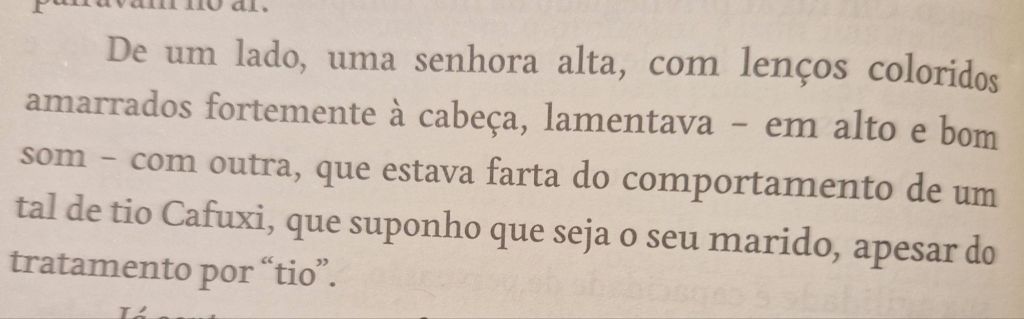
Esta expressão foi usada no livro que terminei recentemente e já está de volta no meu livro atual (“Se Perguntarem Por mim, Digam que Voei” de Alice Vieira)

Macacos me mordam se aquele que manda as bolas ao ar não é o marçano do tio Casimiro”

Monkeys bite me if that one who’s juggling balls isn’t Uncle Casimiro’s apprentice”

So it’s obviously an expression or surprise like “well I’ll be a monkeys uncle”. Do people still say that? Probably not. Anyway, I like it and I’ll have to use it again. Hey, didn’t I start this blog post in portuguese? What happened?

Posted in English, Portuguese

Diabo na Cruz – Vida de Estrada

OK, well this is one of the bands I listened to the other day and liked enough to want to dive into their lyrics. It’s not an easy one because a lot of it is lists of things and events, like the lists in “Its the End of the World as we Know It” by REM or “We Didn’t Start the Fire” by Billy Joel and I am pretty sure I am missing some of the references. I’ll put links on the ones I recognise because it’s probably easier than writing 30,000 words of footnotes. Speaking of feet, there’s a really excellent live video out there and teh lead singer has a cast on his ankle, so well done him for not calling in sick that day!

🇵🇹🇬🇧
Siga em fila vai
Nove emprego cinco sai
Quinto império do atalho
Bomba, escola, pão, talho
Form a line, go
Nine employed, five leave
Fifth empire by a shortcut
Bomb, school, bread, meat
Trívia e televisão
Aurora do quadrilião
No ar um cheiro a esturro
Bom pró esperto, mau pró burro
Trivia and television
Glow of the quadrillion
In the air a smell of burning
Good for the smart, bad for the stupid
Perto, tão perto do oásis no deserto
Longe, tão longe de ir lá hoje
Mora, demora
O que é bom nunca é pra agora
Quem me dera ir daqui pra fora
Close, so close to the oasis in the desert
Far, so far from getting there today
Lay, delay
What is good is never for now
I wish I could get out of here and away
Trânsito no Jamor
A ouvir notícias do terror
Troika, bolha imobiliária
É cara a vida e a pensão precária
Traffic on the Jamor
Hearing news of terrorism
The Troika, a property bubble
Life is expensive, and pensions at risk
Água, cabo, net
Luz, ginásio, yoga, creche
IUC, IMI, IRS
Paga paga, esquece esquece
Water, cable, internet,
Lighting, gym, yoga, creche,
IUC,IMI,IRS
Pay, pay, forget, forget
Fraco tão fraco o sol neste buraco
Boa, tão boa a vida boa
Mora, demora
O que é bom nunca é pra agora
Quem me dera ir daqui pra fora
Weak, it’s so weak, the sun in this hole
Good, so good, the good life
Lay Delay
What is good is never for now
I wish I could get out of here
Mergulhar mãos no volante e adiante
Pra qualquer lugar
Vidro aberto, rádio alto, no asfalto
Sem me apoquentar
Saborear o mar, as serras
Cobrir-me de pó e geada
Roer o osso desta terra
Na vida de estrada
Grab the steering wheel and go
To anywhere
Window open, radio loud, on the asphalt
Without fear
To enjoy the sea, the mountains
get covered in dust and frost
Chew the bones of this land
In life on the road
Sismo no Japão
Zara, nova coleção
Espionagem, guerra, muda o tema
Woody Allen no cinema
Earthquake in Japan
Zara, new collection
Espionage, war, change the subject
Woody Allen at the cinema
Zapping e jornal
Série e logo futebol
O vizinho num concurso
A fazer figura de urso
Channel-hopping and news
Series and then football
The neighbour in a competition
To act like an idiot
Chato, tão chato papar grupo barato
Oco, tão oco o circo louco
Mora, demora
O que é bom nunca é pra agora
Quem me dera ir daqui pra fora
Annoying, so annoying, support cheap group*
Hollow, so hollow, the crazy circus
Live, delay
What is good is never for now
I wish I could get out of here
Mergulhar mãos no volante e adiante
Pra qualquer lugar
Vidro aberto, rádio alto, no asfalto
Sem me apoquentar
Saborear o mar, as serras
Cobrir-me de pó e geada
Roer o osso desta terra
Na vida de estrada
Grab the steering wheel and go
To anywhere
Window open, radio loud, on the asphalt
Without fear
To enjoy the sea, the mountains
get covered in dust and frost
Chew the bones of this land
In life on the road
Onde não há prazos nem obrigações
Não há debates nem euromilhões
Onde o sol eleva e a frescura acata
Sem consulta ao homeopata
Onde a cura é sem vacina
E a cardina é sem pesar
Por lagoas e colinas
Vê-se a lágrima a secar
Dá o vento na cara
E nada nos pára
Nada nos pára
Where there are no deadlines or obligations
No debates, no euromillions
Where the sun lifts you and the coolness follows you
Without an appointment with the homeopath
Where the cure doesn’t take a vaccine**
And the grime doesn’t weigh you down
Through lakes and hills
Feel the wind in your face
And nothing will stop us
Nothing will stop us
Perto, tão perto do oásis no deserto
Longe, tão longe de ir lá hoje
Mora, demora
O que é bom nunca é pra agora
Quem me dera ir
Quem me dera ir daqui
Quem me dera ir daqui pra fora
Close, so close to the oasis in the desert
Far, so far from getting there today
Delay, delay
What is good is never for now
I wish I could get out
I wish I could get out of here
I wish I could get out of here and away
Mergulhar mãos no volante e adiante
Pra qualquer lugar
Vidro aberto, rádio alto, no asfalto
Sem me apoquentar
Saborear o mar, as serras
Cobrir-me de pó e geada
Roer o osso desta terra
Na vida de estrada
Grab the steering wheel and go
To anywhere
Window open, radio loud, on the asphalt
Without fear
To enjoy the sea, the mountains
get covered in dust and frost
Chew the bones of this land
In life on the road

*best guess is that he’s saying you should support independent artsists

**They broke up in 2019, in case you were wondering if this was some sort of covid reference

Posted in English

The Last Day: Wrath, Ruin and Reason in the Great Lisbon Earthquake of 1755 by Nicholas Shrady.

Lazy Post, reviewing an audiobook I finished recently, about the Lisbon Earthquake.

The Last Day by Nicholas Shrady

As the name suggests, the book is organised around the event that literally shook Lisbon and figuratively shook its empire in the middle of the eighteenth century. The day itself is described well, albeit undramatically, and the Marquês de Pombal’s life and legacy gets laid out, including the grizzly bits. Smashing people’s arms and legs with hammers, burning them alive. Oh, and rebuilding the city in line with modern techniques. He’s… Well, to borrow another term from the young folk, “morally grey”.

Anyway, so far so good, but it could have been more focused. I guess his thinking was that a lot of readers wouldn’t know the background so he gives us a tour of the main points of Portuguese history but he doesn’t section it off, he just sort of rambles back in the middle of the book. Maybe the general history stuff would have been better as an optional preamble to the main book. That way, he could have really drilled down both in the horror and chaos of the day itself and on the technical details of how they recovered. I want details, dammit!

My favourite aspect was his summary of how the different groups explained the event. We sometimes think our age is uniquely divided and that the two sides in our political disputes operate with different worldviews and different sets of facts, but in 1755 we have catholics fulminating about how God sent the earthquake for allowing the protestant heretics into Portugal and meanwhile in England, at memorials services for lost Port wine merchants, the vicars are telling their flocks it’s no wonder Portugal was ruined when it is full of dreadful popish idolatry.

Some things never change.

The audiobook reader gets a solid 8/10 for trying with the pronunciation. He obviously doesn’t speak portuguese, but he’s put the effort in to learn the ground rules of portuguese pronunciation and it shows. Instead of just saying all the names like they were Mexican drug lords in Breaking Bad, he pushes in the right direction. He gets a lot wrong, but he’s tried and I appreciate that.

Posted in English

Birth Order

This will probably come in handy again one day so might as well make a note of it…. how to describe oldest and youngest siblings

Filho primogénito – the oldest son

Irmão do meio – the middle brother

Irmão mais novo – the youngest brother

O benjamim is the youngest but can also mean the favourite son, or the favourite in a group, apparently. Ugh! Why would the youngest be your favourite? The first born is clearly the best. Oh and caçula just means youngest, not favourite.