Posted in English

Gender Wars 4: The Pronoun Menace

I’ve been working on this post since I was in primary school and this is now the fourth incarnation. The last version, written 3 years ago, was given the once-over by my teacher (Cristina of the excellent Say it in Portuguese podcast) who has fine-tuned it, adding some tweaks, and suggesting a few exceptions other than the ones on my original list.

OK, so if you’re a new learner, you’ve probably come across a few explanations of how gender works in Portuguese, and how to work out if a given word is masculine or feminine just by looking at it. Different teachers have slightly different rules so I sat down to road-test them and see which versions were reliable and which had so many exceptions that they weren’t worth bothering with. I used a list of the 1000 most popular portuguese nouns (details in Appendix 3 below) and used excel formulae to see what rule *should* apply vs what gender it actually has.

How To Use The Rules

More specific rules nearer the top override more general ones further down. So for example, Avó is feminine because it meets the “Male and Female people” rule even though it ends in an O and “Programa” meets the “Greek words” rule so doesn’t need tobe referred to the ending-in-A rule. Sorry about the colour-scheme, but… well, you know… just trying to harness my cultural stereotypes in a way that makes it easier to follow.

Rule Examples Exceptions
Dependent:
Male and Female animals/people depend on individual’s sex*
  • o touro / a vaca
  • o irmão / a irmã
  • o dirigente/a dirigente
  • o autor/ a autora
  • o rapaz/ a rapariga
  • o socialista/ a socialista
  • o alemão/ a alemã
  • o chefe
Dependent:
Ordinal numbers depend what’s being counted, because they are effectively adjectives!
  • o primeiro (dia)
  • a segunda (noite)
 
Masculine:
Nouns ending in
-o (but not -ão though)
-r
-l
-u
  • o lugar
  • o amigo
  • o chapéu
  • o papel
  • o final
  • a tribo
  • a dor
  • a cor
  • a flor
Masculine:
Names of Lakes, Rivers, Mountains etc
  • o Tejo
  • os Himalaias
  • o Brasil
  • o Atlântico
  • o Tamisa (despite the -a ending!)
 
Masculine:
Compass points
  • O Leste
  • O Oeste
  • O Norte
  • O Sul
 
Masculine:
Car brands** & types of wines
  • o Madeira
  • o Ferrari
  • a Mercedes (but only the brand. The car is “um Mercedes”)
Variable:
The seasons obey their last letter rules o=masculine, a=feminine
  • o verão
  • o inverno
  • o outono
  • a primavera
Variable:
Week days obey their last letter rules o=masculine, a=feminine
  • o sábado
  • o domingo
  • a segunda feira
  • a terça feira
 
Masculine:
Words from greek, usually ending -a: most usually in
-ema
-grama***
-eta
  • o programa
  • o problema
  • o sistema
  • o poema
  • o cometa
  • o planeta
  • o mapa
  • o telefonema
  • o drama

Fake greekery:

  • a gorjeta
  • a gema
  • a alfazema
  • as algemas
Masculine:
Letters
  • o a
  • o p
 
Masculine:
Cardinal numbers
  • o um
  • o cento
  • o milhão
  • a dezena
  • a centena
  • o avo
Feminine:
Words ending in
-ção
-são
-ião
  • a acção
  • a actuação
  • a administração
  • a alteração
  • a aplicação
  • a aprovação
  • a associação
  • a atenção
  • a avaliação
  • a canção
  • a classificação
  • a colecção
  • a comissão
  • a competição
  • a composição
  • a comunicação
  • a concepção
  • a conclusão
  • a condição
  • a constituição
  • a construção
  • a criação
  • a decisão
  • a declaração
  • a definição
  • a designação
  • a dimensão
  • a direcção
  • a discussão
  • a disposição
  • a distribuição
  • a divisão
  • a edição
  • a educação
  • a eleição
  • a emoção
  • a estação
  • a evolução
  • a excepção
  • a expansão
  • a explicação
  • a exploração
  • a exportação
  • a exposição
  • a expressão
  • a extensão
  • a federação
  • a formação
  • a função
  • a fundação
  • a geração
  • a impressão
  • a inflação
  • a informação
  • a instalação
  • a instituição
  • a intenção
  • a interpretação
  • a intervenção
  • a investigação
  • a ligação
  • a manifestação
  • a missão
  • a nação
  • a negociação
  • a obrigação
  • a observação
  • a ocasião
  • a opção
  • a operação
  • a opinião
  • a oposição
  • a organização
  • a orientação
  • a paixão
  • a participação
  • a população
  • a posição
  • a preocupação
  • a pressão
  • a prisão
  • a privatização
  • a produção
  • a profissão
  • a protecção
  • a publicação
  • a reacção
  • a realização
  • a redução
  • a região
  • a relação
  • a religião
  • a representação
  • a resolução
  • a reunião
  • a revisão
  • a revolução
  • a secção
  • a selecção
  • a sensação
  • a sessão
  • a situação
  • a solução
  • a televisão
  • a tradição
  • a transformação
  • a união
  • a utilização
  • a variação
  • a versão
  • a visão
  • a votação
  • o avião
  • o coração
Masculine:
Other words ending in
-ão
  • o alcatrão
  • o algodão
  • o balcão
  • o cão
  • o capitão
  • o cartão
  • o chão
  • o cidadão
  • o escaldão
  • o feijão
  • o órgão
  • o padrão
  • o pão
  • o patrão
  • a gestão
  • a mão
  • a questão
  • a razão
Feminine:
Most words ending in
-a
  • a dúvida
  • a água
  • a palavra
  • a terra
  • o clima
  • o dia
Feminine:
Words ending in -ez
  • a estupidez
  • a gravidez
  • a viuvez
  • a surdez
  • a vez
  • o xadrez
Feminine: 
Words ending
-dade
-ie
-tude
-gem
-ice
  • a cidade
  • a viagem
  • a garagem
  • a juventude
  • a espécie
  • a velhice
  • o índice

Vaguely Feminine:
Cities**** 

  • Londres bela
  • Lisboa antiga
 Places specifically named after things:
  • O Rio de Janeiro
  • O Porto
Feminine:
Names of the Academic Arts and Science subjects*****
  • a medicina
  • a matemática
  • a biologia
  • a física
  • a geografia
 

*=Note that some of these change their endings but some – like dirigente, cientista, keep the same ending.

**= Jeremy Clarkson would love this, I’m sure

***= Some guides say anything ending in -ama, but loads of portuguese words ending in -ama are red herrings and not from greek: chama, cama, lama, fama, ama and on and on.

****= “Vaguely” because they don’t take articles. Some sources say this means they have no gender. At the risk of claiming to know more about portuguese than Ciberdúvidas, or my own teacher, I don’t really agree with this though. OK, I know the lack of article makes it less obvious, but if you have to apply an adjective, you’re going to have to commit to an A or an O on the end of it. As near as I can tell, this usually seems to be an A, maybe because the word “cidade” itself is feminine, and I think if I was in an exam situation I would try and phrase it in such a way that I was saying “Coimbra is a beautiful city” instead of “Coimbra is beautiful” to avoid any ambiguity. 

*****= It might be redundant, this one: virtually all of them end in -a, apart from a  few -ção words, so they would all be feminine anyway.

Rules I Have Deleted in this Version

à – There used to be a rule here about -ã words being feminine, but after seeing a list of exceptions, I did a little digging and I reckon it’s more-or-less fifty-fifty. It might not matter very much because they’re quite rare (there are zero in the top-1000 list) and I think the only reason it’s a rule at all is that most of the words you come across day to day are words like alemã, capitã, irmã, anfitriã, cidadã: in other words feminine forms of words that would normally have -ão on the end and be masculine! I’ve already got this covered with the very first rule in the list so I don’t think the rest of the rule is needed

Countries – Countries are a special case, and rather than list them, it’s probably best to point you to this map on WIkipedia.

Z – Like Ã, Z-endings are fairly rare, but it seems like there are so many exceptions that I can’t really treat it as a reliable rule. 

Appendix 1: Not-So-Easy E

A few of the rules in the table have endings like “-ice” or “-ade”, but what if the word ends in an e and none of the other rules apply?

Some teachers say that nouns ending in E are split between abstract and concrete. However, as you can see, contrary to the textbook rule, it’s mixed pretty evenly on both sides. Conclusion: the rule is bollocks, I’m afraid, and we’ll just have to learn these the hard way.

Masculine Feminine
In theory, these should all be concrete (things you can see and touch) In theory these should all be abstract (ideas, emotions)
o acidente
o ambiente
o ataque
o barrete
o breve
o clube
o combate
o continente
o controle
o corte
o costume
o crime
o debate
o dente
o destaque
o empate
o exame
o filme
o gabinete
o golpe
o horizonte
o instante
o interesse
o legume
o leite
o limite
o mestre
o monte
o nome
o nordeste
o padre
o parque
o peixe
o príncipe
o regime
o romance
o sangue
o telefone
o teste
o transporte
o vale
o volume
a análise
a arte
a árvore
a ave
a base
a carne
a chave
a classe
a corte
a crise
a estante
a face
a fase
a fome
a fonte
a frase
a frente
a gente
a gripe
a hipótese
a mãe
a metade
a morte
a noite
a parede
a parte
a pele
a ponte
a posse
a rede
a saúde
a sede
a sorte
a tarde
a torre
a vontade

(NB Corte appears in both sides because it can mean either “The court” or “The cut”, both reasonably common but having differing genders just to be bloody awkward)

Apprendix 2: Mistakes, Mis-Shapes, Misfits

When I’d counted all the words that fit the rules and the exceptions, there was a short list left over of words that met none of the rules. The majority seem to be masculine, apart from fé, lei, ordem and nuvem.

  • a fé
  • o fim
  • o gás
  • o jardim
  • a lei
  • o mês
  • a nuvem
  • a ordem
  • o país
  • o pé
  • o som
  • o tom

Appendix 3: the List of 1000 Most-used Portuguese Words

I got the list from a site called Hackingportuguese (now defunct) but I took out a couple of words that I saw that were Brazil-specific and a couple that looked like they were (at least in European Portuguese) only used as adjectives, and replaced them with random nouns from a Memrise deck, to bulk it up to a thousand again. I subjected the survivors to extreme torture in an excel spreadsheet in order to see how many exceptions there were, using Excel formulae to check the ending against the supposed rule. My version of the list is available as a spreadsheet here in case you want to play with it and check my work.

Appendix 4: Twinsies

Here are a few words that can have different genders but their meanings change depending on the gender:

o rádio – that device on your kitchen counter 

a rádio – the radio station

o moral – morale

a moral – morality

o capital – the stuff that keeps capitalism working

a capital – where the politicians are busy running capitalism

o polícia – a copper (a female police officer is a mulher-polícia)

a polícia – the cops.

Appendix 5: Notes for People Who Are Insufficiently Confused

There are a few words that are a bit ambiguous and change between regions. I don’t have a definitive list but if you follow the comments under this reddit post you’ll get a few different opinions. Ignore the bloke who says the AO has eliminated all differences between PT-BR and PT-PT, he seems to be high on crack.

Genders can change a little over time. If you ever have an urge to be unhappy, here is a paper you can read about that.

Finally, you might like to check out a series of three texts I wrote about some weird edge-cases for grammatical gender, and especially about gender neutral pronouns. The most recent one is here but it’s a bit short. Probably the best, most informative is this one

Posted in Portuguese

O Melhor Audiolivro de Sempre

Eu e a minha família fomos de carro para Preston na segunda feira e voltámos para casa hoje. A minha filha queria ler um livro chamado “Bones and All” e eu queria ouvir um audiolivro portanto fizemos um compromisso: ela leu o livro em voz alta para podermos ler o livro juntos. O livro é parvo mas não importa, adorei apesar do enredo rebuscado.

Posted in Portuguese

Dia das Palavras Cruzadas

Durante um belo momento, achei que o dia 21 de Dezembro é um Feriado em São Tomé e Príncipe especificamente por causa do Dia das Palavras Cruzadas, mas não é. É uma coincidência: o dia nacional daquele país (quando as ilhas foram descobertas em 1470 por João de Santarém e Pedro Escobar) é celebrado no dia dos cruciverbalistas.

Posted in Portuguese

Utilitarismo

Good advice, both for ethicists and language learners

O Utilitarismo é uma filosofia, associada principalmente com o filósofo liberal John Stuart Mill. Esqueci-me do nome da filosofia ontem durante uma conversa. ‘tás a ver a dimensão do meu problema? Nem sequer sou capaz de falar no meu próprio idioma. Não me admira que as palavras portuguesas não estejam na ponta da minha língua. Eh pá…

A teoria diz que devemos agir duma maneira que tenda a produzir mais felicidade (ou “utilidade”) para mais pessoas. Se pensarmos em fazer alguma coisa, temos de nos perguntar: será que esta ação (por exemplo, roubar €10 de um amigo) leva uma felicidade que ultrapassar a infelicidade dos outros

Pros

  • Eu terei €10 com os quais* comprar uísque

Contras

  • O meu amigo perderia €10 de que ele precisa para comprar fraldas para o seu bebé
  • O mesmo sentir-se-ia traído
  • Provavelmente deixariamos de ser amigos logo a seguir
  • Ressaca

Em suma**, não seria ético. Que pena. Então como obter o uísque?

Para mim, este princípio ético é como a mecânica clássica de Isaac Newton: é um sistema que funciona na maioria das situações. Mas tem os seus limites. É fácil encontrar exceções e paradoxos. O meu exemplo favorito tem a forma de um conto: “Os Que Se Afastam de Omelas”, de Ursula Le Guin mas existe um ainda mais extremo, chamado “O Monstro Utilitário”

Eu falei da filosofia porque acho-a pouco útil na discussão sobre direitos de animais. Principalmente, acho isso porque não podemos imaginar como os animais pensam e como sentem a dor. Mas também duvido que a filosofia descreva bem a natureza. Por exemplo, um tigre “tem o direito” de*** devorar a minha professora de português? Claro que não. Não me importa se a felicidade do tigre em ter a barriga cheia ultrapassar a chatice de ter de procurar uma nova professora de português. Mas o tigre é um tigre, e para um tigre, a sua natureza é comer humanos e outros animais, quer seja ético quer não, porque é um carnívoro, e para mim, o meu dever é proteger o outro ser humano, por mais esfomeado que esteja o gatão, porque preciso de passar o C2. Duvido que exista um “Cálculo Felicífico” capaz de resolver as perspectivas de duas espécies de animais com visões do mundo tão incompatíveis.

Igualmente, não “tenho o direito” de comer frango piri piri, mas sou omnívoro e a galinha sabe bem. Sou o tigre nesta situação. Um tigre que usa óculos multifocais****.

Ainda que tenha este ponto de vista perante a existência da cadeia alimentar, não acredito que os animais nos pertençam. Quando pensamos em experimentar drogas contra doenças graves, o benefício hipotético de curar a doença de Parkinson parece-me obviamente maior do que o sofrimento de uns gatos ou macacos, mas ainda assim não acho que tenhamos o direito de infligir a dor para concretizar aquele benefício.

E se eu tivesse a doença de Parkinsons e existisse um novo medicamento***** conseguido com ajuda de testes em coelhos? Ou macacos? Ou contabilistas? Recusá-lo-ia eu de aceitar por razões éticas? Deixa mas é de fazer questões difíceis.

Talvez a minha “filosofia” pareça-te escanifobética e até hipócrita. Lá ser é, mas acredites ou não, penso muito sobre isto!  

*Quais, not qual, as I originally wrote, because ten euros is plural whereas in English we’d think of money as a substance and it would almost always be a singular sum of money, no matter how many thousands we were talking about.

**Somehow I managed to write “em sumo” which Er… Is not right.

*** tem o direito de / te direito a

**** Well I’ll be gosh-jiggered, I wrote “varifocais” and would have sworn I’d checked that and used it before but apparently not because it doesn’t exist.

*****Almost fell into the trap of using “Medicina” here. Medicina does mean medicine, but as a discipline, like “I’m studying medicine”, not the pills and potions that we take for what ails us.

Thanks to Cristina of Say It In Portuguese for once again saving me, not from being eaten by a tiger, but from making a lot of grammar errors, which is almost as bad.

Posted in Portuguese

Ligações

Ligações (connections versão portuguesa)

Tenho passado muito tempo com a minha mãe nas últimas duas semanas. Ela gosta muito dos jogos de palavras, como palavras cruzadas. Com resultado, acabei por acrescentar “Connections” ao meu leque de passatempos diários (com termo, quina e Quiz de geografia) . Hoje, por puro acaso, descobri que existe uma versão portuguesa chamada Ligações. Infelizmente, o puzzle* de hoje não era muito interessante e até havia umas palavras inglesas. Buuuu! Mas não vou desesperar. Mais vale experimentar uns quatro ou cinco dias porque o de hoje pode ser um lapso de uma serie de jogos interessantes.

*Puzzle? Mas Puzzle é um falso amigo, não é? Significa o que nós ingleses chamamos Jigsaw. Mas “Puzzle do dia” existe na discrição do jogo no Play Store. Não sei explicar. Talvez o jogo seja brasileiro???

Posted in English, Portuguese

Faluas Do Tejo

It’s been a while since I did a translation. Here’s Madredeus doing “Faluas do Tejo”. I’m not even going to translate the title because Falua is a kind of cargo-boat used on the Tejo and we don’t really have a word for that and I think writing “Cargo Boat Used on the Tejo” in the lyrics would be clunky.

The name comes from the arabic word Felucca, apparently.

PortuguêsInglês
Faluas,
Vaga lembrança
Qu’eu de criança
Guardei pra mim
Faluas,
Vague memories
That I as a child
Kept for myself
Se as vejo ainda
Às vezes no Tejo
Revivo a alegria
Do tempo em que as via no rio a passar
If I see them still
At times on the Tejo
I relive the happiness
Of when I saw them passing on the river
Faluas do Tejo
Que eu via a brincar
E agora não vejo
No rio a passar
Faluas vadias
Que andavam ali
Em tardes perdidas
Qu’eu nunca esqueci
Faluas of the Tejo
That I used to see playing
And now I don’t see
Passing on the river
Lost Faluas
That used to go around there
On lost afternoons
I never forgot
E era tanta beleza
Que essas velas ao sol vinham criar
Belo quadro da infância
Que ainda não se apagou
And there was so much beauty
That those sails created
Beautiful painting of infancy
That still hasn’t been wiped away
E eu tenho a certeza
Que as Faluas do Tejo hão-de voltar
Outra vez a Lisboa
And I am sure
That the Faluas of the Tejo will return
Again to Lisboa
Posted in Portuguese

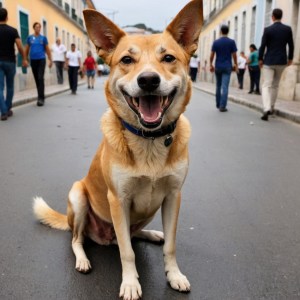
Página de um Diário de um Cão Vadio…

Stray Dog

Just a silly little thing, with the corrections correctified.

Sexta-Feira 

Acordei cedo e vi o sol no horizonte como uma bola gigante. Quem me dera ter um ser humano que pudesse lançar aquela bola para eu ir buscar. 

Percorri o bairro a cheirar as notícias. Temos um novo vizinho e a cadela que mora perto da estação de comboios está grávida. 

Deparei-me com um velho amigo, Bolinha, um pastor alemão cujo dono lhe deu um nome pouco adequado, e nós ficámos na rua a conversar. O seu dono não quis parar, e queixou-se de nós ladrarmos, mas puxasse como puxasse a trela, continuámos com a nossa conversa.

A velha do apartamento no rés do chão forneceu uma tigela de ração. Ela tem 4 gatos, mas apesar disso, é simpática. Tratou-me de “bom rapazinho”.

Posted in English

Michel Thomas on Spotify

That’s it really, that’s the whole post: The Michel Thomas Method Portuguese course, which I’ve talked about before as an excellent place for newbies to start, is now available on Spotify premium, so if you have that, and you’ve never really attained lift-off with your portuguese, I can recommend it as a place to start.

Posted in English, Portuguese

Doing my homework online

Shamelessly just doing my homework on here because I am short of time and shorter of ideas: synonyms from a passage from “Casa do Beco das Sardinheiras”, whose author, Mário de Carvalho seems like someone who likes to use interesting words, making him a challenging read.

I’m going to go above and beyond and do everything that I don’t already know, or am a bit vague about. If the word has multiple meanings I’ll use the one i think is closest to the original meaning in the text.

(Update – Quite a few corrections…)

Farejar => Caçar pelo olfato

Precaver-se => Ter cuidado

Precatar => Acautelar

Gaiato => Miúdo

Tareco => Traste, objeto de pouco valor (e também pode ser um gato doméstico, informalmente)

Eriçado => Levantado, ouriçado

Patorra => Pata grande

Avantajar => Ultrapassar

Surdir => Emergir

Poiso => Esconderijo

Escanifobético => Esquisito

Lá ser é => Isso é verdade

Taludo => Robusto (Pode ser “gordo” também, mas no fundo da página 61, a mulher do chefe da família diz “lá que o Gigas está magrinho par o tamanho)

Alforria => Libertação

Amarrotar => Amachucar

Alvoroço => Agitação

Estraçalhado => Despedaçado

Fera => Criatura feroz

Medonho => Terrível

Algazarra => Tumulto

Arribar => Chegar

Agastar-se => Ficar irritado

Temo-la armada => Vamos ter problemas

Para Cascos de Rolha => Para um lugar afastadíssimo

Notívago => Noturno

Espavento => Assombrado

Prontos! => Combinado!

Quite => Desobrigado *

Lamúria => Lamento

Polícias de Giro => Polícias que andam a pé?**

Botar => Lançar para fora***

Amanhar-se => Adaptar-se

*interesting one, this. It’s plural in the passage: “quites” and I thought it was borrowed from English, like “we’ll call it quits”. It seems not. There must be some common ancestry there though, because it’s too specific to be a coincidence. It’s quite a hard one to come up with a synonym. I’ve gone with Desobrigado but we’re really looking at an “I have now scratched your back after you scratched mine and further backacratching is no longer required”

**Esta frase é poço usada e existe um “Grupamento de Intervenção Rápida Ostensiva” (GIRO) no Brasil mas acho que não tem nada a ver com isto.

*** Os significados desta palavra são muitos e fazem parte nesta canção humorística. “A bota a gente calça e a calça a gente bota” (TW: Brazilian Portuguese)

Posted in English

She’s Sending Me Confusing Stuff Again

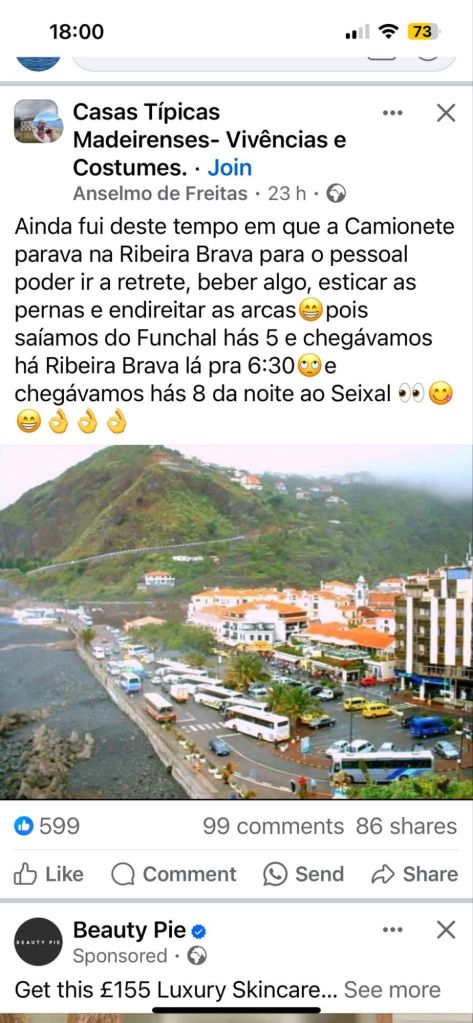
M’wife sending me snatches of Madeiran text to baffle me. I didn’t find it anything like as challenging as the last one though. What’s interesting about this is that they use “há” for “à” and “hás” for “às”. These kinds of mistakes are mentioned in a few guides to good portuguese aimed at native speakers but nobody bothers explaining them to learners. Why? Because they’re the kinds of mistakes you make if you learned the language by hearing it as a baby. Those of us who learned it from books might make a lot of mistakes but I don’t think we’d make this specific one because our brains absorbed these different words visually first. This sort of thing is super interesting to me.

Oh and just to be clear, I think this person knows it’s wrong and is writing in that way for effect, but it happens IRL too, I believe.