Posted in English, Portuguese

Witches! Part 4

Hoje, passamos pela região de Estremadura. Mas afinal, onde fica Estremadura? Porque já não existe na mapa. Estremadura é um território histórico que abrange os atuais zonas de Setúbal, Santarém e Lisboa, que (como a Lola Ramos afirmou) a sede da inquisição que perseguiu tanto as assim chamado “bruxas” quanto hereges, e acima de tudo Judeus.

A Bruxa da Arruda é uma das feiticeiras mais famosas nesta série, a lenda dela fornecendo não só uma atração turística mas também assunto de vários livros (um brasileiro e um português por exemplo) mas o que mais me surpreendeu é quão moderna é a história. A “bruxa”, Ana Loura era ativa durante os finais do século XIX e os primeiros anos do XX e praticou artes comuns a mulheres da sua profissão “curar pessoas e adivinhar coisas”. Deste modo de vida, a questão não está em causa mas ao longo dos anos mais lendas e mais boatos foram acrescentados á história verdadeira. Ela fez sair uma cobra da boca de um rapaz atormentado por doenças misteriosas, por exemplo.

Segundo um livro publicado em 1905, “A bruxa da Arruda, —A celebre bruxa costuma visitar a Ericeira por fins de setembro. É muito respeitada; dizem que é rica, a pobres não leva nada; apresenta-se com muitos ouros. Tem uma filha que já entende de moléstias. Em geral leva 300 reis pela consulta. Receita quasi sempre esfregas de aguardente e papas de pão de milho ralado. Mas isto varia em quantidade, tempo, calor, e no sítio do corpo. Ouvi também chamar-lhe a mulher do Casal das Neves, no termo da Arruda dos Vinhos. Nem precisa ver o doente, levam-lhe roupa do uso do enfermo, uma camisa ou camisola, e ela pelo cheiro conhece a moléstia e logo receita. Costuma pousar numa casa do norte da vila, e a sua chegada consta logo entre a pobre gente que a venera e teme.Já teve questões com padres e médicos, já foi aos tribunais, me disse alguém, e ficou sempre victoriosa!” (Pereira, G. A Villa da Ericeira citado nesta página)

Fico admirado por ouvir que uma bruxa andava ativa, abertamente, sob os olhos da igreja até no século XX!

English Translation

Today, we’re passing through the Estremadura region. But where exactly is Estremadura? Because it no longer exists on the map. Estremadura is a historical territory encompassing the current areas of Setúbal, Santarém, and Lisbon, which (as Lola Ramos stated) was the seat of the Inquisition that persecuted both so-called “witches” and heretics, and above all, Jews.

The Witch of Arruda is one of the most famous sorceresses in this series, her legend providing not only a tourist attraction but also the subject of several books (one Brazilian and one Portuguese, for example). But what surprised me most is how modern the story is. The “witch,” Ana Loura, was active during the late 19th century and early 20th century and practiced arts common to women of her profession: “healing people and divination.” That she chose this way of life is not disputed, but over the years more legends and rumours have been added to the true story. She made a snake come out of the mouth of a boy tormented by mysterious illnesses, for example.

According to a book published in 1905, “The Witch of Arruda—The famous witch usually visits Ericeira at the end of September. She is highly respected; they say she is rich, she takes nothing from the poor; she presents herself with many gold coins. She has a daughter who already understands illnesses. She generally charges 300 reis for a consultation. She almost always prescribes rubs of brandy and porridges of grated cornbread. But this varies in quantity, time, heat, and the location on the body. I also heard her called the woman of Casal das Neves, in the Arruda dos Vinhos area. She doesn’t even need to see the sick person; they bring her the sick person’s clothes, a shirt or sweater, and she recognizes the illness by the smell and immediately prescribes something. She usually stays in a house in the north of the village, and her arrival is immediately announced among the poor people who venerate and fear her. She has had disputes with priests and doctors, she has gone to court, someone told me, and she has always been victorious!” (Pereira, G. A Villa da Ericeira)

I am amazed to hear that a witch was active, openly, under the eyes of the church even in the 20th century!

Posted in English, Portuguese

Witches! Part 3

Ando a negligenciar este blogue e por isso a minha série sobre as bruxas de Portugal perdeu o seu dinamismo. As bruxas escaparam, e torna-se difícil seguir-lhes o rasto. Mas estou de volta com o meu nariz pronto para cheirar as feiticeiras todas. Hoje investigamos a aldeia de Proença-a-Nova na Beira.

Segundo a lenda, havia naquela zona uma viúva atraente que casou com um sapateiro. De vez em quando, nas noites de lua cheia, ela levava ao marido um chá quente, e ao beber, o marido adormeceu, caindo num sono profundo. O sapateiro ficou curioso e, uma noite dessas, não bebeu o chá. Após algum tempo, viu a sua esposa a ungir o corpo dela com ervas e óleo. Depois, abriu a janela e, cantando “Voa voa por cima de toda a folha”, começou a voar pelo ar. O marido, querendo segui-la, esfregou o seu corpo com o mesmo óleo e as mesmas ervas. Entoou as palavras mágicas mas não tinha poder igual à da esposa e acabou no chão, arranhado e machucado. Nunca voltou a falar daquela noite e passou a beber sempre o chá como ela mandou.  

English Version

I’ve been neglecting this blog, and that’s why my series on the witches of Portugal has lost its momentum. The witches have escaped, and it’s difficult to track them down. But I’m back with my nose ready to sniff out all the witches. Today we investigate the village of Proença-a-Nova in Beira.

According to legend, there was an attractive widow in that area who married a shoemaker. From time to time, on nights when the moon was full, she would bring her husband hot tea, and upon drinking it, he would fall into a deep sleep. The shoemaker became curious and, one night, only pretended to drink the tea. After some time, he saw his wife anointing her body with herbs and oil. So he opened the window and, chanting “Fly fly over every leaf,” began to fly through the air. The husband, wanting to follow her, rubbed his body with the same oil and herbs. He chanted the magic words but he didn’t have his wife’s power, so he ended up on the ground, scratched and bruised. He never spoke of that night again and from then on, always drank the tea as she had instructed.

Posted in Portuguese

Natais – Contos e Narrativas de João dos Reis Gomes

Desisti de ler este livro porque ler contos natalícios após o natal é deprimente, mas acho que irei voltar à carga em Dezembro de 2026, e já tenho suficiente do sabor da leitura para escrever uma opinião.

João Reis de Gomes era um madeirense que escreveu vários contos e retratos do natal na ilha. Alguns têm temas religiosos, outros exemplificam a tendência por parte dos leitores verem a festa como uma estação de nostalgia. 

And if that sounds interesting, you can get a copy here, or score an amazing antiquarian version here.

Posted in Portuguese

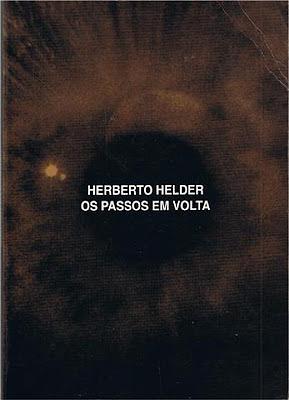
“Os Passos Em Volta” de Herberto Helder

Os Passod em Volta de Herberto Helder

Já escrevi um texto sobre um conto desta coleção há algum tempo, porque eu tive de ler o “teorema” como prate do curso sobre a cultura e a literatura portuguesa. O docente explicou o contexto da história (O protagonista é um dos assassinos de Inês de Castro). Adorei tanto que decidi ler os restantes histórias. Infelizmente, sem um professor para explicar, a experiência foi menos satisfatória… 

O autor é madeirense, e a minha esposa já teve o livro na estante mas quando o mencionei no Insta alguém me chamou de erudito porque tem a reputação de ser uma leitura difícil. Podes crer, mas ainda assim, estou muito contente por ter lido e entendido um dos contos!

Posted in English

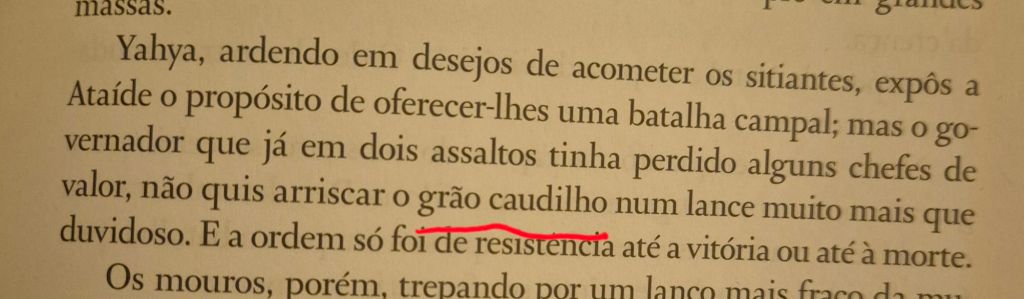
O Grão Caudilho

I was a briefly stumped by this. Grão means grain, normally, and caudilho looks familiar but looks like it ought to be something to do with a tail (cauda). It’s a set phrase though. Caudilho is actually descended from Spanish word meaning the chief, the head man, the dictator. So grão caudilho means… The grain chief? No, grão has a hidden secret meaning, if you scroll down a bit on its priberam page, it can be an adjective, where it’s just a form of “grande”. It’s the masculine form of Grã, as in Grã-Bretanha. So grão caudilho = the big boss, the big cheese.

Posted in English

Sete-Estalos and Surprising Suffixes

Reading “Natais – Contos e Narrativas” by João dos Reis Gomes and came across this phrase that seems to be unknown on the Web.

It’s just some sort of firecracker or cap that goes bang when you throw it on the ground though, according to my wife. Some sort of party snap or cap bomb, I suppose. Do they even make those any more? I haven’t seen anything like it for a while.

The book is quite challenging because it has a lot of unusual words and madeiran regionalisms. One of the new words that struck me was “indelével”.

Very obvious what that means but I don’t think I’ve come across it before and it’s surprising because I’m pretty sure I haven’t seen a word ending in “ével”. Of someone had asked me to guess how to say indelible I would have had it ending in “ível”, for sure.

Hm, I seem to be blogging in English again. Lazy.

Posted in Portuguese

There Goes Another One

Oh! What the hell? I wrote this days ago. Why is it still in my drafts folders. Go, little blog post! Fly! Fly to the inboxes of my subscribers!

Acabo de submeter o segundo “e-Folio” da unidade “Temas de Literatura Portuguesa” e o terceiro do curso. Desta vez, pedi ajuda da minha esposa como corretora de gramática antes de enviar o arquivo porque apesar de usar o FLiP, o Gtranslate e o Gmail* para desenroscar o texto, o e-Folio A ficou com 2 ou 3 errozinhos. Ela concordou apesar de ser exausta após um dia de trabalho porque é um anjo. Encontrou hum… quatro, acho eu.

O assunto desta vez foi desafiante. Tivemos de escolher um livro que contém intermedialidade, ou seja exemplos de influência ou de estrutura de uma outra arte, como por exemplo pintura, cinema ou música. Eu selecionei “A Visão das Plantas” de Djaimilia Pereira de Almeida. O livro tem como ponto de partida um texto histórico de 1923. Ligações com textos funcionam até certo ponto: rigorosamente são exemplos de “intertextualidade” porque a obra de arte em questão também é a literatura, mas há quem afirme que a intertextualidade é um subconjunto da intermedialidade. O segundo exemplo é um capítulo no qual as plantas no jardim olham o protagonista. Eu afirmei que esta cena fosse um exemplo do uso de um segundo ângulo de câmara com, logo a seguir, um “flashback”, ambos truques de realizadores de cinema.

Durante as últimas horas, perdi a minha confiança porque ambos os exemplos pareciam marginais… mas continuei ainda assim e fiz o melhor possível.

O docente do curso avisou-nos que houve uns estudantes que submeteram o e-folio A com evidência de ser escrito por IA. Duvido que eu estou entre os suspeitos, a não ser que existe um IA que especializa em escrever como um estrangeiro confuso. Ah ah!

*If you’re wondering why these three – Flip is a grammar checker for native speakers but a bit weirdly fussy, Gmail – at least the way I set it up – has a very good grammar and spelling checker of its own that is in some ways better than Flip but occasionally gets a bit confused about Brazilian vs Portuguese spelling and Gtranslate is mainly useful because by trying to translate your portuguese back into english you sometimes find mistakes you’ve made.

Posted in English

Say It In Portuguese

Oh! I must have accidentally unsubscribed to Say It In Portuguese’s email feed because I completely missed the notification about the last episode. I had been watching out for it because I’m in it, but I’ve just noticed it’s in my podcast app!

It’s this episode which deals with a song by Deolinda called Fado Toninho, and it was inspired by my attempt to grapple with the meaning of the song, in a post in February.

The podcast is definitely one you should be subscribed to if you are working toward B2 or over. It’s not the sort of thing you can listen to as a newbie, but if you already have decent skills, it gives you a wealth of knowledge about expressions and culture, all of which are essential for moving up to the next level. So, in other words, I can’t recommend it strongly enough! Cristina was my teacher for later C1 through to graduating C2, and she is very much a “friend of the blog”, but I would recommend SIIP even if that weren’t the case, because it’s excellent, it’s been around for ages and there’s nothing else like it, really.

Generally, the podcast picks an idiomatic expression and unpacks it for you, but in this one, we discuss the lyrics of a song, mainly trying to analyse the meaning of “Toninho” itself, but there are some expressions in the song too, and those are worth noticing. So if you don’t know the song already, I challenge thee: set aside some time to give the video and the podcast episode a listen and see how much you can learn in fifteen minutes.

Posted in Portuguese

Do Madeirenses Recognise Their “National Anthem”?

Claro que a música em questão não é o verdadeiro hino da Madeira, mas Deslocado foi a canção selecionada no último Festival Eurovisão de Canção e continua popular naquela ilha lindíssima porque fala da saudade de um nativo longe da sua terra. A minha esposa usou várias vezes no seu insta durante a nossa estadia lá em Novembro.

Aliás, o gajo de barba, com o vape, que finge não reconhecer a canção é mais um criador de conteúdos, o @reijuliano do Insta, e suponho que o encontro não foi por sorte.