Hm, I’m really scraping the bottom of the barrel with these neuter puns aren’t I? (previous examples here and here)
For anyone who was interested in the issue of well-meaning-but-annoying young activists trying to force a neuter gender into Portuguese grammar as a way of describing either individuals who self-describe as gender-neutral, or mixed groups of male and female people, here’s an example in a meme of someone trying to use it in a group situation.
I have to ask myself if it’s real or a joke. If it’s real then Marcelo probably should have said “convidades” to match the adjective to his openening noun. I’m with Mariana, Lucas, Karina and the rest in this one though I think. Its hard enough trying to remember that saucepans have gender without also having to remember that some people have one of 67 imaginary ones.
If, like me, you’re a fan of Portuguese graphic novels and comics, you might enjoy this “fio” (thread) in which a podcaster discusses some of his favourites
I went swimming yesterday for the first time since before the age of covid. Since a long time before, in fact. I recorded the workout in my fitness app. Yes, I’ve become one of those people! Anyway, like most things on my phone, it’s in Portuguese so I had to try and figure out what this lot meant. They’re not words I’ve ever needed before. So here’s the scoooooop:
Natação =swimming
Braçada =stroke. “estilo” and even “movimento” can be used instead.
Costas =backstroke
Bruços =breaststroke (aka “de peito”)
Mariposa =butterfly – also called “borboleta” and “golfinho”
Estilo Livre =crawl actually called “crawl” in Brasil and “crol” in portugal, and these seem to be more common names than “Estilo Livre” as far as I can see.
I’m on day 66 of my epic quest for C1 competence. I’ve finished Português Atual (which is one of the books reviewed on this page) and signed on for the Instituto Camões course. They are the people responsible for administering the exams so I feel like this is “straight from the horse’s mouth” as it were, but I wish they’d work on the website a bit more because all I’ve learned so far is how to say “page loading”.
Um dos meus projectos de estimação é tentar aprender mais sobre a história de Portugal. Deparei com este livro durante uma visita à uma livraria online e fiquei interessado porque confesso que raramente ouço falar do facto de que Portugal fez parte do conflito que devastou a Europa durante 4 anos mas fez, mesmo, e não só na Europa mas também em África onde os portugueses lutaram contra as alemães no sudoeste do país na fronteira de Angola e Namíbia por exemplo.
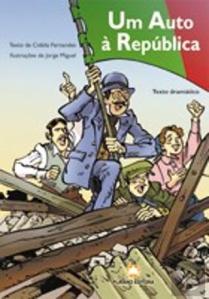
Quase achei que estava a ler uma sequela ao Auto À República porque os eventos neste livro decorreram logo depois do nascimento da República e tiveram raízes na mesma conferência em Berlim que deu à luz a grande época do colonialismo, a partilha de África que alimentou as rivalidades entre os impérios europeus. Felizmente, neste conflito, os nossos países lutaram lado a lado. “Com os Bretões marchar, marchar!”*
Os contos de heroísmo são narrados na forma duma série de bandas desenhadas e são histórias verídicas, claro. O livro tem prefácio do General Loureiro dos Santos cuja carreira abrangeu vários papéis importantes nas forças armada e no governo do país.
*This is a sort of joke based on the national anthem. I’ll be doing a post about that fairly soon.
Este livrinho é um texto dramático – um guião duma peça de teatro que podia ser apresentado numa escola enquanto parte de… Suponho… um programa educativo sobre a cidadania e o crescimento da democracia em Portugal.
Mas há uma peça dentro da peça. Ou seja as personagens são alunos e a sua professora pede-lhes apresentar uma peça de teatro. Então, eles assumem papéis de pessoas históricas tal como o Rei D. Carlos e o poeta Guerra Junqueiro, e representam a história daquela época, explicando o Mapa Cor-De-Rosa, o ultimato da Grã-Bretanha, e a perda de confiança no papel da monarquia.
O livro foi escrito há 12 anos. O que mais me chamou a atenção foi o seu modo como fala de África. Não só os protagonistas da peça-dentro-da-peça mas até os alunos e a sua professora (que vivia no tempo presente) falam do território disputado como se pertencesse ou a Portugal ou à Grã Bretanha e ninguém perguntou “Hum…e os africanos?”. Não há dúvida que nós ingleses sofremos da mesma cegueira de vez em quando… Acho que hoje em dia um professor de qualquer destes países seria mais cauteloso e lembraria que há mais de um lado – e até mais de dois – em cada história!
Quanto mais livros de José Carlos Fernandes leio, mais gosto do seu modo de criar mundos surrealistas. Nesta banda desenhada, introduzem-se seis cidades imaginárias, cada uma com a sua própria história. Embora seja BD, não é um exemplo típico do género. Os desenhos são arrepiantes e escuros, e existem poucos balões de diálogo, so de narração. É quase uma colecção de contos absurdos, cada um ilustrado com um estilo adequado ao seu assunto.
Para mim, o capítulo mais bem sucedido é o último que reconta a história da torre de babel. Adoro ficção que usa, como base, temas religiosos e este, como o Caim de José Saramago e o último capítulo do Bichos de Miquel Torga é um exemplo excelente, cheio de humor contundente.
I see the word corno a lot on social media in different contexts so I thought I’d dig into it a bit.
Me so corny
Ordinary, standard meanings are pretty straightforward:
A horn – ie, what a cow has on its head (you’ll also see “chifre” and “galho” especially in relation to a deer’s antlers, but the distinction between horns and antlers seems a little permeable…?)
By extension, various other things that are a bit like horns (antennae, tentacles, bone spurs and so on) will sometimes be referred to as cornos. You’ll also see “corno de abundância” or “corno de Amalteia” for cornucopia, or corno de sapato for shoehorn, for example.
A horn on a car (I’ve never seen this in the wild – buzina is the more usual word – but this definition exists in priberam).
One of the points at either end of a crescent moon.
A kind of plant – careful though, its not what we call corn (that’s milho), but a family of shrubs in the cornacea family.
But when I see it on social media, it usually means one of two things, depending on whether its singular or plural.
When it’s in the singular, it usually means cuckold, either in the original sense of a man whose wife is unfaithful, or the more modern one of someone who enjoys watching his wife be unfaithful. So when you see it online it’s often by the sort of person who would use the word “cuck” as an insult in English. They tend not to be the loveliest people, I’m afraid.
And in the plural, it usually means the face or head – so “um tiro nos cornos” =a bullet in the head, “levou uma pá nos cornos” = he got hit in the face with a shovel, and you’ll see various combinations of levar/ apanhar/ dar + nos cornos meaning various types of damage being inflicted above the neckline. In some cases it’s figurative – if someone loses a war or an argument or a football match, say.
There’s also “passado dos cornos”, gone in the head, meaning maluco or doido.
Espero que um cavalo te dê um coice nos cornos respectfully
So there you go. I hope you have enjoyed this dose of hardcore cornography. I feel like I should set homework for you. Try going in twitter now and searching for the expression “nos cornos”. Browse through a few examples and see if you can work out what the tweeter is trying to imply – whether they’re describing an actual physical injury or just some sort of defeat. Tell me your favourite example in the comments.
My plot to demoralise the Portuguese Republic by inflicting terrible puns on its citizens until they are unable to function continues apace. Here’s one I did yesterday – with a translation and explanation below.
Fui expulso da Sociedade Geográfica por ter insistido que o Terramoto de 1755 foi causado por moluscos marinhos. A partir daí, os sócios recusaram de falar comigo.
Foi um ostrasismo.
So the translation is:
I was expelled from the Geographical Society for insisting that the great earthquake of 1755 was caused by marine molluscs. From then on, the other members refused to speak to me.
It was an ostracism
It’s probably obvious *where* the pun is. Ostracism is the word that sticks out as unusual. So why is it meant to be funny? Ostracismo is supposed to be spelled with a C, not an S, as I’ve written it. Ostra means oyster and Sismo is another word for earthquake. So… Ostra Sismo.






 Luso
Luso 