Ao que parece, o testo refere-se a uma entrevista durante a qual Dom Aldtrump disse que “Portugal só se salva se em Santa Comba Dão* houver um fenómeno místico que faça saltar uma tampa que projecte “três Salazares” para limpar a “corrupção”, a “bandalheira” e os que “entraram com cadastro” no nosso país “
Don’t know why I chose this illustration for today’s blog? Click here to find out just how deep this Salazar rabbit-hole goes.
Hum, na boa chavalo retardado. Seja como for, deu-me uma ideia para uma piada. Espero que gostes.
Quantos Salazares são precisos para mudar uma lâmpada?
Três: um para subir na cadeira e mudar a lâmpada, um para segurar a cadeira enquanto está de pé nele, e a terceira para a segurar ainda mais firmemente.**
*Caso não saibas (eu também não sabia), Santa Comba Dão é o lugar de nascimento do único Salazar que já poluiu o país na realidade.
**And in case you don’t know what this is about, Salazar died a few days after falling from a chair and injuring himself. It’s still a pretty terrible joke, that he’d be so paranoid about having to stand on the chair he’d ask both his clones to hold it steady…. Oh well, never mind
I got a solid 3.4/4.0 in the essay about Dom Joâo II. That’s 85% – God, I’d have killed for marks like that in the degree courses I took in IT and computing. I made a lot of silly grammatical errors that I should have picked up in editing, but in spite of everything, he noted that I have shown that I had an original and distinctive take on the subject, and I feel quite pleased with that!
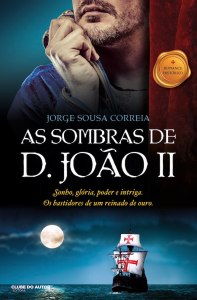
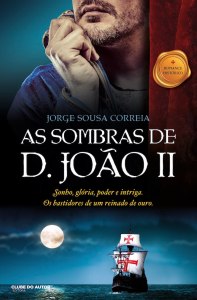
As Sombras de D. João II
Anyway, I need to start revising, so I am going to go through it in detail, fix the mistakes and think about what could be improved. Again, this is just for my own benefit, but if you’re following along, the challenge was to analyse the title and subtitle of this thriller and decide what it means, referring to what we know about the real (historic) and fictional (in legend, propaganda and media representations) person that is Dom João II. I’ll fix all the boring typos and comment on the mistakes that are interesting enough to say something about. I’m indebted to the teacher who took the time to correct the grammar but didn’t penalise me for it as I suspect he probably could have!
Introdução
Neste texto, vou tentar decifrar o significado do título e o subtítulo deste livro, mas antes de começar, é necessário perguntar “o significado para quem?” Raras vezes todos os leitores de um livro concordam sobre a interpretação de um livro. Então o nosso pensamento deve começar com o autor e a imagem que ele quer criar na mente do leitor. Mas a visão do autor não é isolada, separada da cultura e da sociedade onde vive. O seu retrato do rei tem de ser reconhecível para os leitores, ou seja, tem de ter alguma semelhança com a pessoa de João II promulgada* nas escolas e na média. Ao mesmo tempo, um autor de romances históricos sabe bem que os seus leitores querem mais do que factos, nus e crus. Se quisessem isso, teriam comprado alguma coisa da estante não-ficção. Assim podemos imaginar o autor a pensar nas várias narrativas ao longo dos anos. Não sendo historiador nem propagandista, o autor de ficção histórica é livre para escolher os aspetos da lenda que satisfazem os seus critérios.
Como o Título Chama a Atenção dos Leitores
Em primeiro lugar, a palavra “Sombras” pode ser interpretada de várias maneiras. Pode-se imaginar uma montanha ou um castelo a assombrar o território à sua volta por causa da sua imensidade. Uma sombra, então, é símbolo da imponente estatura da figura do rei nos olhos do povo. Por outro lado, a palavra sugere o lado obscuro de um governo e a sua rede de espiões. E em terceiro lugar, é fácil imaginar o rei como um protagonista assombrado pelas suas próprias dúvidas.
Destes três, a primeira explicação é a menos satisfatória. Um castelo tem uma sombra e mais nada, mas a palavra no título é plural. Quanto aos outros significados, o site da editora (Clube do Autor, 2026) fornece amplas provas de ambas. Talvez a única frase mais reveladora do seu assombramento e o do seu povo é “No meio de tudo isto, há um homem de lágrima fácil e íntimo cruel, um verdadeiro manancial de sentimentos por decifrar.”
Noutras palavras, ao** leitor está a ser prometido emoções turbulentas por parte de um rei que anteriormente teria parecido opaco e ainda por cima um enredo cheio de surpresas e que – quem sabe – é capaz de pôr em causa a nossa imagem do Príncipe Perfeito.
Como o Subtítulo Os*** Seduz Ainda Mais
À primeira vista, o subtítulo, “Sonho, glória, poder e intriga. Os bastidores de um reinado de ouro.” garante uma visão do rei que é mais tradicional e mais normativa: o rei levou a cabo uma onda de descobrimentos cruciais para o futuro do país e do continente europeu, trazendo glória, poder e riqueza para os participantes e para o trono. Na verdade, a legacia**** dele é altamente discutível, como vemos na obra da Mafalda Soares de Cunha que mostra exemplos de historiadores serem acusados, desde o século XVII de (entre outras coisas) “[…] omitir uma série de informações importantes, como é o caso do seu papel no progresso da gesta expansionista… (Cunha 1988 pp 651) mas isso não altera a reputação do rei na imaginação pública. O seu nome é quase sinónimo dos descobrimentos, é óbvio no “Mensagem” de Fernando Pessoa, a sua mitologia poética do passado de Portugal, onde o rei aparece não só no poema que tem o seu nome onde ele parece “uma alta serra”***** (Pessoa 1934 pp 44) (e, indubitavelmente, assombra o promontório onde está!) mas também em “O Mostrengo” o navegador leva o nome dele como um talismã contra os perigos do mar****** (Pessoa 1934 pp 57)
Aqui ao leme sou mais do que eu: Sou um Povo que quer o mar que é teu; E mais que o mostrengo, que me a alma teme E roda nas trevas do fim do mundo; Manda a vontade, que me ata ao leme, De El-Rei D. João Segundo!
Adriana Bebiano afirma que a precariedade do mundo atual (ela estava a escrever logo depois dos atentados de 2001) produzia um desejo de regressar ” a representações identitárias onde se observa um excesso de passado” (Bebiano, 2002 pp 534) e que, no caso de Portugal, esta tendência era caracterizada por “a quase omnipresença da gesta marítima” (ibid) como o navio na capa deste romance.
Para Jorge Sousa Correia, escrevendo nos anos vinte deste século, a confiança na autoridade está catastroficamente reduzida e andamos rodeados por teorias de conspiração. Daí, não é nada surpreendente que vejamos neste título e seu subtítulo, uma combinação da glória radiante do passado, salpicada de tons mais escuros, representando a sombra de dúvida no que diz respeito ao líder daquela época dourada*******.
*I should really have said divulgada or propalada. I was really going for something that indicated the image was being put out as a sort of “official version” of events but it turns out I don’t really know what promulgated means even in my own language!
**Over-literal translation here. In english we’d say “the reader is being promised something” but that doesn’t work in portuguese; you have to say something is being promised TO the reader
***This is meant to follow on from the previous heading: having caught the eye of his readers he is seducing them further, but with such a long gap in between it was confusing, so the marker was left scratching his head and wondering who the hell I’m on about
****Woah! This falso amigo really surprised me. I should have said “legado” which means legacy. Legacia refers to the office of a legate!
*****Part of the instructions were that you had to quote something from the mandatory readings and believe it or not there three words are me paying lip service to that rule, because this poem is one of the texts. The marker didn’t notice – perhaps understandably, given how titchy it was, and I think I lost points as a result. Well, it’s a fair cop!
******I’m really not happy with this whole section, highlighted in yellow. It seems like a real tangle of thoughts. The prof didn’t penalise me for it, but I wish I had taken half an hour to straighten it out a bit and order it better.
*******I think the conclusion here went down well. I was quite pleased with it. I was criticised for not going into the “sombras” as much as I could have by referring to the death of his son or or the aristocrats he had bumped off. To be fair, neither of those is really referenced in the blurb and I had the impression the writer wasn’t really focusing on them, but OK, fair enough, maybe I should have gone darker!
Bibliografia
Bebiano, Adriana (2002) A invenção da raiz. Representações da nação na ficção portuguesa e irlandesa contemporâneas em Ramalho, Maria Irene e Ribeiro, António Sousa Entre Ser e Estar (2002) (pp 503-537)
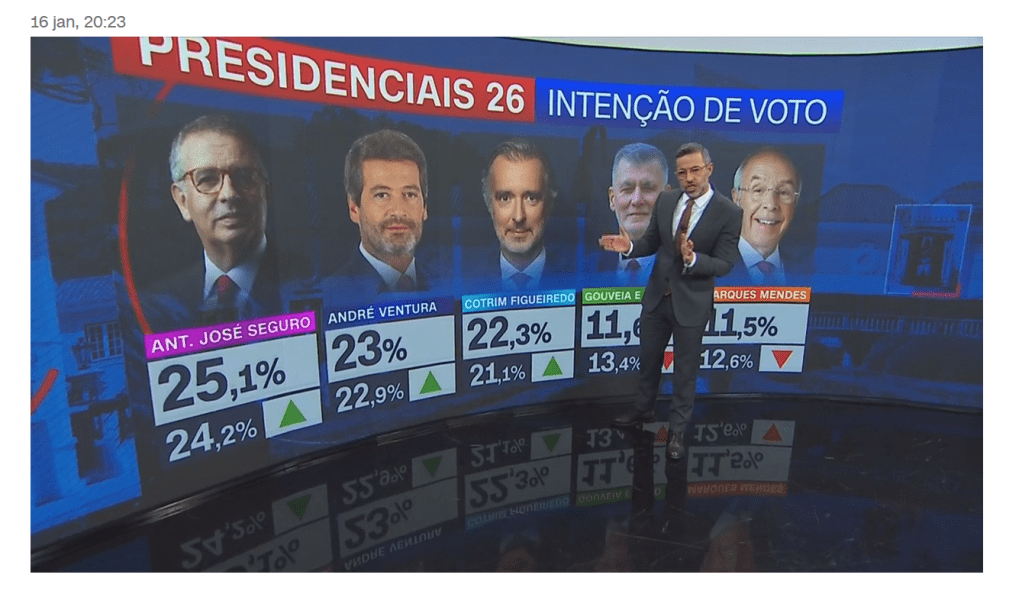
Caso já não tenhas ouvido, André Ventura, o Farage Lusitano acabou em segundo lugar mas o vencedor, António José Seguro, apesar de receber mais votos do que era previsto, não venceu por completo e os dois irão à segunda volta. Em termos da marcha do populismo, isto representa um terramoto político igual à que quase levou Marine Le Pen à presidência da França em 2022.
Durante os próximos dias os restantes candidatos escolherão apoiar um ou outro, segundo a sua consciência e um raciocínio de como o seu apoio afetará a votação. Por exemplo, Ventura está a desafiar o primeiro ministro, Luís Montenegro (cuja tenda fica no centro-direita do campo político) emprestar a sua voz à campanha dele, dizendo “socialismo mata”. Sendo assim, acho que, se o partido comunista decidisse apoiar Seguro (que é socialista) isso daria mais munições ao inimigo, portanto não é um simples questão de se juntarem contra o fascista.
Mas que sei eu? Não sou especialista nesta merda toda, mas espero que os cidadãos de Portugal escolhem com cuidado nesta próxima volta,
Não estou a prestar muita atenção às eleições presidenciais que decorrem hoje, no dia 18 de Janeiro. O atual presidente, Marcelo Rebelo de Sousa não é candidato mas há um leque de homens cinzentos e uma mulher cinzenta prestes a tomar as rédeas do estado, entre eles o javardo Andre Ventura, Henrique Gouveia e Melo, o almirante que dirigiu a resposta do país ao pandêmico e… este tipo genial que aparece dia após dia no meu insta a empolgar o povo com as suas ofertas de vinho canalizado e Ferraris para todos. Até o The Guardian (“o The” é certo, por mais estranho que pareça) deu espaço à campanha desse candidato. E já estava curioso sobre o homem, mas hoje de manhã este vídeo apareceu nas minhas notificações. Eh pá, o gajo também sabe cantar? E claro que sabe, porque antes de ser o próximo presidente da república (ok, probably not, but I can dream, can’t I?) era cantor, artista e membro de várias bandas. Aqui está no canal de David Antunes.
When your guest drops the P-bomb
Há algum tempo, comecei a seguir um outro Vieira, Tim Vieira que, naquela altura, era candidato mas retirou a sua candidatura em agosto, antes de ser formalizada junto do Tribunal Constitucional. O Tim foi um “tubarão” no sentido de ter sido membro do painel da versão portuguesa do “Shark Tank” (Dragon’s Den em Inglaterra), ou seja, é um empreendedor, mas na esfera política, O Vieira tubarão não chega* aos calcanhares do Vieira barbudo.
Quanto aos outros, estou-me nas tintas. Quem me dera que houvesse menos, porque não quero que os votos dos não fascistas dividam-se entre uma dezena de políticos profissionais, mas se não me engano haverá uma segunda votação, caso o resultado da primeira não seja conclusivo…. e ainda bem!
Depressingly close race that…
* e, se levares uma mensagem deste texto, espero que seja isto: “não chega”, ou mais precisamente, “não, chega”.
(Contém spoilers) Madeleine L’Engle é famosa principalmente por ter escrito o clássico de ficção científica A Wrinkle in Time (Um Atalho no Tempo), e confesso que não fazia ideia de quais, nem quantos, outros romances ela escreveu, mas ao procurar as obras inspiradas pela história das cartas portuguesas, deparei-me com este livro.
Trata-se de um romance histórico que sucede em três linhas temporais: a da Charlotte, uma norte-americana dos anos sessenta do século passado (quando o livro foi lançado), a da mesma Charlotte quando era nova, numa escola católica, e finalmente no século XVII, no convento onde viveu a “freira portuguesa”, Soror Mariana Alcoforado. A história da jovem Charlotte é um enredo menor, subordinado às outras duas.
É evidente que a autora fez uma pesquisa minuciosa antes de se pôr a escrever. Embora as cenas com Mariana sejam ficcionais, são baseadas na realidade: citações das cartas, os membros da família da freira, o estado social do seu amante, a guerra, e a polémica em torno da autoria das cartas, por exemplo. O elemento fictício ilumina os factos com uma narrativa credível do estado de espírito da Mariana e das outras freiras desde antes da chegada do jovem militar francês até à publicação das cartas e a sua subsequente desgraça. Existe um epílogo no qual a autora explica quais aspectos do texto são ficcionais.
Apreciei como a autora fez a transição de um fio narrativo para outro: muitas vezes acaba com uma protagonista a dizer ou a fazer alguma coisa, e retoma a história de uma outra, num momento no qual ela está a fazer ou a dizer algo muito semelhante, o que realça como as duas vidas correm em paralelo. A Charlotte também sente-se culpada e abandonada. No seu caso, o seu filho faleceu e a seguir o luto e o sofrimento dela e do seu marido* dá-se num rompimento no casamento deles. Ainda por cima, ela está grávida. A origem da angústia dela não é idêntica à da Mariana, mas o tamanho daquela angústia é igual.
Entretanto, na terceira linha temporal, o maior acontecimento na história da jovem Charlotte tem lugar na escola internato, quando uma amiga dela trai a sua amizade e, quando a Charlotte a escreve uma carta para lhe pedir a voltar a ser amiga dela, a já ex-amiga trai la ainda mais por ler a carta em voz alta às outra alunas no dormitório.
Ao longo do tempo, lendo as cartas e falando com os padres e os amigos que conheceu em Portugal, a Charlotte vem a ter cada vez mais simpatia pela condição da Mariana, e entende a sua situação de uma nova perspectiva de aceitação do seu próprio pecado e da sua própria angústia. Mas a aceitação leva-a a uma decisão surpreendente: ela volta ao marido. O marido da Charlotte é um bruto insuportável, na minha opinião, mas a autora retrata-o como um ser humano falho, em vez de uma caricatura, apesar do seu comportamento imperdoável com a Charlotte. A escolha, por parte da Mariana, para regressar a casa é um osso difícil a roer. Geralmente, não aconselharia alguém a se reunir com um homem daquele tipo, mas na situação na qual se encontram, sabendo que a perda de um filho é capaz de despedaçar uma pessoa, fosse quão decente que fosse, quase vejo como ela chega à sua decisão.
(I posted this on the university message board and the docente asked me how she had managed to work in the controversy around the authorship of the letters so I add the following by way of follow-up)
Não quis sugerir que a autora deixou a questão completamente aberta. Na linha temporal da Mariana, é evidente que ela escreveu as cartas e entrega-as para o soldado com ajuda de um amigo. O livro chega, sem aviso, da França, nas livrarias da cidade e em breve toda a gente sabe, e as freiras tornam-se alvo de piadas grosseiras, e como podes imaginar isso tudo cria muito transtorno e raiva no convento.
Mas ela usa diálogos entre as personagens na narrativa que tem lugar no século XX para elaborar certas coisas sobre o que nós sabemos, ou não sabemos, sobre as cartas, nos dias que correm. Por exemplo, perto do final do livro (os parágrafos da versão Kobo nem sempre correspondem aos de um livro de papel mas acho que há de ser 20-30 páginas antes do fim) encontramos a seguinte exposição escondida numa conversa entre a Charlotte e Dr Ferreira:
She picked up the letters. He looked at them, raising his shaggy brows. “You must understand, Charlotte that it is perfectly possible that these letters are a fraud.” “But what do you think?” Charlotte asked. “Do you think it all happened? There was a nun in the convent called Soror Mariana, wasn’t there?” “Yes. But there are many people who think that the name was stolen, that she has been maligned, that the religious vocation has been smirched.” “And you?” “There have always been people who cannot understand the meaning of vocation and therefore would like to see it belittled. As for Soror Mariana, yes, I happen to think it probably happened, but that is hunch and personal opinion, not authentication.” “Do you think the letters are shocking?” “If they are real, no. If they are a literary fraud, yes.” “Why?” “They aren’t good enough art. If they aren’t a true outcry, they were written purely for sensationalism. It is not that as a subject I find it shocking. I don’t feel that in art there is any subject that is taboo. It is how it is handled that matters. A study of nudes is a simple enough example. Some are art; others are nothing more than pornography. “
Tenho uma cunhada que se chama Natércia, e eu, que não tenho noção, achei que era equivalente a Natasha, ou Natalie, mas há uns dias a minha esposa partilhou este vídeo do linguista Marco Neves. Ela disse-me que a mãe delas explicou a origem quando eram jovens mas eu não fazia ideia!
E eis o poema (ou pelo menos um poema, talvez haja mais!)
Na metade do Céu subido ardia O claro, almo Pastor, quando deixavam O verde pasto as cabras, e buscavam A frescura suave da água fria.
Com a folha das árvores, sombria, Do raio ardente as aves se amparavam; O módulo cantar, de que cessavam, Só nas roucas cigarras se sentia.
Quando Liso Pastor, num campo verde, Natércia, crua Ninfa, só buscava Com mil suspiros tristes que derrama.
Porque te vás de quem por ti se perde, Para quem pouco te ama? (suspirava) E o eco lhe responde: Pouco te ama.
O que mais me chamou a atenção neste vídeo é que o meu irmão, sempre que envia cartas natalícias à minha esposa escreve o nome dela “Caterina” e eu digo “ó rapaz” (é mais novo do que eu: um menino com 51 anos) “ó rapaz, escreve-se…”
“Colin, why are you ranting in portuguese” retorque ele
“Oh sorry” digo “I mean it’s spelled C-A-T-A-R-I-N-A, you silly sausage”
Mas já sabemos que o nome era escrito com “E” antigamente, portanto ainda que ele erre, erra com o grande Camões, em vez de ser certinho com o seu irmão mais velho.
Escrevi um texto sobre Ju Jitsu Brasileiro há algum tempo mas mais recentemente ouvi falar de uma arte marcial portuguesa chamado Jogo do Pau. O meu primeiro encontro veio na forma deste vídeo louco. Pelos vistos o jogo é divertido e energético. Não negar as suas competências ainda que o efeito é ligeiramente cómico. Até consigo imaginar um grupo destes senhores a vencer uma banda de homens armados de espada, com sorte e disciplina, mas duvido que os mesmos seriam capazes de defender a aldeia se os americanos chegassem em helicópteros para raptar o presidente da câmara municipal.
O jogo de pau é igualzinho às artes marciais mais famosas no sentido de ter sido desenvolvido para defender contra um inimigo armado quando os portugueses não tivessem armas próprias, ou por falta de dinheiro ou porque tinha sido desarmados pelo atacador. Hoje em dia existem poucos praticantes mas deparei-me com este vídeo no qual um mestre da arte fala da sua missão revivificar o jogo do pau e reintroduzi-la ao povo como parte do seu património.
In no particular order and with no particular theme – I am just so addicted to blogging that I can no longer just write thing in a notebook like a normal person!
Este poema trata-se de um resumo da missão imperialista durante o reinado do El-Rei Dom João II. O marinheiro ao leme é confrontado por um mostrengo que representa os perigos do mar, mas supera o seu próprio medo em nome do povo português e em nome d’El-Rei.
O mostrengo que está no fim do mar Na noite de breu ergueu-se a voar; [breu=pitch, a component of tar – so “pitch dark”] À roda da nau voou três vezes, Voou três vezes a chiar, E disse: «Quem é que ousou entrar Nas minhas cavernas que não desvendo, Meus tetos negros do fim do mundo?» [teto = AO spelling of tecto] E o homem do leme disse, tremendo: [leme = helm] «El-Rei D. João Segundo!»
«De quem são as velas onde me roço? De quem as quilhas que vejo e ouço?» [quilha = keel] Disse o mostrengo, e rodou três vezes, Três vezes rodou imundo e grosso, [imundo = filthy] «Quem vem poder o que só eu posso, Que moro onde nunca ninguém me visse E escorro os medos do mar sem fundo?» E o homem do leme tremeu, e disse: «El-Rei D. João Segundo!»
Três vezes do leme as mãos ergueu, Três vezes ao leme as reprendeu, E disse no fim de tremer três vezes: «Aqui ao leme sou mais do que eu: Sou um Povo que quer o mar que é teu; E mais que o mostrengo, que me a alma teme E roda nas trevas do fim do mundo; Manda a vontade, que me ata ao leme, De El-Rei D. João Segundo!»
Fernando Pessoa (1888-1935) In: Mensagem
D. João II e a construção do Estado Moderno. Mitos e perspectivas historiográficas
A professora explica como a nossa imagem do “Principe Perfeito” vai mudando ao longo do tempo. Em geral a sua carreira é associada com conflitos com outros políticos, principalmente da alta nobreza com objetivo da centralização de poder mas a sua figura é apropriada por diferentes correntes ideológicas.
Séculos XV-XVI
Chronica de el-rei D. João II (ca 1545) Garcia de Resende e Crónica de D. João II de Rui de Pina elogiam o rei e criaram uma imagem do defensor do povo e disciplinador dos nobres. Resende teve mais impacto devido às suas historias vívidas,
João de Barros (EM “Décadas na Asia”, 1552) e Damião de Góis (Crónica do Principe D. João, 1567) criticam Pina por omissões e tentam reescrever a narrativa, sobretudo sobre o seu papel na expansão e a justiça da condenação dos Bragança e Viseu. Regra geral, apoiantes dos nobres tendam a opor-se à mitologia
Séculos XVII–XVIII
Durante a dominação filipina (ou seja o reinado da monarquia castelhana) e a Restauração a figura de D. João II é usada para discutir o poder régio, a justiça e o absolutismo. D. Francisco Manuel de Melo e D. Agostinho Manuel de Vasconcelos) criticam a crueldade e precipitação dos seus atos em poder. Pedro Barbos Homem anda ainda mais longe, transformando o rei em modelo de anti-Maquiavel.
Com a chegada da dinastia Brigantina (ou seja os Braganças) o papel da monarqia
Século XIX
É no século XIX que nasce a imagem que domina os manuais escolares.
Alexandre Herculano culpa Dom João II por ter dado início á idade de absolutismo que levaria o país à decadência, abolindo a “idade medieval livre”. Ainda por cima, a lei das jurisdições foi, na opinião de Herculano, o ato que levou a cabo a destruição da liberdade pessoal Veja Cartas 4 e 5 em “Opúsculos”
Rebelo da Silva e Pinheiro Chagas reforçam a ideia da centralização ser uma mudança histórico de consolidação e racionalização de poder
Oliveira Martins retrata-o como modelo de cesarismo necessário para revivificar a força do país
Século XX
Os integralistas, seguindo o pensamento de Oliveira Martins, veem o rei como uma figura capaz de exercer poder sem restringir os direitos indivíduos, minimizam os efeitos da centralização. A divisa “Pola ley e pola grey” torna-se bandeira ideológica.
O Estado Novo, por seu turno, prefere figuras militares e fundadores como Dom Afonso Henriques. Reis que mandaram degolados nobres não serviram os seus objetivos ideológicos.
Historiografia moderna tenda a valorizar a narrativa da centralização mas o crescente poder régio não eliminar o regional, aconteceu apenas uma redefiniçao das limites do poder da monarquia face ao poder senhorial mas ao que parece a polémica não está a desaparecer.
O PRÍNCIPE PERFEITO – Miguel Torga
Um Príncipe Perfeito em Portugal, Terra da imperfeição! Que excessivo perdão Pode ter quem é rei! Na bainha do tempo, até o punhal É uma arma letal! Assim nela coubesse a alma que sujei… Perfeito, eu! Perfeito Um rei que desposava no seu leito O luto incestuoso da rainha! Perfeito, eu, que tinha Um herdeiro da esfera adivinhada, E o vi morrer, humano, Com asas de exaurido pelicano, Às portas da aventura começada! Perfeito, eu! Perfeito Quem viu agonizar dentro do peito A grandeza da vida e quanto fez por ela! Incapaz, a cobarde caravela Que mandei ao seu último destino, Desatado o nó cego, masculino, Que no sonho enlaçava A soberba cintura de Castela, -Que perfeição no mundo me ficava? Pensei, lutei, matei – fiz quanto pude, Mas em vão. A quem Deus não ajude, Tudo são índias de desilusão.
Miguel Torga, “Poemas Ibéricos” in “Antologia Poética”, Coimbra, 1981, pp. 146-147.
I submitted the second essay of the second course the day before yesterday.
The challenge was to take the cover of this juicy historical thriller and try and analyse what currents of cultural understanding the writer was drawing on in his presentation of the novel.
It wasn’t a subject I felt very drawn to, I would rather have done the Randy Nun, but I managed OK. Well, I had some good ideas anyway. To be honest if I hasn’t been so tired I might have spent half an hour switching up the order of the lines in some of the paragraphs to make the argument flow better, but I think it’ll do OK.


 Luso
Luso 