Posted in Portuguese

Memórias Póstumas de Braz Ucas

Passei algum tempo durante o fim-de-semana no jardim da minha mãe, a arrancar ervas daninhas e a ouvir o audiolivro clássico brasileiro “Memórias Póstumas de Brás Cubas” mas achei-o difícil por causa do sotaque e porque os primeiros capítulos contêm montes de referências literárias e históricas. Enfim, decidi ouvir a versão inglês em paralelo. Alguns capítulos em português e depois os mesmos capítulos em inglês, para remendar os buracos no meu entendimento.

Infelizmente, a versão inglês é a versão grátis do Spotify e é horrível. Acho que foi gerado por “inteligência” artificial com reconhecimento ótico de caracteres. A voz soa humana mas vai lendo erros no texto, tipo “AU” em vez de “All” e assim por diante . De vez em quando, ouvimos um número de uma página, lido em voz alto ou um título numa outra língua qualquer. Acho que seria mais fácil ouvir a versão brasileira sem batota!

O erro que mais me irrita é quando a voz artificial traduz um verbo com o pronome indefinido “se” (veja este blogue como referência dos usos de se em situações impessoais). Seria praticamente impossível descrever precisamente de que modo é que a “inteligência” artificial falha, mas basta dizer que é uma desgraça. Estou a pensar em comprar a versão do Audible, traduzida pela estimada Margaret Jull Costa e lida por um ser humano qualquer. Custa sete libras mas tem de ser melhor.

Por acaso, tenho um trabalho de casa que foca na posição dos adjetivos (antes ou depois do substantivo) e o livro contém este ótimo exemplo:

Tanto quanto sei, o significado é “I’m not an author who has died but a dead man who has become an author”. Daí, (como se explica logo a seguir) a sua campa é o berço do seu estado atual

O livro está muito na moda nos dias que correm por causa de um vlog americano (veja vídeo infra) mas tem estado na minha TBR há meses e estou super-entusiasmado por me gabar de o ter lido em português. Toma, monoglotas*!

*I originally wrote Chupa (Suck!) instead of Toma. Chupa sounds incredibly rude in English, but appears not to be quite as rude in portuguese. Or rather it definitely can be rude in certain contexts, and it’s always fairly uncouth, but when people say “Chupa, Dinamarca” or whatever, after a football game they are just gloating, not making an obscene suggestion, at least according to Priberam.

interjeição

5. [Informal] Indica satisfação, geralmente em relação a uma derrota ou um revés de alguém. = TOMA

“Chupa”, in Dicionário Priberam da Língua Portuguesa [em linha], 2008-2024, https://dicionario.priberam.org/Chupa.

But I asked around and I think the feeling was that it was a bit too spicy and I should de-escalate the situation by using Toma instead. In both cases, they’re interjections. Toma doesn’t really change even if you’re taking to a whole group of people “Coloquei ananás nesta pizza. Toma, italianos!” but with Chupa it seems to be more of an open question whether you say “Chupa italianos” or “Chupem italianos” (ie, conjugate it as a plural imperative because you’re addressing multiple Italians). In the kinds of situations you are saying these types of things, the niceties of grammar are often among the first casualties.

Well, that was an interesting diversion!
Posted in English

A Commercial Break: Books and Where to Read Them

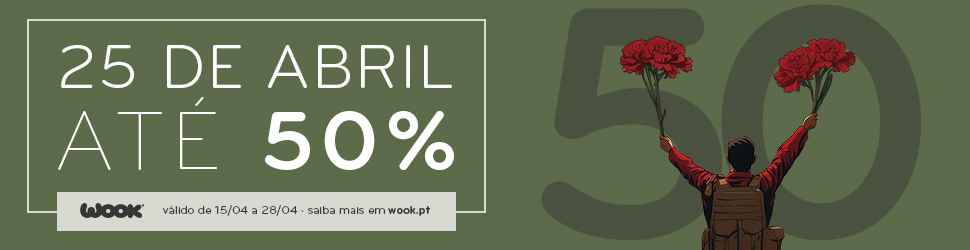
I mention books on here a lot. Wook have what looks like a pretty generous sale to celebrate the anniversary of the revolution so if you want to have someone fill a box with literature and have it shipped across the sea, this is probably a good way to do it.

25 de Abril Wook Sale
(affiliate link)

They say books can bring down dictatorships, but so can other inanimate objects, so if you need somewhere to read your book, you could always buy the most effective weapon against dictatorships Portugal has yet devised: a chair. They look great don’t they? I’m a bit intimidated by the lack of a price though. I’d like one but I feel like it might be one of those “If you have to ask how much it is, you can’t afford it” situations.

What do chairs have to do with dictatorships? Um… well, nothing really, I’m just being daft, but Salazar died in 1970 after being incapacitated for two years because he’d fallen out of a chair, so if you are looking for an excuse to buy a new chair, there’s your excuse. It’s to show your support for Democracy!

Oh my god, that’s two posts in a row in english. I’d better get my act together

Posted in English, Portuguese

Memorial do Convento de José Saramago – Opinião

Memorial do Convento
Memorial do Convento – whoever decided that ALL the Saramago books would be released with this boring cover format really needs to be put in the stocks and have cold pasteis de nata thrown at him until he learns the error of his ways

This book is pretty challenging, especially as an audiobook. I don’t know about you, but I need all my concentration for an audiobook, and it’s much more of a faff to go back and re-read anything you didn’t understand the first time, so i tend to find it takes me ages to plough through. Anyway, Wook have it on audio and they have a paper version too. It’s been translated into English as Baltasar and Blimunda and Foyles have that (I’m pretty sure they have the original too but I can’t find it on their site).

.

.

No dia em que acabei de ler “Uma Aventura nas Férias de Natal”, também ouvi a última hora-e-tal da obra-prima de José Saramago, o “Memorial do Convento”

Este livro é uma leitura mais desafiante do que o outro, mas ainda assim, não é nada complicado. É um romance histórico com elementos de Realismo Mágico. A história tem dois protagonistas: Baltasar Mateus, um soldado que lutou contra os espanhóis mas acabou por ficar maneta*, e Blimunda Jesus, uma mulher jovem que tem capacidades de perceção sobrenaturais durante períodos de jejum.

Tem lugar durante o século XVIII. O rei Dom João V faz uma promessa de construir um convento em Mafra após o nascimento do seu primeiro filho. O poder e a riqueza da coroa portuguesa estão no zénite naquela altura por causa dos lucros oriundos do Brasil, portanto o rei é capaz de apresentar a Deus um edifício magnífico. Assim a monarquia e a aristocracia desperdiçam os bens do Império sem pensar no povo.

Entretanto, os protagonistas participam na construção de uma máquina voadora, “A Passarola”. Na realidade, esta máquina é fictícia… Ou melhor, é meio-fictícia: o inventor, Padre Bartolomeu Lourenço de Gusmão existia mesmo e a ideia da Passarola tem raízes históricas, ainda que não chegasse a ser construída.

Noutras palavras, este livro apresenta uma história alternativa e fantástica do Convento de Mafra (também conhecido por “O Palácio Nacional de Mafra”), com personagens verdadeiras, mas sob o ponto de vista de várias pessoas imaginárias que vivem nas margens da história oficial. Está contado com humor e imaginação.

Este vídeo (cuja criadora é brasileira – cuidado!) explica muito bem o contexto histórico da romance na minha opinião.

*I quite like that, like the eskimos and snow, the portuguese have multiple words for the loss of a bodypart. This one is one-handed, and you might already know zarolho from the poem “Camões, poeta zarolho / fez versos à dona Inês / Via mais ele com um olho / do que tu com todos os três!”

Thanks again to Cristina of Say It In Portuguese for the help.

Posted in English

New Audiobooks

It looks like Wook have just put a new crop of Audiobooks on their website. I only noticed because I just went to look for a link to the book I’ve just finished and when I went to the “Literatura” page it was full of softcore erotica. José Saramago was sandwiched between “Sexo no Carro” and “Amarre-me”. Coitodo! Er… I mean Coitado!

Sadly they seem to be mostly Brazilian portuguese so be careful, they’ll damage your grammar as well as your eyesight.

I did spot a new European portuguese book though – or at least one I hadn’t noticed before: they’ve got “O Livro de Desassossego” now. Nice! I’m not sure I dare try and read it as an audiobook though… Maybe later!

Anyway I’ve got guests coming soon, but I’ve made a mental note to spend more time looking around to see if there s anything I fancy.

Posted in English

I Still Haven’t Read What I’m Wooking For

mw-fb post

Wook are having a sale today, which seems like a good opportunity to replenish my (admittedly already pretty damn full) To-Be-Read shelf. Why not take advantage? The banner on this page will get you there, and it’s an affiliate link so you’ll be helping me keep this site ad-free (well, unless you count this as an ad, I suppose…) at the same time.

If you’re looking for inspiration, the best books I’ve read this year are

Capitães da Areia (This one’s Brazilian but it’s worth making an exception for if you’re a strong reader and not worried about getting confused over dialects)

A Visão Das Plantas (Chilling stuff!)

Ideias Concretas Sobre Vagas (You can’t go wrong with Richard Araújo Pereira)

… And I’m also a big fan of graphic novels so you could maybe try Balada Para Sophie or whatever tickles your fancy!