The exam went OK. I had one of those classic questions where I didn’t know the answer but I reckon I can say just enough about it to hang a long digression on, and talk about things I do know. The other two questions were fine and I was able to give solid answers for both.
I’m really noticing how my language has deteriorated in terms of just everyday usage. I’m not getting as much talking practice in, and even though I’m reading a lot, my language was extremely stilted and extremely limited in the essays. I need to find some people to speak to.
Anyway, whole course done. It was quite an experience, and I’m really glad I put myself through it.
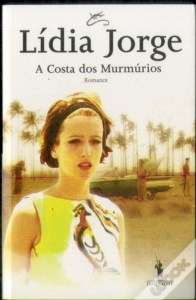
This is e-Fólio B, from Literatura e Cultura Portuguesas – Época Contemporânea, about A Costa Dos Murmúrios. The question is based on the short story which forms the introduction to the book. It’s called “Os Gafanhotos” (“The Locusts”) and the protagonist of the main story reads the short story, which seems to be describing a younger version of herself, living in the colonies, in a culture that very much looks down on the natives of the country. Part way through the story, a cloud of locusts comes and surrounds the gathering, and I think we’re meant to see the portuguese colonists themselves as a biblical plague of locusts laying waste to everything they settle on. The main book is all about Eva unravelling the rosy view of empire that is explained to Evita buy the other guests at the party in os Gafanhotos. Finally, on the last page, as the body is pulled from the sea, she talks about how the words she has heard were becoming isolated sounds, the sounds murmurs, as the last stage before silence, which speech is followed by:
…disse Eva Lopo, rindo. Devolvendo, anulando “Os Gafanhotos”
and the question asks us to Indique e comente um exemplo de uma passagem de “Os Gafanhotos” que Eva Lopo tenha “anulado”. To be honest, i really struggled with this essay. It came directly after a massive work deadline and my head just wasn’t in the game, so I freestyled it and was amazed when, once again, I got a surprisingly decent mark for the work!
Resposta
O desenvolvimento da protagonista do romance é inextricavelmente ligado à sua crescente desilusão com a versão da vida colonialista exemplificada n’Os Gafanhotos, e assim quase todos os acontecimentos levam a cabo a anulação do conto e da ingenuidade da Eva.
Mas para mim, talvez a frase mais agridoce do conto seja uma que vem logo na última página. “Todos, incluindo Evita, compreendiam que o excesso de harmonia, felicidade e beleza provoca o suicídio mais do que qualquer estado” (OG p38).
No conto, Evita está “a chorar baixinho” (OG p38) quando este pensamento surge no fluxo da consciência dela, e é por isso que a autora do livro (The docente corrected this to “o narrador” and said not to identify the two “de carne e osso”, but I don’t think I agree – this part of the story really feels like the lens has pulled back and we‘re getting addressed directly by the writer… but I could be wrong of course!) nos conta, no final do livro que “rindo”, ela anulou, de uma vez por todas, Os Gafanhotos. Evita é ingénua, Eva desiludida, mas paradoxalmente a última é que acaba rindo e a outra em lágrimas. Porque é que a reação dela é tão diferente? Talvez porque, sabendo mais do que a Evita sobre a realidade da sociedade, ela entende melhor. Ao resgatar as memórias perdidas na narrativa oficial, ela é curiosamente mais livre.
O caminho até este estado de entendimento é longo. A “rebelião de selvagens” é revelada como guerra sangrenta na qual o seu marido faz parte. O marido, que antigamente se interessava pela matemática (I wrote “engenharia” ‘ how weird, I could have sworn it was that!), deixou morrer os seus sonhos na perseguição dum novo: o heroísmo. No processo, tornou-se uma sombra do seu major, um bruto, ou seja, um selvagem. Entretanto, na cidade, os negros inocentes perdem as vidas por causa de umas garrafas de vinho envenenado de metanol.
Pensando nas contradições do passado, Eva Lopo escreve, no primeiro parágrafo do terceiro capítulo “Definitivamente, a verdade não é o real, ainda que gémeos, e n’Os Gafanhotos, só a verdade interessa. Por isso não teria sido útil introduzir o gesto do alferes com a faca na boca e o sangue a abrir e a alastrar como uma estranha flor” (p85). Noutras palavras, ela acha a narrativa d’Os Gafanhotos demasiado “unida e (…) infragmentada” (p85) (the correction here was that it is a general proposition and not specifically about Os Gafanhotos— OK, fair point, although in a question about os Gafanhotos, referencing a paragraph where she has said Os Gafanhoto is interested in the truth, and the truth is too unitary and unfragmented, I feel like I can extrapolate to say that, yes, she thinks this about OG too – especially when I only have one side of A4 to make my argument… But maybe my tendency to reject criticism is holding back my development… I have thought about it though, I’m not just sticking my fingers in my ears and going la-la-la) enquanto a realidade de traição, de veneno, de sonhos perdidos, de murmúrios abafados é “disperso e irrelevante”. Esta tema reaparece n’Os Memoráveis da mesma autora.
Afinal, a ironia da citação supra, sobre o suicídio e a beleza não é errada. A beleza da ilusão de um império resultou numa sociedade apodrecida e uma falta de respeito aos cidadãos negros. E um império que não sabe distinguir entre os inocentes e os rebeldes rapidamente faz dos inocentes mais rebeldes. Assim, o suicídio é do império.
Bibliografia
Jorge, Lídia (1988) “A Costa Dos Murmúrios” 16ª Edição, Dom Quixote 1995
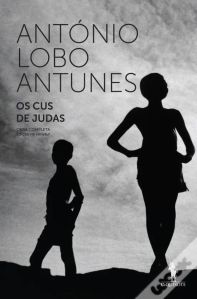
Breakdown of the first “e-Fólio”. I think I talked about this at the time didn’t I? (Searches) Ah, yeah, here it is! The book in question is Os Cus de Judas by António Lobo Antunes.
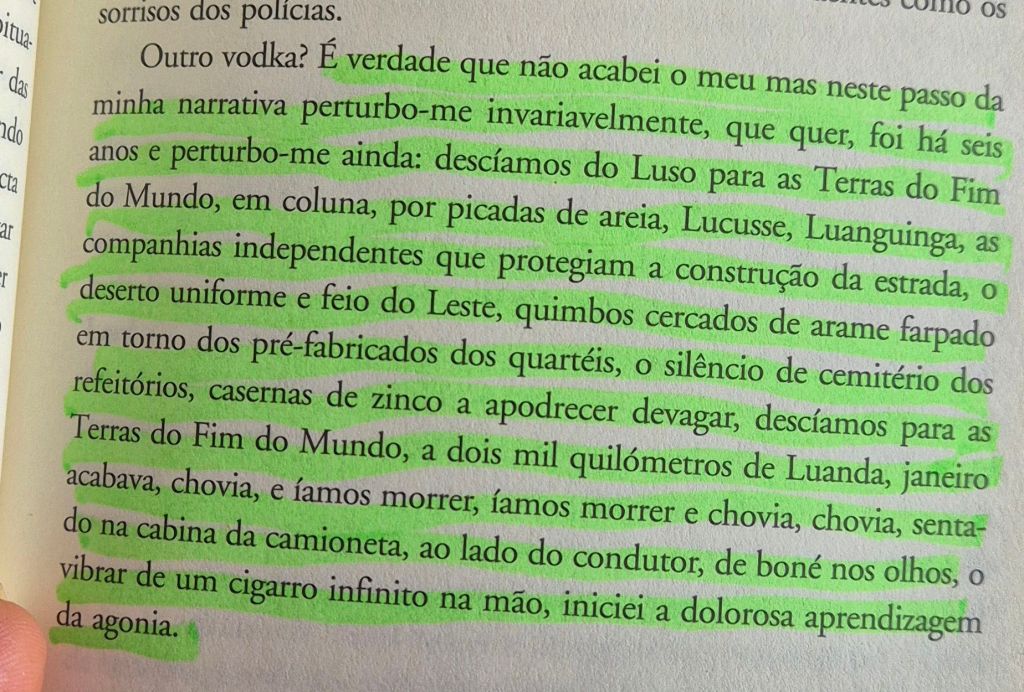
Citação Escolhida
Talvez que a guerra tenha ajudado a fazer de mim o que sou hoje e que intimamente recuso: um solteirão melancólico a quem se não telefona e cujo telefonema ninguém espera, tossindo de tempos a tempos para se imaginar acompanhado, e que a mulher-a-dias acabará por encontrar sentado na cadeira de baloiço em camisola interior, de boca aberta, roçando os dedos roxos no pêlo cor-de-novembro da alcatifa. (p60, Capítulo G, 37º edição, Dom Quixote, 2019)
Razões
Não é nada surpreendente que esta frase, que previa a morte do narrador me chamasse (I put “chamar-me-ia” which I guess is too literally anglophone and anyway I should have known the pronoun-sandwich would be wrong!) a atenção, uma vez que o autor realmente faleceu durante a primeira semana deste curso.
Mas para mim, isto sublinha uma coisa sobre a qual volto a pensar de vez em quando: as histórias paralelas do meu país, o Reino Unido, e de Portugal. Partilham uma herança gloriosa de descobrimentos e de vontade (por falaciosa que seja) de espalhar os benefícios da civilização aos quatro cantos do mundo, mas ao longo dos séculos acabaram com impérios dos quais estavam a perder o controle. O processo de aceitação da realidade e depois da libertação dos territórios foi difícil para os dois mas para Portugal foi ainda mais penoso.
Em 1971-3, enquanto o jovem Lobo Antunes era médico no exército português, o meu pai era médico no exército britânico na Irlanda do Norte. Naquela altura quase todo o império britânico tinha desaparecido, graças a vários movimentos independentistas, revoluções e acordos com governos estrangeiros, processo que se acelerou (I just wrote “acelerando…”) a partir de 1945 por causa do consenso do pós-guerra. Ao mesmo tempo, Portugal enfrentava revoluções nos seus territórios e guerras sangrentas que tinham demorado mais de uma década.
Acho que grande parte da diferença entre os dois países tem a ver com o governo. Uma ditadura não tem medo de ser derrotada nas próximas eleições, daí não se importar (OK, I don’t know what’s going on here. I wrote “não se importa” without the r. The docente corrected me but I can’t understand why. I mean, he must know but… what???) se milhares de soldados perderam as vidas. Ainda por cima, havia uma ideologia que dizia (not disse) “Portugal não é um país pequeno”. A identidade da (not do) metrópole era fortemente ligada à sua posse de territórios ultramarinos.
Lobo Antunes oferece críticas (Fazzini, 2014 p30) da ideologia fascista (entre outras coisas), no livro, através da narração do protagonista que se encontra num bar a contar a sua história de deshumanização, em frases cada vez mais violentas (e menos pontuadas) (I got my concordância wrong on both these adjectives – a sure sign that I was low on time for proofreading!), ao explicar como a guerra “talvez” o tenha mudado, Sim, talvez.
E afinal, foi a ditadura que meteu o país nesta loucura toda. A forma do governo importa. Evidentemente os militares sabiam desse problema e foi por isso que tiveram de libertar o seu próprio país em 1974, para possibilitar a sua liberdade e a dos africanos.
Bibliografia
Fazini, Luca (2014) “Guerra e testemunho no romance europeu contemporâneo” Faculdade de Letras da Universidade de Lisboa.
Olá! Será que alguém ainda está a ler este blogue? Espero que sim mas tenho de admitir que ando muito ocupado com todos os meus compromissos, não só no âmbito de trabalho, mas também no condomínio, a horta comunitária e o curso online, tenho pouco lazer e não me admiraria se todos vocês tivesse desistido de seguir!
O último exame do curso (Literatura e Cultura Portuguesas – Época Contemporânea; Universidade Aberta) estará neste terça-feira. Não fiz a leitura toda. Ups. Mas tenho de fazer um esforço nos próximos dias, porque se conseguir uma boa nota nisto, passarei o curso todo e voltarei a ter tempo livre.
O Retorno
Hoje, aprendi uma nova palavra: “Cronótopo”. Não é muito útil. Se entrares numa loja e dizeres “O Evaristo, tens cá Cronótopos?” O lojista dar-te-á um olhar perplexo. Trata-se de um conceito emprestado da matemática ao campo da teoria literária, e descreve o estado do tempo e do tempo interligados numa narrativa. No caso d’O Retorno de Dulce Maria Cardoso, O Hotel do Estoril funciona como cronótopo, no qual Rui e a sua família ficam presos ao chegar ao metrópole. Neste espaço liminar, os retornados tentam reconstruir as suas rotinas num tempo que não é passado nem futuro. “Insistimos em pormenores insignificantes porque já começamos a esquecer-nos” Frases repetidas (por exemplo “um quarto pode ser uma casa”), esta noção de ser fora do tempo é reforçado e, segunda a académica Ana Filipa Prata*, o romance sublinha a permanência da trauma com o hotel como metáfora da condição existencial do país na esteira da descolonização.
Tenho nove horas e meia para desenvolver o trabalho do primeiro e-Folio do curso atual. A pergunta é a seguinte:
Atente na última frase de cada um dos capítulos de” Os Cus de Judas” de Lobo Antunes. Escolha, de entre essas últimas frases, uma que lhe tenha especialmente agrado e explique as razões da sua escolha.
Mas também…
Nota: é obrigatório citar a frase escolhida.
Então? Porque é que este blogue é intitulado “O Trabalho Mais Fácil de Sempre”? Porque as normas do exercício estipulam “o e-Folio não deve ultrapassar 1 página A4”. E olha o tamanho das frases que Lobo Antunes escreveu.
São quase todas iguais. Depois de citar a frase escolhida, sobraria espaço o suficiente para 3 palavras.
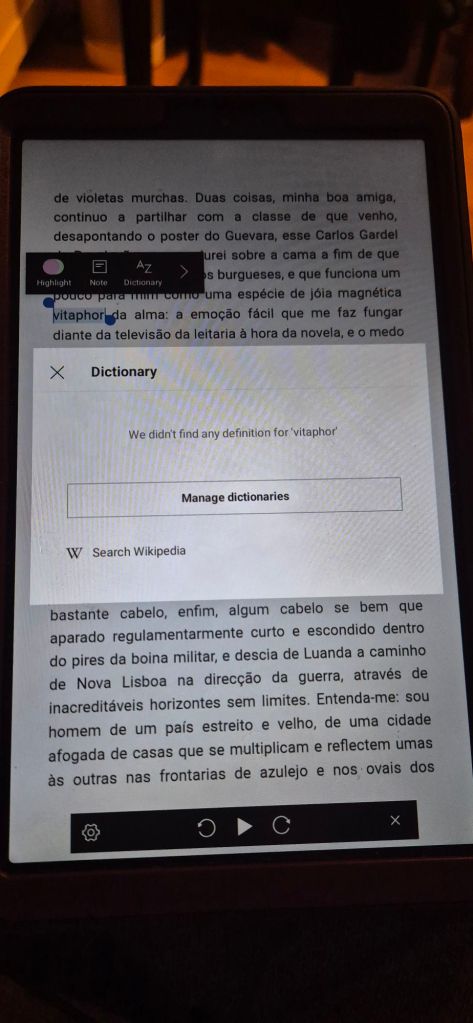
Struggling a bit with Os Cus de Judas. I should have finished it by now really, but it’s non-linear, dense, grammatically complicated and has very long sentences full of very fancy, unfamiliar words. On top of that, the cultural references fly right over my head, obviously, since he’s writing about a time when I was about 4 years old.
I’ve taken to reading it on a tablet which is easier since I can use the onboard dictionary and save a lot of tedious page flipping business. I can even have it read to me in a passable robot voice, which helps me sustain the momentum.
Of course not all the words are in its dictionary. Vitaphor isn’t capitalised but I believe it’s a kind of medicinal tonic drink… Maybe…
Got the result for the second of the exams. It arrived via a completely different route from the other, contributing to my impression that the Universidade Aberta’s systems are a bit more random than the Open University in Britain. Anyway, never mind. As for my own performance, well, it was pretty terrible. Worse than expected, even. 7/12, which is only just over the pass mark. Luckily, this one has 40% for continual evaluation though, and I did pretty well in that so the average was dragged up. 13.7/20 which is what? 65 +3.5 = 68.5%. That’s not bad really! If I’d had 5 more minutes for a quick grammar check Iºd have probably gone up 5 or 10%, I think, but it was not to be!
The final stage of the course is starting now: Literatura e Cultura Portuguesas – Época Contemporânea. It seems to be all about the colonial wars and the end of empire and there are three set books, two of which I have read already and one is on my TBR: respectively “O Retorno” (Dulce Maria Cardoso), “A Costa dos Murmúrios” (Lídia Jorge) and “Os Cus de Judas” (António Lobo Antunes). I’m excited to get started because I enjoyed the first two books but don’t remember them well, so a guided re-read of them would be great, and Os Cus de Judas comes highly recommended too!
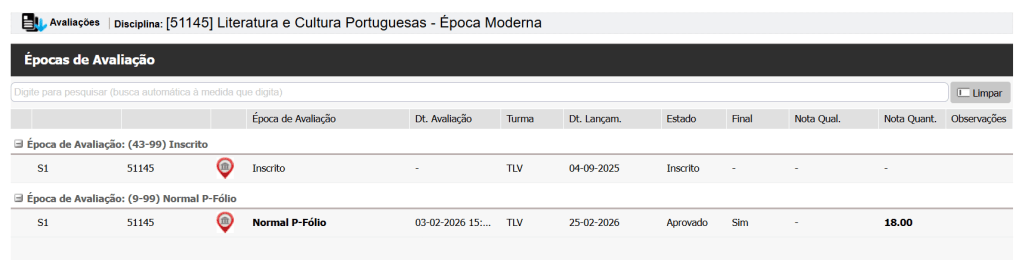
And it’s not exactly easy to find. Nobody told me I had passed or anything but according to the site I got “18.00”. OK, well fine but out of what? Not 18% I hope!
I had to go back to the course description in the end and it says that…
O Exame Final consiste numa única prova escrita, realizada na plataforma WISEFlow e classificada numa escala de 0 (zero) a 20 (vinte) valores.
So… I think I got 90%! Pretty pleased with that! The pass mark is only 50, and 90% is way beyond what I’ve got in any exam since O-Levels, so yeah, pretty pleased!
I’ve just finished the literature exam. I think I gave pretty solid answers, but I was much more pressed for time in this one than the last and crucially didn’t have time to go back and fix typos. And the browser they use for the exams doesn’t even have spellcheck or any of the other features I take for granted when writing here, say, so I imagine I will be losing some marks for my shit grammar.
Chewing over other things I probably could have done better, I discussed a narrative told to the narrator by a character she interviews and I probably should have slipped the word “intradiegético” in there somewhere. Likewise, when discussing other forms of art used as framing devices in Os Memoráveis (the fact that they are making a film, and the fact that they have a photograph with them which they are using the jog people’s memories) I think I explained the mechanism pretty well but I should have used the word “intermediality”. Just throwing away points, there.
Half way through, a parakeet came and landed on the bird feeder near where I’m sitting. It’s really only for little birds like robins and tits, so if I see a parakeet, a crow or a pigeon out there I usually chuck a pen, or whatever is to hand, at the window to scare them away. This time I only had my wallet so I threw that, realising, just as it left my hand, that the window was open in the direction i was throwing. Luckily, I hit the glass and disaster was averted. Imagine how embarrassing it would be to have to come on here and say “Well, I was failed for leaving the table for 3 minutes while I ran downstairs to retrieve my credit cards from the pavement after lobbing them at a ring-necked parakeet”!
Since the final exam of the literature module starts in an hour and a quarter, I might have left the revision a bit late. In truth, I haven’t even finished the third book. It took me ages to get into it although now I have, I am flying along but I haven’t reached the end. Oh well, never mind, I can finish it in my own good time
Conceitos
Intermedialidade
A intermedialidade é a possibilidade de descobrirmos interações entre discursos em mediáticos autónomos: livros, filmes, bandas desenhadas podem dialogar entre eles.
-> e intertextualidade é um sub-genero disto.
Transnarratividade
A transnarratividade é a disseminação da narratividade em práticas para além das narrativas formalmente constituídas como tais.
Transmedialidade
A transmedialidade trata-se de uma passagem de uma narrative de uma forma para outra. Por exemplo, uma adaptação de um livro no cinema.
Figuração
Processo de construir uma “figura” ou seja um “ser de papel” (Barthes, citado por Carlos Reis) o que não se restringe a uma aceção personalista ‘ veja por exemplo a Casa do Ramalhete d’Os Maias ou a Manderley no Rebecca. “Os Cinco Mil” é um exemplo disto
Liberalismo e romantismo – interlogados
Oitecentista
Extradiegetica « o narador
Intradiegetica – contado por uma personagem
Metadiegética – dito por uma pessoa em curso de uma narrativa contado por uma personagem!
Viagens na Minha Terra
1846 – entre 1789 e 1848! (uau! a serio?)
Joaninha – Ultrapassa o arquétipo da “Mulher Anjo” ou mulher siflide – “a menina dos rouxinois
Carlos – herói liberal de sangue quente, dividida entre a Georgiana e a Joaninha. “Rousseauniano” . Acaba gordo e um deputado.
Frei Dinis – Inflexível, consciente do seu grande pecadp
A terra como figura
“Fashionável”
Trio em Lá Menor
Os Memoráveis
“De todos os testemunhos, sem dúvida o mais emotivo aquele que é dado pela viúva de Charlie 8 “o rapaz dos tanques e dos chaimites”, aquele que pôs o relógio da história a andar, mas que o regime maltratou, negando-lhe uma pensão que não negou aos torcionários da pide.” here