Posted in English

Podding Along

I’ve mentioned the podcast Say It In Portuguese a few times, mainly because its creator, Cristina, coached me through C1 and C2, but also before that, because it’s just a very good podcast for more advanced learners who want to explore the huge range of expressions in Portuguese.

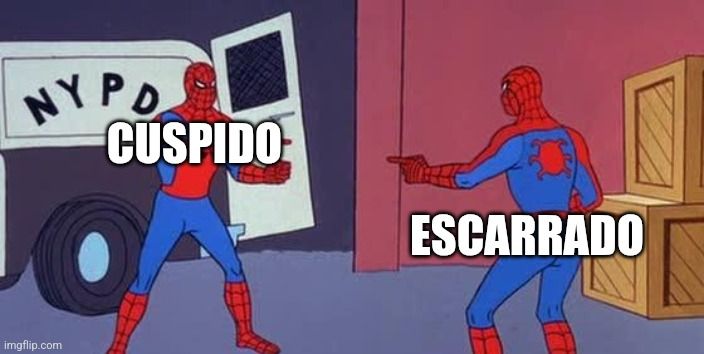
Anyway, I wrote a blog post recently about the expression “Cuspido e Escarrado” and joked that I was copying the style of the podcast, and… Long story short, it ended up being an episode! I adapted it for the format, and put a sound effect in place of the gif, and it sounds OK, though I say so myself. It’s here if you want to listen:

Say it in Portuguese: Cuspido e Escarrado

By the way, full disclosure, when I was looking around for the blog post that became the podcast, I found an older post where I’d mentioned the phrase earlier. It was only as a sidebar to a post discussing a different expression, “Cara de um, focinho do outro“. I’d completely forgotten about this. Having a terrible memory makes it hard to learn languages but it does have the advantage that I can be surprised by a new and interesting fact even after having written a blog post about it!

Anyway, in the earlier blog, I’d given a slightly different explanation: that it comes from. “esculpido em carrara” but the sources I looked at this time around described that origin as “less likely” which is why I didn’t mention it in the later one.

In truth, these sorts of etymological explanations are a lot of fun to speculate about but often they are just attempts by modern speakers to explain the inexplicable. Sometimes expressions are just weird and they don’t make sense, so it’s best to treat the explanations with caution!

Anyway, now that I’ve recorded a podcast about it, hopefully I’ll remember it this time, but don’t be surprised if I write another blog about the same expression next year and seem just as amazed by it then as I was last week!

Posted in Portuguese

Hawktuaguês

Lendo o subreddit r/português esta manhã, encontrei a frase “Cuspido e Escarrado” numa conversa sobre como dizer “they resemble one another” em português. A pessoa que proferiu a sugestão é brasileira mas acho que a frase existe em Portugal também. Já a conheci, mas não tinha pensado de onde vinha. A frase é muito esquisito, não é? Literalmente falando, “cuspido e escarrado” significa “expelido pela boca”, assim….

A cara do Burton, cuspida e escarrada… Literalmente!

… Mas não é ofensiva. Usa-se para descrever alguém que tem uma semelhança muito forte com um outro. Priberam dá um exemplo de um filho: “Ele é a cara do pai cuspida e escarrada”.

Ora bem, nós ingleses temos uma frase muito semelhante: “Spit and image”* (cuspo e imagem) que se usa igualmente “He’s the spit and image of his father”. É uma coincidência incrível que os dois idiomas tenham expressões tão semelhantes não é?

O mistério aprofunda-se ainda mais quando consideramos que “spit and image” é uma corrupção de “spirit and image” (alma e imagem). Ou seja, esta pessoa é muito parecido fisicamente e também tem um modo de estar igual ao da outra. Mas “cuspido” não soa como “alma”, portanto de onde vem esta expressão estranha?

Segundo o Professor Google, a expressão “surgiu do uso indevido da expressão esculpido e encarnado(aqui). Uau. Mas a sério, ua-mesmo-au. Ambas as línguas têm uma locução que nasceu de uma afirmação da semelhança física entre duas pessoas que mudou, ao longo do tempo, para uma expressão idiomática tendo a ver com expulsão de saliva. Isto é uma coincidência linguística que me deixa boquiaberta. E boquivazia**.

*ou, mais recentemente, “spitting image”, na sequência da série televisiva dos anos oitenta daquele nome (and if you’re a fan of that, you might enjoy Contra Informação, the RTP rip-off of the same idea)

** Espero que seja óbvio que isto é um trocadilho. Boquivazia não existe. É invenção minha.