Posted in English

When is a Mistake not a Mistake?

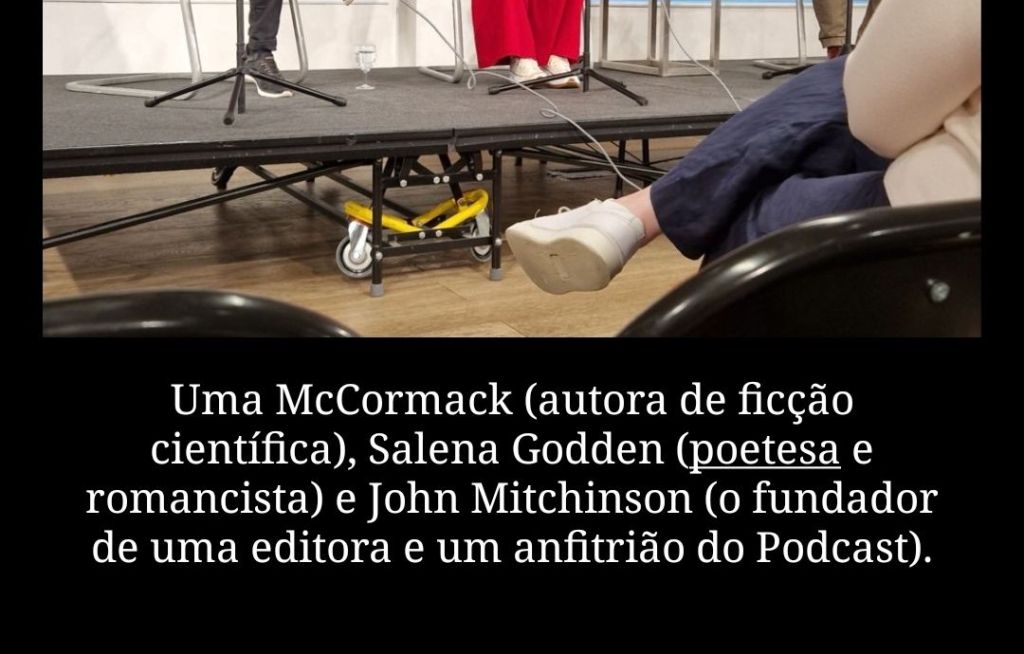
Like Alexander Fleming failing to keep his room tidy, William Webb Ellis getting away with handball or Christopher Columbus getting lost on the way to Japan, sometimes we fuck up, but the result turns out to be a kind of victory. Apparently I did this in yesterday’s post. I referred to Salena Godden as a “poetesa” thinking it was the feminine form of poet. It isn’t.

But it doesn’t matter. Why? Well, as you probably already know, poeta just means poet, and is masculine by default despite the -a ending. The equivalent of poetess is poetisa. In English almost nobody says poetess and it sounds a bit antiquated because we’re moving to a world where a job is a job and doesn’t need to change with the gender of the person performing it. Portuguese is a more gendered language generally, and if pens, TVs and hats can have gender, maybe it seems less obvious why gender has to be eliminated in words that refer to people. As a result, poetisa persists and is still used. But even though it is less of an endangered species that poetess is, don’t be surprised if you meet a poetisa who describes herself as uma poeta because why not?

But why is poetesa not a mistake then? I was baffled when I was told it actually sounded better than the right word, so I dug around, and I think it’s because of this. Esa is a suffix from latin which, when used as part of a feminine noun designates status and dignity. Well that’s good then. I don’t really know Salena Godden’s work but I bought a copy of her book Mrs Death Misses Death to read later and she signed it and I’m happy to have accidentally given her a respectful title!
Posted in Portuguese

Mudam-se os Tempos, Mudam-se as Vontades

Há um capítulo do Português em Foco que explica alguns pontos altos da literatura portuguesa. Um destes pontos altos é o Soneto. Esta forma de poesia é conhecida tanto em inglês quanto em português. Shakespeare escreveu muitos e neste exemplo o seu primo zarolho, Luís Vaz de Camões* também escreveu. Creio que tem mais influência em Portugal, Não tenho nenhuma perícia neste campo mas não acho que houvesse poetas famosos a escrever sonetos em Inglaterra no início do século XX. Em Portugal, sim**.

Um soneto consiste em 14 versos*** arranjadas em quatro estâncias – duas quadras e dois tercetos. Cada verso tem 14 decassílabos. Que raio é um decassílabo? Não faço a mínima ideia mas 14 deles é igual a dez sílabas. Neste exemplo, a rima segue um padrão: ABBA ABBA nas quadras e CDC DCD no tercetos (assinalado acores no transcrito infra), mas este padrão não é obrigatório. O poema “Rústica” de Florbela Espanca que memorizei em 2021 e que tentei, com o hubris dos ignorantes recitar ontem numa aula porque não tinha feito o TPC é um soneto mas corre ABAB ABAB CCD EED.

A forma poética é importante; o autor do livro afirma que “estamos perante um soneto perfeito” por causa do modo em que o poeta distribui os conteúdos pelas estrofes de maneira que cada estância tem o seu próprio tema.

O título do soneto é igual ao primeiro verso:

Mudam-se os Tempos, Mudam-se as Vontades (Times change, intentions change)

Mudam-se os tempos, mudam-se as vontades,
Muda-se o ser, muda-se a confiança:
Todo o mundo é composto de mudança,
Tomando sempre novas qualidades.

Continuamente vemos novidades,
Diferentes em tudo da esperança:
Do mal ficam as mágoas na lembrança,
E do bem (se algum houve) as saudades.

O tempo cobre o chão de verde manto,
Que já coberto foi de neve fria,
E em mim converte em choro o doce canto.

E afora este mudar-se cada dia,
Outra mudança faz de mor espanto,
Que não se muda já como soía.

*Obviously joking about their being cousins but this made me wonder if they were contemporaries. Sort of. They overlap by 16 years. Camões was about forty years old when Shakey was born.

**I don’t think I’ll be writing a history of anglo-lusitanian poetry anytime soon though, so definitely take this with a pinch of salt!

***OK, well here’s the first false friend for you: Verso doesn’t mean verse, it means a line of the poem.