Posted in English

Confusing Swears

This post is going to be very sweary, so if you don’t like that, maybe give it a miss.

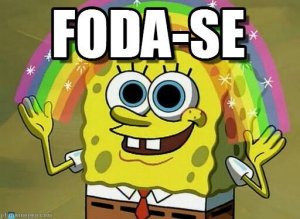
I’m watching this Netflix series, Rabo de Peixe and I’m hexed, vexed and perplexed by the weird contradictions in a line of dialogue from near the end of episode 5:

“O Universo não julga, não dá premios, é pura indiferença e acaso. Por isso se te calha a sorte de uma segunda oportunidade, caralhos me fodam, se não a agarras com unhas e dentes.”

Here’s how I translate it (keeping the commas intact)

“The universe doesn’t judge, it doesn’t give prizes, it’s pure indifference and randomness. So if you’re lucky enough to get a second chance, dicks fuck me, if you don’t grab it with your fingernails and teeth.”

It’s a bit of a mess as far as I can see. I think I get the gist of what he’s saying overall, but it’s that weird, sweary tree-word clause in the middle of the second sentence that doesn’t seem to fit: why does he switch from the second person to the first for that bit? It just sounds like the clause is an exclamation that has nothing to do with the wider sentence, which is why it’s surrounded by commas. But if you imagine the sentence without the clause, the remainder makes no sense at all.

The best explanation I’ve had is that it is not an exclamation at all, it’s a legit part of the sentence. So he’s saying “you” in the sense of “any person”, and he’s so sure that any random person would grab the second chance that he’s willing to call down all the fodando of all the caralhos if he’s wrong.

It’s a bit hmm, though. For a start, for that to be true, the comma before and after the clause would have to be a mistake. Ugh, it gives me a headache!
Posted in English

Aparrantly This Is Swearing

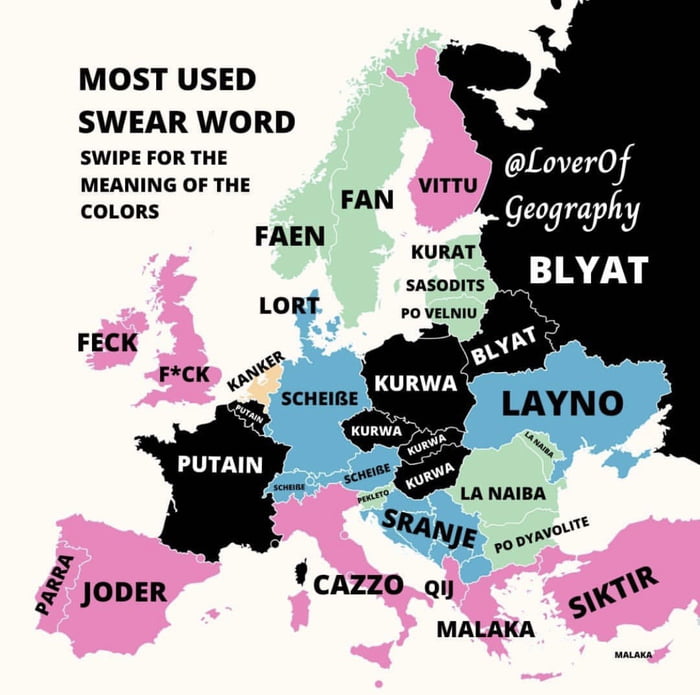
Portuguese twitter is very amused by this Instagram Post from “Lover of Geography”

For those not in the know, the actual palavrão here is “porra“, not “parra”.

Palavrão? Don’t I mean “asneira”? Palavrão is a swear word, whereas an asneira is any bad thing. You can “dizer asneiras” (say bad things) but you can also fazer asneiras (do bad things) so an asneira isn’t necessarily a swear word, it depends on context. The other relevant word is “calão” which just means slang.

By the way, why is Fuck the only one of these considered rude enough to have an asterisk? Or do they mean that English people actually say “Effasteriskseekay”? I wouldn’t put it past some people to be honest.

Posted in Portuguese

A Semiótica Do Palavrão

(Description of an article about swearing in Porto: there are some grammar and vocab pointers down at the bottom for anyone who needs them. The portuguese is uncorrected and might contain errors but hopefully not many! Thanks to Dani and “Iznogoud” of the r/WriteStreakPT subreddit for helping me tidy up a few errors in the original text)

Acabo de ler um artigo no site do jornal Público intitulado “A Semiótica do Palavrão“. O autor, Paulo Moura, defende que a língua do Porto é rica porque a gente de lá usa muitas expressões com palavrões. Estas expressões não se trata de insultos como seria noutras regiões, mas sim de uma filosofia da vida. Acho que ele está a brincar, ou pelo menos está a escrever numa maneira ligeira. Parece que ele tem muito carinho pelos cidadãos daquela cidade e a sua maneira de falar. Apesar das obscenidades, acha-os acolhedores e simpáticos.

Já ouvi falar desta tendência portuense de usar palavras feias. Tenho uma amiga lisboeta que considera os portuenses bárbaros por isso mesma! Fica escandalizada quando vê vídeos online ou programas televisivas de tripeiros e o seu calão.

Notes on the text.

I’ve referred to Porto residents in three different ways

  • “a gente de lá” (the people from there). Gente is a collective noun so it’s treated as a singular (“a gente… usa” instead of “a gente… usam”)
  • “portuenses” is just a standard adjective meaning “from Porto”
  • “tripeiros” means tripe sellers, and has a couple of origin stories, both dating back about 600 years into the early history of portuguese navigation. You can read more about the most common version here

If you’re reading the article, hopefullly you’ll realise that the missing words are all rude

  • c=cu in every case, meaning “arse”. There are ruder c words in Portuguese like “caralho” (cock), “cagar” (verb meaning to shit) or “cona” (cunt) but I don’t think any of these are the c in any of the expressions on the page
  • p=puta which is a word for a prostitute. You occasionally see the abbreviation pqp online, meaning “puta que pariu” or “puta que te pariu” which is the whore who gave birth to you
  • b= I’m less sure about this one. “Bico” possibly? That just means beak but has a lot of alternative meanings, one of which is “Prática sexual que consiste em estimular o pénis com a boca ou com a língua. = FELAÇÃO”

Checking the theory in the last post, dealing with gender of – ão nouns, just to make sure it isn’t leading me astray:

  • Palavrão (swear-word) – masc: fits the rule
  • Expressão (expression) – fem: fits the rule
  • Razão (reason) – fem: doesn’t fit the rule, but it’s listed as one of the exceptions in the article so that’s no surprise
  • Regiao (region) – fem: fits the rule
  • Cidadão (citizen) – masc: fits the rule
  • Calão (slang) – masc: fits the rule
  • Felação (fellatio) – fem: fits the rule