Posted in Portuguese

Madeira Day 3

No terceiro dia das nossas férias, acordei cedo (como sempre!) e fiz os meus planos para a manhã. Pesquisei oculistas perto daqui. Encontrei vários, e até há um nos arredores do* Funchal onde não é necessario marcar consulta. Refresquei o meu conhecimento das letras do alfabeto porque não quero ficar com um par de óculos forte demais por ter pronunciado “E” como “I” ou algo do género.

Fui de carro até ao centro comercial, fiz o exame e comprei uns óculos novos. Senti-me orgulhoso pelo facto do funcionário mal ter tentado falar inglês – apenas quando fiquei confuso sobre lentes de “graduação negativa” mas a minha confusão não era linguística mas sim matemática!

Os novos óculos chegarão no dia 25 ou 26, o que é mais rápido do que normal para quem tenha olhos lixados como os meus. Parece-me uma empresa eficiente: exames à visão grátis, óculos rápidos e… Isto é o mais incrível de tudo: a loja está aberta até às 23h todos os dias! Quem precisa de um exame à visão às 23h? Talvez exista muita gente naquela zona que costume ficar a beber na tasca até tarde e, a caminho de casa, bata num candeeiro de rua com o rosto, partindo os óculos.

Fiquei preso numa fnac que não me permitiu sair sem três livros. Que chatice!

Mais tarde, fomos ao poço das lesmas (Que nome bonito!) para nadar, e depois a um restaurante em São Vicente onde experimentei peixe-espada grelhado enquanto as mulheres partilharam uma espetada madeirense.

Updated with corrections from rubenmiq and dani. Thank you both!

*Most towns don’t take a direct article like this and they usually only do when they are named after some other geographical feature: so o Porto, o Rio and so on. A Funchal is an area planted with funchos – ie, fennel plants. Well well, the more you know!


Posted in Portuguese

Velocidade Madeirense 2 – Ligação Óculo

I originally published this a couple of days back but I’ve updated it with some really interesting corrections from Dani

Levada do Moinho

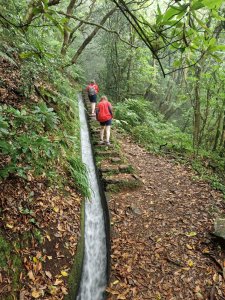
No segundo dia da estadia a minha família ficou na* cama até tarde mais uma vez. Quando acordaram, fomos ao topo da montanha para dar um passeio no PR7 (Percurso Recomendado Sete) “Levada do Moinho”. O tempo estava belo: fresco sem ser frio, húmido sem encharcar tudo e nebuloso sem esconder as vistas. Adorámos o nosso tempo que lá passámos.

Depois, voltámos a casa, para agarrarmos os fatos de banho e fomos à praia de Seixal onde a areia é preta, mas não por causa dum derramamento de crude**. E aí o dia saiu errado: para quem usa óculos dia após dia, é fácil esquecer-se de que estão na cara e… Para resumir uma longa história, perdi-os no Oceano Atlântico. Bolas. Chamei um táxi para ir buscar o par sobressalente (sou o único que sabe conduzir), o que (mais vale ser otimista neste cenário infeliz) me deu uma oportunidade de falar com um taxista madeirense (um homem interessante que tinha trabalhado na Venezuela durante muitos anos). Mas não há dúvida que esta parvoíce nos fez perder*** muito tempo.

Acho que vou tentar visitar um oculista amanhã se for possível (e se puderem fazer os óculos novos depressa) porque os sobressalentes são antigos e fazem-me doer os olhos.

Chega de autocompaixão! À noite, subimos montanha acima de carro mais uma vez e comprámos uns pastéis e pãezinhos numa padaria… Sei lá… Duzentos metros abaixo da lua. Passei tempo com a minha mulher de modo relaxado o que acontece com muito pouca frequência nos últimos tempos. Foi uma noite agradável, ainda que a Catarina estivesse um pouco desfocada.

* This one sounds odd too English ears since, if you translate it literally, it seems to imply they were both in the same bed. I originally write “em cama” which is too much of a Britishism. So, yes, “na cama” is a generic expression and applies no matter how many people you’re talking about, so you can say King Charles and Rishi Sunak were “na cama” without fear of causing a scandal.

** Yes, “crude”, on its own. This usage can be found on the RTP site here for example. It was corrected from “óleo cru” but I don’t think cru has exactly the same usage as crude. I can find examples of “óleo cru” being used but actually they seem all to be Brazilian, I think…? Here for example. And I think petróleo is probably the word I should have used… OK, I know petrol and crude oil are two different things, but if you Google “derramamento de crude site:.pt” you get more sites showing spillages of “petróleo” (this is the first result) usually with pictures showing black goo flowing out of the side of a ship (eg here – this is the second result in the Google search) , than you do for crude. The RTP page mentioned above is the third Google result, and only the first to use Crude in its headline. I dunno… Maybe journalists aren’t always using the right word. Both words exist, anyway. You’ll just have to work out from the context what specific substance is being scraped off the local marine wildlife.

*** I wrote “esta parvoice desperdiçou muito tempo” but things/actions don’t waste (desperdiçar) time, only people do. A situation like this can only cause the desperdício. So it made us waste/lose time, it didn’t waste it directly, if you see what I mean.

Posted in English

My Spex Is On Fire

Same, Velma, same.

I mentioned glasses in the last post and specifically the “ponteira”, which is the part that loops round the back of the ear. Like a lot of objects, even if you know what the thing itself is called, we don’t often learn the names of the parts. I’ve done bikes and hands before, but this seems like a good excuse to do the same for specs. Specs usually consist of a frame (armação) and lenses (lentes)

You can see a diagram of a pair of glasses and all the little bits and pieces on this (brazilian) optician’s Website, and the vocabulary breaks down like this:

  • Lente = lens
  • Aro = the front parts of the frame – the bit that actually holds the lenses. Other uses of this word, not specific to glasses include things like “rim”, “hoop” and “collar”
  • Haste = arm or spoke – the bit that hugs your face, basically
  • Armação – the whole of the frame, Aro, Haste and all
  • Ponteira = earpiece
  • Ponte = the bridge that links the two halves of the frame above the nose
  • Plaquetas = the plastic pads that sit on your nose
  • Charneira = hinge, aka “dobradiça”.
  • Mola = spring, might be included in the hinge to make it more flexible
  • Parafuso = screw
Posted in English, Portuguese

Óculos

I used this text to ask a question about a book I’m reading. It’s about the difference between “seu” and “dele” – which are both ways of expressing possession but they’re used slightly differently. Thanks to Butt Roidholds for the correction and to the assembled Reddit multitudes for the answers.

Será que alguém me* pode ajudar? Estou a ler um livro, no qual o protagonista fica obcecado com um músico que se chama Luís Stockman. Na página 91, vai a uma sala de concertos à espera de falar com o Stockman e tem no seu bolso os óculos dele (que foram perdidos num outro concerto e que o protagonista conseguira obter).

Descrevendo a aparência do Stockman o autor diz: “Reparou que tinha uns óculos novos, de armação mais grossa do que a dos seus (ou, no fundo, dos dele), e um cachecol preto em volta do pescoço.”

Custa-me compreender esta frase. Entendo todas as palavras, sem problema, mas o qual é o significado dos parênteses? A diferença entes “dos seus” e “dos dele” neste contexto?

*”que” is attractive so the pronoun has to go first

So I get the general point of “seu” (meaning his, her or its) and dele being a way of saying “of him”. The first one changes with the gender of the owned object (becoming sua for feminine objects), whereas the second changes with the gender of the owner, (becoming dela if it relates to a woman or a girl, say) so it can be useful for making an ambiguous sentence clearer. If a man and a womam go somewhere to get her in “seu carro”, whose car is it, but if its OK “o carro dela” Then you know its the woman’s car.

This one is a little weirder because there no gender problem to untangle but nonetheless the author is trying to be emphatic. He’s saying “He noticed he was wearing new glasses, the frames of which were thicker than his (or rather, of him) and a scarf around his neck.”

Opinion seems to be that it was just underlining the fact that he was referring to the original subject of the sentence – ie, Stockman, not the protagonist.

More about seu and dele on Ciberduvidas