So I was asked a question about something I said in the post about Linguee the other day. I said that I thought Google Translate (aka Gtranslate) was better than Deepl for certain things. Both are translation apps, but Deepl is usually thought of as better at European portuguese, so people will usually recommend it. That’s usually good advice: if you didn’t know any Portuguese and you wanted to translate something into European Portuguese you’re usually better off with Deepl.
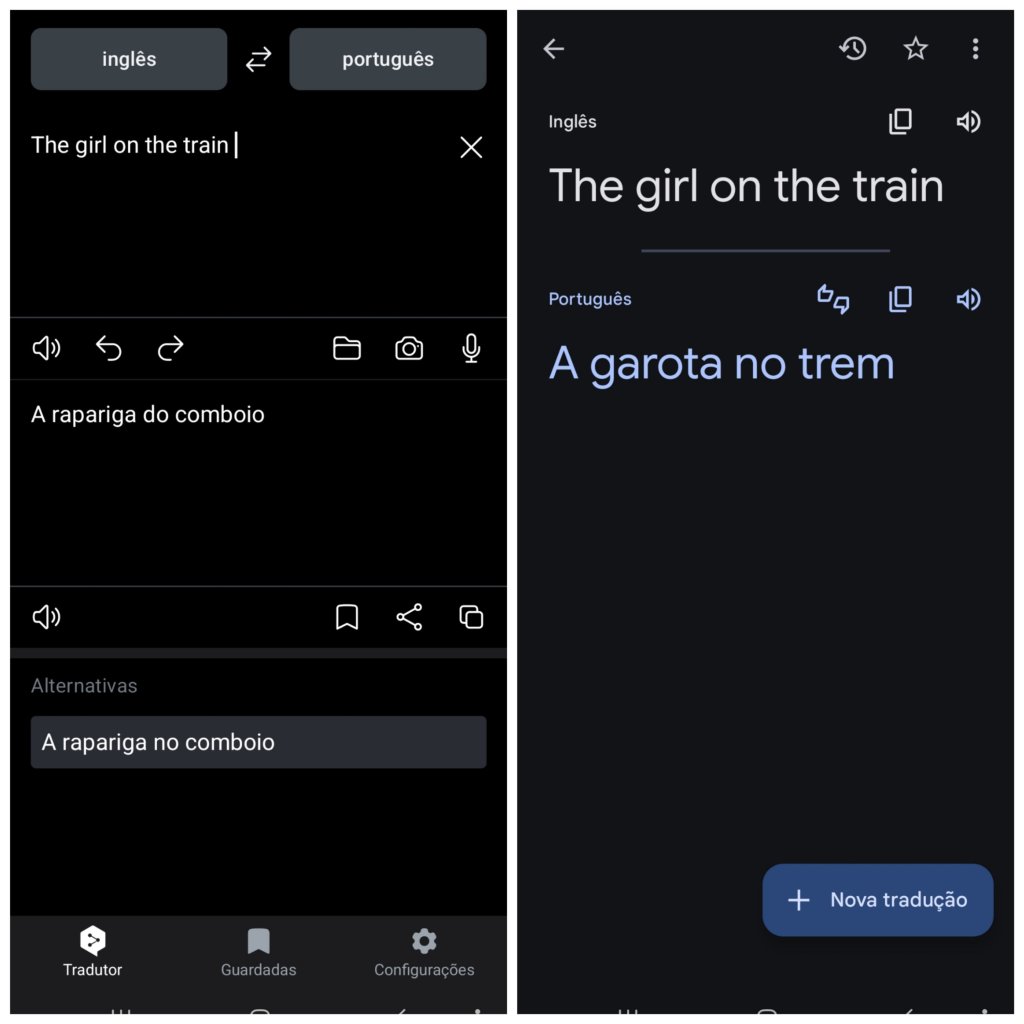
So why did I say Gtranslate was better? Because we’re language students, so I think we usually don’t want the app to do all the work for us. English-Portuguese translation isn’t something we need often. But what we do want is the opposite: we want it to check our work by translating it back into English because of it can understand it then that’s a pretty good indicator that we got it right.
So for example, if I’ve written “Este carro é muito carro”, what I want is for it to say “this car is very car”, so I know I’ve goofed; I’ve put an extra r in “caro”. If it translated it correctly as “this car is very expensive”, I wouldn’t notice my idiocy.
And so I thought Deepl would be less useful because it is AI and it’s cleverer, which means if you did something like this it would be more likely to guess what you meant and translate it correctly, hiding the error and lulling you into a false sense of security.
Líliana, (whose website The Talking Sardines caters for early stage learners around A1/A2), asked for an example so I tried a few. Want to see if I was right? Read on!
Let Battle Commence
OK, so let’s put both apps in the Thunderdome together and see which emerges victorious. Two apps enter, one app leaves. In each round, I have presented the translators with a sentence with a couple of minor errors. Remember, it’s a backwards competition. What I want is for it to give the wrong answer because that’s more useful than hiding the mistake.
In each case, Deepl on the left, Gtranslate on the right
“Gosto de escreve contas de fada”
Escreve should be an infinitive “escrever” and a fairy tale is a “conto de fado”, not a “conta de fado”

Result: tie! Each spotted one mistake and ignored the other.
Well, this is a surprise. Maybe I was too harsh on Deepl?
“Os caos ladram tudo a noite”
The word cão (Dog) has one of those weird plurals: cães. The word “caos” does exist but it means “chaos”. Oh and and obviously I’ve used “tudo” (everything) in place of “toda” (all).
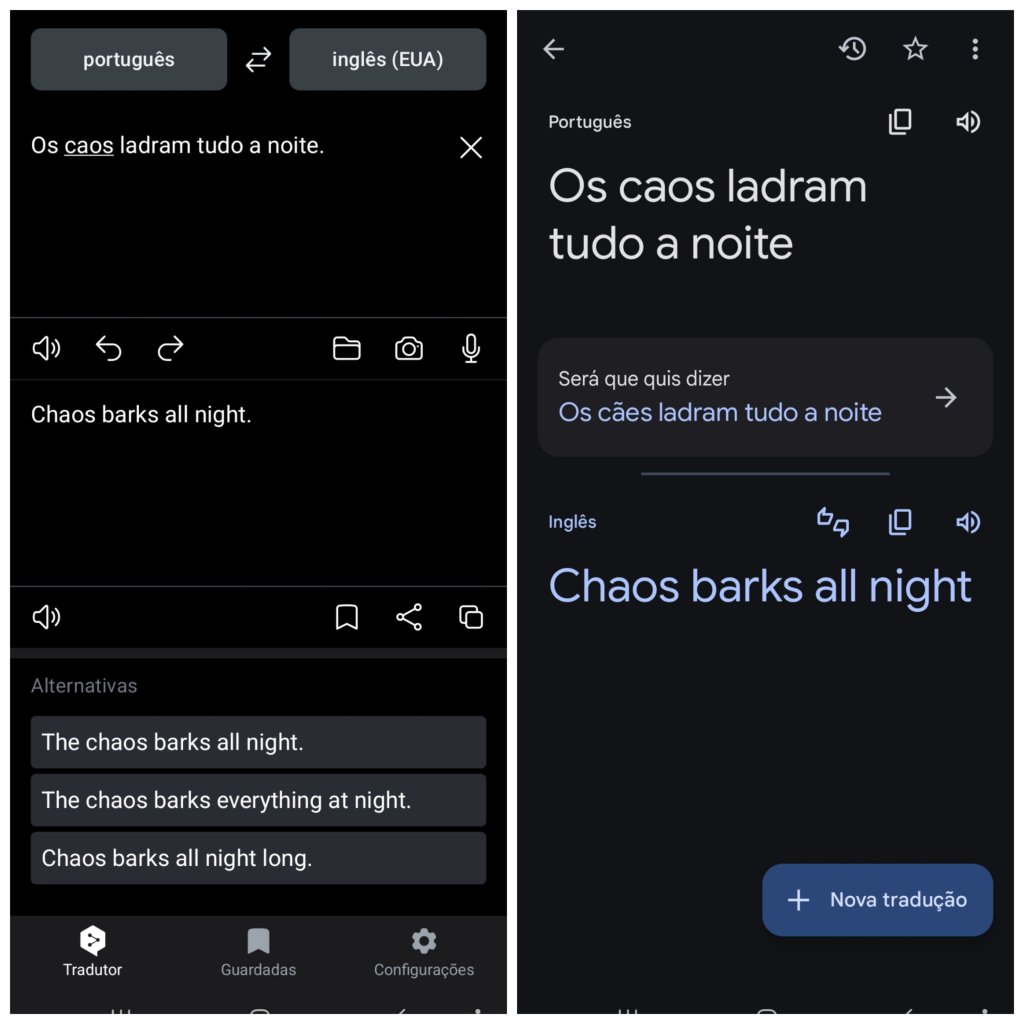
Result: tie! Both get one right, one wrong. Whether or not you want it to spoon feed the answer is a matter of taste so I don’t give Gtranslate extra points for that.
“Estou na quinda a trater dos porcos”
Quinta and tratar are both spelled wrong

Result: Gtranslate is victorious. Initially it loses marks for ostensibly ignoring the errors, but it scores top marks for prompting me to fix both, not just the first. Deepl only highlights one mistake.
“Estou na fazendo a elementar os gansos”
Fazenda is another word for farm (I think I’m right in saying it’s more specifically a larger, family owned farm), whereas fazendo is just the present participle of fazer. And the verb I’m looking for is “alimentar”.
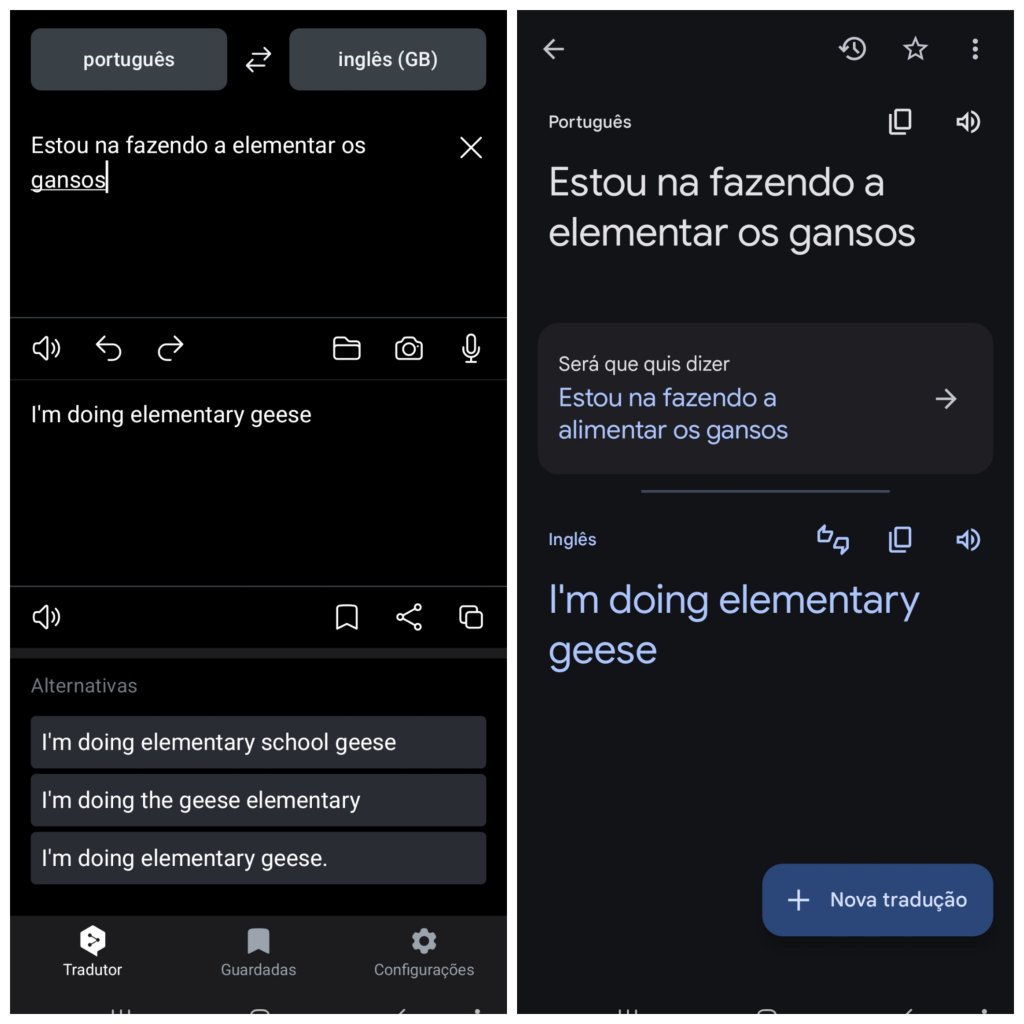
Result: tie! Both have done their job correctly, translating garbage into garbage. Whether or not you want the extra help Gtranslate gives you is a matter of taste.
“O gato está a cazar rattos”
Caçar and ratos are both spelled wrong.
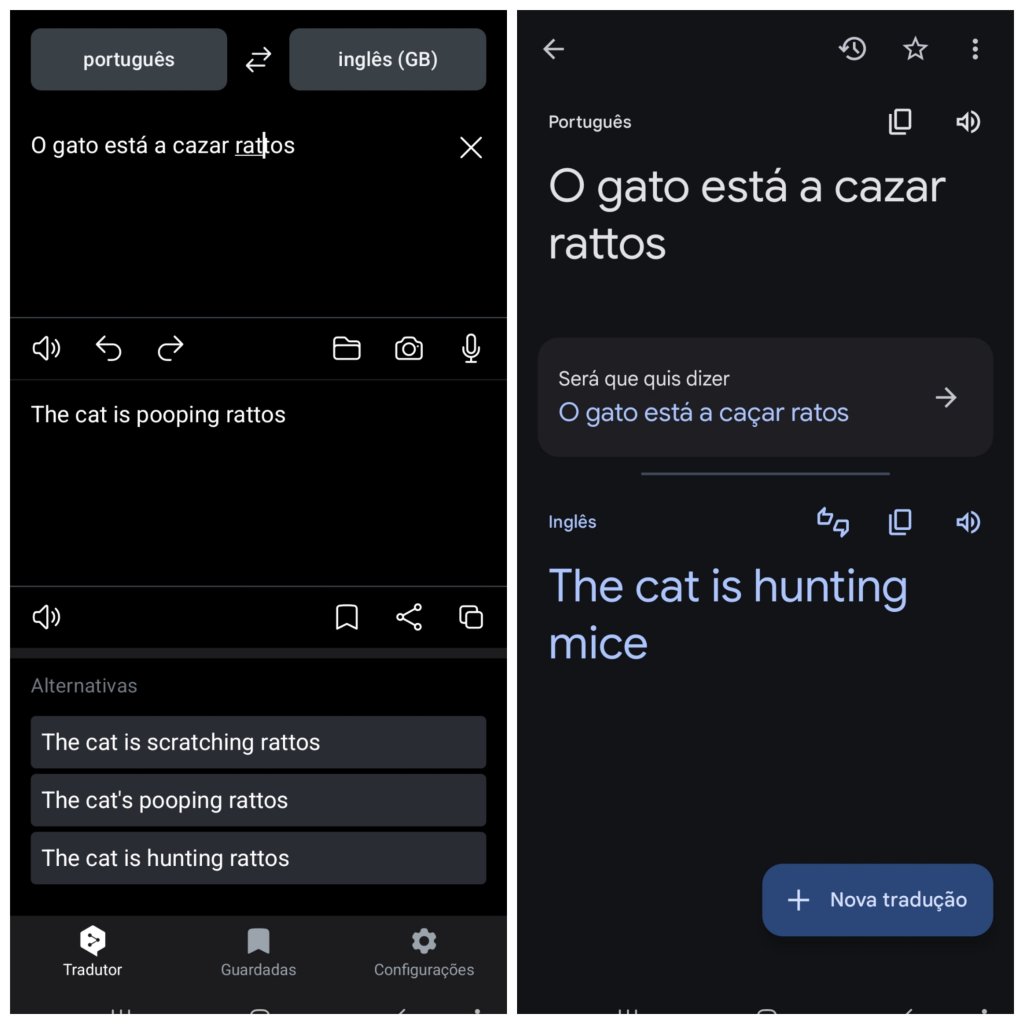
Result: Deepl is victorious. Although gtranslate has clearly done a better job here, I think I would prefer Deepl’s confusion, prompting me to rethink what I’d written, so I’m reluctantly awarding it the laurels here.
“A mãe teve depressão pós-pato desde o nascimento do beber.”
Postpartum depression is missing an r and bebé has gained one.
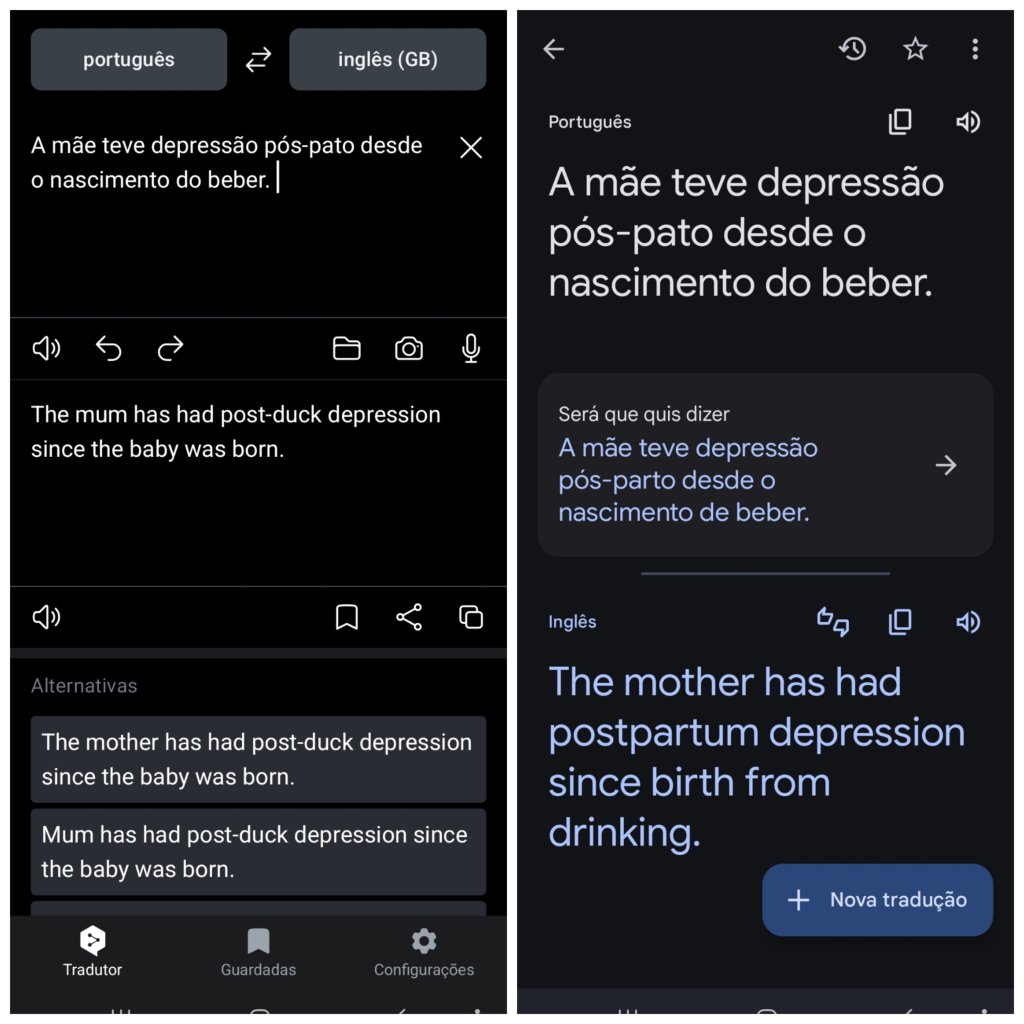
Result: Gtranslate wins another round.
“O meu irmã está a assustar a um espectáculo”
Irmã is feminine and the “o meu” should match. The verb should be assistir, not assustar
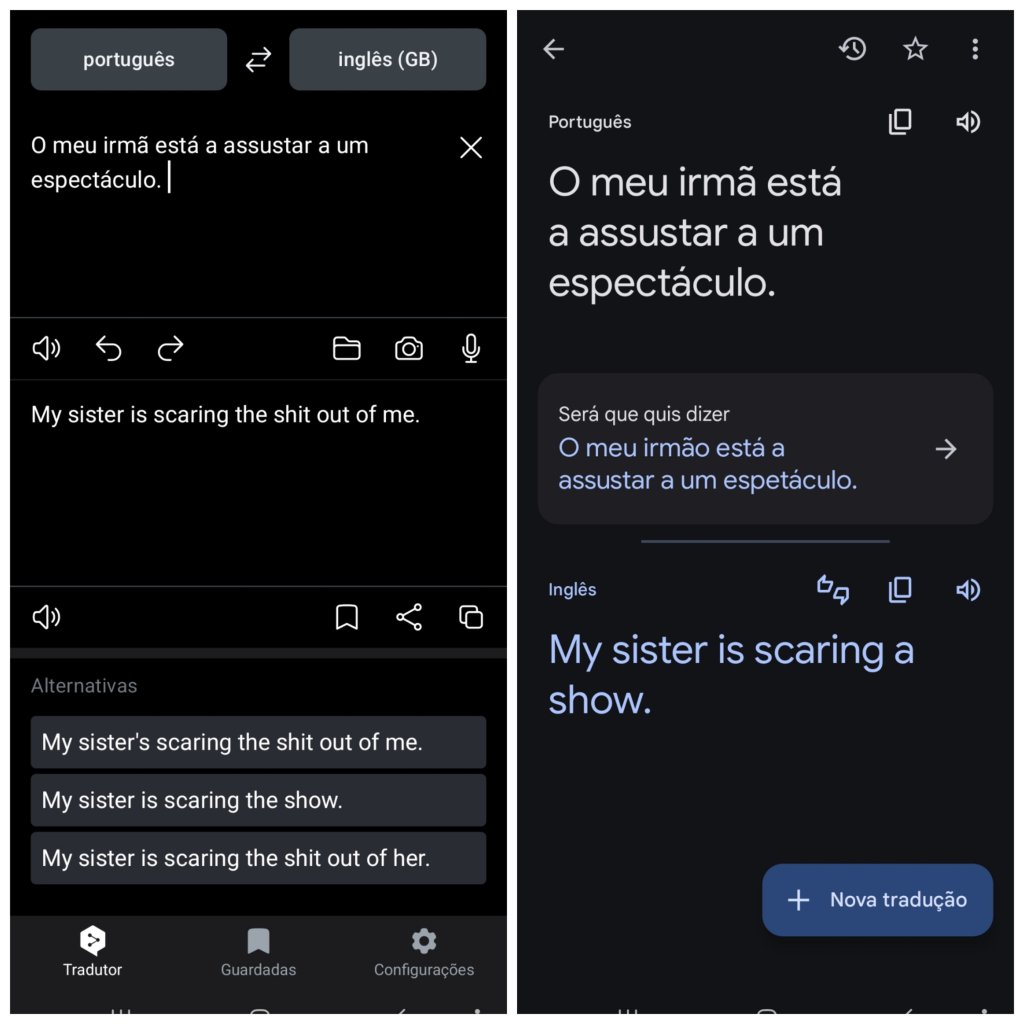
Result: Gtranslate is a clear winner since it gives a far more precise indication of what’s wrong without peeing in its pants.
Conclusion
As I said at the beginning, Deepl remains the best for English-Portuguese translation, but as the results show, in most cases, Gtranslate is better for reverse-translation in situations where you want to check your own written portuguese.
I was surprised by the results. I was expecting Deepl to be more accomplished at working around errors. It was far more hit and miss than that, but it’s undeniable in most cases that what Gtranslate offers is much more useful than what Deepl offers. You’re much more likely to be able to fix your errors that way.
Remember, this isn’t going to be enough on its own. My process is usually:
- Read the text and correct obvious errors.
- Paste into Gtranslate, correct what it mistranslates.
- Paste into FLiP to check for syntactical errors. FLiP has its blind spots and will occasionally flag a valid word, but by and large it’s helpful.
- Show to a teacher and/or post it here and wait for someone to tell me i have 38 more errors to fix.

 Luso
Luso 