Posted in Portuguese

Man and Roupaman

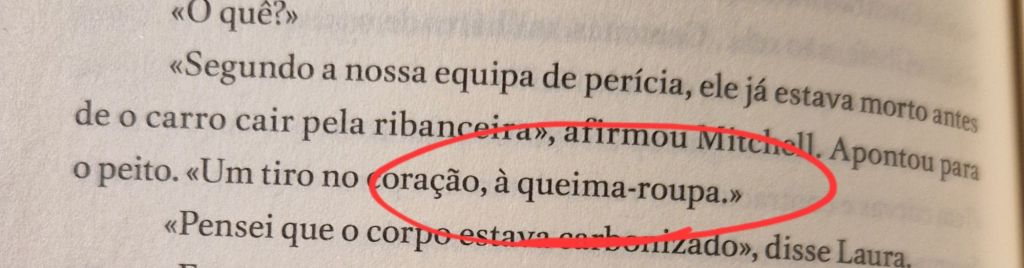
Fiquei intrigado por esta pequena frase. Se o homem levou um tiro no coração, quem se importa se a roupa também foi queimada?

Mas a expressão significa “muito de perto, ou cara a cara” ou seja, Point blank, como dissemos em inglês.

No mesmo livro, deparei numa nova palavra que também tem a ver com roupas, especificamente com roupões:
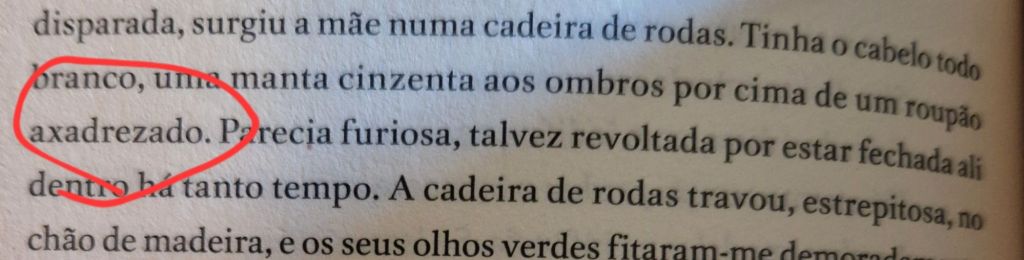
Ainda que não tivesse visto esta palavra, não perdi tempo em perceber o significado. Xadrez é o jogo de tabuleiro que nos anglófonos chamam de “Chess”, portanto, um roupão axadrezado é simplesmente um roupão feito de tecido que tem um padrão quadrado. Não têm de ser quadrinhos de preto e branco igual a um tabuleiro de Xadrez como o fato do Benny no jogo Fallout New Vegas…

…O roupão colorido de Arthur Dent também é axadrezado.

Este padrão é também chamado simplesmente de “xadrez”, como, por exemplo, nesta loja online (uma camisa, porque é evidente que não é apenas roupões). A palavra “enxadrezado” também existe mas não encontrei exemplos daquela forma na Internet.

Um sinónimo que pare quem não goste de falar de jogos é “escaqueado” mas acho que esta palavra é rara porque quando pesquisei o Google devolveu montes de páginas sobre pessoas esfaqueadas!

Todos estes particípios têm os seus verbos: axadrezar, enxadrezar, escaquear.
Posted in English, Portuguese

Let Me Hear Your Body Talk, Body Talk

I’ve already done a post on this, but you know what they say “You can never have too many blog posts about idiomatic expressions based around body parts”, and you know, they’re right.

Aqui está um resumo das expressões idiomáticas que usam o recurso a partes do corpo e os seus equivalentes numa língua falada pelos habitantes duma ilha húmida perto da França:

🇵🇹🇬🇧
Ter a barriga a dar horas
(estar com fome)
To have a rumbling stomach
Dar o braço a torcer
(Aceitar que não tem razão)
To throw in the towel
Estar pelos cabelos
(Estar desesperados)
To be having kittens
Ter as costas largas
(Aguentar com as responsabilidades)
To have broad shoulders
Ter as costas quentes
(Ter proteção de alguém
To have friends in high places
Falar pelos cotovelos
(Falar demais)
To talk the back legs off a donkey
Ter dor de cotovelo
(Ter inveja, ciúmes)
To be green with envy.
Esta expressão é, para mim, uma das expressões mais inéditas na língua portuguesa. O que é que os cotovelos tem a ver com ciúmes? Segundo a ciberdúvidas, (e uma professora que é especialista de cotovelologia) a expressão vem da dor intensa de bater com o cotovelo em algo, que é igual à dor de ser traído ou de não ter algo que desejamos. Pois é.
Fazer algo em cima do joelho
(Fazer algo depressa)
To dash something off, or do something on the fly
Saber na ponta da língua
(saber de cor, saber bem)
To know by heart (NB NOT to have something on the tip of your tongue)
Ter uma palavra debaixo da língua
(estar quase a lembrar alguma coisa)
To have something on the tip of your tongue
Dar com a língua nos dentes
(Contar um segredo)
To spill the beans
Estar com as mãos na massa
(estar a tratar de um assunto)
To be on the case
Estar com uma mão atrás e outra a frente
(Estar na miséria)
To be down in the dumps
Estar de mãos atadas
(Não ter poder)
To have one’s hands tied
Acho que esta expressão é a primeira que é igual em ambos os idiomas!
Ter a faca e o queijo na mão
(Ter o poder ou a facilidade de fazer alguma coisa)
Hum… confesso que não conheço uma expressão equivalente*… Mas adoro esta expressão. Nunca ouvi antes.
Uma mão lava a outra
(Ajudar-se um ao outro)
One hand washes the other
Meter o nariz onde não é chamado
(Imiscuir-se na vida dos outros)
To stick your nose into other people’s business
Custar os olhos da cara
(Ser muito caro)
To cost an arm and a leg
Ter mais olhos que barriga
(Pensar que se vai comer mais do que realmente consegue comer)
To have eyes bigger than your stomach
Entrar por um ouvido e sair pelo outro
(Não dar atenção)
In one ear, out the other
Estar com a pulga atrás da orelha
(Estar desconfiado)
To smell a rat
Com uma perna às costas
(Fazer algo facilmente)
With one arm tied behind one’s back
Fugir a sete pés
(Fugir rapidamente)
To hightail it
Meter os pés pelas mãos
(Confundir-se ao fazer ou dizer alguma coisa)
Put your foot in it (Interessante que em inglês metemos os nossos pés na “mouth” que soa como “mãos” em PT)
Estar com a corda na garganta
(Estar numa situação desesperada)
To be up against it
Meter o rabo entre as pernas
(Dar-se por vencido)
To have one’s tail between one’s legs
Fazer das tripas coração
(Suportar com paciência, encher-se de coragem)
To man up, to pluck up courage, to screw one’s courage to the sticking place

*The people have spoken and they have suggested this page: “To have the upper hand”, “to hold all the aces” and “to be in the catbird seat”. The whatbird? Well, To hold all the aces is close. I don’t think either that or “To have the upper hand” are quite right though. Both suggest that you are in a position to defeat an opponent, whereas “Ter a faca e o queijo na mão” seems to be defined as having the power or ability to achieve something, more generally (ref: Priberam). Anyway, it’s better than anything I can think of, so I’m not complaining! But I had a poke around and I came across This Guy’s Very Good WordPress Post . He describes it as having all the necessary items to hand to get the job done: “Assim, sempre que alguém tem as capacidades ou os instrumentos para terminar uma tarefa, cumprir um objetivo ou obter um qualquer benefício, diz-se que essa pessoa tem a faca e o queijo na mão.” In english, if you were in this situation, what would you say? “I’ve got all my ducks in a row”.

Thanks to Cristina for the corrections

Posted in Portuguese

Gordura é Formosura

Antes do movimento de “positividade corporal”, os portugueses já sabiam que há beleza* num corpo com mais calorias armazenadas. Porquê? Será uma questão de moda? Não, mas é verdade que a nossa perceção da beleza muda ao longo dos anos, como outros aspetos da nossa atitude. Mas a origem da expressão “Gordura é Formosura” é mais específica.

Antigamente, a saúde do povo estava constantemente sob ameaça por causa da falta de medicamentos e vacinas modernas e, em determinados lugares e épocas, por causa da pobreza. Doenças graves, como a tuberculose, causaram mortes e sofrimento, mas antes disso, deixaram as vítimas pálidas, amareladas e cadavéricas.

Portanto, a gordura veio a ser um sinal de saúde: se uma mulher estivesse roliça**, com as maçãs do rosto bem rubras apresentaria mais hipóteses de ter filhos saudáveis***.

O fenómeno tem raízes na nossa evolução, claro, e muitos animais comportam-se de maneira semelhante na seleção dos seus cônjuges. Os sinais do nosso passado como mamíferos vêm à superfície em tempos duros, ainda que sejam abafados por camadas de civismo e cultura. Mas, segundo o cirurgião Gil Faria, esta predisposição tornou-se prejudicial nos dias de hoje porque andamos constantemente rodeados por tentações e acabamos por ficar obesos.

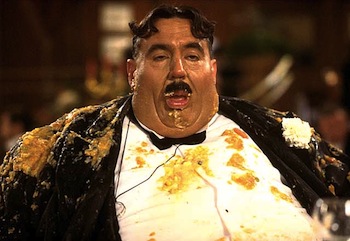
Me, demonstrating my suitability as a supplier of genetic material

*I wrote “uma beleza”, pretentiously trying to copy English sentences like ‘There is a beauty in the world, though it’s harsher than we expect it to be.’ (Michael Cunningham, “The Hours”) but it doesn’t seem to translate well and just came across as a mistake so I guess this is not a thing in portuguese.

**I originally wrote gordinha but roliça was suggested. It means round or plump

***I think I phrased it this way because of how I imagine choice was exercised in the past and thinking it was more likely that it would be women who had to meet certain standards to be chosen, but I guess we’re talking about many classes, many countries and many times so I could probably have opened this out a bit…

Thanks as ever to Cristina of Say it in Portuguese for the help with this text

Posted in English, Portuguese

Raízes

Mais uma tradução! Após de mergulhar no mar de política, mereço uns dias de diversão não achas? Esta cancão é incrível. Por um lado, lembra-me daquela colaboração entre Dulce Pontes e os Moonspell: Um homem de barba a rugir no palco e depois a mulher abre a boca e rebenta com tudo. Por outro lado, também tem letras interessantes com umas expressões idiomáticas úteis.

PortuguêsInglês
Eu não nasci em berço d’ouro
Felizmente há quem pense no amor e no apreço como um bem mais valioso
E o preço que eu penso que valha
Aos olhos de muita gente nem um terço calha
Tenho o passado presente, com meu futuro na mente
Perguntam se sou vidente ou mais um canalha
Mas venha só um que tente meter-se na minha frente
Derrubar tudo o que penso só pra ver que falha
I wasn’t born with a silver spoon in my mouth*
Luckily there are those who think of love and appreciation as a more valuable good
And the price I think it’s worth
It isn’t worth a third in the eyes of others
I have the past present with my future in mind
They ask if I’m a visionary or just another lowlife
But just let one person get in my way
To tear down everything only to see that he fails
Vivo como antigamente, alguém que represente
Porque eu baixo a cabeça quando a mãe me ralha
Se pra ti eu sou diferente, então fica ciente
Que esta vida te deu tudo e tu só comes palha
Fui forjado p’rá batalha, eu tenho um compromisso
Fiz-me homem de vontades e a fome nem deu por isso
Se queres ouvir verdades então fica submisso
Não venhas para aqui com frases só p’ra encher chouriço
I live like back in the day, someone who respresents
Because I hang my head when my mother tells me off
If I’m different from you, then be aware
That this life gave you everything and you only eat straw
I was forged for battle, I have a commitment
I made myself a man of will and the hunger didn’t even notice
If you want to hear truths then
keep quiet
Don’t come round here with phrases just to pass the time of day**
E é assim que guardo a meu lado
Os olhos de quem me ama
As vozes de quem chama por mim
E quando tudo chegar ao fim
Direi adeus sorrindo
And that’s how I keep at my side
The eyes of those who love me
The voices of those who call for me
And when everything comes to an end
I’ll say goodbye, smiling
Puto mimado, beijocas das tias e vias nos olhos do meu pai babado
Lágrimas frias entre as melodias sempre que me ouvias a cantar o fado
Todos os dias vos tive a meu lado minha raíz que foi presa sem nós
Vivi feliz porque não sabia as saudades que iria ter dos meus avós
Ouçam a minha voz, vós aí em cima eu fiz esta rima pra vos ver sorrir
Se há coisa que a vida ensina, é que a dor em si
É ter de aceitar a sina de vos ver partir
Mas assim não, não dá p’ra não sentir
A cicatriz é grande e marca o tempo que os perdi
Protegem-me a cada passo que dou e eu agradeço
Beijando sempre o meu braço quando vou dormir
Spoiled child, kisses from the aunties and you used to see in the eyes of my doting father***
Cold tears among the melodies whenever you hear me sing fado
Every day I had you at my side my root that was trapped without us
I lived happy because I didn’t know how much I would miss my grandparents
Listen to my voice, you up there, I made this rhyme just so I could see you smile
If life teaches us anything its that pain itself
Is having to accept the inevitability of seeing you go
The scar is deep and marks the time I lost them
They protect me every step I take and I thank them
Always kissing my arm when i go to sleep
Nem tudo foram favas contadas
Se achavas que eu vinha queixar das minhas amarguras
De portas fechadas e cartas rasgadas de amor acreditem há vidas mais duras
Eu fico grato pelo facto de ter no momento exacto
Histórias de vitórias pelos meus actos
E há que ver que só vivo a vida se for destaque
Vim para tapar os fracassos sem me enterrar em buracos
It wasn’t all preordained****
If you thought I was coming to complain about my bitterness
of closed doors and torn up love letters, believe me there are harder lives
I’m grateful for the fact of having at the exact moment
Stories and victories of my actions
And you have to see I only live life if I’m at the forefront
I came to cover the weaknesses without burying myself in holes
E é assim que guardo a meu lado
Os olhos de quem me ama
As vozes de quem chama por mim
E quando tudo chegar ao fim
Direi adeus sorrindo
And that’s how I keep at my side
The eyes of those who love me
The voices of those who call for me
And when everything comes to an end
I’ll say goodbye, smiling
E é assim que guardo a meu lado
Os olhos de quem me ama
As vozes de quem chama por mim
E quando tudo chegar ao fim
Direi adeus sorrindo de obrigado
And that’s how I keep at my side
The eyes of those who love me
The voices of those who call for me
And when everything comes to an end
I’ll say goodbye, smiling thank you

*Actually, “Nascer em berço de ouro” means to be born in a golder cradle, but this is the nearest english equivalent

**Encher chouriço(s) is another expression: busy-work, filling up time by talking or doing something without any real purpose. In brasil they would say encher linguiça.

***I’m not sure this is an expression as such, but pai babado sounds like it should mean drooling father. Seems like a weird choice of words, but it’s actually a way of saying doting father, and that makes a lot more sense in context!

****Favas contadas is an expression meaning something inevitable

Posted in Portuguese

Frases de Engate

Claro que, como estudante desta língua, não tenho tempo para praticar a arte de sedução e ainda por cima a minha esposa não me permitiria, mas o Dia dos Namorados está quase a chegar e achei que alguns de vocês, os meus caros leitores, podiam gostar desta lista de frases de engate que roubei desta página do Observador de há oito anos.

Confesso que gosto muito da terceira (ah ah, soou como um daqueles anúncios de Clickbait “A terceira vai te chocar!”) mas concordo com o cabeçalho; são mesmo horríveis. Este julgamento não visa criticar o machismo implícito nas frases. Isso seria aceitável se fossem engraçadas mas…. eh pá… “Posso pagar-te um copo ou preferes dinheiro?” Boa sorte em limpar a Sagres da tua camisa depois de dizer essa merda!

Vou explicar cada uma em inglês para quem não sabe, mas estou demasiado constrangido para pedir ajuda de um professor , portanto pode haver alguns erros. Desculpem. (Obrigado pela ajuda, Cristina)

  • Que pernas tão bonitas. A que horas abrem? [“What great legs. What time do they open?”]
  • Ó fêvera! Junta-te aqui à brasa! [fêvera = febra, so “Hey, fresh meat, come over here to the charcoal”]
  • Ó joia! Anda aqui ao ourives. [“Hey, jewel, come to the goldsmith”]
  • Usas cuecas TMN? É que tens um rabo que é um mimo! [“Do you wear TMN knickers? Because your bum is a treat” (TMN seems to be a brand of undercrackers, but it used to be the name of a telecoms company who used a mime (“mimo” can mean both “mime” and “treat”) in its ads. You can see an example here. Considering how old it is (the ad gives prices in Escudos!) I can’t imagine this is going to get you very far in 2024]
  • Ó flor… Dá para pôr?! [“Hey, flower, can you be laid?” Not sure about this one: por can be used for laying flowers eg on a grave, and there’s obviously a double meaning, so I think this is probably the closest I can get] [No, apparently it’s even cruder than that. It means “Hey, flower, can I put my dick in you?” Fuxake, rapazes, não têm rizz nenhuma?]
  • Ó estrela, queres cometa? [“Hey, star, do you want a comet?” I guess this is meant to sound like “comer esta”]
  • Andas na tropa? É que já marchavas. [“Are you in the army? It’s just that you were looking really good” Assuming this is the fifth, informal definition of “marchar” here)]
  • Contigo… era até achar petróleo! [“With you… it was like striking oil” This is a weird one because it sounds like something you say after you’ve slept with someone, not before]
  • Posso tocar no teu umbigo… por dentro? [“Can I touch your navel… from the inside?”]
  • Tens um rabo que parece uma cebola. É de comer e chorar por mais! [“You have a bum like an onion. You eat it and cry for more”]
  • Sabes onde ficava bem essa roupa? No chão do meu quarto… [“D’you know where those clothes would look good? On my bedroom floor”]
  • Com umas boias dessas o Titanic não tinha ido ao fundo. [“With floats like that, the Titanic would never have sunk”]
  • Posso pagar-te um copo ou preferes dinheiro? [“Can I buy you a drink or would you prefer money?”]
  • Tanta carne e eu em jejum… [“So much meat and I’m fasting”]
  • Não és ave-maria, mas és cheia de graça! [“You’re not a hail Mary but you’re full of Grace”]
  • Estou a lutar desesperadamente contra o impulso de fazer de ti a mulher mais feliz do mundo. [“I’m desparately struggling against the impulse to make you the happiest woman in the world”]
  • O teu pai deve ser terrorista porque és cá uma bomba! [“Your dad must be a terrorist because you are da bomb!”]
  • Perdi a chave da minha casa, posso ir dormir na tua? [“I’ve lost my house key. Can I sleep at yours?”]
  • Com uma montra dessas… Imagino como é que é o armazém! [“With a shopfront like that, I’m picturing what must the storeroom be like!”]
Posted in Portuguese

Maria Cachucha

Escrevi um texto na segunda-feira, que terminou com “tinham batido a bota longe antes”. Infelizmente esta frase está errada porque “longe” é uma palavra que descreve distâncias físicas. Por exemplo, a Ilha da Madeira fica longe de Portugal continental.

A substituição sugerida foi “no tempo da Maria Cachucha”. Quem é, ou quem foi, esta senhora? Ninguém! Ou seja, “ela” não era um ser humano, mas sim uma dança (igual ao corridinho! Que maravilha que quase todos os mistérios da língua portuguesa se resolvem da mesma maneira: “é uma dança”!

A cachucha era oriunda da Espanha mas segundo o Ciberdúvidas “teve uma certa voga na França” e depois, em Portugal, foi escrita uma letra gracejadora e zombeteira, a Maria Cachucha para acompanhar a música. Portanto, no século XIX, as pessoas dançavam os passos espanhóis ao seu som. Daí “no tempo da Maria Cachucha” significa muitos, muitos anos atrás.

Posted in English

Armar(-se) Ao

I’ve come across phrases like “Armar-se em valente” before, where “armar em” means put on a show. So armar-se em valente might be making a big show of what a heroic figure you are (shortly before being flattened) but I came across a slightly different version the other day: armar aos cucos. There are variations too: Armar aos cágados and Armar ao pingarelho. These all seem to mean more-or-less the same thing: to make yourself the centre of attention – for example by giving a huge tip (the example I saw at first) or by having an eye-catching look like in this make-up tutorial.

Posted in English

The Mane Event

Everyone gets fifteen minutes of fame and I’ve just had three and a half of my minutes handed to me, courtesy of the “Say It In Portuguese” podcast, where I am the interlocutor in Episódio 147: Voltar à Carga. You can find it on the website or just search it on most podcast platforms. It’s definitely worth the subscription if you’re intermediate level or above because it explains a lot of useful portuguese expressions.

Remember you don’t need a horse to get back in the saddle.

Voltar à carga is similar to an expression I tried to use about 3 weeks ago, “Get back on the horse”, except that where getting back on the horse usually has a sense of confronting something that you’ve failed at and not letting yourself be put off by a setback, voltar à carga is more like returning to action after a pause. So it’s more like “get back in the saddle“.

When I first started listening to the podcast I could barely understand half of it, but now I’ve actually been able to take part in a recording so it feels a bit like I’ve won a chance to be an extra in the new Star Wars film or something. My acting probably isn’t going to win me a starring role in an RTP radio drama, but that’s OK. My biggest stumbling block was the phrase “carga de trabalhos”. I struggle with the lh sound at the best of times, but coming straight after a string of crunchy consonants – rg-d-tr-b – it felt like a real tongue twister and I had to have a few goes before I got it right.

Anyway, have a listen and see what you think.

Posted in English

Limar as Arestas

Noting this new phrase I’d never heard before.

Limar means to rub something with a lima – a file. I mean one of those scrapey things you use in metalwork class or in the nail bar.

Aresta can have a few different meanings, but in this context, it’s a pointy, sticky-out bit the corner or the edge of something.

So the general idea is you’re rubbing off the rough edges, polishing something or perfecting it.

According to Ciberdúvidas, it can also mean to conciliate a difficult person. That’s a very different idea, but you can see how they both make sense of you’re thinking of smoothing things over with someone.