Posted in Portuguese

Weird Subjunctive

Lazily recycling a question I asked in another place and turning it into a blog post to help me remember
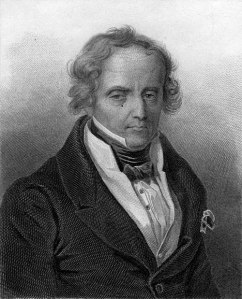
Xavier de Maistre, author of “Voyage autour de ma chambre” approves of this blog post

Logo na primeira página do meu livro (Viagens Na Minha Terra de Almeida Garrett) o autor coloca a seguinte frase.
Mas com este clima, com este ar que Deus nos deu, onde a laranjeira cresce na horta, e o mato é de murta, o próprio Xavier de Maistre, que aqui escrevesse, ao menos ia até o quintal
Graças ao Google, já sei o que é murta* e quem foi Xavier de Maistre mas ainda não faço ideia de porque o autor escolheu o imperfeito do conjuntivo neste contexto. Podes explicar sff?

Segundo os portugueses (e um brasileiro) que responderam, Garrett está a construir uma situação hipotética. “Que”, neste contexto, está a funcionar como “se” ou “caso”, portanto precisamos do conjuntivo.

Noutras palavras, Embora Xavier de Maistre tivesse escrito o seu livro dentro do quarto, se estivesse em Lisboa nos dias do Garrett, iria ao quintal dar uma vista de olhos à beleza das laranjeiras e a murta a florescer nos campos**.

*It’s a plant – a kind of myrtle – if you want to know.

**Thanks to u/yangruoang for paraphrasing the sentence: I have paraphrased his/her paraphrase as an exercise for myself, and if I have introduced any errors, they’re my own, but basically rewriting it helped me understand the whole thing a lot better
Posted in Portuguese

Subjunctive Snooker

Eis uma questão do caderno de exercícios do “Português em Foco”:

Selecione a resposta correta, de acordo com as informações fornecida pela frase

A. Mal estivessem na praia, eles faziam surf.

  1. Eles fizeram surf.
  2. Não sabemos se eles fizeram surf.
  3. Eles não fizeram surf.

Tive de pedir ajuda da gente simpática do r/portuguese para entender porque é que a resposta dada é 2 mas, na verdade, não é assim tão difícil. Fiquei confuso porque a ação tem lugar no passado. Se o narrador falasse sobre eventos um tempo no futuro teria dito “quando estiverem” (when they get to the beach) e não haveria qualquer dúvida de que o narrador não sabia o resultado pois ainda não aconteceu! Mas “estivessem” é pretérito imperfeito, certo? Portanto isto já aconteceu? Sim, mas isso não significa que sabemos a história inteira. Não significa “as soon as they were at the beach they went surfing” (mal estiveram na praia…), mas sim “When they got to the beach they were going to go surfing”. Ou seja, o falante está a descrever os planos que o grupo tinham feito antes de partir, mas não tem a certeza de se vieram a pôr os planos em prática.

Posted in English

Subjunctive Words of Wisdom

I liked what this fella had to say about subjunctives in his recent video. It’s a subject we anglophones don’t really use much, but most latin languages make a much bigger deal of it. I have read a few french books and it definitely doesn’t get as much of an airing in that language as it does in portuguese, but I think the principles and the rationale behind it carries across between languages, so the points he makes here about french, spanish and italian still hold, I think. I won’t try and summarise them – if you’re reading this and you struggling to put some junc in your trunc, have a look for yourself.

Posted in Portuguese

Nossa!

Porque é que estou a queixar-me agora?

É que… Peguei neste livro porque apeteceu-me ler algo fácil, mas embora seja um conjunto de contos infantis, com 94 páginas e muitas ilustrações, está cheio de palavras desconhecidas e gramática emaranhada.

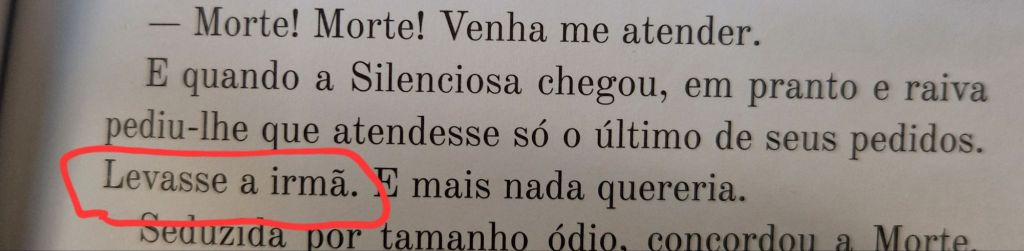
Ora bem, segundo todos os livros que já estudei, a frase “Levasse a irmã” não deve* existir, mas olha, lá está na página. Que raios? Pensei muito e acho que percebo. A autora está a “reciclar” a gramática da frase anterior: “pediu-lhe que atendesse (…) o último (…) pedido” e depois, esclarecendo a ação implicada, podia ter dito “ou seja, pediu-lhe que levasse a irmã” mas ela não queria repetir as primeiras palavras, portanto limitou-se a acrescentar as palavras reveladoras.

Dito isso, acho que seria melhor se a frase fosse separado da frase anterior com uma vírgula em vez de um ponto final, mas não sou o rei da gramática e talvez esteja completamente errado!

*I originally wrote “deve não existir”, trying to imitate a sort of modern, affected way of emphasising the strength of feeling in english by shifting the “not” to another part of the sentence: “It needs to not exist” instead of “it doesn’t need to exist”. This seems not to be a thing in portuguese. Oh well, it was worth a try.

Posted in English, Portuguese

Locuções Temporais

I’m struggling a bit with finding the right tenses for some of the sentence structures set out in the C1 course so decided to try and write a few for practice. Thanks to Dani Morgenstern for help with the corrections.

  • Quando acabei de ler ele já tinha escrito a sequela (when I finished reading he had already written the sequel)
  • Enquanto ele tocava bateria, eu preenchia os formulários de divórcio (while he was playing drums, I was filling in the divorce forms)
  • Quando chegares a casa, descasca as batatas (when you get home, peel the potatoes)
  • Ela disse-me que queria ser primeira ministra quando fosse grande (she told me she wanted to be prime minister when she was big)
  • Quando o vírus tivesse passado, ela voltava a treinar (when the vírus had passed she went back to training – I think the sense here is of something that happened repeatedly: she’d get ill every so often and go back to training after each occurrence, hence the imperfect tense)
  • Enquanto não leres o texto não estás capaz de responder às perguntas (since you won’t read the text you won’t be able to answer the questions)
  • Enquanto os negócios tivessem apoio financeiro não iriam à falência durante a pandemia. (as long as the businesses had financial support, they wouldn’t fail during the pandemic)
  • Enquanto o tio Rui não tivesse chegado a casa, a família não começava a jantar* (since Uncle Rui hadn’t arrived at the house the family weren’t starting their dinner)

*It’s probably worth pointing out here that this “a” is a preposition and “jantar” a verb. They hadn’t started to dine. But jantar can also be a noun so I could also have said “o jantar” instead of “a jantar” and the sentence would still work but it would mean “they hadn’t started the dinner”.

  • Logo que o comboio parta, telefona-me (as soon as the train leaves, call me)
  • Assim que receberes a carta do SNS, marca consulta. (as soon as you get a letter from the SNS, make an appointment)
  • No momento em que as cortinas se abrissem, a banda comecaria a tocar (as soon as the curtains opened the band would start to play)
  • Mal tivesse aberto a janela, o pisco entraria na sala (as soon as he had opened the window the robin would enter the room)
  • Logo que eu acordava tomava um café (as soon as he woke up, he used to have a cup of coffee)
  • Assim que enviou a carta, percebeu que se tinha esquecido do selo (Just as he posted the letter he realised he’d forgotten the stamp)
  • No momento em que o professor abriu a boca a campainha tocou (at the instant the teacher opened his mouth the bell rang)
  • Mal soube as noticias, começou a chorar (As soon as he heard the news he started to cry)
  • Antes que te esqueças, faz notas sobre a reunião (before you forget make some notes about the meeting)
  • Antes que ligasse ao meu pai, ele enviou-me uma mensagem (Before I called my dad, he sent me a message)
  • Antes de abrir a boca vou pensar duas vezes (before I open my mouth I’m going to think twice)
  • Depois de nos termos encontrado a minha vida era vazio e sem propósito (Before we met each other, my life was empty and without purpose)
Posted in Portuguese

Subjunctives

Random witterings based on the subjunctive exercises in the C1 course. Notes below. Thanks to Cataphract for correcting the original

Ainda que tenha tentado muitas vezes entender os tempos verbais mais… Profissionais, digamos assim, deste* idioma, continuo confuso. Já fiz um exercício** hoje de manhã, chumbei (quarenta e dois por cento, que desgraça!) e fiz novamente. Apesar de ter revisto as respostas todas, não conseguiria passar, nem que*** a nota das escolhas múltiplas tivesse aumentado, porque as respostas escritas permaneceram cem por cento erradas (o site não mostra exemplos correctos deste tipo de questão, o que não é muito prestável!).

Decidi deixar o exercício para amanhã. Entretanto, se revir**** as informações sobre os significados, e os graus de probabilidade das várias estruturas (“mesmo que”, “caso” e os outros marcadores que introduzem o modo conjuntivo), talvez fique mais capaz de lidar com este curso do caraças!

*=idioma is one of those Greek derived words that ends in a but is still masculine.

**=for some reason my spellchecker got it into its head that this word was spelled with an s so it kept changing it. Luckily in Android there’s a way of holding down your thumb on a predicted word and telling it never to predict that again, so I’ve done that now.

***=This pair of words, “nem que” comes up a fair bit in this exercise and I hadn’t really been conscious of it before. It means “even if” and its one of those constructions that needs a subjunctive verb.

****=review. I wrote “rever” which os the infinitive but this is a future subjunctive and it looks like the infinitive of a totally different verb!