Hard Mode Homework. From Português Outra Vez: using verbs with prepositions. Often the meanings of the verbs can change so radically with the choice of preposition that it basically acts as a compound verb. The base verbs it offers are these
- Andar
- Fazer
- Ficar
- Ficar-se
- Vir
- Voltar
- Voltar-se
Each can use a variety of prepositions and I’m using the Guia Prático de Verbos com Preposições by Helena Ventura and Manuela Caseiro to pin down which is which. I often use some of these without quite realising why and it’s useful to spell it out.
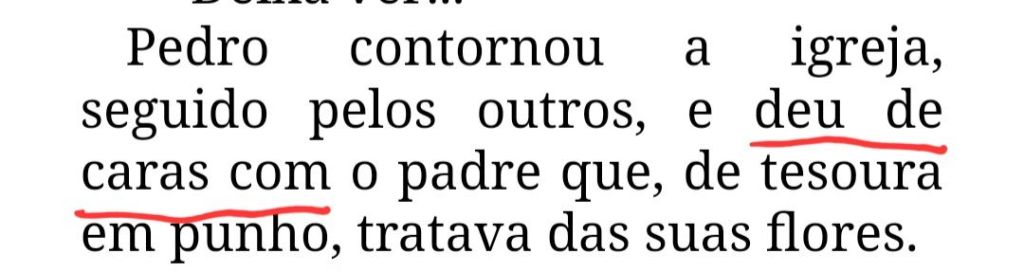
Quite often, I’ll come across a feature of Portuguese and think it’s weird and unlike anything in English and then I realise that, no, we do have them, we just don’t notice them because nobody draws attention to their existence. Think of the difference between “Stick to”, “Stick out” and “Stick around” for example – or “Pass by”, “Pass over”, “Pass for” and “Pass out”.
Andar
- Andar a (+inf) = to progressively achieve something (ando a ler Fernando Pessoa)
- Andar com = to feel (anda com dor de dentes) OR to live with (ele agora anda com gente muito esquisita) OR to have something with you (ela anda sempre com o telemóvel)
- Andar de = to use some form of transport (ando de bicicleta)
- Andar em = to frequent (ela anda na Faculdade de Direito) OR to achieve (ela anda em grandes obras na casa de praia)
- Andar para = to have an intention to do something (ando para ir ao cinema)
- Andar por = to approach (o preço do carro anda por dez mil euros) OR to visit, pass through, hang out in (gosto muito de andar pelos parques)
- Andar sem = to be without something (o Pedro anda sem atenção)
Fazer
- Fazer com (que) = to force (fizeram com que o ministro aceitasse as reivindicações) OR to have a consequence (a avaria na EPAL fez com que alguns lisboetas ficassem sem água durante muitos dias)
- Fazer de = to act like (o Pedro fazia de palhaço) OR to transform (os E.U.A. disseram que queriam fazer do Iraque uma pátria livre)
- Fazer… Por… To do something for (or on behalf of) someone (a Patricia fez o trabalho pelo colega)
- Fazer por (+inf) to make an effort (ela faz por gostar de bacalhau mas não consegue)
Ficar
- Ficar a =to be in a place (Lisboa fica a cerca de 300 quilómetros do Porto) OR to stay somewhere (não fiquei a assistir ao espectáculo ao final)
- Ficar com = to get, or keep hold of (fico com a blusa verde) OR to continue to feel (fico sempre com medo quando ouço barulhos estranhos)
- Ficar de (+inf) =to promise to do something (ele ficou de passar por minha casa às nove horas)
- Ficar em = to stay, to be situated – similar to ficar a (o Hospital fica em Lisboa, a atleta Rosa Mota ficou em primeiro lugar)
- Ficar para =to be destined for something (o colar de pérolas fica para ti) OR to be deferred (a nossa conversa fica para amanhã)
- Ficar por =to support (nas discussões ela fica sempre pelas mulheres) OR to substitute for someone (o meu colega ficou por mim) OR to cost (o fato ficou por cem euros) OR to remain uncompleted (as camas ficaram por fazer porque ela teve de sair à pressa) OR to stop (hoje ficamos por aqui)
- Ficar sem =to lose or be deprived (ficamos sem água toda a tarde)
Ficar-se
- Ficar-se por =to limit oneself to (na reunião com os seus apoiantes, o presidente ficou-se por um discurso breve)
Vir
- Vir a =to attain an objective (se vice estudar muito, pode vir a falar português corretamente)
- Vir de =to finally do something (era minha intenção saudar os alunos que vinham de chegar)
Voltar
- Voltar a =to repeat an action (o telefone voltou a tocar)
- Voltar para =to turn something toward (voltaram os olhos para o céu)
Voltar-se
- Voltar-se para =to turn toward (voltei-me para ele e disse-lhe tudo o que oensava
The book lists several other combinations of verbs and prepositions but I don’t think they are different enough from their original meanings to bother defining like this. For example, vir normally means “come” and you can come to, come from, come by and so on. Voltar means return, and you can return to, from, whatever. It’s not rocket science.
OK, here we go… I’ll put my answers in brackets. When I get it wrong, I’ll cross out my answer and replace with the corrected version.
A Teresa (anda para ficou de) passar por minha casa hoje à noite para estudarmos juntas, espero que não falte. [hm, I don’t think my answer was too bad. Maybe not the best one, but doesn’t seem wrong either…]
Após muitos anos no estrangeiro p Zé, cheio de saudades, (voltou para) Portugal
Lisboa (fica a) cerca de 300km
O excesso de açúcar é de álcool (faz com) que as pessoas fiquem obesas
Quando eu morrer, o meu colar de pérolas (fica para) a minha neta Joana*
Para cá chegares mais depressaa, sugiro-te que (vir venhas pela) autoestrada.
De repente (voltou-se para) o chefe e disse-lhe tudo o que lhe ia na alma.
Costumas (andar de vir a) pé ou (andar vir de) autocarro para (andar vir para ) a faculdade? [The word “para”, just after “autocarro” is missing from the book but it doesn’t make any sense without it, so I’m not 100% sure but I think it should be there]
Porto Covo (fica na) costa vicentina, (fica ao no) litoral alentejano
Não gostava de (andar de) transportes públicos sobretudo, detestava (andar de) metro
Se estudares muito, podes (vir a) falar português fluentemente no futuro**
Eles (virão de ficaram de) pagar as dívidas às Finanças no prazo de seis meses, caso contrário vão a tribunal [OK I can see that makes sense]
Eu (ando a) ler um livro de Mário de Carvalho***: “A Arte de Morrer Longe”
Ele (fazia por) agradar ao chefe mas era sempre um esforço em vão.
O ministro, lacónicamente (ficou-se por) um breve discurso na tomada de posse
(Andamos para) fazer um passeio no Douro, já há dois anos, mas ainda não nos foi possível fazê-lo.
Depois da queda do muro de Berlim, muitos imigrantes da Europa de leste (vieram para) Portugal.
A empregada é incompetente: limpou mal a casa e as camas (ficam ficaram por) fazer. [I was umming and ahhing over the tense for ages and it looks like I plumped for the wrong one]
Carlos, (voltou voltaste a) casar? Não desistes, é a terceira vez!
Os lisboetas (ficaram sem) água durante toda a manhã. Foi o caos!
Por vezes, convém-me (fazer de) surda, para não ter de responder a certas pessoas
*Woah, this question from Português Outra Vez is almost exactly the same as the one in a the Guia Prática.
**Another one! Oh right, I’ve just realised Helena Ventura is a co-author of both so she’s probably recycling her own material
***Coincidentally, I have a different book by the same author, Ronda Das Mil Belas em Frol, on the arm of the sofa as I write.


 Luso
Luso 