Posted in English

How Fernando Pessoa Saved Portugal

Yesterday’s post was about the strange case of Fernando Pessoa’s advertising slogan for Coca Cola in 1927. As I mentioned, there seem to be a few different perspectives on the motives of the people involved, but I don’t think the facts of the matter are in doubt.

Anyway, it turns out that there’s a short movie about the incident. It’s made by a French company but it’s in portuguese with English subtitles. Someone’s put it on Facebook. Hurry though, it might not be there forever. It’s a good length and very easy to follow, so I can recommend it even if your listening skills are underdeveloped.

The film has a slightly playful, surreal tone. The name of the drink os given as “Coca Louca” and it translates the slogan as “First you’re surprised, then you’re possessed”, then plays with that idea of possession by showing the minister for health convinced that the drink contains evil demons which need to be cast out by an exorcist with a bottle opener in the shape of a crucifix!

It also depicts the poet not as Pessoa himself but as Álvaro de Campos, one of the heteronyms, who appears in the film as a separate person, looking just like the man himself.

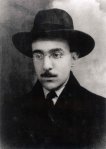
A still from the movie "Como Fernando Pessoa Salvou Portugal"
Fernando Pessoa Working Up a Thirst
Posted in Portuguese

Álvaro de Copos

Ontem, escrevi um texto sobre Humberto Delgado, o “General sem Medo”. Na mesma altura, os aderentes da outra ideologia extremista, o comunismo, alcunharam-no de General Coca-Cola, troçando dele por ser um fantoche da OTAN* e dos EUA.

Mas décadas antes disto, tinha havido mais uma história interessante sobre a bebida e a reação portuguesa ao capitalismo americano. A Coca-Cola foi lançada no mercado português em 1927. Naquela altura, Fernando Pessoa era um escritor comercial além de ser um poeta (ou melhor “além de ser muitos poetas”) e escreveu um slogan para a marca: “Primeiro estranha-se, depois entranha-se”**. É um bom slogan, mas implica algo sobre o produto cujo ingrediente principal era basicamente cocaína: era muito viciante. O governo de Salazar já pensava em proibir o refresco, mas o slogan confirmou a decisão. Foi banido durante o resto da época da ditadura e não foi vendido no país até 1977, quando Mário Soares, então primeiro ministro da República, negociou um empréstimo de 300 mil dólares.

A cronologia é confusa: uma página tem uma imagem do Soares a apertar a mão do Presidente Ronald Reagan, mas Reagan passou a ser presidente em 1981. Os motivos também são confusos. Uma página deu impressão de Pessoa ter tentado derrubar o governo Salazarista com o slogan. Duvido disso. Suspeito que a maneira de contar a história depende do escritor e da sua opinião de Pessoa e do capitalismo americano. Pessoa escreveu um slogan para a marca. Então, isto significa que ele gosta da bebida? Ou que foi um ato de sabotagem? Salazar baniu-o porque era anticapitalista e queria proteger as empresas nacionais? Ou porque foi um capitalista que cedeu sob pressão do poeta? Os comunistas falam mal da Coca-Cola porque é uma ferramenta do capitalismo ou porque preferem o Compal?

*OTAN is NATO in portuguese but NATO is often used just because that’s the standard way of writing it and, after all, it’s an international organisation.

**How to translate this? The “-se” pronouns effectively make the verbs able to be used without an object, and the two verbs are cognates of “estranges” and “entrances”. First it estranges then it entrances… Hm, it doesn’t sound idiomatic does it? First it seems weird, then you’re hooked. Something like that is probably better.