Here in the UK, everyone’s nerves are shredded. It’s the 22nd of June, the day before the referendum. At this stage, nobody is going to change their mind and on Twitter, conversation quickly moves from disputing the veracity of a statistic to name-calling, blocking and general unpleasantness.
That being the case, I thought I would go further afield and look at some Portuguese reporting on the Brexit on the grounds that looking in from the outside might give some useful perspective. A few days ago, I blogged about the delightful description of Boris Johnson by Miguel Esteves Cardoso in a column in Público (cf “Learning from the Brexiteers“) but I have come across some other examples, too. As you would expect, it’s a mixture of fear for the future of the EU and the Western Alliance more broadly, versus a sort of mystified bafflement about why we are having this collective hissy-fit, and I’ve even seen a few saying “sod ’em” and describing the UK as “the Crying Child of Europe”. It’s a fair cop.
First of all, I was interested to see some views from Portuguese people living in Britain. Here’s one in the Jornal de Notícias, and another in Bom Dia Europa. The worry for existing residents is twofold. First of all, although it’s unlikely there would be mass deportations, nobody knows what post-brexit Britain will be like, so it’s not impossible, and with the mood getting as ugly as it is. I know my wife and some of her friends are already sensing a higher level of ambient resentment against them from people whose opinions are formed by the Daily Mail and Daily Express. Secondly, Portuguese people will have a higher level of hassle and inconvenience moving about,. Presumably it’ll be the same for Brits living in Spain who will be lose a lot of their current rights and entitlements. And we haven’t even got into things like VAT harmonisation and the nightmare small businesses will face dealing with paperwork, reclaiming money and on and on. Some of the interviewees are small business owners and there’s a level of concern about the unknown consequences as they see the remain campaign being forced onto the back foot by the giddy, unthinking optimism of the leave campaign for some ill-defined future. Some are considering leaving.
Next, let’s look at a blogger – César Agosto – who writes for Homo Causticus on WordPress. He has blogged a few times on the referendum and related matters such as the last general and mayoral elections. I don’t know anything about him but I guess he must live here, or visit often, or at least be a keen bifewatcher because his blogs draw on a knowledge of history and pop culture. In “As Propostas Por Favor” he rightly highlights the lack of a clear sense of what is to come after Brexit, and the problem that causes in trying to decide whether or not you want to support it. In Life on Mars he uses the TV show of the same name as a jumping-off point to illustrate differences between the seventies, when the first EEC referendum took place and the modern world, where we are now holding the second one on the European Union. The first is typified by the famous debate between Tony Benn (much-revered eccentric hero of the left) and Roy Jenkins (mainly remembered, I think, for his speech impediment). Each one is measured and forceful, defending their views (basically: economics vs democracy) without rancour (just as well… I don’t like to think what would happen if Roy Jenkins were to say “Rancour”).
What he could add, but kindly doesn’t, is that the second is typified by the sight of useless, workshy UKIP MEP Nigel Farage telling Herman Van Rompuy ” I don’t want to be rude but, really, you have the charisma of a damp rag and the appearance of a low-grade bank clerk”. And this is what our country has come to after forty years. Other modern figures get a mention too, and not just the usual suspects. Redwood gets a mention, and Cameron’s Eton demeanour is contrasted with Sadiq Khan, famously the son of a bus driver. Bizarrely, he is described as charismatic, although to me he seems to disappear into the background on any stage he’s on, even when he’s actually speaking, but hi ho.
In the news media, there is some sympathy for the idea that the EU is in need of a good kick in the arse. For example, José Pedro Teixeira Fernandes says “Long Live the European Union – and Down with the technocracy of Brussels and Frankfurt” while José Vítor Malheiros proclaims “The EU has turned Europe into a brothel” and argues that the brexit might just cause a welcome return of democracy to the region. Portugal, of course, has had its fair share of problems with the EU, and has more cause for complaint than our whining. With that in mind, Paulo Pisco calls the brexit vote “A national egoism” and defends the humanist spirit of the European project against the xenophobia and selfishness of one nation that seems to want to dominate it completely. Actually, Público is buzzing with columnists looking for an angle on the story, so you can take your pick, really.
Finally, there’s an article I can’t even read in its entirety because it has a paywall but I liked the first few lines. As you know, last week some deranged idiot, driven on by some misplaced sense of fighting against “traitors” shot and killed his local Member of Parliament, Jo Cox, near a constituency surgery. There was – and still is – a heated and rather nonconstructive debate about the extent to which the tone of the Leave Campaign’s rhetoric fed a climate of violence that led to the attack. In “I am Jo“, João Duque invokes the memory of “I am Charlie” to stand with her against violence and for European values. Paraphrasing the first three sentences:
If Jo Cox died because she believed the UK is important to the EU then I am Jo
If she believed that a more diverse Europe can be richer and more stable then I am Jo
If Jo Cox believed that democracy will allow wisdom to prevail then I am Jo
 Estou a escrever este comentário três dias antes do referendo, por isso, se pensa em lê-lo, venha logo!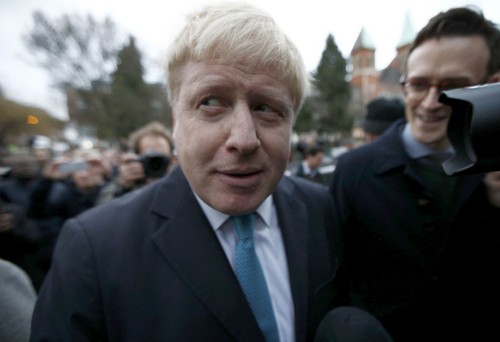
 Luso
Luso 