I need to do a techie course in a specific kind of database system and there are loads on offer on Udemy. I’m wondering if I dare try one of the courses offered by Brazilian Portuguese language teachers. This is a terrible idea isn’t it? It costs money and it’s quite challenging in English, so making it harder seems silly, but I’m drawn to the idea of a two-for-one. If there was one in European Portuguese I’d have a go, but… Hm…
Tag: Brazil
Buarque Life

Continuing to fanboy about this song. Here’s a translation, highlighting the “Proparoxítono” words.
I’ve borrowed pretty heavily from some of the many versions on Lyricstranslate. They’re all by brazilians, I think, and they’ve done a great job, so I’ve cleaned up the english and made a few other changes but generally assumed they know more than I do about the point of the song. I found “flácido” really difficult to translate. It obviously means “flaccid” but that word just sounds so wrong in a song. I’ve gone for “sagging” since it fits in both the lines it’s used in. I think that’s the best I can do but this is the sort of thing that makes you realise how hard the job of the translator is.
A couple of interesting things to add:
Firstly, I didn’t notice when I heard it but the first two lines end in the same word. That’s a bit of a cheat, Chico, come on! It’s the only example of that though.
Secondly, he keeps the rest of the line unchanged almost all the time but there are a few other small changes, which I’ve highlighted in orange. The fact that portuguese doesn’t use many subject pronouns helps in this regard. In the first line, “fosse” goes from “it was” to “he was” with no need for other changes. You just get it from the context, because “única” changes gender, meaning it is now referring to the man, not to the (a) vez.
| Amou daquela vez como se fosse a última Beijou sua mulher como se fosse a última E cada filho seu como se fosse o único E atravessou a rua com seu passo tímido Subiu a construção como se fosse máquina Ergueu no patamar quatro paredes sólidas Tijolo com tijolo num desenho mágico Seus olhos embotados de cimento e lágrima Sentou pra descansar como se fosse sábado Comeu feijão com arroz como se fosse um príncipe Bebeu e soluçou como se fosse um náufrago Dançou e gargalhou como se ouvisse música E tropeçou no céu como se fosse um bêbado E flutuou no ar como se fosse um pássaro E se acabou no chão feito um pacote flácido Agonizou no meio do passeio público Morreu na contramão atrapalhando o tráfego | He made love that time like it was the last time He kissed his wife like she was the last woman And kissed each child like they were the only one And he crossed the street with his timid steps He climbed the construction like he was a machine He built up four solid walls at the next level Brick after brick in a magical design His eyes were crusted with cement and tears He sat down to rest like it was Saturday He ate rice and beans like he was a prince He drank and sobbed like he’d been shipwrecked He danced and laughed like he was listening to music He tripped on the sky like he was a drunk And he floated on the air like he was a bird And he ended up on the ground like a sagging package He agonized in the middle of the public pavement He died on the wrong side of the road disrupting the traffic |
| Amou daquela vez como se fosse o último Beijou sua mulher como se fosse a única E cada filho seu como se fosse o pródigo E atravessou a rua com seu passo bêbado Subiu na construção como se fosse sólido Ergueu no patamar quatro paredes mágicas Tijolo com tijolo num desenho lógico Seus olhos embotados de cimento e tráfego Sentou pra descansar como se fosse um príncipe Comeu feijão com arroz como se fosse o máximo Bebeu e soluçou como se fosse máquina Dançou e gargalhou como se fosse o próximo E tropeçou no céu como se ouvisse música E flutuou no ar como se fosse sábado E se acabou no chão feito um pacote tímido Agonizou no meio do passeio náufrago Morreu na contramão atrapalhando o público | He made love that time like he was the greatest He kissed his wife like she was the only one And kissed each child like they were the prodigal son And he crossed the street with his drunk steps He climb the construction like it was a solid He built up four magic walls at the next level Brick after brick in logical design His eyes were crusted with cement and traffic He sat down to rest like he was a prince He ate rice and beans like it was the greatest meal He drank and sobbed like he was a machine He danced and laughed like he was the next one He tripped on the sky like he was listening to music And he floated on the air like it was Saturday And he ended up on the ground like a timid package He agonized on the middle of the shipwrecked pavement He died on the wrong side of the road distrupting the people |
| Amou daquela vez como se fosse máquina Beijou sua mulher como se fosse lógico Ergueu no patamar quatro paredes flácidas Sentou pra descansar como se fosse um pássaro E flutuou no ar como se fosse um príncipe E se acabou no chão feito um pacote bêbado Morreu na contramão atrapalhando o sábado | He made love that time like he was a machine He kissed his wife like it was logical He built up four sagging walls at the next level He sat down to rest like he was a bird And he floated on the air like he was a prince And he ended up on the ground like a drunken package He died on the wrong side of the road disrupting Saturday |
The song was written in the seventies, during the dictatorship when Buarque was living in exile. There are a lot of theories about exactly wht he’s trying to do, but he hasn’t really spelled it out, preferring to let people speculate. There’s a definite shift between the three stages: the first one seems quite factual, the second sort of carefree, the third nightmarish. The social criticism is about the fact that, at the time, a lot of people were moving to the cities in search of a better life but finding that living conditions and working conditions were pretty terrible.
Proparoxítono
This 👇

Is exactly the sort of thing I love. The writer is Ricardo Araújo Pereira, comedian, columnist and all round good guy (well, as far as I know) Anyway, in the passage above, he’s describing a song by Chico Buarque and saying that if a foreigner were to hear it, although they would rightly spot that it sounds lovely, they probably wouldn’t understand it and certainly wouldn’t notice that the last word of every line is “proparoxítona”* and nor would they understand that the word “proparoxítono” itself is proparoxítona**. And he’s right: it is a lovely song and when I read this in bed last night I had no clue what Proparoxítono meant but I knew I had to find out as soon as I woke up.
First of all, let’s hear the song
Oh my god, that is the good stuff alright. I know it’s Brazilian Portuguese, not Portuguese Portuguese but Jesus Christ it’s good. Inject it directly into my veins! There is something slightly strange about the rhythm of the verse though isn’t there? And I never would have spotted what it was.
Before I get I to it, let’s lay a bit of groundwork by thinking about where the stress falls in a Portuguese word.
The vast majority of words in Portuguese put the stress on either the final syllable (if the last letter is r, l, z, u or i ) or the penultimate one (basically, all other letters). Any exceptions to the rule need an accent to be added as a hint to the reader. So for example there are a lot of words that end in – ável or – ível that are pronounced with the stress on the a and the i respectively. If the accent wasn’t there you’d have to say incrivEL and confortavEL. But it’s pretty easy and you get used to it, and before you know it, you’re just used to the rhythm of Portuguese speech without even being conscious of it.
Proparoxítono means that the stress falls on the antepenultimate (last-but-two) syllable. These always have to have an accent because they break the normal rules, like bêbado (BÊ-ba-do) and mágico (MÁ-gi-co) and sábado (SÁ-ba-do) and última and único and tímido and… Well, and every other word he finishes a line with in the song, which is why you get this effect that’s really unusual in a Portuguese song, where the last two syllables of every line are unstressed.
Oh my god, that’s so satisfying. I love it! It’s the most value I’ve ever got out of a single paragraph, I think: a new word, a new song and a new way of noticing the rhythm of Portuguese music.
Anyway, if you want to know more, this video has some good analysis. It’s in Brazilian Portuguese too, so be warned if you’re trying to avoid the dialect. It’s worth making an exception for though.
*it has an a in the end here, unlike in the title, because its an adjective and palavra is feminine
**Now I know what you’re thinking: “Isn’t that the stuff Bret Weinstein and Heather Heying think should be used to cure Covid?” Close, but no, it’s not that either.
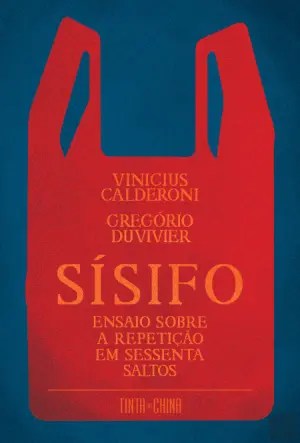
Sísifo – Gregório Duvivier e Vinicius Calderoni
Sísifo – Ensaios obre A Repetição em Sessenta Saltos By Gregório Duvivier and Vinicius Calderoni
#BRAZILIANPORTUGUESEKLAXON
Oi galera, estou escrevendo um comentário sobre um livro brasileiro embora eu aprenda português europeu. Blz!
Eu já conheci a obra de um dos autores, Gregório Duvivier por causa de uma conversa pública com Ricardo Araújo Pereira e ouvi falar dos seus programas televisivos. A cara é legal!
Neste livrinho, os dois rescrevem o mito de Sísifo, mesclado com outros fios culturais: Hamlet, a crise ambiental, memes, o teatro do absurdo. Nas palavras do Duvivier “‘A história se repete’ dizia Marx, ‘a primeira vez como tragédia e a segunda como farsa’. Acrescentamos ‘a terceira vez como um gif'”. Para mim, esta explicação vale o preço do livro em si. Fez-me rir “kkk” disse eu. uh-oh, vem aí o cancelamento. “kkkkkk”, acrescentei, porque três cás* só não dá para ganhar amigos no mundo anglófono.
Apparently in Brazil K is written “cá”, not “capa” which makes sense because cácácá sounds like laughter whereas capacapacapa just sounds like a bunch of rooks fighting over a bag of chips.
Contos de Lima Barreto
Ouvi este Audiolivro sem saber nada sobre o autor. ‘tá bem, suponho que seja brasileiro… O sotaque do narrador é brasileiro também mas isso não me assustou assim tanto porque fala de modo tão claro que percebi todas as palavras mesmo que algumas fosem desconhecidas, e deu para entender o enredo sem problemas!
Parece que os contos são satíricos. Confesso que não sei nada sobre sociedade brasileira daquela época, portanto é provável que tenha perdido muito do humor mas o seu estilo é divertido e tanto quanto entendi, gostei.
Online Language Apps

Para Inglês Ver

This is a phrase that came up in one of my lessons the other day that I thought had an interesting origin.
As you know, the british and portuguese empires share in common a long, proud history of discovery, exploration, heroism and er… (checks notes) buying and selling other human beings as if they were cattle. In the early nineteenth century, Britain was beginning to develop a conscience. Spurred on by reformers, many of them quakers, it had effectively ended slavery on the mainland at the back end of the eighteenth and was using its power and influence to shut down the slave trade, starting with its own empire (1807) and then in the various colonies or at least the ones that hadn’t already become independent by then (I’m looking at you America) in 1833. Having made some social progress of its own, Britain, as Top Nation, was keen to ensure other countries followed its good example, so it started pressurising its major trading partners such as Portugal and Brazil (independent from 1822) to stop their own slave trades, using economic sanctions and gunboat diplomacy. This was… inconvenient, let’s say. In addition to conscience, economic factors play a part in whether or not people are willing to give up being complete bastards, and the fact is that Brazil, especially, was very reliant on huge pools of free agricultural labour in a way that britain wasn’t.
To keep the gringos off their back, and keep them buying coffee, the brazilian government, in 1831, passed the Lei Feijó, which abolished the slave trade and gave complete freedom to all african slaves disembarking in brazilian ports. Which was great… or at least would have been, except they also passed out a memo to the courts that the law was “para inglês ver” (“For the english to see”) and that they weren’t meant to actually enforce it or anything.
So the phrase “para inglês ver”, applied to a law or rule, still signifies that it’s a high-minded statement of intent, only meant for show, but largely ignored. It doesn’t seem like the kind of thing that would get much use in day-to-day life, but the first chance I get, I’m definitely going to crowbar it into the conversation!
Slavery wasn’t abolished in Brazil until the passing of the Lei Áurea in 1888. Portugal, whose prime minister the Marques de Pombal, had abolished the slave trade in Portugal in 1761, even before britain, joined britain in renewing its commitment to abolitionism in 1807, freed remaining slaves in 1854. However, the catholic church held on to its slaves in portuguese territories for a further two years (well, it’s what Jesus would have wanted) and an illegal slave trade carried on after that until it was finally ended in 1869.
Ana Paula Henkel
Recentemente vi uma entrevista com Ana Paula Henkel numa programa brasileira. A Senhora Henkel é uma ex-jogadora de vôlei brasileiro. Hoje em dia, é licenciada em Ciências politicas na universidade de Califórnia, e é activa na vida politica do país. Ora bem, não concordo muito com as suas opiniões: durante a entrevista, ela não mencionou o presidente actual do país, o Jair Bolsonaro, mas falou com o apresentador (um comediante chamado Danilo Gentili) sobre Trump, sobre os jornais tendenciosos, e sobre o assunto mais chato e sobrecarregado no mundo: o excesso do politicamente correcto. Não tenho paciência para tudo isso: políticos que justificam quaisquer políticas ruins, ou quaisquer crimes contra o estado por método de dizer que as queixas vêem exclusivamente das pessoas hipersensíveis da esquerda.

Ao final da entrevista mostrou a sua top, com uma imagem de Margaret Thatcher, a ex-primeira ministra do Reino Unido. e a legenda “lute como essa garota”!
A Ana Paula é uma das personalidades desportistas que tem falado contra o fenómeno de pessoas trans, com corpos masculinos que jogam contra atletas femininas, que é algo muito polémico nesta altura, mas isso não fazia grande parte da entrevista e por isso não sei se recebesse muitos insultos, tal como a Martina Navratilova, que disse algo semelhante. Por acaso, este assunto é a única dela com qual eu concordo.
Falou do seu dedo deslocado, a a sua coragem em continuar a jogar com aquela lesão. Enfim achei-a uma personagem interessante, apesar das suas opiniões conservadores.
Sorry – so much Brazil lately! I need to get back on point here!
*=I wrote “muito abuso” but I don’t think you can use “abuse” in that context. Abuse of power but not “I got a lot of abuse”
Two Countries Separated By A Common Language
I was sent this video by my Brazilian language partner and its a pretty good illustration of the language barrier between the two sides of the atlantic. Note that the Portuguese guy (Caesar Mourão, one of the comedians on the line-up of the comedy festival I mentioned yesterday) understands the tourists because the Portuguese are so used to listening to Brazilian “Novelas” but they have no idea what he’s on about.
À Noite, No Museu

É provável que vocês tenham ouvido a notícia da semana passada sobre o Museu Nacional no Rio de Janeiro, onde houve um incéndio catastrófico que destruiu a maior parte do seu espólio de vinte milhões de peças, que constituiu a maior colecção etnográfica e histórica na América do Sul.
Claro esta é uma a tragédia para o povo do Brasil e, ainda por cima, para o mundo em geral. Tantos tesouros sem preço e insubstituíveis deixam um buraco negro na memória da humanidade. Com certeza, existem lições que os gerentes dos museus do mundo devem retirar, sobre como cuidar dos seus conteúdos. Esperemos que as aprendam. Sobretudo, esperemos que os políticos que controlam os orçamentos dos museus proporcionam dinheiro suficiente para fazer as mudanças necessárias. Claro, para o Museu Nacional, é tarde de mais, e a lição seria “casa roubada, trancas na porta”.
Eu já li vários artigos sobre a situação no Brasil, e é interessante de ver como esta tragédia encaixa-se no debate político. Por um lado, há a questão de se o governo actual é culpável, até certo ponto, pela falta de segurança, e por outro lado, este museu continha um registro verdadeiro da diversidade e riqueza de historia brasileira que contradizia a narrativa da extrema-direita, e o seu líder, Jair Bolsonaro. Já que o registro está perdido, tornar-se-á mais fácil para autoritários afirmarem que Brasil é um país homogéneo, e os índios, negros, refugiados venezuelanos, e o resto da “escória do mundo” não se encaixam lá?
Para quem quiser mais informações, eis os artigos que eu li antes de escrever este blog:
Museu Nacional Do Brasil. Um País À Procura De Si Perde O Arquivo Onde Podia Encontrar As Respostas.
Contra-Revolução Autoritária: Brasil Alerta Máximo
Lições a tirar da tragédia do Museu Nacional, no Rio de Janeiro
[Uncorrected] É mais de possível que fiz muitos erros factuais aqui. Confesso que o Brasil não é um país cuja politica anda sempre na frente dos meus pensamentos, e isso é apenas o que retirei de uns artigos que, talvez, eu mal entenda. Parece um assunto interessante mas estou a escrever exclusivamente para praticar e não para dar uma opinião considerada e baseada em evidencia. Se fizesse tal erros, ficaria interessado nas suas opiniões mas espero que não vou ofender ninguém!
 Luso
Luso 