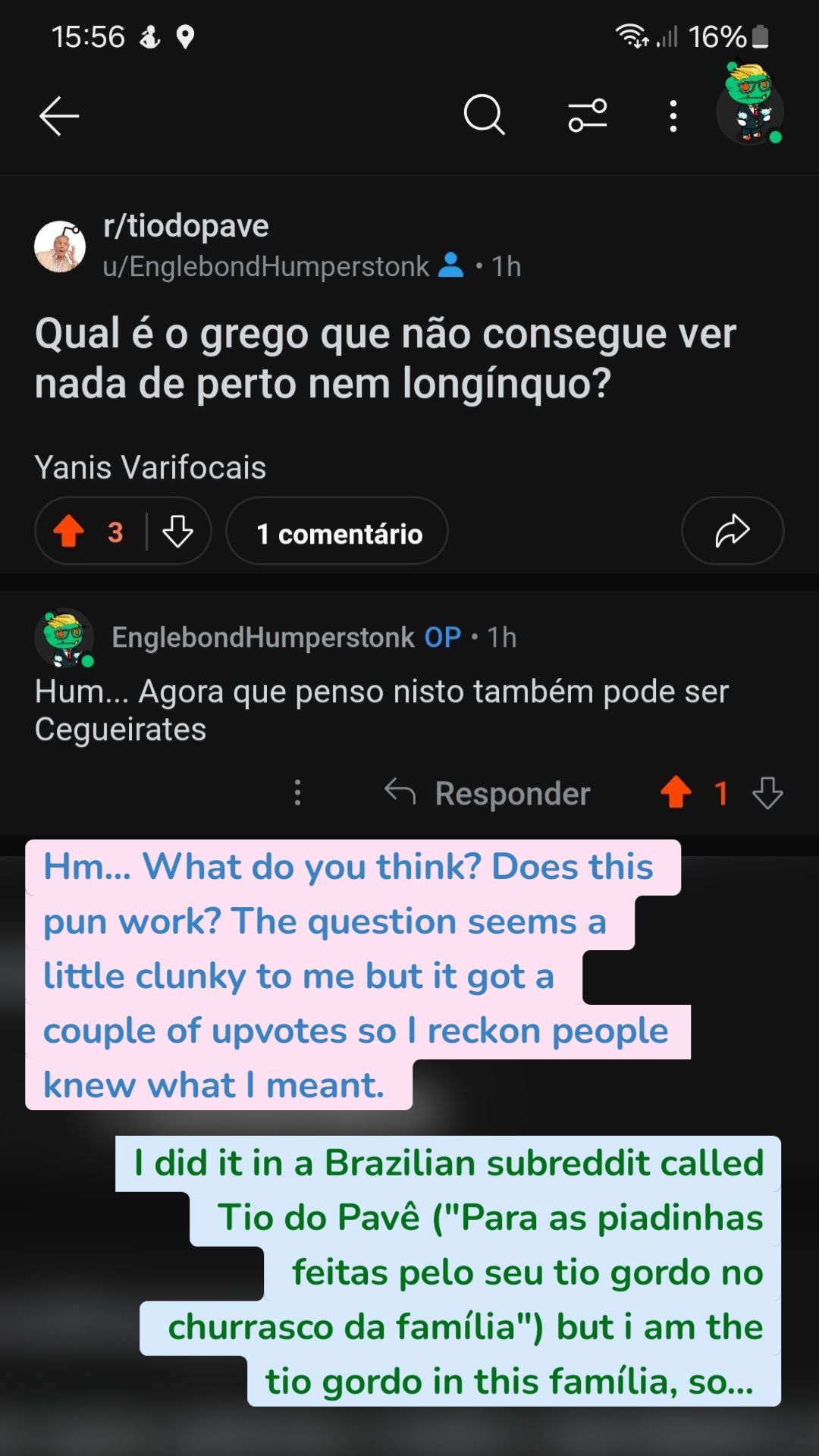
I hope this works. I’m very pleased with myself but nobody seems to have upvoted it. Are they miserable sods, I wonder, or did I mess it up?

I hope this works. I’m very pleased with myself but nobody seems to have upvoted it. Are they miserable sods, I wonder, or did I mess it up?
Sorry, it’s in English today.

After writing yesterday’s blog, I looked at some more posts by the same Instagram account. The guy’s missus, who is Brazilian, has a video here in which she talks about a shitty, racist flyer that was being handed out in downtown Lisboa. She makes a lot of good points, but she seems to have caught some negative attention from social media bottom-feeders, as you can see from the follow-up post here.
In some cases, the critics have dressed up their nonsense as a complaint about non-standard Portuguese, but obviously, the underlying problem here is just straight-up xenophobia. There are racists in every country, of course. This is as true in Portugal as it is anywhere else, and weirdly Portuguese racism even extends to Brazilians, which is surprising when you consider that Brazilians are not natives of a former colonised country, they are largely the descendents of Portuguese settlers (and their slaves). Brazil, as a state, only exists because the territory now known as Brazil was colonised by the Portuguese. In short, they are you, lads! They’ve been away longer than your sobrinha who moved to Luxembourg last year, but it’s the same principle, just with a bigger time lag.
Now, I’m not saying there shouldn’t be an immigration policy that works for the country as a whole, but it has to be one that treats people as people. The minute people get into this kind of hatred, they’re on the road to a very, very bad place.
This is all by way of getting to my main point, which is that I’ve made cracks about Brazilian Portuguese on here a few times and I’ve even shared the odd meme (here for example). But I hope it’s clear that it’s not meant to be hostile. As you know, I mostly try to stick to European Portuguese as much as possible so as not to get confused, so some of the gags are about that desire to keep the other dialect at bay. But there’s also some friendly intercontinental rivalry between Europe and America, which is, at root, born of the inferiority complex of smaller less powerful countries seeing their former colonies doing more business and having more fun than us. Taking the piss out of our erstwhile cousins’ spelling and accent helps us cope with the shame of being efete and irrelevant on the world stage.
Anyway, I thought I’d better get that clear in case anyone thought I was like these pamphlet yahoos. This is a European Portuguese blog, but we love our transatlantic friends too, despite the occasional bit of teasing.
Brazilian Portuguese is the easiest kind!

Conheci esta autora no FLILP há três meses. Achei-a muito simpática e é evidente que a sua obra tem muitas fãs no seu próprio país (aqui está uma brasileira a falar sobre o mesmo livro, por exemplo).
O romance é um thriller, que se passa em Inglaterra, e conta a história de uma funcionária de um call centre inglês chamada Ella, que descobre que foi adotada e que é a herdeira de um milionário. Em breve, apaixona-se por um rico e os dois casam-se, mas nem tudo é como parece. Em breve, a sua amiga está morta, ela mesma quase morre num acidente de trânsito e durante a sua lua de mel, ela cai montanha abaixo. Então é evidente que há alguém que quer se livrar da nossa heroína. Mas quem?
A escritora escreve bem: o diálogo parece-me natural e a ação não pára*. Infelizmente, achei o enredo um pouco rebuscado. Os planos do antagonista não têm pés nem cabeça, e há vários outros aspectos pouco credíveis. Basicamente, a experiência de ler este livro não é nada má, mas deixou-me insatisfeito. Talvez um conhecedor deste género, que esteja mais acustomado à suspensão de descrença possa gostar mais.
*Strictly speaking should be “para” following the Acordo Ortográfico but it’s the least popular change in the AO for obvious reasons, and even people who usually take care to follow the new rules tend to rebel on this one. I feel like I’ve written about this before but I can’t find it now, so here’s a Ciberdúvidas article for anyone who isn’t familiar.
Já publiquei uma tradução de outra canção de Chico Buarque, mas ouvi falar desta em relação às comemorações do aniversário da Revolução dos Cravos. Hum… não me sinto grande fã deste artista, mas cada vez que escuto com mais atenção uma música dele, adoro-a e aprendo muito. Acho que chegou a hora de ouvir os seus discos todos.
(Ah ah ah, discos, sim, escute os seus discos, avô, nós estamos a ouvir no Spotify)
“Tanto Mar” é uma música que ilustra certas coisas sobre a época e sobre a relação entre os dois países, Portugal e o Brasil. Existem duas versões na Internet, e eu pensei, “está bem, a segunda é uma gravação nova da mesma canção”. Mas não é! O cantor escreveu a primeira versão em 1975, um ano depois da revolução e dedicou-a ao povo português – ou melhor, à revolução em si. Naquela altura, o Brasil também estava em plena ditadura militar (um governo que permaneceu em vigor desde 1964 até 1985), portanto a revolução no país menor deu motivo para esperança no maior. As letras refletem aquela esperança mas por isso mesmo, foram censuradas pela ditadura brasileira.
A segunda versão foi lançada 3 anos depois, em 1978, mas desta vez com letra atualizada. Existe um sentimento agridoce perante a crise de 25 de Novembro, o enfraquecimento dos objetivos da revolução e a realidade que a passagem dos anos trouxe. Mas apesar de tudo, a esperança é ainda evidente.
Em baixo, traduzi as duas versões. Gosto da simplicidade da poesia. Um escritor menos talentoso teria tentado escrever algo maior, e teria enchido cada verso de sentimentalismo e cliché, mas esta letra é curta e limpa e não tem uma única palavra a mais.
Just a reminder, obviously, this is in PT-BR, so in case anyone is avoiding brazilian accents on their learning journey, allow me to sound the 📢#BRAZILIANPORTUGUESEKLAXON📢 as a warning.
| Português | Inglês |
|---|---|
| Sei que estás em festa, pá Fico contente E enquanto estou ausente Guarda um cravo para mim | I know you’re having a party, man I’m glad And while I’m away Save a carnation for me |
| Eu queria estar na festa, pá Com a tua gente E colher pessoalmente alguma flor No teu jardim | I wanted to be at the party, man With your people And pick a flower in person in your garden |
| Sei que há léguas a nos separar Tanto mar, tanto mar Sei também quanto é preciso, pá Navegar, navegar | I know there are miles* between us So much sea, so much sea And I know how much we’d have to Navigate, navigate** |
| Lá faz primavera pá Cá estou doente Manda urgentemente Algum cheirinho de alecrim | It’s spring there, man Here, I’m sick Send, urgently, some Fleeting scent of rosemary |
| Português | Inglês |
|---|---|
| Foi bonita a festa, pá Fiquei contente Ainda guardo renitente Um velho cravo para mim | It was a great party, man It made me happy I still hold stubbornly An old carnation for myself |
| Já murcharam em tua festa, pá Mas certamente Esqueceram uma semente Em algum canto de jardim | The (flowers) withered at your party man But certainly They left a seed In some corner of the garden |
| Sei que há léguas a nos separar Tanto mar, tanto mar Sei também quanto é preciso, pá Navegar, navegar | I know there are miles* between us So much sea, so much sea And I know how much we’d have to Navigate, navigate** |
| Canta a primavera, pá Cá estou carente Manda novamente Algum cheirinho de alecrim | Sing the spring, man Here I am in need Send me again Some fleeting scent of rosemary |
* =Léguas is more like leagues but it would sound confusing in english so I fudged it
**Maybe I should have fudged this one too: naveger is much more specifically about travelling in a ship, as opposed to english where it’s more like “finding your way”
Wow, this girl is really smashing the bilingual life! She lives in Harrogate but speaks Brazilian portuguese, having been raised bilingual, so she seems to have become a bit of a celebrity in Brazil, describing English lifestyle to a Brazilian audience in what is apparently a perfect regional accent. Harrogate is the posh bit of North Yorkshire, but even so, I feel like she’s a bit more Downton Abbey than the average nine year old even in her home town. But no worries, it’s YouTube and I love that she’s made that connection across the Atlantic! You go, girl!

I really like being able to make puns in another language. That’s me, the first comment u der the main post.
As you probably know, or can probably guess a Centavo is a hundredth of a Real (Brazilian currency)
I think the people following up are mocking the collapse of the Argentinian Peso. It’s lost more than half it’s value in the last year including a sharp drop-off when the sensible candidate got knocked out if the election race.
I hope its clear from the review, but in case it isn’t, this is a great book to read, but don’t spend time studying the grammar because it’s a million miles from anything you’ll want to write in a PT-PT exam. See this post for the most glaring example but it’s not the only thing by any means.

Raramente leio livros brasileiros porque português brasileiro é tão diferente. Ainda por cima, o português neste livro é longe do padrão de português brasileiro: há montes de calão, expressões regionais e gramática específica à região onde a história tem lugar. Mas apeteceu-me ler porque ouvi tantas coisas boas sobre este autor e esta obra sobretudo. O livro conta a história dum grupo de jovens e meninos abandonados que moram num trapiche(1). Recordei-me dos “Lost Boys” de JM Barrie (o líder ate se chama Pedro, a versão português de Peter) ou as carteiristas do Fagin no Oliver Twist de Dickens. Mas o tom do romance é mais escuro.
São criminosos, temidos pela gente da cidade, mas ao mesmo tempo, são crianças que sentem saudades da segurança e da felicidade de um lar e uma família. São sempre à procura de uma “mãezinha” e querem ir brincar no carrossel. Sem hipótese de viver como crianças, tornaram-se homens, mas não só homens: criminosos. Roubam viúvas, exploram pessoas simpáticas, lutam com navalhas e punhais. A personagem principal, com quem o autor pretende nos simpatizemos, até viola uma rapariga, o que é contado de maneira gráfica, e fica surpreendido quando depois ela o pragueja.
Ao longo dos meses, as personagens andam pelos seus percursos – há tragédia e redenção, mas o pano de fundo contra o qual o enredo se desenrola é a violência e caos na sociedade brasileira nos anos trinta do século XX, e o autor retrata esta sociedade muito nitidamente. É um livro virtuosístico.
(1) Entendi esta palavra como “armazém” mas ao que parece, tem um outro significado em PT-BR: um cais. Acho que armazém faz mais sentido neste contexto porque não consigo imaginar dezenas de pessoas a dormir num cais! Mas vou ver o filme em breve e espero entender melhor depois.
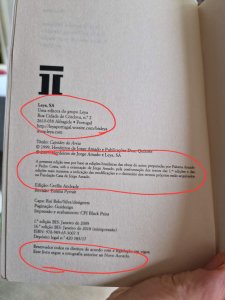
The book I’m reading right now is a classic Brazilian book, “Capitães da Areia” by Jorge Amado, about a group of street kids in Salvador da Bahia in the 1930s. My edition was published by a portuguese company called LeYa, and advertised under the government’s Ler+ initiative. At first, I thought someone at the publishing house had tweaked the language to make it more understandable to portuguese readers. Let me explain why, and why I was wrong.
As you probably know, (check here if you don’t) Brazilians typically address each other as “você” in their conversation and change the verb endings accordingly. “Tu” is more common in Portugal.
What’s weird about this book is, the characters all address each other as “tu”, after the European style, but the verb conjugations all use the você form. This looked like a mistake to me, so I went online to ask if maybe someone had screwed up at LeYa HQ.
Here’s my question in portuguese, and I’ll put a summary of the answer down below in English.
Estou a ler um livro brasileiro chamado Capitães da Areia, mas ao que parece a editora, Leya, mudou determinadas frases para soarem mais naturais a um leitor europeu. O resultado é… Surpreendente. Ou pelo menos eu fiquei surpreendido. Há montes de diálogo onde o pronome é “tu”, como se usa em Portugal, mas o verbo fica na terceira pessoa como se seguisse o pronome “você”
“Tu quer me fazer um favor”
e
“Tu liga para guarda?”
e
“Tu sabe, Sem-Pernas, que ele é um bicho calado”
Isto tudo está errado ou eu estou a enlouquecer? Ou… Talvez haja uma explicação melhor. É normal em PT-BR? A maior parte da história parece-me como o original (calão e vocabulário brasileiros, “trem” em vez de “comboio”, etcetera. Até há um daqueles “us” com hum… Umlaut… (Google) Trema! U com trema, que nem sequer existe em PT-PT, nem antes do AO nem depois.
Many of the replies said yes, this was a horrible disgrace, but there were quite a few brazilians who told me that all this is normal: it’s just a dialect spoken in some parts of southern Brazil. Besides, they added, the street kids haven’t really had the benefits of education, so it’s no surprise that they don’t have immaculate grammar.
There are a couple of ways of approaching the question of how to define good use of a language. The first is prescriptivism, which says there is one correct way of speaking and anything that deviates from it is wrong. The second is descriptivism, which starts from the premise that if people are speaking in a non-standard way and being understood by the people around them then they are just speaking a different version of the language, using different rules, and the linguists’s job is to describe what they’re doing, not to tell them they’re wrong. Most linguists and dictionary writers tend to be descriptivists on principle* with some exceptions**. I tend to be mostly descriptivist until someone tells me that ‘literally’ can mean ‘figuratively’, at which point I reach for my kalashnikov.
So, for example, you could argue that Brazilian portuguese is bad portuguese because it has diverged from the standard form of the language, spoken in Lisbon. But you could equally well say the same about Madeiran portuguese, or. Scouse English. In fact, if you wanted to be very hard-line about it, you could say portuguese is badly-spoken Latin since it has deviated from the language the Romans brought there in the third century BC.
Let’s say, for the sake of argument, that portuguese is it’s own language now, and that Brazilian portuguese is one among many dialects of Portuguese spoken in Portugal and it’s former colonies. But what about within Brazil? Is this Salvador de Bahia variant a separate dialect that has diverged and formed its own rules or are it’s speakers just hicks whose babbling would be scorned by educated people in Rio, let alonwle Coimbra?
The answer probably depends on your personality and your politics, but for me, as a learner, I just have to appreciate the book for what it is: a milestone of literature in portuguese. Let the linguists argue over the details.
If you’re studying a language, you should probably think like a prescriptivist because the people marking your work will be following a standard. If you use a você verb ending with someone you’ve addressed as tu, they won’t treat that as a delightful regional variation, they’ll just deduct marks. I made this point in what I thought was a light-hearted way to a strong descriptivist who told me “right and wrong don’t exist” when it comes to questions of language, but I got downvoted, suggesting most people disagreed. 😂

* If you haven’t read “The Meaning of Everything” by Simon Winchester I can recommmend it, and it addresses why early lexicographers made this choice.
**There have been some famously sarcastic and biased definitions in English dictionaries in the past. More recently, prescriptivist tendencies have come out in attempts by activists to get the meanings of words changed in order to short-circuit debate and bring about social change in a more top-down way. The most famous was this one in the aftermath of the George Floyd murder.

 Luso
Luso 