This was yesterday, actually, but still…
View this post on InstagramA post shared by Colin (@18ck) on
This was yesterday, actually, but still…

In a sense it gives a lot of backing to the strategy often called “language-hacking”, which aims at getting people to grapple with the language more in a range of settings and study it less, but there are important differences. For example, it seems to be against the idea of massive input, and in favour of “little and often”. That’s not something you’ll hear in language hacking circles.
Quite interesting if you like to know the theory behind what you’re doing but if you really want to get stuck into a language you’re probably better off with something more hands-on like Fluent in 3 Months by Benny Lewis
 Acabo de ler o “Caim” de José Saramago. Custou-me muito ler, não apenas porque há tantas palavras desconhecidas mas também porque este escritor é famoso por ter escrito num estilo experimental. Portanto, neste livro há parágrafos que se esticam através de 5 páginas com pouca pontuação, nomes de pessoas sem letras maiúsculas, e tudo isso torna a leitura numa montanha-russa de confusão para um estudante como eu. Felizmente, já li a Bíblia, que me ajudou muito.
Toda a gente conhece a historia de Caim, filho de Adão e Eva, que matou o seu próprio irmão. Nas mãos de Saramago, este assassino original torna-se um rebelde contra o Senhor. Depois da sua expulsão do jardim, Caim percorre o mundo e viaja involuntariamente no tempo, entre épocas e locais, onde se encontram as personagens dos contos mais infames do testamento antigo. Assiste a queda das muralhas de Jericó, agarra a mão de Abraão quando está ao ponto de sacrificar o seu filho, e foge com Job do fogo e enxofre que engolem Sodoma.
A sua conclusão é que Deus é rematadamente maluco, e por isso, este próprio Caim tenta fazer alguma coisa muito ambiciosa: nada mais nada menos do que frustrar a vontade do Senhor, mas não quero explicar precisamente como, ou com que nível de sucesso, porque não quero dar spoilers!
Saramago ganhou o Prémio Nobel nos anos noventa, e mereceu: este livro é impressionante. O protagonista é um ser humano, mais realista, e melhor realizado que o da Bíblia. Trata-se principalmente de uma crítica de religião, mas já temos tantas daquelas! Também é uma história divertida. Por exemplo, na cena com Abraão, Caim amaldiçoa o patriarca pela sua falta de humanidade e sentimentos dignos de um pai. Isso serve como acusação poderosa contra Deus, mas na página seguinte, quando chega o anjo, há um momento de comédia que me fez rir em voz alta. Além disso, o livro foi escrito num modo brincalhão e ligeiro, apesar dos seus parágrafos gigantescos. Cá para mim, o livro foi um desafio mas não foi trabalho.
Acabo de ver uma apresentação dum novo livro escrito por uma autora portuguesa, chamado “A Inglesa e o Marialva”. É baseado em factos verídicos, sobre uma inglesa que chegou em Portugal nos anos sessenta. Tem um bom aspecto.
Alguém fez uma pergunta que muitos devem ter-se se perguntado: o que é que é um “marialva”. Foi explicado que esta palavra tem dois significados: pode ser um bom cavaleiro ou um homem que se traja como o Marques de Marialva, e tem o comportamento daquele fidalgo; forte, bem vestido, tipo Dom João. Mais recentemente, o nome tornou-se mais negativo, portanto muitas vezes significa um bêbado, ou um homem que corre atrás de mulheres.
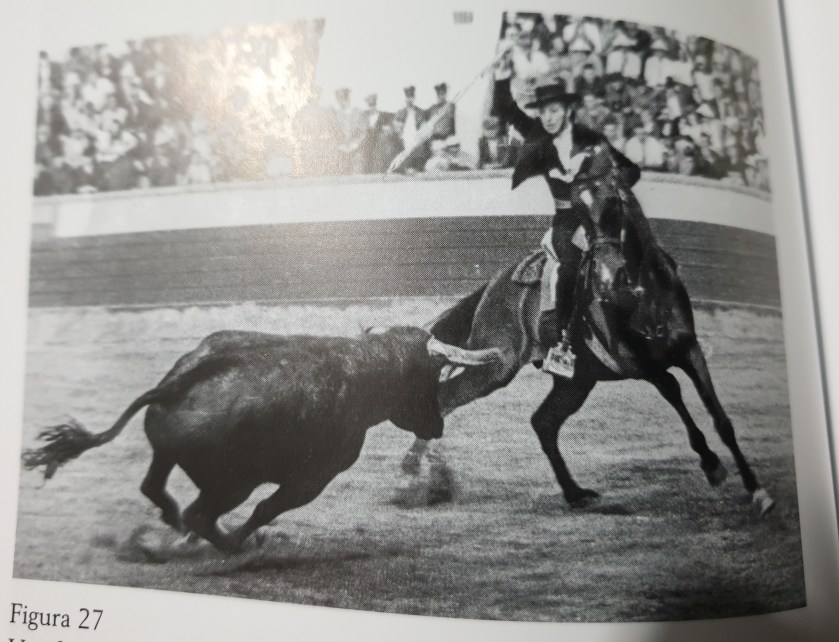 https://www.instagram.com/p/BvAGG_HAYFf/?utm_source=ig_share_sheet&igshid=19jshjfc41kl2

Diz-se que não se pode avaliar um livro pela capa, mas confesso que comprei este livro por esse motivo só. Os livros da editora Tinta da China são sempre bonitos. Este tem capa mole cor de lavanda com cantos arredondados. O assunto é igualmente bonito, apesar de ser menos alegre. O assunto é a morte. A escritora viajou com profissionais da saúde e de cuidados paliativos para visitar pessoas com pouco tempo de vida e familiares dos recém-falecidos, numa paisagem fora das grandes cidades, onde parece que um modo de vida está a morrer também. Ali, ela ouviu as histórias das pessoas, e escreveu os pensamentos delas sobre a morte, a vida e o que é importante no fim de contas.
 Este livro é uma coleção de contos. O primeiro tem um tipo de beleza melancólica que nunca chegou a ser deprimente apesar de tanta tragédia. Os outros também seguem o mesmo padrão; também cheio de tristeza mas mesmo assim, não tive vontade de parar de ler porque são tão bem escritos.
 Uma grande amiga minha ofereceu-me este livro e eu nem sequer conhecia o autor antes de o receber. É uma banda desenhada. A arte é muito gira com muitas piadas visuais, escondidas nos pormenores. A história parece o enredo de um episódio perdido da série “Black Mirror”.
Gostei bastante, se bem que o final deixou-me insatisfeito. Não posso dizer o porquê sem dar spoilers, mas… hum, não sei. Acho que é descabido. Existe uma “versão B” do mesmo livro que tem um desenlace diferente e se calhar isso seria melhor…?
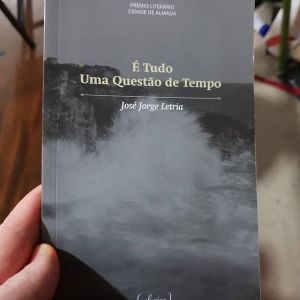 Mais uma tentativa de apreciar a poesia portuguesa… Gosto muito de José Jorge Letria desde ouvi um poema dele num podcast. Foi a primeira vez (e continua a ser quase a única vez!) que gostei de um poema português. Lamento que ainda falte paciência para ler poesia em qualquer língua, e o problema fica ainda pior quando tenho de alcançar o dicionário a cada 4 linhas! Mas de vez em quando uma luz penetra a escuridão da minha ignorância e consigo ver a beleza da escrita. Às vezes reli os poemas mais de uma vez para aumentar a experiência.
 Este livro é o segundo deste autor que já li. Gostei bastante! Consiste num serie de artigos, publicados inicialmente na revista Visão. São muito engraçados. Soltei gargalhadas durante quase todos. Além disso, os artigos frequentemente têm temas sérios, relacionados com as notícias da época em que foram escritos. Há poucos comediantes que conseguem escrever opiniões assim, e dar um resumo duma situação, com humor e, quando é necessário, força.
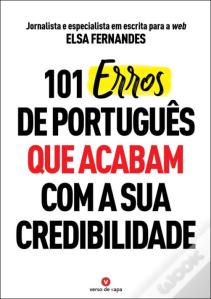 So I got this book “101 Erros de Português que Acabam Com a Sua Credibilidade” (Available on Amazon | Bertrand) , which is really, really *not* aimed at estrangeiros like me, so a good deal of it either went over my head or seemed like something I could ignore safely. but I thought I’d go through it and list out the errors that are worth remembering. I’ll leave out the obvious idiocies – the portuguese equivalent of saying “He asked pacifically how big the specific ocean was” – and also the very fancy, finer-points-of-the-language stuff and just stick to listing out the ones that might be useful to refer back to later.
Ordinal numbers – because portuguese uses primeiro, segundo, etc instead of first, second, etc, they use 1°, 2° instead of our 1st, 2nd, etc. Now, obviously, this looks like a degree sign, so to distinguish it from a temperature, they put a dot after the number like this: “2.°“. Or should. The same applies to feminine nouns such as days of the week: 2.ª-feira. Note the dot, the dash and the lower case f! This seems not to be very strictly applied by native speakers. This is the first hit I get on google. No dot, no dash, upper case F
Percentages – plural or singular?
Collective nouns – as I noted in a previous post, the portuguese are a bit more consistent in using colleective nouns like “a gente”, “a família” and “a maioria” as singulars that take singular verbs and singular adjectives but the author reminds us that if that’s followed by a plural, it reverts to being plural: “A maioria dos ingleses votaram para o Brexit”. Basically, it hinges on whether you’re talking about the group as a solid mass or as a set of many individuals, I think
Acerca de/A cerca de/Há cerca de – three similar-sounding phrases.
Laughter – Ah! Ah! Ah! not Ha! Ha! Ha! This seems like a weird thing to have as a rule, but that’s what the book says, babe. Ah! on its own is still an interjection, denoting surprise, as in english
Billions – Bilião should designate um milhão de milhões as it… should in the UK. Curiously, the author has given us up as a lost cause and grouped us with the countries that use a short form billion – a thousand millions. Brazil is one too, but a long-form billion is the standard in Europe generally.
Bimensal and bimenstral – OK, a bit obscure this one. Bimensal means twice a month and bimenstral is every two months.
Cará(c)ter – has an accent in the singular form, even though the plural – caracters – doesn’t. Obviously, this is just for alphanumeric characters, not characters in a film – those are personagens or protagonistas.
Círculo vicioso, not ciclo vicioso – as in english, dammit!!!
Concerteza is not a thing – it’s com certeza and that’s that
Discordar – When you agree, it’s “concordar com” but when you disagree you have to use “dioscordar de” – so you disagree from someone and agree with them. I like that.
Fake Acordo Ortográfico changes – Some words that look like they should have dropped their C in the AO haven’t. It’s contacto, not contato, and facto not fato (which would be confusing, what with that already being a word)
Dates seem to have set formats so it’s either the long form
or in a short form, with the year foremost
Decerto and de certo – this was interesting to me because I didn#’t even know there was a word “decerto”. Apparently it means the same as “com certeza” and “certamente”. De certo (as two words) is used in phrases like “de certo modo” and “o que temos de certo” – so it means “in a certain…” or “of what’s true”
De forma que – “In order to” can be used in place of “para”. Occasionally written as “de forma a que” but this is wrong.
Despender – “to expend” – always has an e as its second letter, not an i, even though the noun (“dispêndio”) and the adjective form (“dispendioso”) have an i.
Descricao and Discricao – Description and Discretion. Not to be confused
“Em Vez de…” and “Ao invés de” – are sometimes used interchangeably. The first one means “Instead of” and the second “Contrary to”. So one could be used in a sentence like “Tocou uma guitarra em vez dum piano” (“he played a guitar instead of a piano”) the other would be used in “Ao invés de melhorar a banda, a guitarra fez ainda pior” (“Rather than making the band better, the guitar just made it worse”).
Empenho/Empenhamento – both mean the same thing (commitment) but the shorter one is preferable
Foreign Words – like french, portuguese is plagued by words from english showing up especially in discussions about media, business and computing. She recomments finding portuguese equivalents where possible: Gosto for “like” on facebooks for example, clique for click, aswell as avoiding neologisms based on other languages like “equipe” for “equipa” and “controle” for “controlo”. There’s a list of “estrangeirismos” on the Portal Da Língua Portuguesa along with some suggested alternatives, where they exist.
Latin phrases – behave like in english, so they’re italicised when they’re used, and the littlest one, etc., has a dot after it, with surrounding punctuation behaving just as it would in english too.
Fim de semana – not fim-de-semana
Adverbs ending in -mente – No adverb ending with -mente needs an accent, even if the adjective it’s based on does. This seems like a useful rule! I love useful rules!
Some stuff about “haver” – apparently some people write há-des for some reason. Presumably thinking the -de is part of the verb, and most verbs take an s on the end in the second person singular. It’s hás-de of course. Some people also use “houveram” as the bast tense of “há” when talking about more than one thing “houveram muitos erros no meu último blogue” but unlike “existir”, you don’t use the plural form in that context.
Business Bullshit – cited examples of fancy words being misused in the workplace to sound more hardcore
Imprimir and its participles – Imprimir has two participles – imprimido and impresso. Imprimido is used with ter and haver (tenho imprimido….) when it’s behaving in a more “verby” way and impresso is used with “estar” and “ser” when it’s behaving in a more “adjectivey” way. “o documento foi impresso”
Interveio – intervir is based on vir not ver so the past tense is “interveio” and not “interviu”
Informar (de) que – Informar someone de que something is used when the sentence refers to who you’re informing (“Informo o professor de que chega atrasado”) and informar que is just used when you’re giving out some information but not saying who to (“Informa que chega atrasado”)
Ir ao/de encontro – “Espero que esta proposta vá ao encontro aos seus objectivos” means “I hope this suggestion meets your objectives”, but if we change ao to de it means “I hop it opposed your objectives”. Common mistake, apparently!
Cash – euros, dollars etc are written with small letters when referraing to actual day-to-day notes in circulation (libras, euros) and capitals when discussing the currency itself (A Libra Esterline). When writing amounts of money, The Euro symbol or EUR goes after the number, not before as in english.
Numbers – some rules for orthography
Ó vs Oh – Ó is used when addressing or calling someone as in “Ó Evaristo, tens cá disto?” the phrase in O Pátio das Cantigas that drives the shopkeeper to distraction. Oh! is more of an indicator of surprise: “Oh que pena!”
Reflexive pronouns – being misheard as part of the verb – e.g percebeste / percebes-te, falasse/fala-se. Just something to be aware of, really.
Porque/Por que/ porquê – A lot of people get these wrong, apparently, and especially in questions.
Poder/Puder – Poder is very irregular but apparently you can remember when it’s a u and when it’s an o by remembering that it’s an o when the e that follows it is enunciated as an ê and u when the e is enunciated like an é. TBH, I’m none the wiser but i’ll interrogate Mrs Lusk about it later when she’s recovered from my obtuseness over the difference between porquê and porque. For a start, there are some parts of the verb where the e is silent, or an near as dammit.
Senão and se não – Whew – already written a post about this one.
Reunir – Normally means “bring together”. Used reflexively (“reunir-se”) it means “meet”. If it’s followed by “com” (ie, “meet with”, it’s always reflexive.
Abbreviations – As in english, there’s a difference between “acrónimos” (abbreviations like LASER and NATO that can be said as words) and “siglas” (standard abbreviations like UN or RSPCA that are said letter-by-letter). They are to be written in caps with no dots between them. To make them plural, you pluralise only the article – e.g. “As FAQ”, not “As FAQs”. Nobody is quite sure whether SMS is masculine or feminine so maybe say “uma mensagem” instead and save yourself the headache.
Ter de and Ter que – I’ve seen a few different teachers defending different opinions on this one but Elsa Fernandes is of the school of thought that thinks “Ter de” is right and “ter que” is a vulgarisation. Tenho de fazer alguma coisa means I have to do something. You can say “tem muito que melhorar” meaning “It has a lot that is beneficial” but not “ter que fazer alguma coisa”. It’s done wrong often eough that you’ll see it that way though.
Trata(m)-se de – Like “haver”, “tratar-se” is a verb that is basically only ever used in the third-person singular. Trata-se de means something like “it refers to” or “it deals with” or even just “it’s an example of”… it’s quite hard to translate though. I used to think it meant “it’s about” so I’d say stuff like “Este livro trata-se dum homem que…” but that’s wrong. The example she gives is “trata-se de tecnologias capazes de transformar a forma como trabalhamos”, which is something like “It’s all about technologies that can change how we work”.
Ups! – Not Oops!
Compound verbs with pronouns – In the example give, “vou-me ligar à internet” or “vou ligar-me à internet”, either is fine. It doesn’t go into great detail so I have had a look at the gramar book. The rules seem to be:
It tends not to matter whether the pronoun follows the main vern or the auxiliary. It’s more a matter of style than rules (thank the lord! at last!) except where the auxiliary in question is “ter” or “haver”
It’s a funny old book. It purports to show errors “that will obliterate your credibility” but in some cases, she’s just highlighting that there are two options but one is preferable, which doesn’t seem like it would obliterate anyone’s credibility. In short, it seems more like a style guide and arguably a bit pedantic in places. There’s also an error (I think – and my wife agrees) on page 36!

 Luso
Luso 