Since I’ve decided to go and see this band, I thought I’d pick a video of theirs and start translating it. The more I did, the more I regretted my choice. I should have chosen Na-Na-Nada or Amanhã ‘Tou Melhor or something a bit livelier. And something with a video that is less baffling than this one. Oh well, everything is a learning experience, and I found a couple of interesting vocabulary nuggets in this one, so here we go…
The song seems to be about getting drunk on Friday night and not remembering much but having your friends tell you what happened. Or… something. You wouldn’t know it from the video. Seriously, what is going on with the video?
| Água de Cana, outra etapa da gincana Na demora que eu procuro e que a semana nunca traz Atraso bem o final p’ra madrugada ou meio da tarde Só segunda é que volto a estar capaz | Cane Water*, another stage of the rat-race** In the pause I’m looking for and the week never brings I don’t stop till morning or the middle of the afternoon I only start functioning again on Monday |
| O que eu prevejo no futuro é tão duro Que a cabeça não hesita em dar abrigo ao temporal Portanto escuta meu querido, sei que és muito meu amigo Mas hoje vou voltar ao Carnaval | What I predict in the future is so hard That my head doesn’t hesitate in sheltering the storm So listen, dear, I know you’re a good friend But today I’m going back to the Carnaval |
| Por pouco que me lembre do que acontecer Eu sei que vai valer a pena Não é preciso lembrar Tenho amigos com boa memória | As little as I remember about what will happen I know it will be worth it I don’t need to remember I have friends with a good memory |
| Por pouco que me lembre do que acontecer Eu sei que vai valer a pena Não é preciso lembrar Os meus amigos contam-me a história P’ra depois poder contar | As little as I remember about what will happen I know it will be worth it I don’t need to remember I have friends with a good memory To tell me about it later |
| Depois da sesta, bater a mão na testa Só é coisa que eu evito se a memória me falhar E por saber que é verdade, perco sempre a humildade Se decido arrastar-me e não parar | After a nap, smack myself in the forehead I only avoid it if my memory fails And by knowing it’s true I always lose my humility if I decide to drag myself along and not to stop |
| Se houver cortejo é p’ra ter esta fartura Vai depressa que só dura enquanto a culpa não voltar Com sorte a culpa não bate A culpa não vai fazer parte da história Que amanhã me vão contar | If there’s a cortege, it’s to have this excess It goes quickly and only lasts while guilt doesn’t return With luck, the guilt doesn’t strike Guilt won’t play a part in the story That they’ll tell me about tomorrow |
| Por pouco que me lembre do que acontecer Eu sei que vai valer a pena Não é preciso lembrar Tenho amigos com boa memória | As little as I remember about what will happen I know it will be worth it I don’t need to remember I have friends with a good memory |
| Por pouco que me lembre do que acontecer Eu sei que vai valer a pena Não é preciso lembrar Os meus amigos contam-me a história P’ra depois poder contar | As little as I remember about what will happen I know it will be worth it I don’t need to remember I have friends with a good memory To tell me about it later |
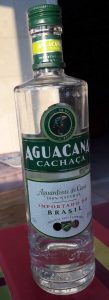
*It’s weirdly difficult to find out what água de cana actually is. Cana usually means sugar cane, but googling it, I mostly get results relating to “caldo de cana”, a non-alcoholic drink made from cane juice, preserving some of the minerals and nutrients, justifying its claim to be a health drink even though it is sugary AF. However, it looks like the real meaning is even less healthy because água-de-cana, with hyphens, is one of the alternative names given on the Wikipedia page for Cachaça – a kind of rum made of sugar cane and used in making the cocktail known as caipirinha. Mmmm, caipirinha…
**This obviously has the same indian origin as the english word “Gymkhana” but while, in english, it tends to be an equestrian event or possibly some kind of motor sport, in portuguese it can be a series of challenges either done as a game or as part of an exam (one reddit user told me “Aqui em Portugal, alguns cursos (como, por exemplo, medicina) têm algumas avaliações em formato de gincana, em que os alunos têm que ir de sala a sala, respondendo a questões orais sobre diferentes temas.“. According to Infopédia, the word has a figurative meaning: “sucessão de peripécias ou imprevistos” so I think he’s talking about the unending flow of stuff we have to deal with every day, and comparing that to a gincana, and so I’ve picked “the rat race” as the closest English translation. It seems to fit with the rest of the lyrics, I think God, two asterisks already and I’m only on the first line. This is going to be a long slog, isn’t it***!
***No, just those two by the look of it. That was nice of them, getting both the footnotable items out of the way early. Thanks, lads.
 Luso
Luso 