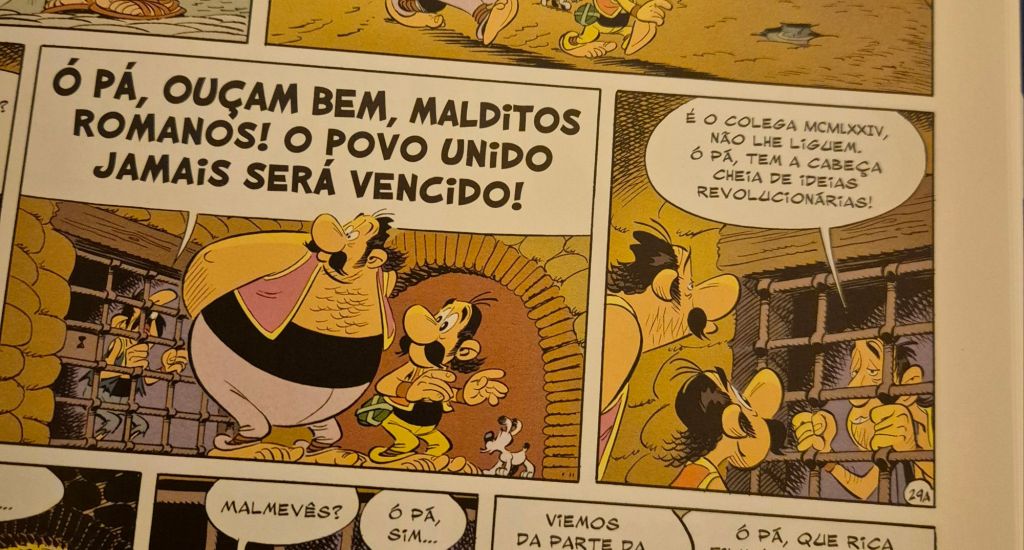
Adoro esta série de bandas desenhadas e estou muito feliz que os nossos heróis, Astérix e Obélix chegam finalmente na província romana de Lusitânia. A sua missão é libertar Malmevês, um empresário de garum (uma espécie de molho de mariscos) e o pai da Saudade, (uma mulher pela qual o Obélix está caidinho, embora não admita!). O Malmevês está preso numa cadeia romana porque é suspeito de um atentado contra o imperador, mas os gauleses espertos sabem descortinar o verdadeiro assassino, disfarçando-se como Tugas para entrar sem ser capturado.
Ainda bem que não havia partidos políticos da extrema-direita porque às vezes os visitantes ajudam muito.
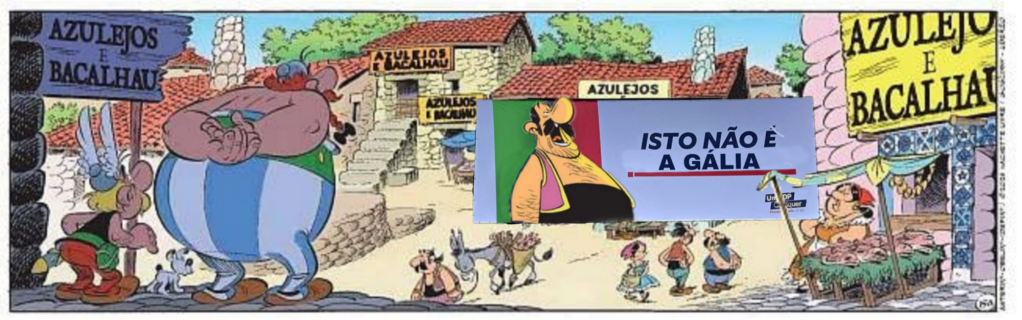
Como sempre, os habitantes da terra onde a história tem lugar têm as características dos atuais habitantes do país moderno: comem bacalhau, construem calçadas mosaicas e cantam poemas tão melancólicas que quem os ouve desata logo em lágrimas.
Apesar da morte dos criadores, Goscinny e Uderzo, a série retém o espírito dos livros originais: humor, otimismo, alegria e inteligência.
I’m reading this and enjoying the little touches the authors and translators have put in for the home team. I can already see a plot twist coming. In Asterix in Britain, the British are constantly drinking hot water with a spot of milk until the Gauls introduce them to a herb called “tea”. In this, the lead character is called Tristês, and the villagers are constantly referring to destino and emoção so i reckon i can guess what famous national characteristic the Gauls are going to help them discover!
(EDIT: no, I’m wrong – about ten pages in a character called Saudade turns up)
Olhinhos de Couve
This is just the knotty bit at the heart of the cabbage, not the tenderest leaves, which is presumably why the prisoner is getting it. Incidentally, the prisoner is called Malmevês, and of course names in Astérix books are always jokes. I don’t know if this is a reference to the Camões poem “Indo O Triste Pastor Todo Embebido” or if it’s just a random set of words they’ve chosen as his name.
Garum
Getafix/Panoramix explains that it’s a fish sauce, and it does seem to be a word in current use not just a Latin word dropped into the text.
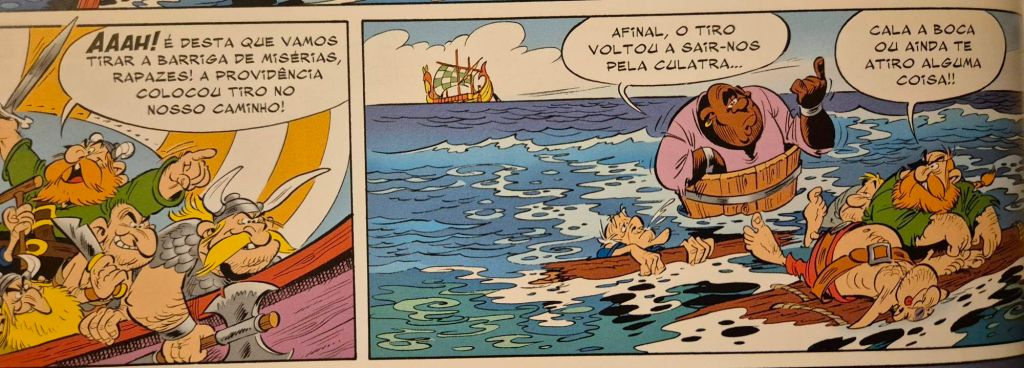
O Tiro Saiu Pela Culatra
The pun here is based on the fact that the ship the pirates attack is a phoenecian trading vessel, and Tiro (Tyre) is a busy trading city in Phoenecia (modern Lebanon). The Nubian is referring to an expression “o tiro saiu pela culatra” (The shot came out through the breech). In other words, our plan backfired.
Zepovinhium
I can’t believe I actually googled this. D’oh! I wrote a blog about Zé Povinho just the other day so I really should have recognised it! And of course “À beira mar plantada” is a reference to a poem by Tomás Ribeiro who describes Portugal as “O jardim da Europa à beira mar plantado”
Tabefe
Obviously means something violent – a slap, in fact. I googled it wondering if it was some sort of corruption of “feito ao bife” but it doesn’t seem to be.
De Lá Por Onde Der
This smelled like a set phrase to me – and it just means “wherever you might come from”. And yes, by the way, what sets the Portuguese characters from everyone else is that they pepper their speech with “ó pá”
Ricky Gervais
Er… Why the heck is he here? Does he have some link to Portugal? As far as I can tell, no, they just sometimes do cameos and they decided to include him. Weird choice but OK, whatever.
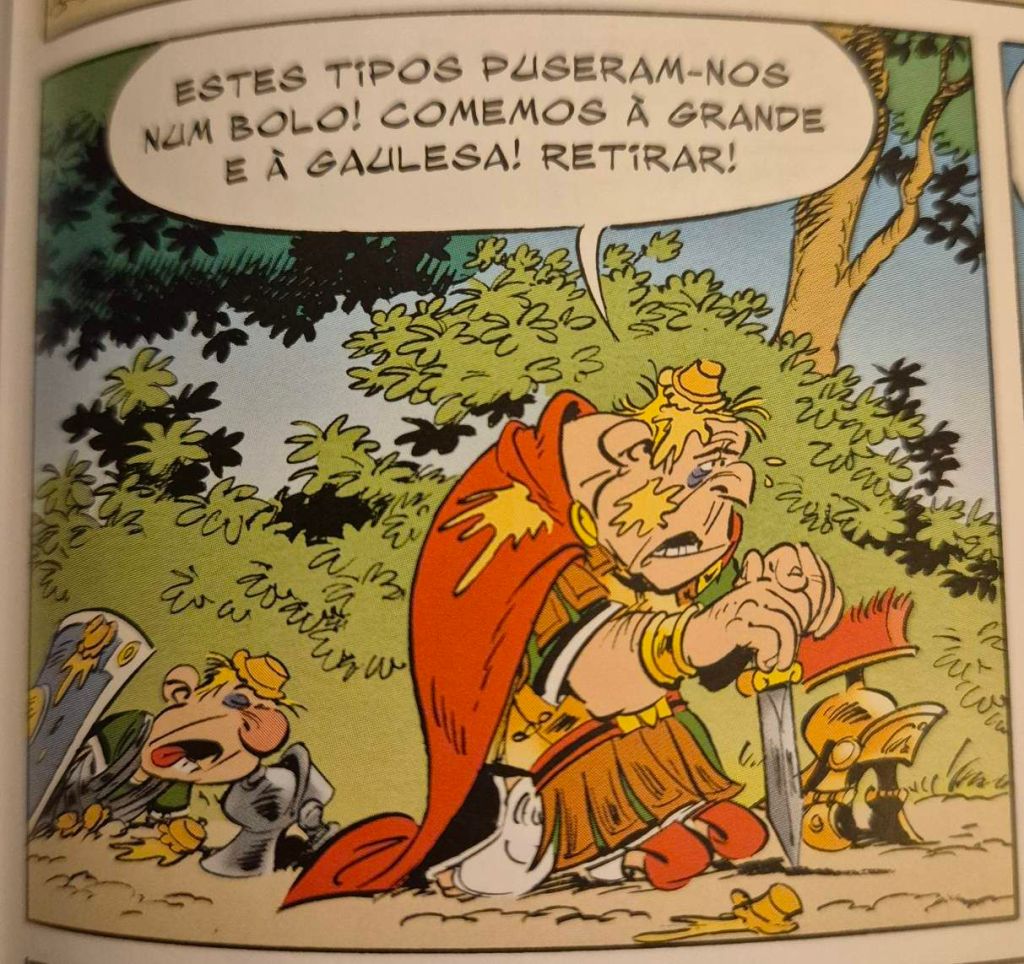
À Grande e À Gaulesa
The custard tart massacre provides plenty of scope for comedy, mostly fairly obvious. I feel like “pôr alguém num bolo” must be an expression but I couldn’t find it. Bolo has some sex-related meaning, so when I searched for it with “pôr” at the same time most of the results were PORn, so I gave up. “À grande e à gaulesa” is a romanised version of “à grande e à francesa”, which just means in luxury, and with abundance. Origin here.
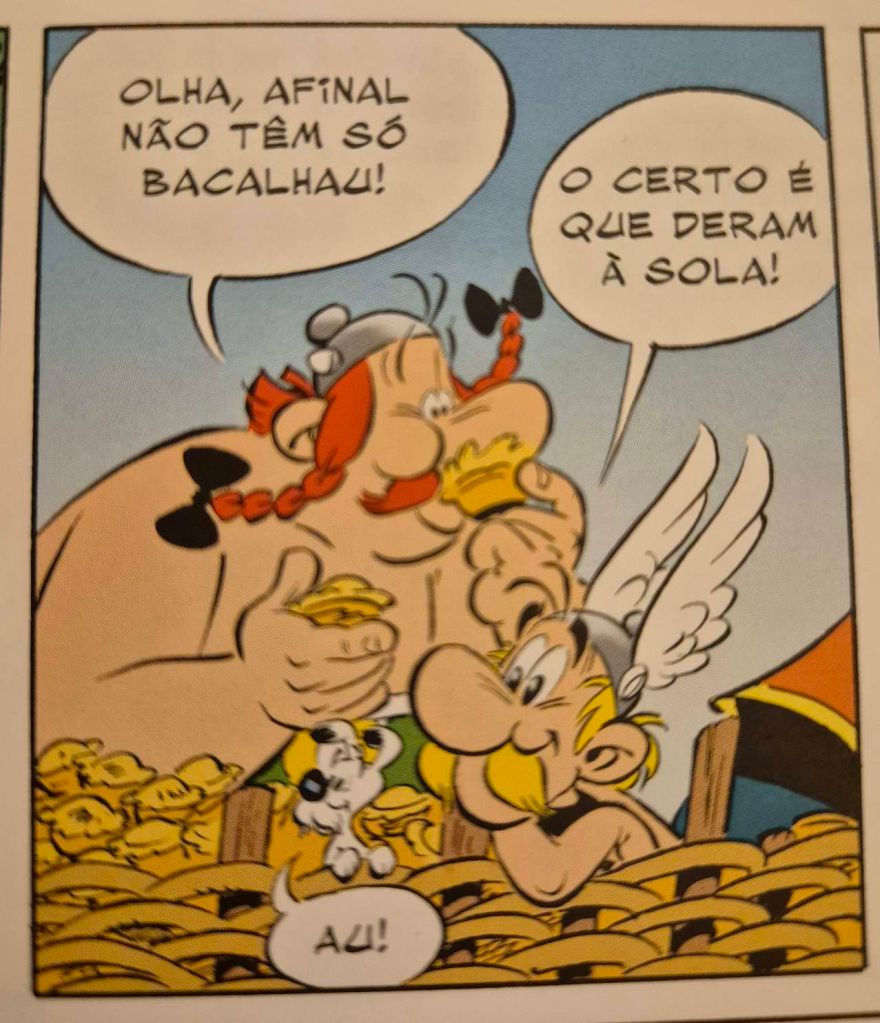
Dar à Sola
And straight after that, is this another joke? Dar à sola means to run away and the “sola” there means the sole of your foot. I want it to be a pun based on the fact that Obélix is talking about cod (of which he is not a fan!) and sole can also be a kind of fish. It doesn’t quite work in Portuguese though because the words are slightly different: sola for the sole of your foot and solha for the flat fish.
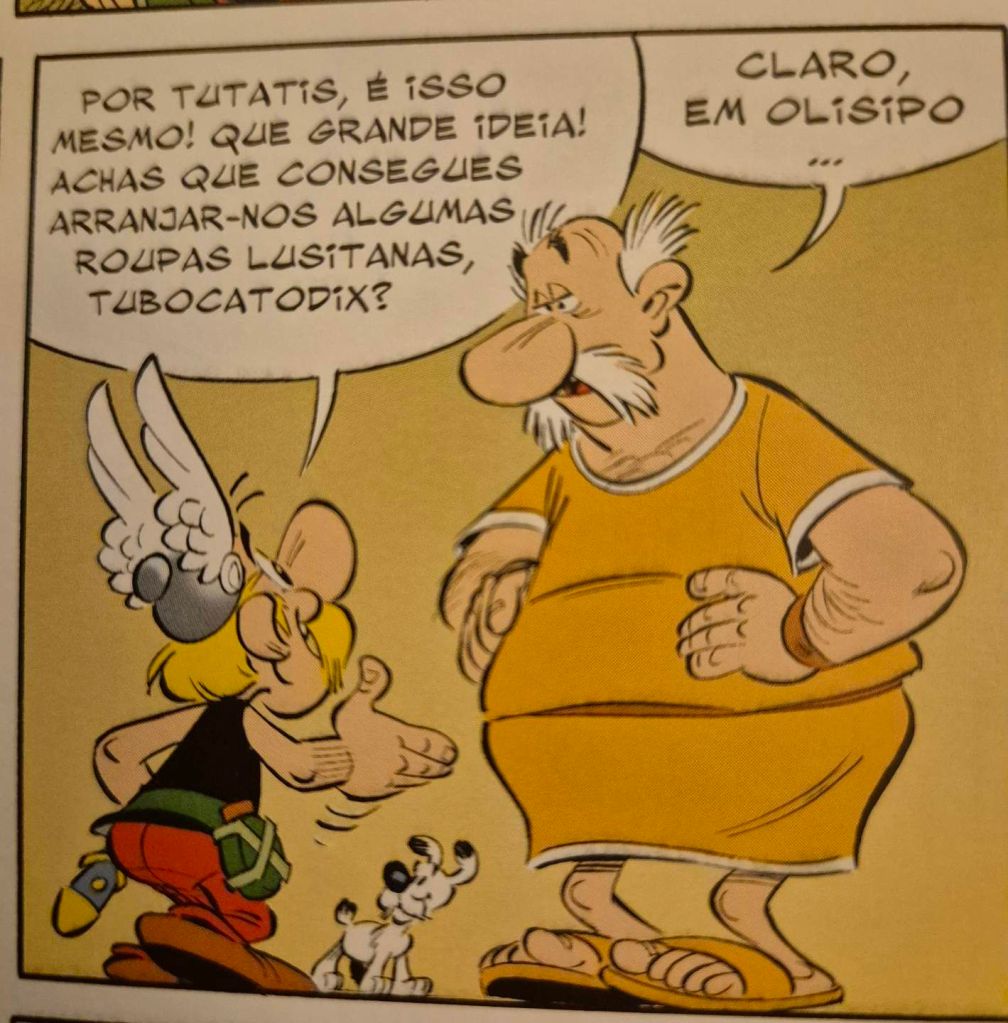
Tubocatodix
Ahhh, i couldn’t work out what his name meant! Tubo catodico =cathode ray tube. I think “tubo de raios catodicos” is more common, in fact, but you can say it the shorter way. His wife, Locutorina must just be the feminine diminutive of locutor – a rádio announcer.
PSI XX
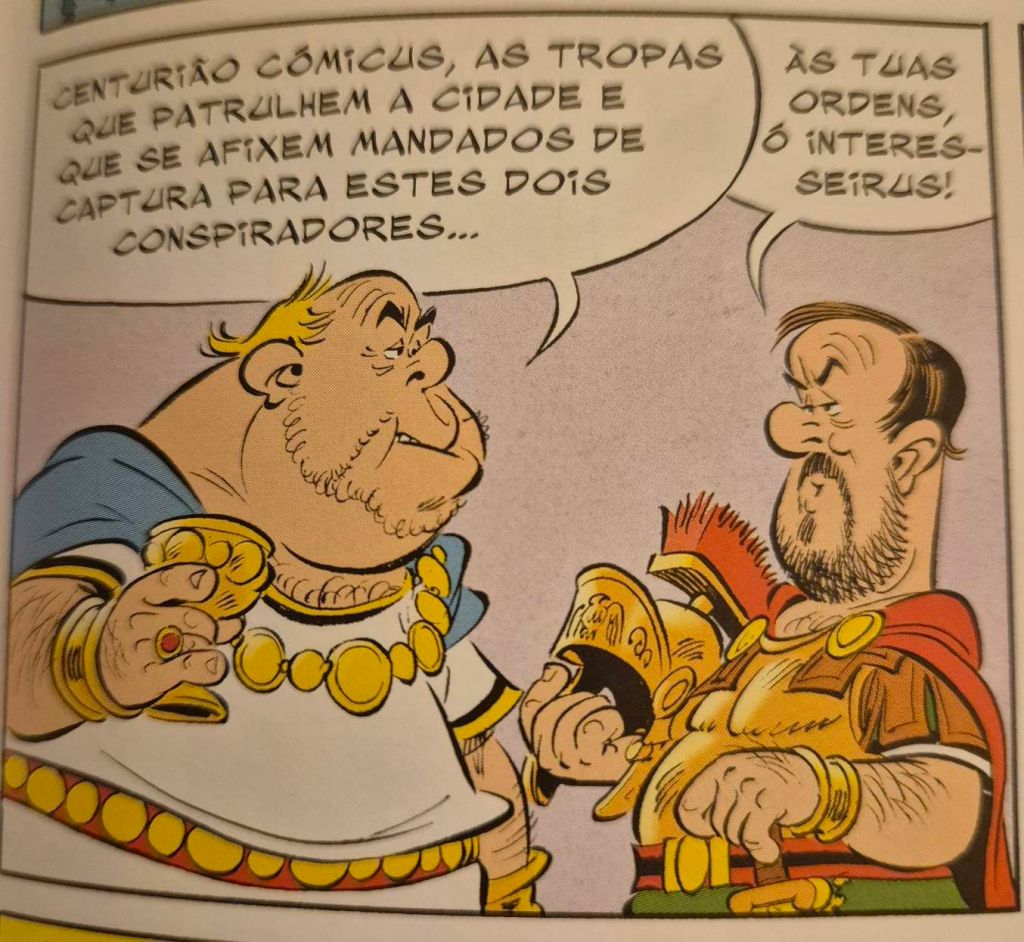
Sacanês’s suggested name for the list of important indistrialists based in Lusitania happens to coincide with the index of the 20 largest companies on the Portuguese Stock Index, the PSI-20, equivalent to our FTSE100. Why its abbreviation isn’t Portuguese (what? Índice de Ações Portuguesas?) i don’t know.
And by the way I had forgotten what “em cascas de rolha” means too, although I’m sure I’d come across it before. It just means a long way away.
A Quem Tu Dizes
I guessed correctly that “Who are you talking to?” would be something like “You don’t say!” or “You aren’t kidding!”
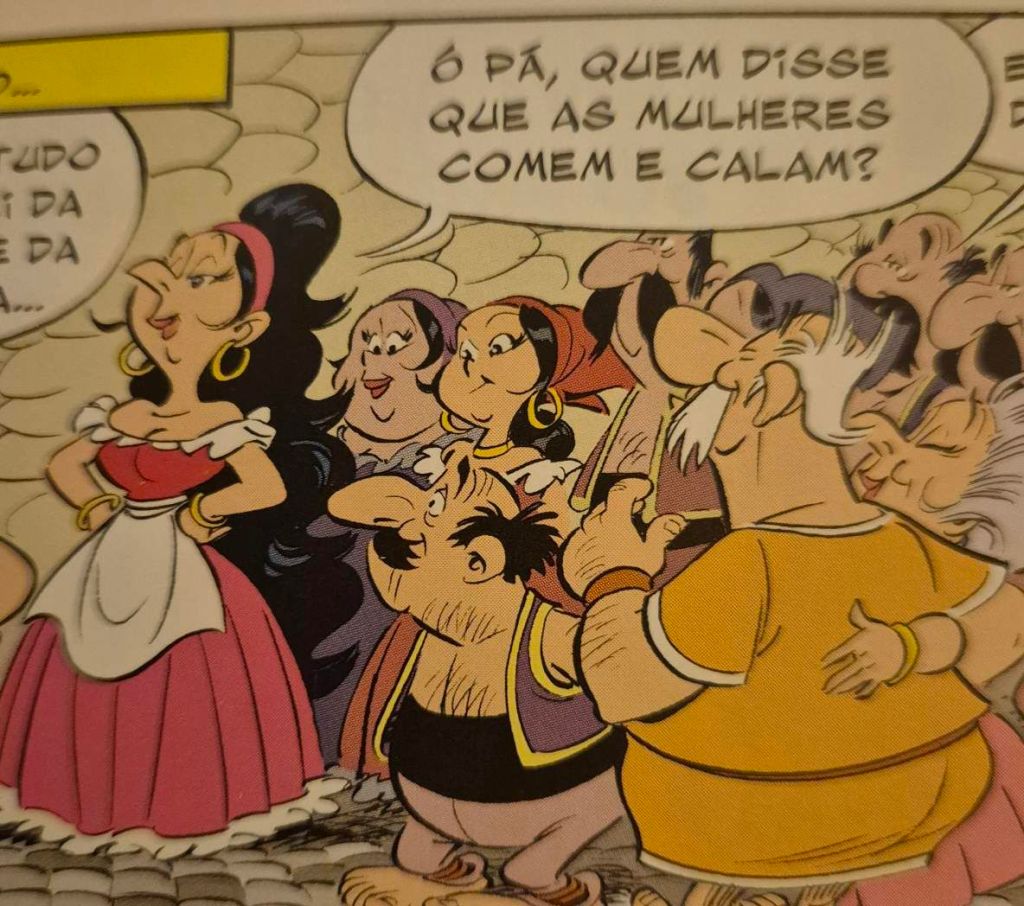
Comer e Calar
Comer e calar is a set phrase meaning “put up with something without any protest”
Este blogue anda cada dia mais negligenciado. Nem sequer escrevi sobre a recente descarrilamento do Elevador de Gloria. Mas li ontem uma notícia que não consigo ignorar: há uma nova banda desenhada na qual Astérix e Obélix chegam, finalmente na província romana da Lusitânia!
O livro vai ser publicado em português, a língua daquele território, em Outubro deste ano. Mal consigo esperar!
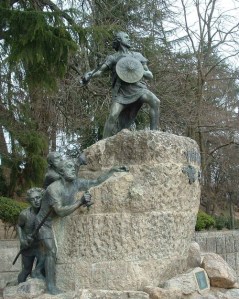
Viriato (em latim: “Viriatus”) foi um líder dos lusitanos que se opôs aos romanos no século II antes de Cristo. Sob a sua liderança, os lusitanos, (naquela altura, a mais poderosa nação da Hispânia) infligiram muitas derrotas no exército de ocupação. Era um herói nacional tal como a inglesa Boudicca (em latim “Boadicea”), o alemão Hermann (em latim “Arminius”) ou o francês Astérix (em latim “por Júpiter, deixa de bater-me!”)
Eventualmente, dois companheiros do Viriato tornaram-se traídores e assassinaram-no. Sem a presença do Viriato, os romanos foram capazes de cumprir a sua campanha para anexar a península ibérica.
Segundo o Diodoro (e confesso que vou colar esta frase da Wikipedia) “Enquanto ele comandava ele foi mais amado do que alguma vez alguém foi antes dele.” e até hoje em dia, existem muitas estátuas dele em Portugal e Espanha.
Eu pesquisei o nome de Viriato por causa de uma canção dos Deolinda*, que se chama “Berbicacho”. A letra trata de um homem chamado “Viriato”. Não percebi porquê. E apesar de ter feito uma pesquisa, ainda não faço ideia. É muito esquisito.
*=Já mencionei que os Deolinda são a minha banda preferida? Dois milhões de vezes? Ah, peço desculpa.
Thanks to Nini for helping me correct the errors in this one. He also gave the opinion that the name Viriato was chosen by the songwriter more for its sound than for any historical connection. Link to a track-by-track description of the album here.








 Luso
Luso 