I can’t remember if I’ve mentioned this app before but I’ve been using it much more consistently this year. I added it to my daily to do list and I’ve stuck to that as a habit along with my other wake up games, Termo and Quina. 20 questions per day until I have it down cold. I am trying to boost my knowledge of flags, boost my geography and of course learn the portuguese spellings of these places. Of course you’ll only get the portuguese lesson if you go into the settings and set the game language to portuguese. Impressively, you can choose between Portuguese Portuguese and Brazilian Portuguese.
My flag knowledge is pretty terrible, but iI think I’m a lot better at geography. I have my weak points though. There are lots of little republics in Europe that I know exist but don’t know how they fit together. I learned the map of Europe by doing a Jigsaw of European countries at primary school but… Well, a lot of those wooden shapes have been cut up into mush smaller pieces now! Central Asia is a bit of a blur, and most of the western part of Africa is a mystery too. I’m OK on the rest of Africa, or at least I thought I was, but I was a bit embarrassed to realise Swaziland had changed its name to Eswatini. I know Rwanda is a country and Kigali isn’t. Therese Coffey, take note!
Most of the spellings are pretty similar in portuguese, or they change in fairly predicatable ways. So for example, if you knew you wanted “Slovakia” but you didn’t know how to spell it in portuguese, you could make a fair guess: not many words begin with “S” followed by a consonant in portuguese, so it would probably have an E at the start (like “Espanha”).
Eslovakia.
Hm, well K isn’t very portuguese either so let’s lose that and put QU on its place.
Eslovaquia.
Close, but it wouldn’t be quite right either because it would be stressed on the penultimate syllable: eslovaQUIa. That would sound weird, so to make it right you’d need to whack an accent on the A.
Eslováquia. Boom!
Some are very different though. The most surprising one, for me, is Algeria which in portuguese is Argélia – the R and L swap places from one language to the other.
I’m really enjoying it. I grew up on Every Boy’s Handbook, before the Internet turned our brains to mush, and this sort of thing – flags and maps and all that boyscout stuff – seems like Proper Knowledge, and I’m glad there are apps that help me banish my ignorance. The fact that it’s building my Portuguese vocabulary is certainly a bonus.
So I was asked a question about something I said in the post about Linguee the other day. I said that I thought Google Translate (aka Gtranslate) was better than Deepl for certain things. Both are translation apps, but Deepl is usually thought of as better at European portuguese, so people will usually recommend it. That’s usually good advice: if you didn’t know any Portuguese and you wanted to translate something into European Portuguese you’re usually better off with Deepl.
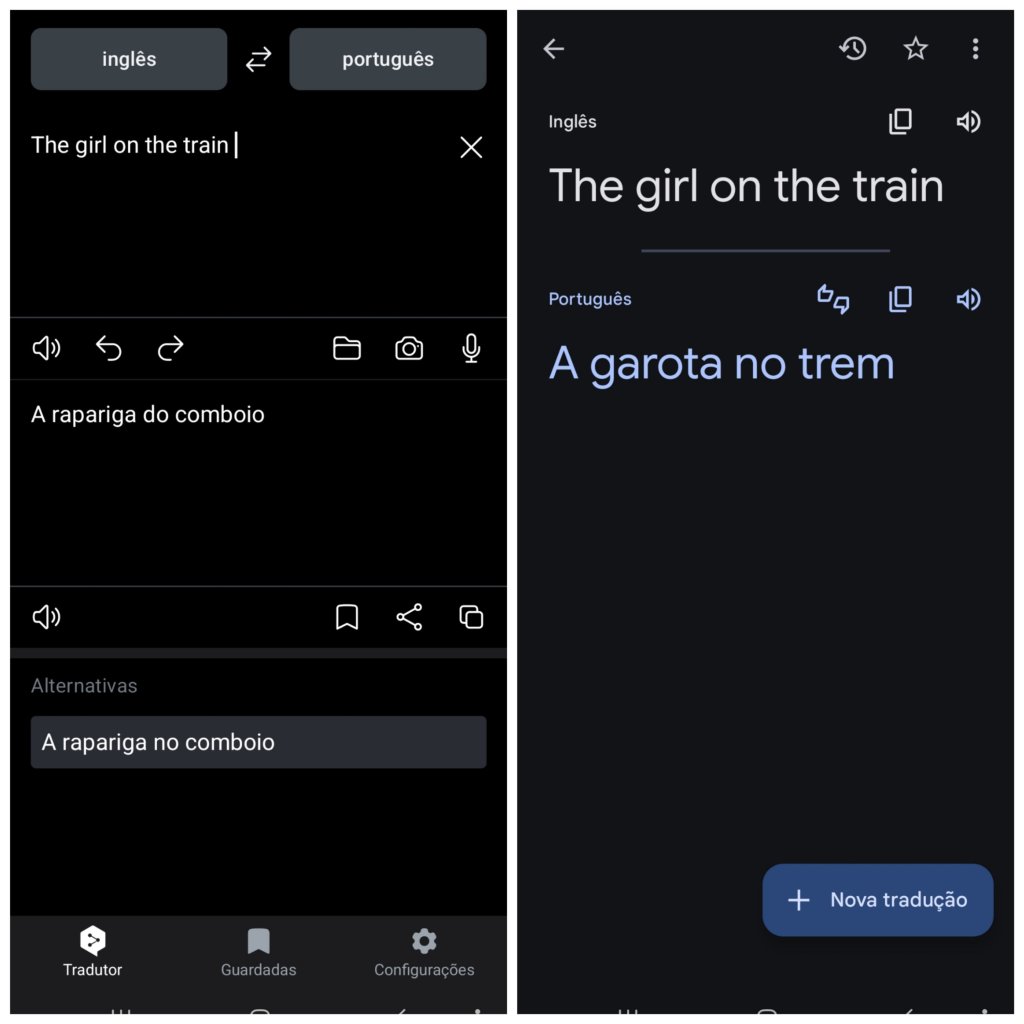
Deepl (left) correctly translates this book title into European Portuguese while Gtranslate comes up with the Brazilian version.
So why did I say Gtranslate was better? Because we’re language students, so I think we usually don’t want the app to do all the work for us. English-Portuguese translation isn’t something we need often. But what we do want is the opposite: we want it to check our work by translating it back into English because of it can understand it then that’s a pretty good indicator that we got it right.
So for example, if I’ve written “Este carro é muito carro”, what I want is for it to say “this car is very car”, so I know I’ve goofed; I’ve put an extra r in “caro”. If it translated it correctly as “this car is very expensive”, I wouldn’t notice my idiocy.
And so I thought Deepl would be less useful because it is AI and it’s cleverer, which means if you did something like this it would be more likely to guess what you meant and translate it correctly, hiding the error and lulling you into a false sense of security.
Líliana, (whose website The Talking Sardines caters for early stage learners around A1/A2), asked for an example so I tried a few. Want to see if I was right? Read on!
Let Battle Commence
OK, so let’s put both apps in the Thunderdome together and see which emerges victorious. Two apps enter, one app leaves. In each round, I have presented the translators with a sentence with a couple of minor errors. Remember, it’s a backwards competition. What I want is for it to give the wrong answer because that’s more useful than hiding the mistake.
In each case, Deepl on the left, Gtranslate on the right
“Gosto de escreve contas de fada”
Escreve should be an infinitive “escrever” and a fairy tale is a “conto de fado”, not a “conta de fado”
Deepl responded to “conta de fada” better, by translating it literally. Gtranslate is cleverer (ie less useful) because it has hidden the mistake, but Gtranslate also makes change suggestions – in the middle of the screen it asks: “Será que quis dizer…”, meaning “Did you mean to say…” and there it gets bonus points for spotting the grammatical error in escrever and suggesting I change it. Great!
Result: tie! Each spotted one mistake and ignored the other.
Well, this is a surprise. Maybe I was too harsh on Deepl?
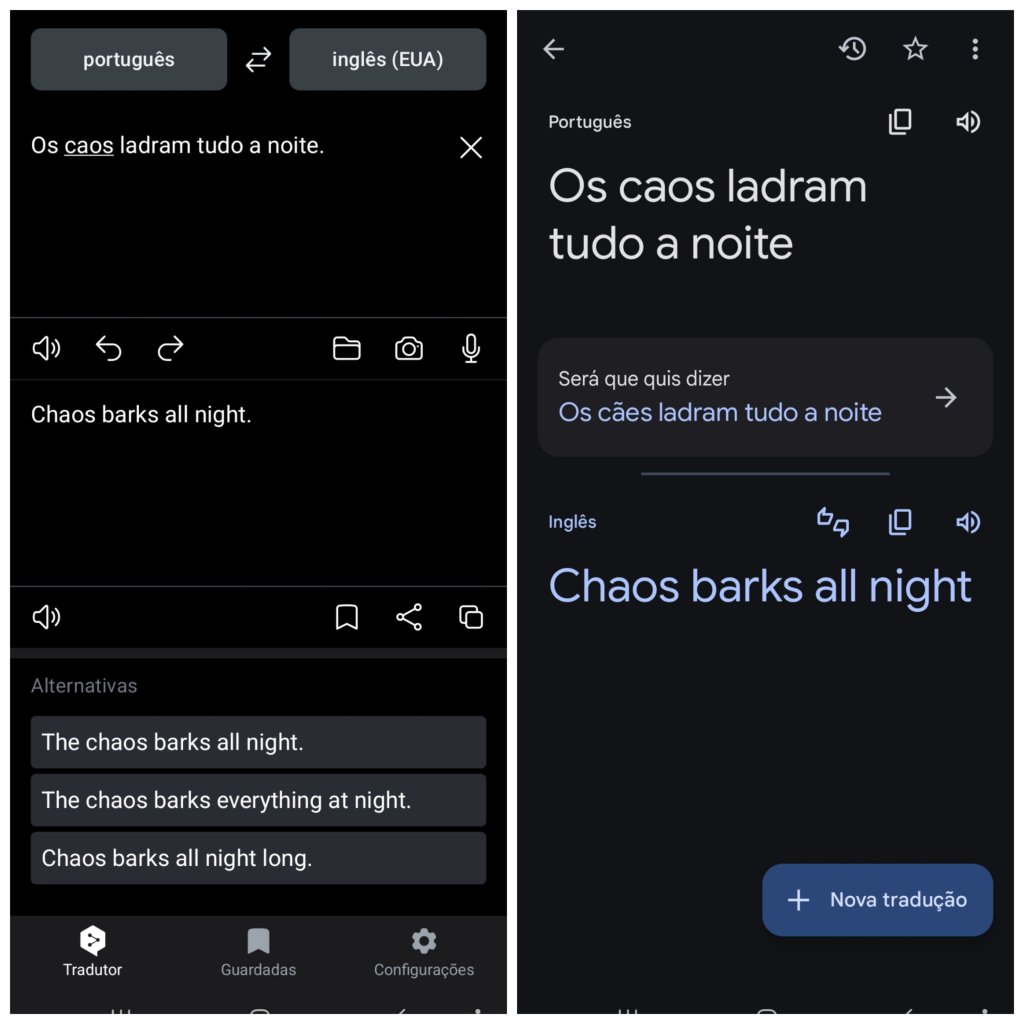
“Os caos ladram tudo a noite”
The word cão (Dog) has one of those weird plurals: cães. The word “caos” does exist but it means “chaos”. Oh and and obviously I’ve used “tudo” (everything) in place of “toda” (all).
This would make a great album title, wouldnt it? Gtranslate has a helpful suggestion, but both have correctly translated one mistake and erased the other
Result: tie! Both get one right, one wrong. Whether or not you want it to spoon feed the answer is a matter of taste so I don’t give Gtranslate extra points for that.
“Estou na quinda a trater dos porcos”
Quinta and tratar are both spelled wrong
Deepl is just freestlying. I don’t even know what it’s thinking there. Gtranslate has translated it correctly (not helpful) but it has very cleverly and helpfully suggests that I fix both spelling errors. Great work!
Result: Gtranslate is victorious. Initially it loses marks for ostensibly ignoring the errors, but it scores top marks for prompting me to fix both, not just the first. Deepl only highlights one mistake.
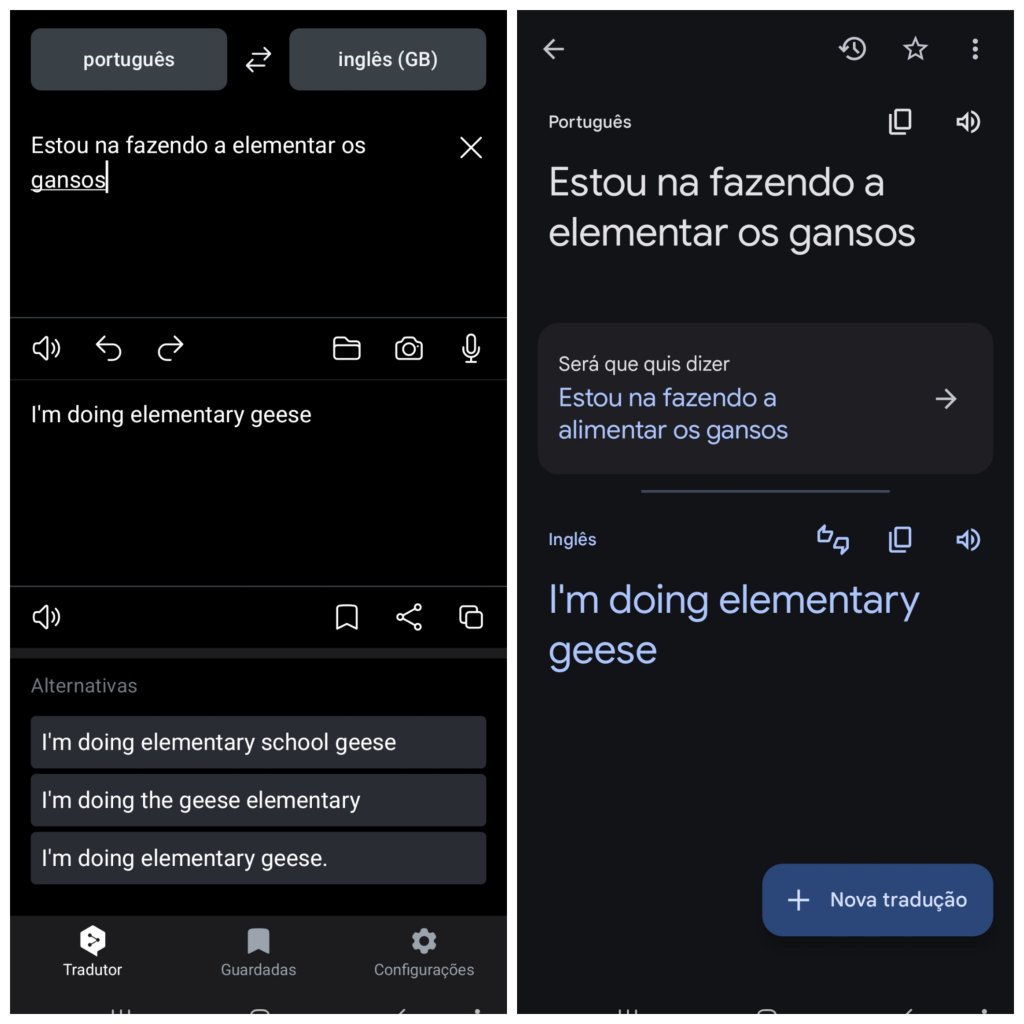
“Estou na fazendo a elementar os gansos”
Fazenda is another word for farm (I think I’m right in saying it’s more specifically a larger, family owned farm), whereas fazendo is just the present participle of fazer. And the verb I’m looking for is “alimentar”.
Both helpfully mistranslated both words. Gtranslate is correctly able to suggest the correction for one of them at least.
Result: tie! Both have done their job correctly, translating garbage into garbage. Whether or not you want the extra help Gtranslate gives you is a matter of taste.
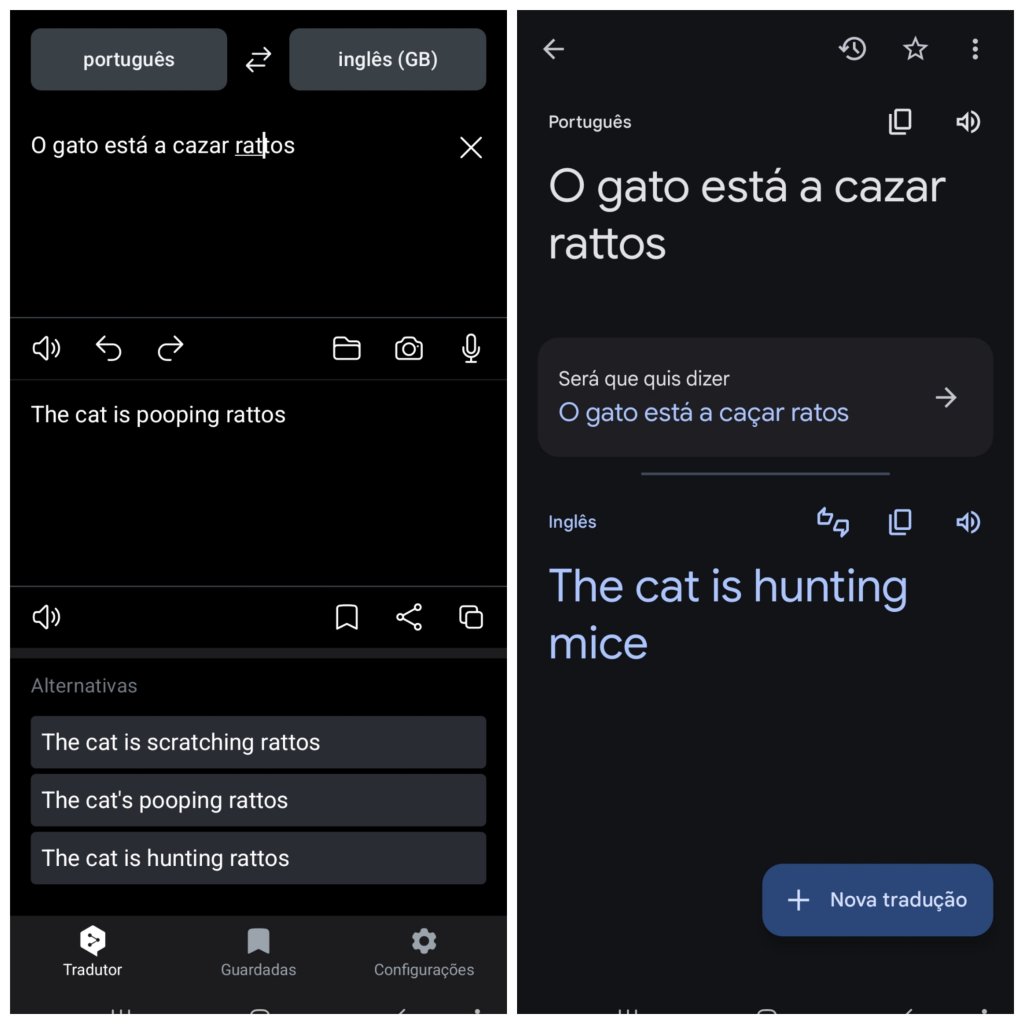
“O gato está a cazar rattos”
Caçar and ratos are both spelled wrong.
Deepl tries to be clever and interpret cazar but guesses the z is supposed to be a g. It has no idea what I am talking about with the extra t in rattos. Good. Gtranslate cleverly translates both words correctly, which is unhelpful, but it redeems itself by suggesting corrections for both words.
Result: Deepl is victorious. Although gtranslate has clearly done a better job here, I think I would prefer Deepl’s confusion, prompting me to rethink what I’d written, so I’m reluctantly awarding it the laurels here.
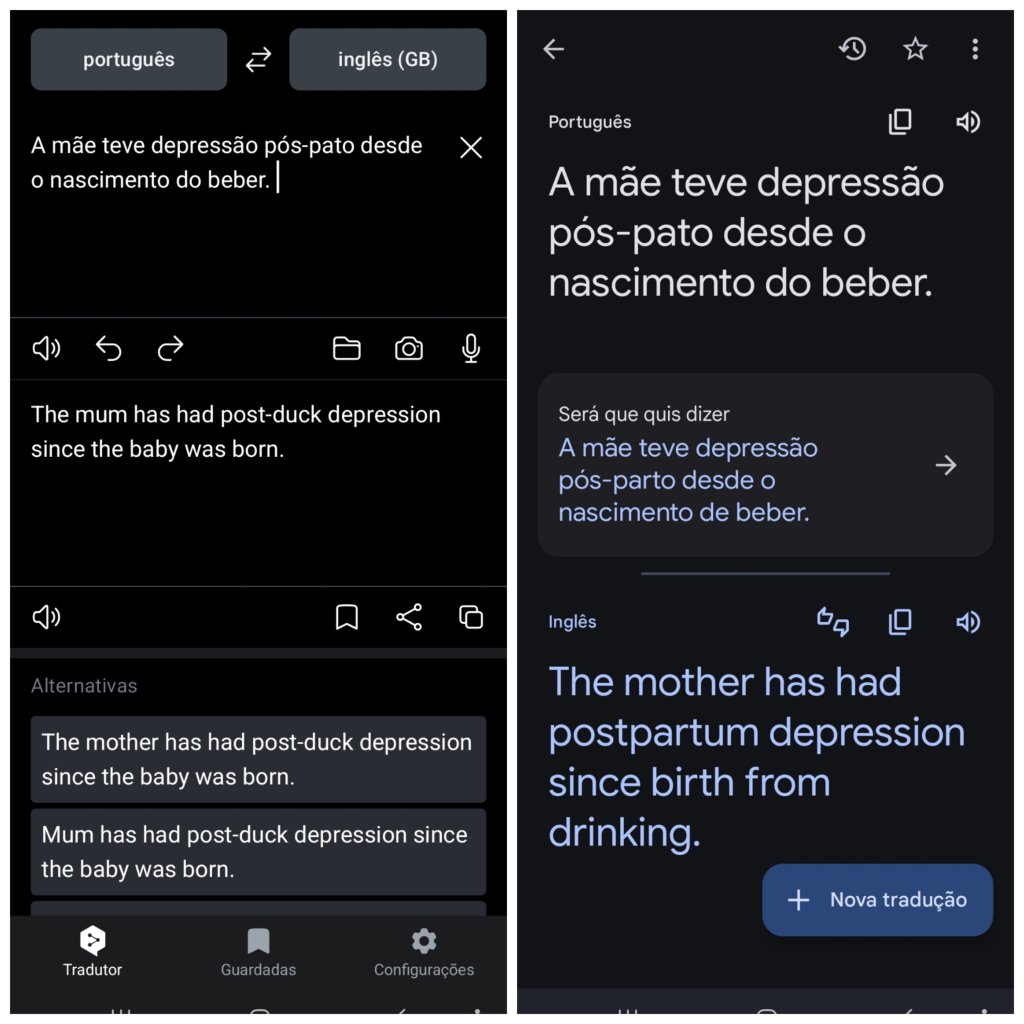
“A mãe teve depressão pós-pato desde o nascimento do beber.”
Postpartum depression is missing an r and bebé has gained one.
Deepl helpfully produces surreal results on the first mistake but annoyingly airbrushes out the second. Gtranslate unhelpfully takes the first error in its stride but does a better job of highlighting the second. It also provides a suggested correction in which it suggests a spelling change, so between its two parts of its reply it has correctly flagged both errors.
Result: Gtranslate wins another round.
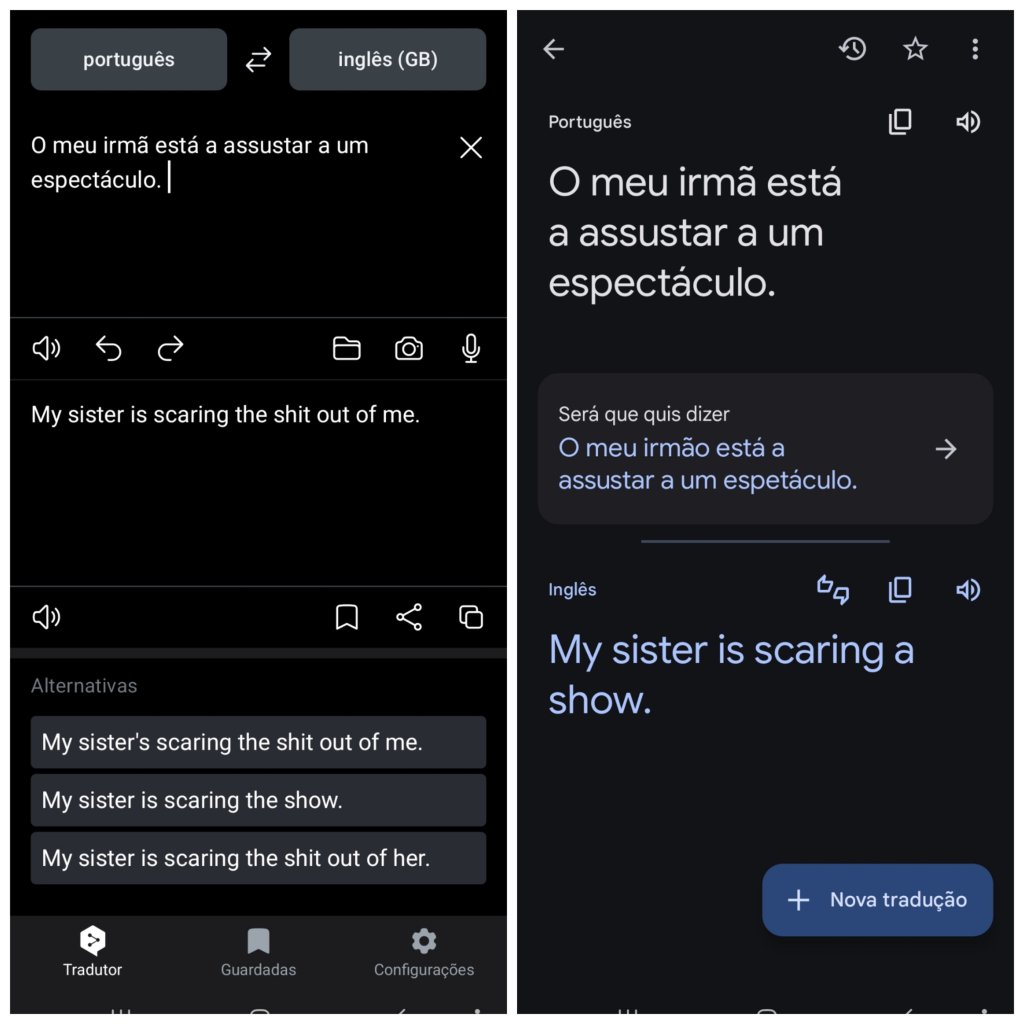
“O meu irmã está a assustar a um espectáculo”
Irmã is feminine and the “o meu” should match. The verb should be assistir, not assustar
Deepl is reliving childhood trauma. Well, that’s fine, at least it acknowledges something is wrong. Gtranslate keeps a level head, correctly mistranslates the word that is incorrect. It also offers a suggestion to harmonise the gender of irmã.
Result: Gtranslate is a clear winner since it gives a far more precise indication of what’s wrong without peeing in its pants.
Conclusion
As I said at the beginning, Deepl remains the best for English-Portuguese translation, but as the results show, in most cases, Gtranslate is better for reverse-translation in situations where you want to check your own written portuguese.
I was surprised by the results. I was expecting Deepl to be more accomplished at working around errors. It was far more hit and miss than that, but it’s undeniable in most cases that what Gtranslate offers is much more useful than what Deepl offers. You’re much more likely to be able to fix your errors that way.
Remember, this isn’t going to be enough on its own. My process is usually:
Read the text and correct obvious errors.
Paste into Gtranslate, correct what it mistranslates.
Paste into FLiP to check for syntactical errors. FLiP has its blind spots and will occasionally flag a valid word, but by and large it’s helpful.
Show to a teacher and/or post it here and wait for someone to tell me i have 38 more errors to fix.
Here Comes Bahrain Again, Falling I’m My Head Like A Memory
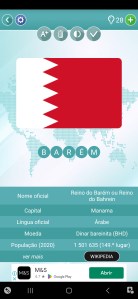
Ando a jogar “Quiz de Geografia” porque quero saber mais sobre as bandeiras do mundo, mas a língua padrão do meu telemóvel é PT-PT, portanto os nomes dos países têm de ser escritos em português também. É um ótimo método para aprender os nomes portugueses de vários países pequenos que ainda não sei porque raramente penso neles, tal como “Quirguistão”, “Camboja” e “França”.
The name of the app is “Quiz de Geografia” in my phone but I have all its settings in portuguese (as discussed here) so it might present as something else if you haven’t taken this gung-ho approach. As with many things, names of countries and capitals are subject to orthographic reform…
It’s a pretty simple game that starts with the player being rescued from a car crash by Ventura and exchanging phone numbers. It then takes you through a series of days in which you can work to earn money, go to the shopping mall, or call your man to go on a date. At the mall, you can buy accessories for your Ventura, such as sunglasses and hats. On the dates, you can chat, question his choice of venues, and deal with various enemies who appear, such as gypsies and antifa members. You can play as yourself, although if you are a male it’ll send you away with “Bro, sai daqui. O André Ventura não gosta de paneleiros”. That sets the tone, really: the game is sending up his actual attitudes so it warns you right at the start to expect racist, sexist and homophobic language throughout.
Playing games is, of course, a bit silly, but we can’t study vocabulary all the time. Most of us have apps on our phone that we use to pass the time on lunch breaks or on public transport, so having a Portuguese game to play is good way to keep your brain in Portuguese mode without a huge commitment of energy. I doubt this one is going to be an addiction because the joke is bound to wear thin after a while but I’ll play it a few times and see where it takes me.
Third version of this now: it seemed like it was time since some of the things I recommended originally have disappeared, or I realised there were much better versions out there
It’s always a good idea to have some tricks up your sleeve for learning languages when you don’t feel like it, when you want to increase the density of your target language in your life, or when you just want a change of pace. Here are a few of my favourite techniques with a Portuguese flavour – mostly but not exclusively European:
Put Your Apps To Work
I found it pretty hard to find good apps for learning European Portuguese, but it’s relatively easy to find good games and many of them have other language settings. I started with a copy of Trivia Crack which I’d set on Portuguese so I can enjoy farting about playing games and still be learning new words, phrases and pop culture references and (crucially) facts about Brazilian football. It has its drawbacks of course: most of the questions are written by Brazilians so you get quite a lot of Brazilian grammar in there, but still, it’s more educational than Angry Birds.
Once you realise that any game can be portuguesified, the world is your lobster. Usually it’s Brazilian portuguese, but since you’re not specifically learning grammar, it’s not too confusing. Over the years, I have tried several and I’ve learned a few new words that way without it feeling like work. Here’s June’s Journey, for example. It’s a sort of detective game, where you win by spotting objects in a picture. You need to do it against a timer, so you get quite fast at matching the word with the object. My daughter has played in French and it was the most fun she’s ever had doing homework.
Then there’s The Interactive Adventure of Dog Mendonca and Pizzaboy, based on the graphic novels by Filipe Melo and Juan Cavia. The sound is in english for some reason but the text is all portuguese.
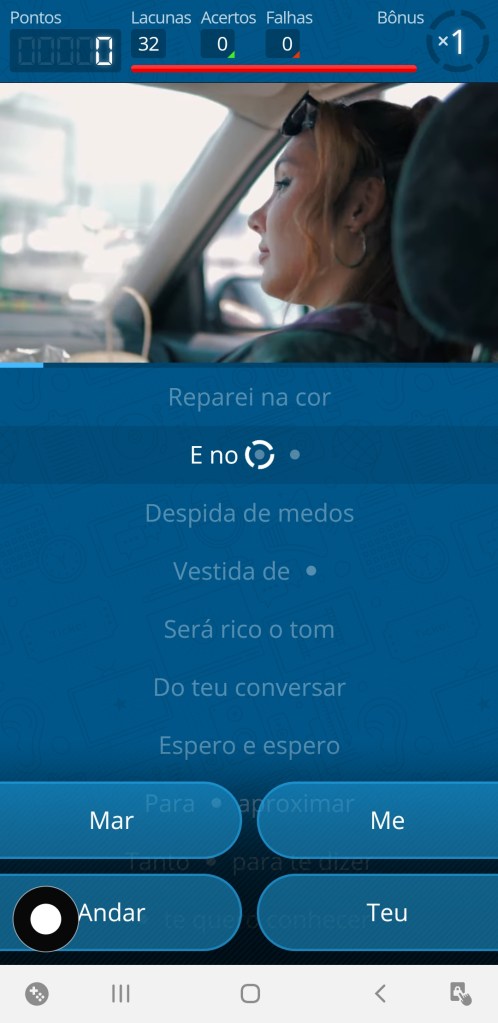
Finally, Lyricstraining lets you play multiple choice games based on music videos by european portuguese artists (among many others). It’s pretty good, steering the line between study and things you can actually do for fun.
Specific Language Apps
I’m told by the cool kids that Anki is the best language learning app but I prefer Memrise. What makes it different from other apps is that it keeps track of the words you’ve learned and returns to them a short time later, to jog your memory so that they really stick. There’s some science behind it apparently. I dunno. It works pretty well though.
The decks are made by users, so they vary in quality. Some are mildly irritating. For example, I had a deck that had animal names in it once and it gave the word for “horse” as “cavalho” which isn’t right. That doesn’t stop it being a kick-ass vocab-learning tool though, and of course you can easily make your own decks with words you want to learn. I usually have a go on it while I’m brushing my teeth at night and while I’m eating my breakfast in the morning. As with most things, make sure you specify European Portuguese, not Brazilian.
There are lots of other vocabulary apps but I don’t really rate them highly. If you want to take a look, you could try this blog post by Marlon Sabala. Don’t bother with Duolingo. I’ve become reconciled to it recently for studying Scottish Gaelic as a Quarantine hobby, but the fact remains that a lot of the things it tells you are very specifically Brazilian and don’t work in a Portuguese context
iTalki and Hellotalk are useful apps that can help you find formal or informal tuition, language exchanges and so on.
Most of the newspapers and broadcasters have their own apps too, and you can set them up to bombard you with portuguese destaques (headlines) throughout the day, and some of the language translation sites like Google Translate and Linguee have apps too.
Podcasts
If you’ve got some mindless task to perform, such as hoovering, ironing or writing a speech for Donald Trump, don’t listen to the new Stray Kids album, listen to someone speaking your chosen language instead. Portuguese (as opposed to Brazilian) podcasts are hard to find on Apple iTunes, but I’ve recently started listening to podcasts on my phone instead of an ipod, which has changed my life, because Podcast Guru makes it much, much easier to find them. There are four specific language-learning podcasts for european portuguese that I know about. They all have their own websites but you can find them on most podcast apps too. I’ve put them in order of difficulty with the easiest first.
Portuguese with Carla is really focused. Carla and her husband Marlon take a short piece of dialogue and break it down in minute detail, encouraging listeners to follow and repeat the words. It is definitely a good place to start if you have no Portuguese at all or if you want to work on your pronunciation. They have a few weird theories about how smelling herbs helps you learn but no worries; I’ve tried it without performance-enhancing oregano and it has been very helpful.
Portuguese Lab Podcast. Very visibly pinching ideas from other podcasts, this one is pretty easy to follow: most of the episode titles tell you what they’re going to teach and how hard they will be.
Practice Portuguese is everyone’s go-to podcast for European Portuguese, and if you speak to other portuguese learners they’ll usually mention it within the first ten minutes. It’s produced by a native Portuguese guy called Rui, who does most of the talking and Joel, who is Canadian and adds a learner’s perspective to some of the dialogues.Since I wrote the first version of this post, they have also launched a second podcst called Portuguese Shorties. Pro-tip: if you try the original podcast, don’t listen to it in order because the earliest ones are some of the more challenging. You’re better off looking on the website, where they have a filter system that lets you choose your difficulty level, or just start with the most recent ones and work your way backwards.
Say it in Portuguese is the most advanced of all, I think. Each episode deals with an idiomatic expression and explains its use and meaning. It’s great if you are working at the B1/B2 level but it takes no prisoners, and I definitely wouldn’t recommend it if you’re starting out. Some of the later episodes have a brazilian co-host (boo! hiss!) but that’s OK, it’s not presented in a confusing way.
In addition, you can probably find Portuguese podcasts on subjects that interest you. Obviously these are harder, because they’re aimed at a home audience, not at learners, but it’s a great way of developing listening skills if you don’t mind a challenge! I don’t recommend this for absolute beginners. I listened to a lot of RTP podcasts early on but I couldn’t follow them and drifted off, so I think it just taught me to not pay attention when a portuguese person is speaking. Not exactly a good habit!
One strategy for finding them is to search the podcast directory for portuguese words that interest you (futebol, livros, telemóveis etc), but you’ll probably find a lot of Brazilian or even spanish results come back and you might need to experiment a bit. Another route is to look for specific portuguese broadcaster like “rádio comercial”, RTP or TSF and see what they have to offer. Here are a few I like, and, again, I’ll put them in order of how easy it is to follow the narrator’s speech patterns and accent
Sbroing Probably the easiest portuguese podcast, since it’s aimed at children. They did a whole recording of “O Principezinho” (The Little Prince) that has expired from iTunes but you can still download it from the site by clicking on 2015 in the blog archive links on the right hand side.
Arrepios com a Bilinha Creepy stuff, murders and whatnot. I haven’t really listened to this much because the episodes are dauntingly long, but I subscribed a little while ago on a recommendation and the host seems to talk nice and slowly, which is good.
Pessoal e Transmissível Interviews with people from all walks of life. The podcast isn’t being made any more but there are hundreds of old ones still available on iTunes.
Conta-me Tudo Live Storytelling in the style of “The Moth”, so if you like that kind of thing, you might like this. I find it quite hard to follow the live recording, unfortunately
Caderneta De Cromos A series on Rádio Comercial about eighties pop culture, covering Star Trek, Pat Benatar, Ghostbusters, Space 1999, Rocky, Pac Man… All the good stuff. Nuno Markl, the host of this show has done lots of podcasts, most famously “O Homem Que Mordeu o Cão” so if you like this you could look him up and choose from a variety. It’s quite fast though, and often there are a lot of people talking over each other which doesn’t help!
Taking a left-turn at the traffic lights, there are some good, inspirational podcasts for language-learners in general. Have a look at “Actual Fluency” or “Creative Language Learning” in your podcast app, for example. Personally, I can only take this kind of thing in small doses, but a little of it now and again is good. It reminds you that you’re not alone and it gives you some ideas from the hardcore language-ninjas.
Books
If you like reading, you might be wondering how to get started reading portuguese. I wrote a couple of blog posts (1, 2) a while ago about this if you’d like to get some ideas.
Audiobooks
It’s quite hard to find european portuguese audiobooks, but there are a few on the ebook app Kobo. I did a blog post about it a while ago. There’s only one on Audible, as far as I know, called “A Porteira, a Madame e Outras Histórias de Portugueses em França”
Librivox has a few books in Portuguese but they’re mainly recorded by Brazilians, I think, including the collections of European Portuguese poetry. There’s a very good version of Amor de Perdição by Camilo Castelo Branco in proper Portuguese though, and you can probably find a few others if you dig around a bit.
Online Videos
Try turning on the TV if you’re in Portugal, you lucky buggers. If you haven’t already seen it, have a look at the video about learning with the TV on the Youtube channel “Talk the Streets”, which will tell you the best way to use portuguese TV. If you’re like me and live on a small island off the coast of France, try RTP Play, SIC or TVI.
If you have Netflix, try looking for Salvador Martinha’s “Tip of the Tongue”. He’s a comedian, and as far as I know, his show is the only legit European Portuguese offering on UK Netflix at the moment. There’s a series called 3% which is in Portuguese and meant to be very good but it’s Brazilian so probably not helpful if you’re studying European Portuguese.
There’s quite a bit on Youtube though. Leaving aside whole films, Youtube is a great source for things like documentaries and vlogs. If you can find a channel that broadcasts regular updates on a subject you like, it’s a huge incentive to listen regularly, and you’ll find Youtube helps you along by suggesting similar things to try. I am a huge fan of books, so I started out googling “livros” and various other likely-sounding portuguese words until I managed to find the portuguese booktube community. Criteria to use when picking a channel might be:
Does the subject matter interest me? (obviously!)
Is the presenter engaging,
Do they share my tastes in books/ motorbikes/ fashion/ antique silver cowcreamers/ whatever? A lot of Youtube videos are made by younger people, so you if you’re an old fart like me you might have to hunt around for people who have interests outside the young adult mainstream.
Do they speak clearly?
I’ve recommended a few different channels in the past but there are so many I like, I don’t think I can just pick a few now. It’s a close-knit commuinity though and these three are probably the busiest and best-connected. If you watch them you’ll see other Booktubers mentioned and you can follow what sounds interesting.
Books and Beers (aka “Books, Less Beers and a Baby” these days!)
If podcasts aren’t your thing, there’s always music. I’m a bit ambivalent about music as a learning method. A lot of people recommend it, including my wife, but I often find it’s like watching as a stream of syllables rushes by at speed. I think unless you’ve taken trouble to read the lyrics written down beforehand and compare with a translation, it’s difficult to pick the words out and appreciate them. Of course, you can still enjoy the music, but understanding the lyrics adds a whole other dimension. Most songs can be found on sites like lyricstranslate, and if you put some time into getting familiar with the meanings, it’ll pay off, I promise!
If there’s one thing Portugal has lots of, it’s music. Here are a few bands to try:
Deolinda (by far my favourite Portuguese band)
Ana Bacalhau (solo material by the singer from Deolinda)
Amália Rodrigues
Miguel Araújo
Os Azeitonas
António Zambujo
Orquestrada
Ana Moura
Mariza
Salvador Sobral
Carlos Do Carmo
DAMA (everyone tells me how they like this band. I can’t be doing with them myself but maybe I just have bad taste)
Marcia (there are a few singers called Marcia – I mean this one ↓ )
Here’s my Spotify playlist if Spotify is your thing
DVDs
If you’re clever enough to understand films made in Portuguese, that’s a great way to learn more but it’s pretty challenging. You’re not helped by the fact that the Portuguese film industry is not particularly strong compared to Brazil, even, let alone Hollywood. Some of the old classics are excellent (but beware modern remakes of classics like O Pátio das Cantigas for example). Variações, the biopic of “The Portuguese Bowie”, Antonio Variações is great. I liked Capitaes de Abril very much and the films of António-Pedro Vasconcelos seem to be worth a look, like Os Imortais for example, or Call Girl, which looks a bit dodgy but I’ve heard is good. Some portuguese movies can be a bit grim though. Ossos, for example, is slow and turgid and has barely any dialogue in it so what’s the point? I have one called O Vale de Abraão which I’ve heard good things about but it looks pretty bleak too, and the bloody thing is three and a half hours long, so I’m putting it off…
Easier fare would be an English-Language film you’ve seen before, dubbed into your target language. That usually means children’s animated films, since nobody ever dubs live-action movies. Try and check that the actors doing the voice-overs aren’t Brazilian. The last thing you want is all that Eejy Beejy Beejy thing that Brazilians do. We have three dubbed films in the house (*points* at the picture at the top of this section) and it’s good because my daughter likes watching them too. Turn on English subtitles if you are very new to the language, or Portuguese subtitles if you just want written clues to help you disentangle the words. Or neither if you’re a total badass.
Change the Way You Use The Web.
If you spend a lot of time online (ha ha ha, sorry, I’m kidding – obviously you do! It’s the twenty-first century and you probably haven’t left the house in weeks*!) why not challenge yourself to post in two languages, providing english and portuguese versions of your tweets, instagram captions and so on. You’ll lose some of your followers, but fuck ’em, you don’t need followers like that. You’ll get better, more interesting ones instead.
You can massively increase the amount of language in your life by tweaking the settings on your most-used websites. The obvious one for me is my Google Account settings, which affects all my search results, plus the menus in Google Chrome, names of folders etc in Gmail, spellcheck in Google Docs, names of days and months in Google Calendar and half a dozen other things.
I’ve also changed twitter, but that doesn’t do much except teach you some stupid pretend words like “tweetar” (shouldn’t that be “pipiar”???). I daresay if you use Facebook you could get some mileage out of changing the language settings in that. You can change the settings of Windows itself if you have Windows 10 but it’s a bit harder on earlier versions. This might be the ONLY advatntage of Windows 10.
Going a step further, try changing the language settings on Android or iOS. It’s quite a big step because from then on just about anything you do using it will require a bit more concentration, but if you’re up for it, it’s a great way of getting familiar with vocabulary related to gadgets. Make sure you know how to change them back if you have to.
Websites
I’ve come across a few useful websites that you might want to check if you don’t already know them:
Conjuga-me (excellent website that summarises all the verb tenses for a given verb. Definitely one to bookmark!)
Linguee (it took me ages to see the usefulness of this, but if you search for a word, either in english or portuguese, it’ll give you actual human-created translations in real books or official publications so that you can get a feel for the way it’s translated in context)
Readlang (directory of native speakers reading texts)
I mentioned, a while ago, posting post-it notes all over my house with the names of things on them. That’s quite a clever way of bumping up your vocabulary a bit without really trying, although with hindsight I wish I’d written the words in larger letters with a big fat marker, as I find myself peering at the post-its instead of having the words thrust in my face.
Lindsay Does Languages has a brilliant variant on this theme. I came across it earlier today and decided to incorporate it in my life as soon as I get a free minute (2019, I think). While you’re at it, have a look at some of the other articles on her site. They’re pretty good fun.
*=This was just a joke in earlier versions of this post but it could easily be literally true now, in Summer 2020.







 If you’re clever enough to understand films made in Portuguese, that’s a great way to learn more but it’s pretty challenging. You’re not helped by the fact that the Portuguese film industry is not particularly strong compared to Brazil, even, let alone Hollywood. Some of the old classics are excellent (but beware modern remakes of classics like
  Luso
Luso 