Um tipo alto sentou-se à minha frente no clube de comédia onde o espetáculo de Hugo Sousa teve lugar. Pediu licença, educadamente, claro, porque soube que a sua cabeça ocultaria a minha vista do palco. Não pensei muito sobre o incidente mas no próximo dia o humorista republicou uma foto tirada pelo mesmo homem no seu insta e quando vi a conta dele, havia montes de pessoas a segui-lo. Acabei por constatar que o homem é um futebolista. É? Era? Foi? Será que alguém que antigamente jogava futebol deixa de ser futebolista após algum tempo? Sei lá, mas estive ligeiramente divertido pelo facto de ser (provavelmente) a única pessoa na sala que não fazia a mínima ideia de quem é!
OK; I’m far from being an expert on footy, but I think the Portuguese WIki entry is a bit out of date. According to the english version he played for Gondomar in about 2008 and his last recorded dates are in 2011. He’s a bit younger than me but seems to be past professional age and, if his Instagram is anything to go by, really having a good retirement!
Fui assistir ao espectáculo de Hugo Sousa. O 60% das piadas que entendi foram muito engraçadas. Deve haver um bilhete para não-lusófonos que custa menos dependente da nível de compreensão. Será mais justo, não achas? ☺️
O humorista fiz um erro da diplomacia muito grave. Comecei o espectáculo por perguntar quantas pessoas no público eram do norte do país, e falei um pouco sobre o norte. Depois quantos pessoas do centro, e finalmente do sul.
Tendo resumindo a nação inteira, começou com a sua rotina, mas esqueceu-se do facto da maioria dos Tugas em Londres serem madeirenses. “As Ilhas! Madeira!” gritaram todos. Quase acabou enforcado. Mas apesar disso, correu tudo bem.
(Scroll down for an english translation of this one)
Este texto é o segundo sobre As Bruxas de Portugal. Veja o primeiro aqui se não te lembras o motivo
A nossa bruxa semanal é a bruxa lavandeira, nativa à região Trás-os-Montes. A imaginação popular é uma maravilha. Quando inventamos legendas sobre mulheres com poderes sobrenaturais, não conseguimos imaginar nada mais interessante para elas fazerem senão trabalho doméstico. O mais normal é o uso da vassoura como modo de transporte, mas neste caso as controladoras da força mágica focam os seus poderes em fazer lavandaria. Hum,’tá bem avó.
We’re going to be seeing a lot of this scene in this series of posts, aren’t we_
Nas lendas, as bruxas percorrem as aldeias com luzes na mão. São capazes de voar até aos telhados. Por vassoura? Não. Claro que não, seu panhonha. Transformam-se em patos (ah ah ah! patos, á sério!) ou gansos (isso sim, não me admira de todo. Não confio nunca num ganso).
Como o nome implica, estas feiticeiras surgem nas margens dos rios onde gostam de lavar roupas. Ai, Jesus nos protege das servas do diabo que querem (leio as minhas notas) limpar camisas, vestidos e meias.
🇬🇧 English Version (with a bit of help from GTranslate)
Our weekly witch is the washerwoman witch, native to the Trás-os-Montes region. Popular imagination is amazing. When we invent legends about women with supernatural powers, we can’t imagine anything more interesting for them to do than housework. The most common thing is the use of a broom as a means of transport, but in this case, the controllers of magical forces focus their powers on doing laundry. Hmm, okay, Grandma.
In the legends, the witches roam the villages with lights in their hands. They are able to fly to the rooftops. By broom? No. Of course not, you fool. They transform into ducks (ha ha ha! ducks, seriously!) or geese (actually, that one doesn’t surprise me at all. I never trust a goose.)
As the name implies, these witches appear on the banks of rivers where they like to wash clothes. Oh, Jesus protect us from the servants of the devil who want (checks notes) to clean coats, dresses, and socks.
Todos os dias no subreddit r/whatisthisbird alguém chegará com a mesma pergunta: que raios é este pássaro insólito que acaba de aterrar no meu jardim? Hoje a pessoa em questão estava em Portugal, o que me faz pensar “hm, e como se chama esse amigo de duas asas?
O seu nome é “Poupa”, também conhecido por “poupa pão”, poupão, poupinha ou boubela.
This jumped out at me on Instagram yesterday. I didn’t know the song so I googled it and I think I like the drag version better than the original. It’s Sincera Mente, who I mentioned a few days ago, with another drag queen who was on a talent show, I think…? I don’t know, I haven’t seen it. Anyway, they both have good voices and I thought I’d translate it because why not? The video only has the first verses and the chorus, but I’ll include the other two verses from the original
Estrala a bomba E o foguete vai no ar Arrebenta e fica todo queimado Não há ninguém que baile mais bem Que as meninas da ribeira do Sado
The bomb explodes And the rocket goes up It bursts and burns up Nobody dances better Than the girls of the Sado valley*
As meninas da ribeira do Sado é que é Lavram na terra com as unhas dos pés As meninas da ribeira do Sado São como as ovelhas Têm carrapatos atrás das orelhas
The girls of the Sado valley are the ones They plough the earth with their toenails The girls of the Sado valley Are like sheep They have ticks behind their ears.
Era um daqueles dias bem chalados Em que o sol batia forte nas cabeças As meninas viram que eu estava apanhado E disseram: Nunca mais cá apareças
It was one of those crazy days The sun was beating down on our heads The girls saw I was caught And said “Don’t come around here again”
Mas voltei e entretive-me a bailar com três Queriam que eu fosse atrás no convés Mas não fui e mandei-as irem dar banho ao meu canário Que bateu as botas com dores num ovário
But I returned and entertained myself, dancing with three of them They wanted me to go to the back of the deck But I didn’t and told them to bathe my canary Who had died of pain in the ovary**
*I’m going to translate “Ribeira do Sado” as “The Sado Valley” because even though Ribeira is a smallish river, saying they’re the Sado river girls makes them sound like mermaids. I think it’s more like the area around the river, so that’s what I’ve gone with.
**Er… well, it was going well until the end there. What the hell happened in the last verse? I asked around and the consensus seems to be that going “atrás no convés” was a euphemism for going somewhere quiet to canoodle, but it was far from certain. In the next line, telling someone too go and give the dog a bath is like telling them to go and comb monkeys or go and bother Camões, Go away in other words. But they changed it to a canary and a terminal illness just to make it more silly.
Que estranha imagem esta frase invocou! Dei uma olhada ao dicionário mas não há definição que cabe neste cenário. Então, é um metáfora? Imaginei o narrador a encostar o seu rosto ao vidro, como se estivesse a beijar o superfície, para ver o lado dentro. Mas o significado é mais simples e menos invasivo, segundo anglia gente do Reddit: para objectos, namorar significa desejar, invejar, imaginar se tivesse. E claro que isso faz mais sentido quando lemos a próxima frase!
Deparei-me novamente com este vídeo no insta. Tinha visto antes mas acho que a cena ganhou mais relevância face à xenofobia de André Ventura. Convém lembrarmo-nos de que os nossos compatriotas vivem em outros países mesmo que os estrangeiros vivem nos nossos países. Neste vídeo, portugueses celebram a sua cultura num palco no Luxemburgo.
A música é Malhão Malhão. Foi cantado por muitas pessoas ao longo dos anos, mas o melhor vídeo que já encontrei no YouTube é este de Linda de Suza
O Malhão é uma espécie de dança oriunda do Minho, e existem muitas canções que usam o ritmo para a gente dançar, como por exemplo Malhão de Portugal ou Malhão das Pulgas.
The dance in full, complete with Amália Rodrigues’s voice and the full saia rodada action!
Então porquê “Malhão Malhão”? Não tenho certeza, mas é óbvio que as letras se referem a uma pessoa. Segundo a Wikipedia (versão inglês) a pessoa em questão é um “winnower”* ou seja uma pessoa que separa os cereais das suas testas. Pode ser, pode ser, mas segundo o Priberam, Malhão, quando é aumentivo de malho não significa nada mais do que o utensílio**. Mas também pode significar “pessoa hábil e experiente”. Tendo lido as letras, acho que a pessoa a quem o narrador está a falar não é experiente, é uma jovem, uma rapariga que o narrador quer namorar. Ainda por cima, nas letras que encontrei Online, Malhão tem letra maiscula. Até pode ser uma alcunha! Noutras palavras, Malhão Malhão é um malhão (música para dançar) sobre um malhão (pessoa hábil/pessoa que trabalha na agricultura e/ou pessoa chamada “Malhão”).
Ai Jesus, tanta incerteza!
As letras são repetitivas mas basicamente é isto:
Ó Malhão, Malhão que vida é a tua? Comer e beber, ai trrim-tim-tim Passear na rua
Oh, Malhão, Malhão, what is your life like Eating and drinking, trim-tim-tim Strolling in the street
Ó Malhão, Malhão quem te deu as botas? Foi o caixeirinho, ai trrim-tim-tim O das pernas tortas
Oh Malhão, Malhão who gave you your boots? It was the boxmaker, trim-tim-tim The one with the crippled legs
Ó Malhão, Malhão quem te deu as meias? Foi o caixeirinho, ai trrim-tim-tim O das pernas feias
Oh Malhão, Malhão, who gave you your socks? It was the boxmaker***, trim-tim-tim The one with the ugly legs
Ó Malhão, Malhão ai Margaridinha! Eras do teu pai, ai trrim-tim-tim Mas agora és minha
Oh Malhão, Malhão, oh little Margarida You were your father’s, trim-tim-tim But now you’re mine.
*winnowing, in case you don’t know, is an agricultural term, meaning separate out the wheat from the chaff proper to grinding it into flour.
** specifically: Utensílio para malhar cereais, composto de dois paus ligados por uma correia, sendo um curto e grosso (pírtigo), e outro um cabo comprido e delgado (mango).
“7 Senhoras” de Margarida Madeira é mais uma banda desenhada mas tem um ritmo mais lento do que o do Astérix. Retrata as vidas de sete mulheres que a autora conhecia na juventude. Temos, por exemplo, uma bisavó, uma professora e uma senhora que faz parte da vizinhança, mas cujo nome a autora nem sequer sabe. Não há enredo nenhum, apenas uma vista microscópica destas vidas únicas, algumas ternas, outras absurdas, mas cada uma desperta a atenção da menina que um dia tornaria artista e autora. É uma homenagem às vidas escondidas que nos influenciam ao longo do caminho, cada uma à sua própria maneira.
Look at this mess! I hadn’t even started it and already I’d done this. This is why we can’t have nice things.
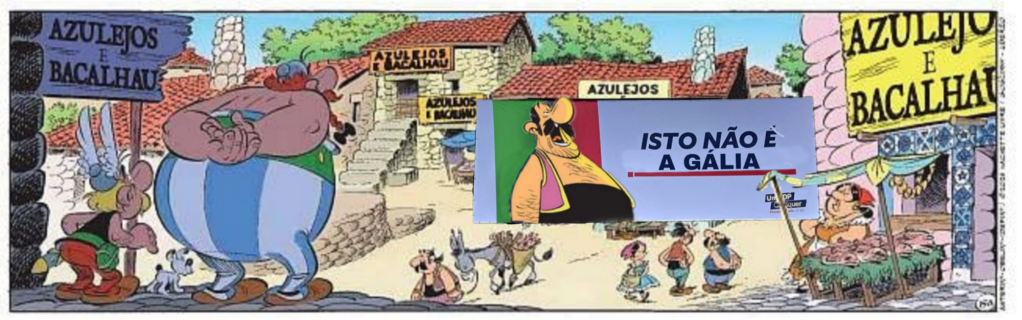
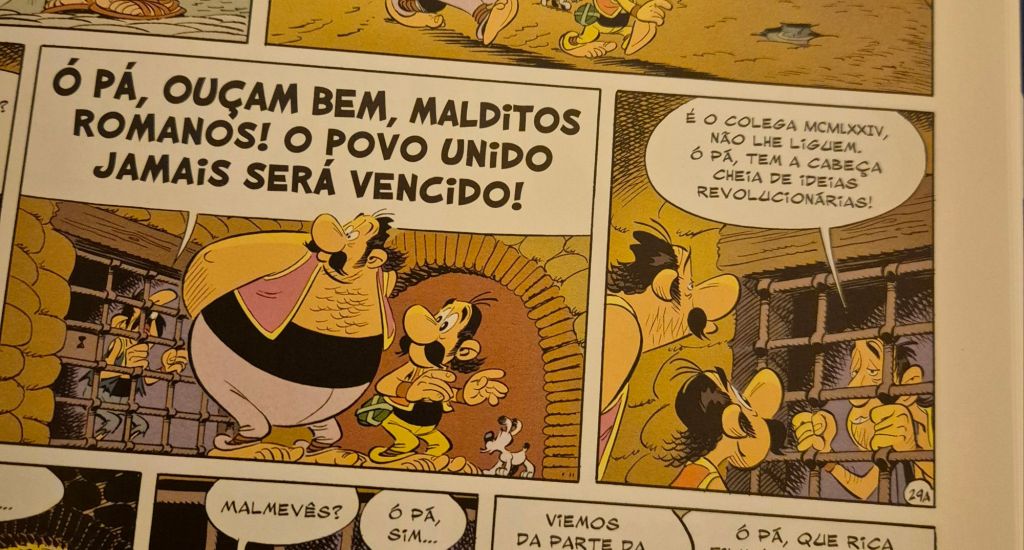
Adoro esta série de bandas desenhadas e estou muito feliz que os nossos heróis, Astérix e Obélix chegam finalmente na província romana de Lusitânia. A sua missão é libertar Malmevês, um empresário de garum (uma espécie de molho de mariscos) e o pai da Saudade, (uma mulher pela qual o Obélix está caidinho, embora não admita!). O Malmevês está preso numa cadeia romana porque é suspeito de um atentado contra o imperador, mas os gauleses espertos sabem descortinar o verdadeiro assassino, disfarçando-se como Tugas para entrar sem ser capturado.
Ainda bem que não havia partidos políticos da extrema-direita porque às vezes os visitantes ajudam muito.
Como sempre, os habitantes da terra onde a história tem lugar têm as características dos atuais habitantes do país moderno: comem bacalhau, construem calçadas mosaicas e cantam poemas tão melancólicas que quem os ouve desata logo em lágrimas.
Apesar da morte dos criadores, Goscinny e Uderzo, a série retém o espírito dos livros originais: humor, otimismo, alegria e inteligência.
I’m reading this and enjoying the little touches the authors and translators have put in for the home team. I can already see a plot twist coming. In Asterix in Britain, the British are constantly drinking hot water with a spot of milk until the Gauls introduce them to a herb called “tea”. In this, the lead character is called Tristês, and the villagers are constantly referring to destino and emoção so i reckon i can guess what famous national characteristic the Gauls are going to help them discover!
(EDIT: no, I’m wrong – about ten pages in a character called Saudade turns up)
Olhinhos de Couve
This is just the knotty bit at the heart of the cabbage, not the tenderest leaves, which is presumably why the prisoner is getting it. Incidentally, the prisoner is called Malmevês, and of course names in Astérix books are always jokes. I don’t know if this is a reference to the Camões poem “Indo O Triste Pastor Todo Embebido” or if it’s just a random set of words they’ve chosen as his name.
Garum
Getafix/Panoramix explains that it’s a fish sauce, and it does seem to be a word in current use not just a Latin word dropped into the text.
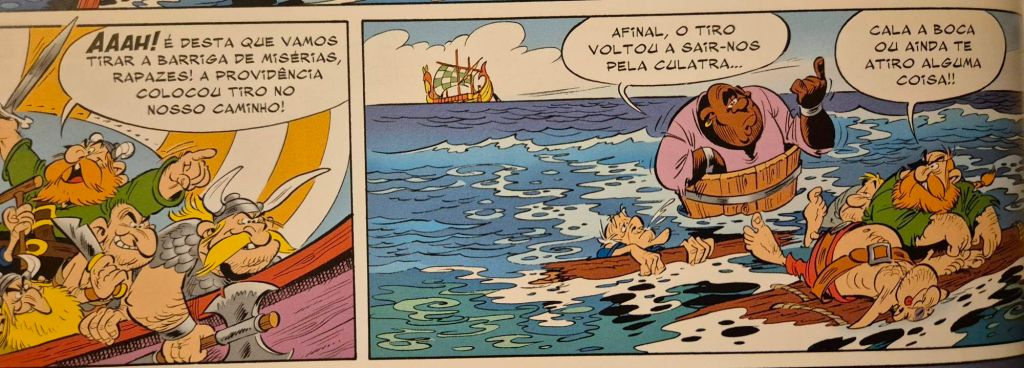
O Tiro Saiu Pela Culatra
The pun here is based on the fact that the ship the pirates attack is a phoenecian trading vessel, and Tiro (Tyre) is a busy trading city in Phoenecia (modern Lebanon). The Nubian is referring to an expression “o tiro saiu pela culatra” (The shot came out through the breech). In other words, our plan backfired.
Zepovinhium
I can’t believe I actually googled this. D’oh! I wrote a blog about Zé Povinho just the other day so I really should have recognised it! And of course “À beira mar plantada” is a reference to a poem by Tomás Ribeiro who describes Portugal as “O jardim da Europa à beira mar plantado”
Tabefe
Obviously means something violent – a slap, in fact. I googled it wondering if it was some sort of corruption of “feito ao bife” but it doesn’t seem to be.
De Lá Por Onde Der
This smelled like a set phrase to me – and it just means “wherever you might come from”. And yes, by the way, what sets the Portuguese characters from everyone else is that they pepper their speech with “ó pá”
Ricky Gervais
Er… Why the heck is he here? Does he have some link to Portugal? As far as I can tell, no, they just sometimes do cameos and they decided to include him. Weird choice but OK, whatever.
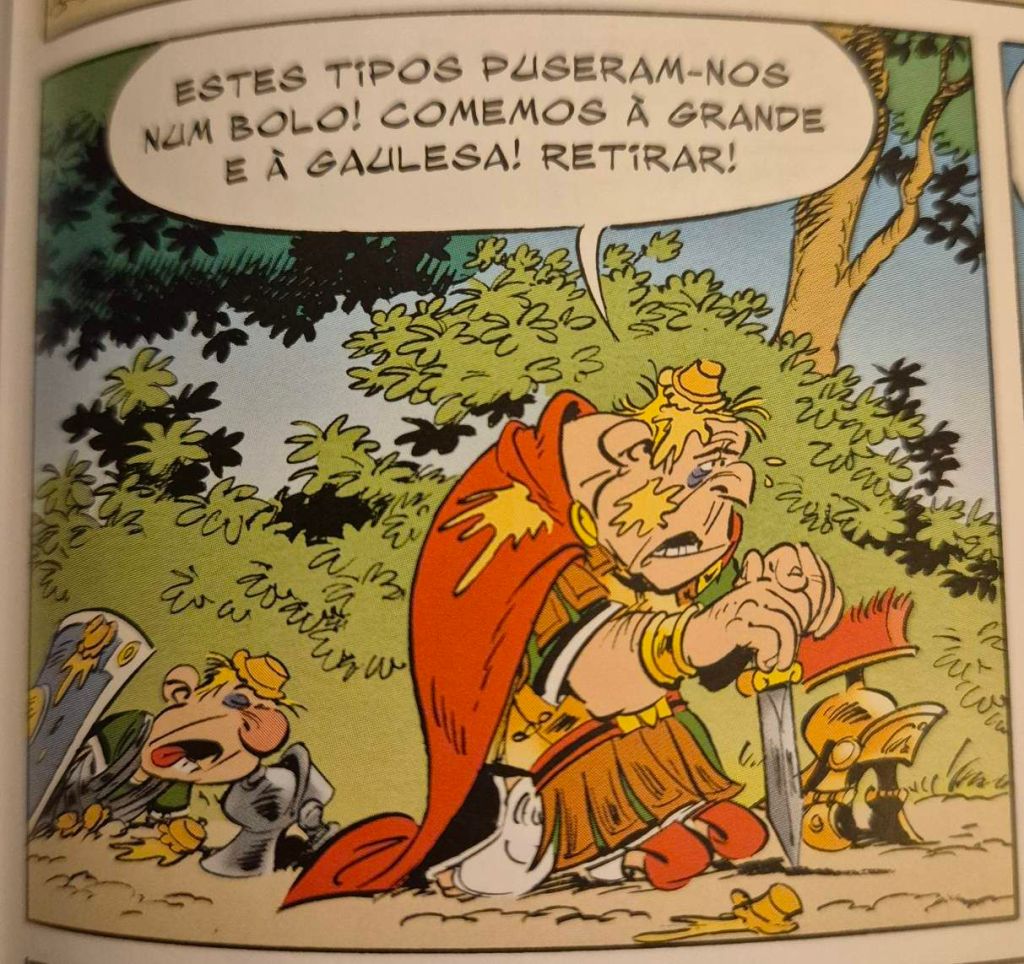
À Grande e À Gaulesa
The custard tart massacre provides plenty of scope for comedy, mostly fairly obvious. I feel like “pôr alguém num bolo” must be an expression but I couldn’t find it. Bolo has some sex-related meaning, so when I searched for it with “pôr” at the same time most of the results were PORn, so I gave up. “À grande e à gaulesa” is a romanised version of “à grande e à francesa”, which just means in luxury, and with abundance. Origin here.
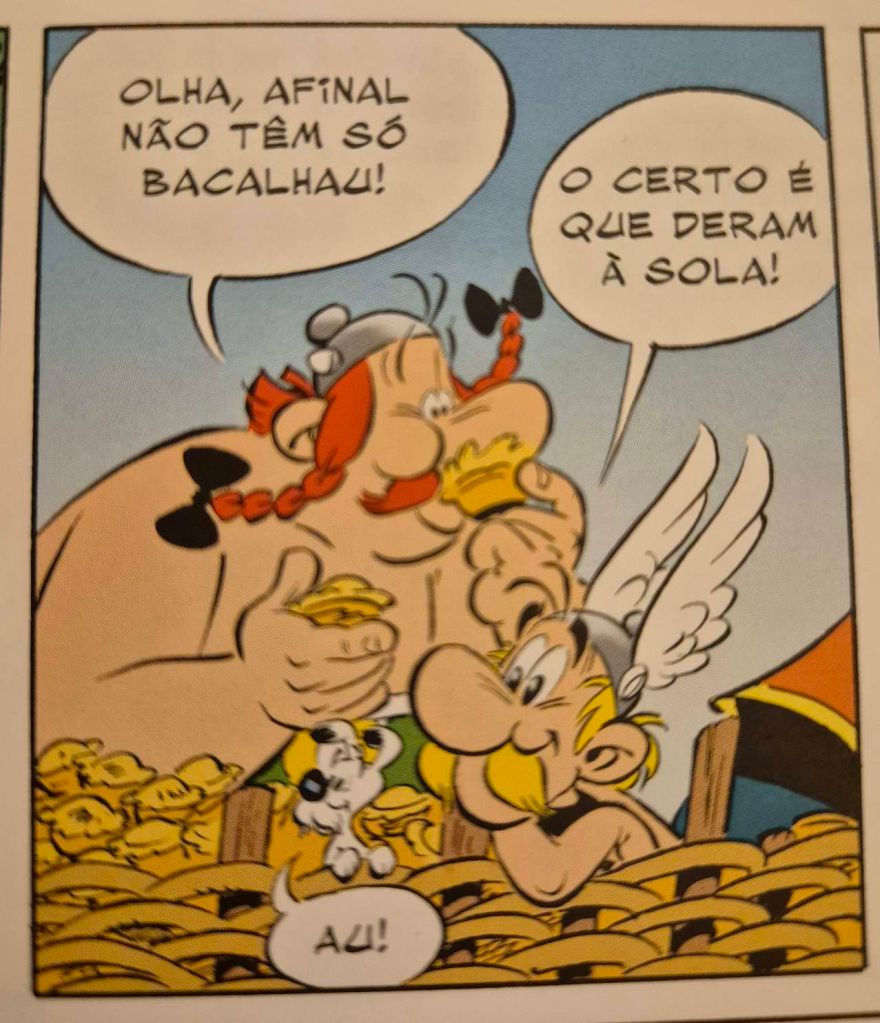
Dar à Sola
And straight after that, is this another joke? Dar à sola means to run away and the “sola” there means the sole of your foot. I want it to be a pun based on the fact that Obélix is talking about cod (of which he is not a fan!) and sole can also be a kind of fish. It doesn’t quite work in Portuguese though because the words are slightly different: sola for the sole of your foot and solha for the flat fish.
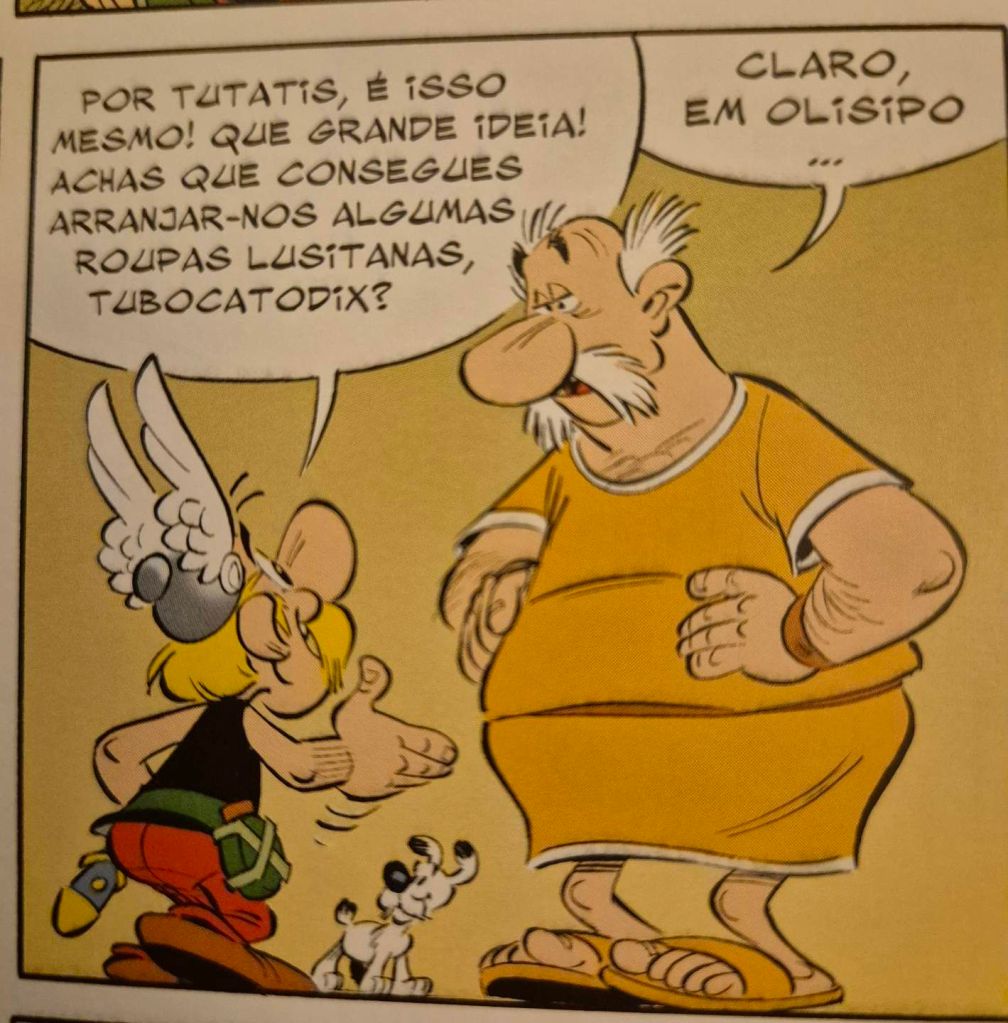
Tubocatodix
Ahhh, i couldn’t work out what his name meant! Tubo catodico =cathode ray tube. I think “tubo de raios catodicos” is more common, in fact, but you can say it the shorter way. His wife, Locutorina must just be the feminine diminutive of locutor – a rádio announcer.
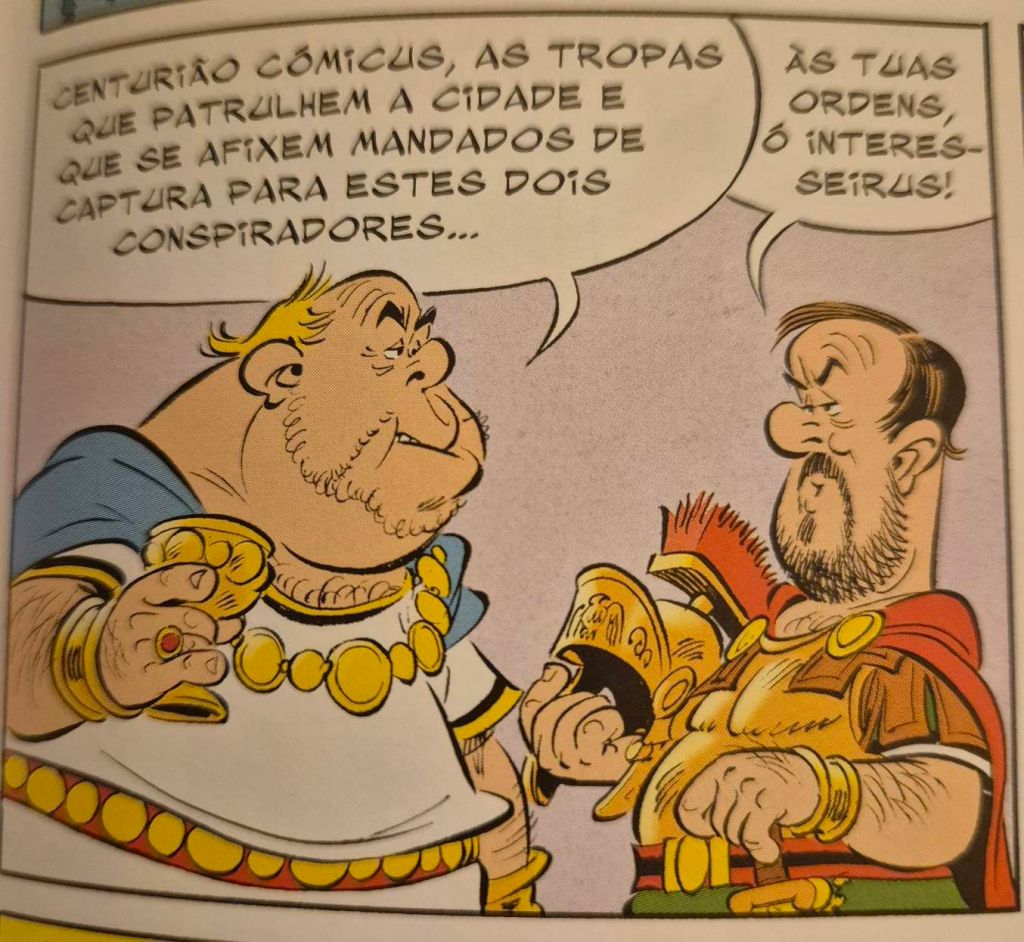
PSI XX
Sacanês’s suggested name for the list of important indistrialists based in Lusitania happens to coincide with the index of the 20 largest companies on the Portuguese Stock Index, the PSI-20, equivalent to our FTSE100. Why its abbreviation isn’t Portuguese (what? Índice de Ações Portuguesas?) i don’t know.
And by the way I had forgotten what “em cascas de rolha” means too, although I’m sure I’d come across it before. It just means a long way away.
A Quem Tu Dizes
I guessed correctly that “Who are you talking to?” would be something like “You don’t say!” or “You aren’t kidding!”
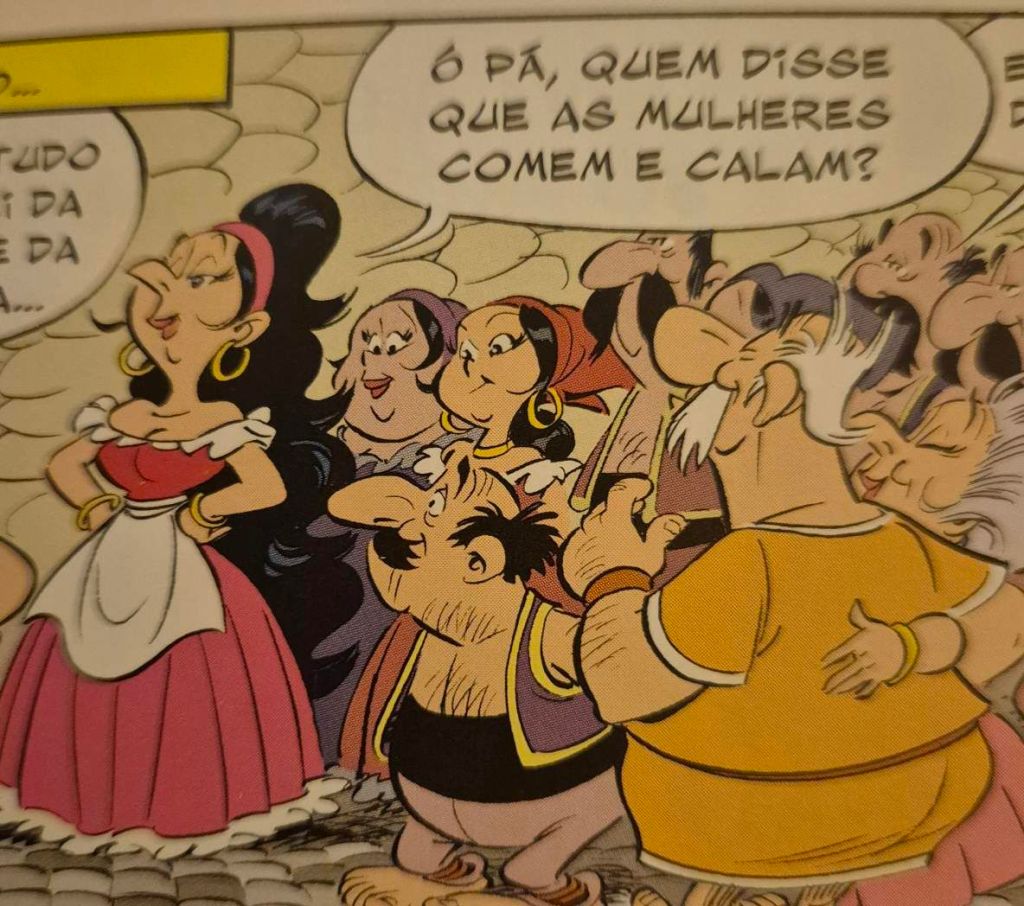
Comer e Calar
Comer e calar is a set phrase meaning “put up with something without any protest”








 Luso
Luso 