This post is going to be very sweary, so if you don’t like that, maybe give it a miss.
I’m watching this Netflix series, Rabo de Peixe and I’m hexed, vexed and perplexed by the weird contradictions in a line of dialogue from near the end of episode 5:
“O Universo não julga, não dá premios, é pura indiferença e acaso. Por isso se te calha a sorte de uma segunda oportunidade, caralhos me fodam, se não a agarras com unhas e dentes.”
Here’s how I translate it (keeping the commas intact)
“The universe doesn’t judge, it doesn’t give prizes, it’s pure indifference and randomness. So if you’re lucky enough to get a second chance, dicks fuck me, if you don’t grab it with your fingernails and teeth.”
It’s a bit of a mess as far as I can see. I think I get the gist of what he’s saying overall, but it’s that weird, sweary tree-word clause in the middle of the second sentence that doesn’t seem to fit: why does he switch from the second person to the first for that bit? It just sounds like the clause is an exclamation that has nothing to do with the wider sentence, which is why it’s surrounded by commas. But if you imagine the sentence without the clause, the remainder makes no sense at all.
The best explanation I’ve had is that it is not an exclamation at all, it’s a legit part of the sentence. So he’s saying “you” in the sense of “any person”, and he’s so sure that any random person would grab the second chance that he’s willing to call down all the fodando of all the caralhos if he’s wrong.
It’s a bit hmm, though. For a start, for that to be true, the comma before and after the clause would have to be a mistake. Ugh, it gives me a headache!
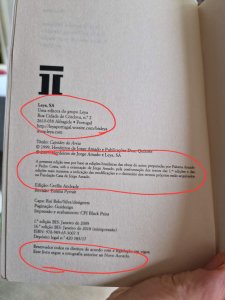
The book I’m reading right now is a classic Brazilian book, “Capitães da Areia” by Jorge Amado, about a group of street kids in Salvador da Bahia in the 1930s. My edition was published by a portuguese company called LeYa, and advertised under the government’s Ler+ initiative. At first, I thought someone at the publishing house had tweaked the language to make it more understandable to portuguese readers. Let me explain why, and why I was wrong.
As you probably know, (check here if you don’t) Brazilians typically address each other as “você” in their conversation and change the verb endings accordingly. “Tu” is more common in Portugal.
What’s weird about this book is, the characters all address each other as “tu”, after the European style, but the verb conjugations all use the você form. This looked like a mistake to me, so I went online to ask if maybe someone had screwed up at LeYa HQ.
Here’s my question in portuguese, and I’ll put a summary of the answer down below in English.
Estou a ler um livro brasileiro chamado Capitães da Areia, mas ao que parece a editora, Leya, mudou determinadas frases para soarem mais naturais a um leitor europeu. O resultado é… Surpreendente. Ou pelo menos eu fiquei surpreendido. Há montes de diálogo onde o pronome é “tu”, como se usa em Portugal, mas o verbo fica na terceira pessoa como se seguisse o pronome “você”
“Tu quer me fazer um favor”
e
“Tu liga para guarda?”
e
“Tu sabe, Sem-Pernas, que ele é um bicho calado”
Isto tudo está errado ou eu estou a enlouquecer? Ou… Talvez haja uma explicação melhor. É normal em PT-BR? A maior parte da história parece-me como o original (calão e vocabulário brasileiros, “trem” em vez de “comboio”, etcetera. Até há um daqueles “us” com hum… Umlaut… (Google) Trema! U com trema, que nem sequer existe em PT-PT, nem antes do AO nem depois.
Many of the replies said yes, this was a horrible disgrace, but there were quite a few brazilians who told me that all this is normal: it’s just a dialect spoken in some parts of southern Brazil. Besides, they added, the street kids haven’t really had the benefits of education, so it’s no surprise that they don’t have immaculate grammar.
There are a couple of ways of approaching the question of how to define good use of a language. The first is prescriptivism, which says there is one correct way of speaking and anything that deviates from it is wrong. The second is descriptivism, which starts from the premise that if people are speaking in a non-standard way and being understood by the people around them then they are just speaking a different version of the language, using different rules, and the linguists’s job is to describe what they’re doing, not to tell them they’re wrong. Most linguists and dictionary writers tend to be descriptivists on principle* with some exceptions**. I tend to be mostly descriptivist until someone tells me that ‘literally’ can mean ‘figuratively’, at which point I reach for my kalashnikov.
So, for example, you could argue that Brazilian portuguese is bad portuguese because it has diverged from the standard form of the language, spoken in Lisbon. But you could equally well say the same about Madeiran portuguese, or. Scouse English. In fact, if you wanted to be very hard-line about it, you could say portuguese is badly-spoken Latin since it has deviated from the language the Romans brought there in the third century BC.
Let’s say, for the sake of argument, that portuguese is it’s own language now, and that Brazilian portuguese is one among many dialects of Portuguese spoken in Portugal and it’s former colonies. But what about within Brazil? Is this Salvador de Bahia variant a separate dialect that has diverged and formed its own rules or are it’s speakers just hicks whose babbling would be scorned by educated people in Rio, let alonwle Coimbra?
The answer probably depends on your personality and your politics, but for me, as a learner, I just have to appreciate the book for what it is: a milestone of literature in portuguese. Let the linguists argue over the details.
If you’re studying a language, you should probably think like a prescriptivist because the people marking your work will be following a standard. If you use a você verb ending with someone you’ve addressed as tu, they won’t treat that as a delightful regional variation, they’ll just deduct marks. I made this point in what I thought was a light-hearted way to a strong descriptivist who told me “right and wrong don’t exist” when it comes to questions of language, but I got downvoted, suggesting most people disagreed. 😂
Cancelled for my prescriptivist tendencies
* If you haven’t read “The Meaning of Everything” by Simon Winchester I can recommmend it, and it addresses why early lexicographers made this choice.
**There have been some famously sarcastic and biased definitions in English dictionaries in the past. More recently, prescriptivist tendencies have come out in attempts by activists to get the meanings of words changed in order to short-circuit debate and bring about social change in a more top-down way. The most famous was this one in the aftermath of the George Floyd murder.
True story. I know it sounds made up, but it’s not, I swear. Thanks to Dani for the corrections.
Eu e a minha filha fomos ao pub ontem para participar no “Quiz” deles (um concurso de perguntas e respostas). Desta vez, convidámos a prima dela, mais uma nativa da Madeira, para participar na nossa equipa. Fomos pelo caminho à beira do rio porque é sempre bonita ao fim da tarde. Ela ia a falar sobre o seu ator preferido, Reece Shearsmith, que está atualmente numa série da Netflix.
Após algum tempo, havia um grupo de pessoas a andar na direção oposta e, atrás delas, duas ciclistas. Parámos para deixar as ciclistas passar, e o homem do grupo, vendo que havia alguém parado na sua frente, levantou a cabeça para dar uma olhada à sua volta. Assim que vi o seu rosto apercebi-me de que era o rosto do Reece Shearsmith.
Pus-me a andar de novo, boquiaberto. Ouvi a Olivia a perguntar “O quê???”.
“Isto aconteceu mesmo?” disse eu
“Aconteceu, sim” respondeu. “Mas porquê?”
E continuámos para o nosso destino, mais velhos e mais sábios*.
Ela contou a história à sua prima e (através do aplicativo Discord) a alguns amigos, mas não quer revelar o encontro nas redes sociais porque ninguém vai acreditar em algo tão rebuscado.
Ganhámos o quiz porque somos génios mas isso foi apenas a segunda coisa mais incrível da noite.
*We went on our way, older and wiser. I like this as a phrase and I enjoyed translating it, but really it’s likely to sound a bit weird in portuguese. It’s a bit self-indulgent to expect quotations to translate frictionlessly from one language to another.
I was presented with a pun the other day and I totally failed to get it. It was in the context of one of those puzzles where you have to work out how to resolve an apparent contradiction: there are two parents and two children in the car but there are only three people. How is that possible? The answer is that it’s three generations: grandpa, dad, son, where the dad is also the son of the grandpa. One of the guesses was along the lines of maybe it’s a gay couple, and when they realised it couldn’t be that because even in Ron DeSantis’s Florida, homosexuals don’t count as only half a person, they said “Estou muito pouco esperta”.
So where’s the pun? In English, we might say someone who immediately tried to introduce an LGBT theme into an unrelated discussion is “Woke”, but someone who gets riddles straight away might be “Clever”. Actually, let’s say “smart” – I don’t know why, but I feel this american, practical sort of cleverness is the best one to use in this context, because both “Woke” and “Smart” can be translated as “esperto”. So the person was saying that they’d got the joke wrong by being “not so smart” but also saying they weren’t one of these woke people.
I marked it down as something to look into and I have because I’m a nerd. As far as I can tell from the canonical meaning of esperto on priberam and the more slangy definition on dicionário informal, esperto doesn’t mean the same as “Woke” as its used in English now: meaning the person holds a range of well-manicured opinions related to identity politics that are simultaneously censorious, emphasising and exacerbating social division as much as possible and also weirdly corporate-friendly and able to be used in a LinkedIn post without the slightest trace of irony. No, rather, esperto is more literally “awake”. It’s related to the word “despertador” (alarm clock) so it goes back to the original meaning of woke – that you’re awake, that you’ve had your eyes opened to injustice.
So it works as a pun, but don’t get carried aeay: I don’t think you could say of an earnest and slightly preachy young person that they were “esperto”. Woke is apparently used in portuguese. I doubt the cultural salience is exactly equal (people my age using it in a “tut tut, what is the world coming to” way, and people under thirty acting as though trying to destroy other people’s lives over a tweet was “just being kind”), but it does exist. Here, for example, at 4:20, where you can see other Americanisms like “boomer”, and “policamente correto”
So what about the other meaning of esperto? Why did I say smart was a better translation than clever? Or, put another way, what’s the difference between being inteligente and being esperto? The Açoriano podcast Helfimed explains it in this video using an analogy, starting at 3.38
He says, in his amazing accent, that if you imagine 2 people who have never seen electric light, and they’re put in a room and then the lights are turned off. They both see there’s a light switch on the wall (how they see this in the dark, we’re not told) and they can see it’s something unfamiliar. The inteligente is thinking well, maybe it controls the light, but maybe it’s a trap. And if it does turn on the lights, how does that work? They’re seeing the problem in a more holistic way, maybe. The esperto, on the other hand, is more practical, operating at the level of cause and effect, and so he just cracks on, finds out what works, and gets results.
So that’s that. I think I’ve done a thorough job of over-analysing the hell out of that, haven’t I.
I’m having a meeting with the host of the Learning Portuguese is Fun podcast today because she’s putting together a series of episodes where learners at the B2/C1 level talk to each other and she explains some of their difficulties. I’m a little nervous but also excited.
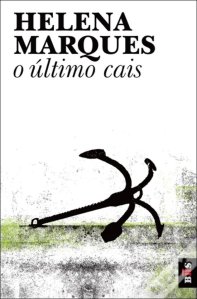
Começando este livro, custou-me a entender o primeiro capítulo porque havia tantas personagens em duas linhas de tempo distintas que perdi logo o fio à meada. Desenhei uma árvore genealógica de como as várias pessoas estavam ligadas, que tornou a compreensão mais fácil, e depois fiquei absorvido na história.
O enredo anda à volta de uma família madeirense, principalmente um casal que vive nos finais do século XIX. Há uma narradora que está a contar a história mas ela é quase invisível. Poucas vezes faz referência ao seu próprio ponto de vista, cem anos depois, quando herda uma escrivaninha e vários papéis da sua tia, que também é neta do casal.
Cada capítulo é dedicado a um familiar, principalmente os elementos femininos, e a sua perspetiva. Embora Marcos, o marido do casal, seja central ao enredo, não é o protagonista. A autora está mais interessada na experiência das filhas e irmãs e outras mulheres; na primeira página há uma citação de Herberto Hélder* “Começa o tempo onde a mulher começa”.
Seria muito fácil para um livro que tem lugar numa ilha ser insular ou paroquial, mas a autora deixa uma janela aberta para o mundo lá fora: Marcos participou na luta contra a escravatura em África após a sua abolição na Europa e nos Estados Unidos, e outros capítulos abordam o movimento pelos direitos das mulheres, conhecido por sufragismo, o crescimento do sentimento republicano e até o desenvolvimento de infraestrutura tecnológica na forma de um cabo telefónico sob o Atlântico. Assim situando o seu elenco num palco mundial, pintando numa tela grande (estou a misturar metáforas mas não me importa), a autora evita um sentido de claustrofobia.
Adorei o livro e estou muito contente que mo tenham recomendado antes das nossas férias na Madeira.
*i originally wrote this as “há uma citação na primeira página de Herberto Hélder” (there’s a quote on one first page from Herberto Hélder) but that is confusing because “a primeira página de Herberto Hélder” makes it sound like HH has pages, and he probably doesn’t.
Este livro é uma versão BD de um filme que não veio a ser realizado. A qualidade dos desenhos é básica e o diálogo é parecido com o estilo das sitcoms britânicos dos anos setenta: cru e sem sofisticação. Não sendo incrível, deu-me duas boas horas de sorriso sem rir em voz alta.
My daughter has been telling people her favourite portuguese music is “Eu Tenho Dois Amores” by Marco Paulo, and she’s even sung the opening line to me a couple of times, but nothing could prepare me for the real thing.
I see a lot of people in the comments are nostalgic for it, and I get that: music that reminds you of a time and a place is always special. And I have to admit, the lad has or a set of pipes on him. But, as someone hearing it for the first time in 2023, it’s pretty cringe. The hair style, the little dance, the fact that he is singing about his two girlfriends who are completely different because um… they have different hair colours… Well, that’s the eighties for you, I suppose!
Ricardo Araújo Pereira é um dos humoristas mais confiáveis que já li: sempre que abro um livro dele, fico divertido e, às vezes, até aprendo algumas coisinhas. Nunca encontrei um livro dele aborrecido (mas nunca experimentei o que fala de futebol!)
Neste livro, o ganda Ricardo vira a sua atenção para a pandemia e os transtornos, as parvoíces e todas as mudanças daquela época na história do nosso mundo. Ler o livro é uma espécie de viagem no tempo: é quase possível adivinhar a semana na qual um capítulo foi escrito, analisando o que ele menciona: o confinamento, as medidas contra infeção, como lavagem de entregas, máscaras, o horrível vídeo de estrelas a cantar “Imagine” e por aí fora. E não desilude.
Tanto quanto sei, o título é um trocadilho baseado no duplo significado de “vagas”: como substantivo é um sinónimo de “ondas” e como adjetivo é a forma feminina e plural de “vago” que significa “impreciso”. Portanto pode significar “sobre as vagas do vírus” ou “sobre ideias vagas”.
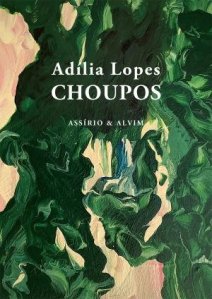
Ouvi falar desta autora e, logo no dia seguinte, um livro dela caiu no meu cesto no FNAC. Confesso que o achei um pouco aleatório. Poesia, aforismos, esboços verbais… para mim, há nisto uma certa falta de coerência, mesmo que tenha gostado de várias páginas.
Não sabia o que queria dizer o título. É uma espécie de árvore – a que nós chamamos de “Poplar”.





 Luso
Luso 