I came across this fairly baffling sentence in an exercise. What on earth can it mean? Googled it to see if I could find anyone using it and apparently, yes, it’s an expression, the gist of which is that, if you follow your parents’ guidance you won’t go far wrong in life. There’s an example here, referring to sporty kids following in the footsteps of their sporty parents.
O Leilão da Casa da Mariquinhas
I saw this in the same compilation as yesterday’s. The style is a bit lighter. The singers are Fernando Maurício (left) and Francisco Martinho (right). For me, the best thing is the staring match between the guy on the portuguese guitar and the guy on the vanilla guitar. Neither of those lads is backing down.
The song seems to date from the thirties or forties, when a song with a similar name – A Casa da Mariquinhas – was written by João Silva Tavares and sung by Alfredo Marceneiro. It tells the story of a house with shutters on the windows, which we are meant to understand is a brothel, and it was so popular it inspired a whole lot of similar songs about whorehouses. This is one, and it talks about the auction held after the closure of the house. Oh no! So I’ve listened to the sequel without hearing the original!
There’s a lot more background on this page if you want to know more.
| Portuguese | English |
|---|---|
| Ninguém sabe dizer nada Da formosa Mariquinhas* A casa foi leiloada Venderam-lhe as tabuinhas | Nobody knew how to say anything About the beautiful Mariquinhas The house was auctioned They even sold the shutters |
| Ainda fresca e com gajé Encontrei na Mouraria A antiga Rosa Maria E o Chico do Cachené Fui-lhes falar, já se vê E perguntei-lhes de entrada Pela Mariquinhas, coitada | Still cool and with swagger I met in the Mouraria Old lady Rosa Maria And Chico do Cachené I went to speak to them, as you see And asked them right away About poor Mariquinhas |
| Respondeu-me o Chico: E vê-la? Tenho querido saber dela Ninguém sabe dizer nada As outras suas amigas A Clotilde, a Júlia, a Alda A Inês, a Berta, a Mafalda E as outras mais raparigas Aprendiam-lhe as cantigas As mais ternas, coitadinhas Formosas como andorinhas Olhos e peitos em brasa Que pena tenho da casa Da formosa Mariquinhas! | And Chico replied: And to see her? I was wanting to know about her Nobody knew how to say anything Her other friends Clotilde, Júlia, Alda Inês, Berta, Mafalda And some other girls They learned her songs The most tender ones, poor things Beautiful as swallows Eyes like black coals I feel such pity for the house Of beautiful Mariquinhas |
| Então o Chico apertado Com perguntas, explicou-se A vizinhança zangou-se Fez um abaixo-assinado Diziam que havia fado Ali, até madrugada E a pobre foi intimada A sair; foi posta fora E por mor duma penhora A casa foi leiloada | Then Chico, eager To ask questions, explained The neighbourhood got angry And started a petition They said there was fado There until the small hours And the poor woman was summoned To leave; she was put out And for the sake of a foreclosure The house was auctioned |
| O Chico fora ao leilão Arrematou a guitarra O espelho, a colcha com barra O cofre-forte e o fogão | Chico, outside the auction Bid for the guitar The mirror, the striped duvet The safe and the stove |
| Como não houve cambão Porque eram coisas mesquinhas Trouxe um par de chinelinhas O alvará e as bambinelas E até das próprias janelas Venderam-lhe as tabuinhas | Since there was no change because they’re trivial things He took a pair of slippers The license and the awning And from the windows themselves They sold him the shutters |
Mariquinhas seems to be a woman’s name here, but generally speaking mariquinhas is a diminutive of maricas, meaning sissy or effeminate, so probably to be used with care.
Vida Vivida – Argentina Santos
I saw this one in a compilation video and I’d never heard of the fadista but I thought it would make a good transation. And holy shit it’s heavy! Not the music, obviously, but the sentiment is raw and real. I don’t think it would even make sense sung by anyone younger than she is. It’s emo music for the older generation.
| Portuguese | English |
|---|---|
| Volta atrás vida vivida Para eu tornar a ver Aquela vida perdida Que nunca soube viver | Come back, life lived So I’ll see again That lost life I never knew how to live |
| Voltar de novo quem dera A tal tempo, que saudade Volta sempre a primavera Só não volta a mocidade | If only I could go back again, to such a time, what sadness Spring always returns Just not youth |
| A vida começa cedo Mas assim que ela começa Começamos por ter medo Que ela se acabe depressa | Life starts early But as soon as it starts We start fearing That it will end soon |
| O tempo vai-se passando E a gente vai-se iludindo Ora rindo ora chorando Ora chorando ora rindo | Time keeps passing People keep deceiving themselves Either laughing or crying Either crying or laughing |
| Meu deus, como o tempo passa Dizemos de quando em quando Afinal, o tempo fica A gente é que vai passando | My god, how time passes We say, from time to time But really, time stays It’s the people who pass by |
*
Learning About Time Zones Is Fun
I mentioned a while ago that I was going to appear on a podcast with Ângela from Learning Portuguese is Fun. She’s made it a theme of her current season that she invites on a couple of intermediate-level learners, and runs through a series of questions with them and then, after she edits it, gives her subscribers an exercise to correct the errors. She also goes through them with the learners of course. It seemed both fun and useful!
The questions are given out in advance for the students to think about but ideally should be fairly spontaneous, not just reading out prepared answers.
Unfortunately, I made a basic geographical error for which I blame Zoom: the invite said 3PM, which is fine, but I didn’t notice it also had the letters “CEST” after it. That’s “Central European Summer Time”. So although I had a chance to think about the answers on Thursday and Friday, I had planned to set aside an hour or so before the recording to get my brain and tongue warmed up, read through my notes and generally prepare myelf. But almost as soon as I sat down to do that, I got an email saying they’d already started and was I joining! Whoops! I’m more used to MS Teams and I think it would have handled the “fuso horário” better. Anyway, considering a cold start, I guess it wasn’t a total disaster, but I definitely made a lot of mistakes, talked too quickly because I was nervous, tripped over my tongue, went off on a few weird little tangents… Oh well, never mind, I’ll take all the speaking practice I can get! I might be on future episodes if she isn’t too traumatised by the amount of editing she had to do!
I was on with a Bosnian chap who I have to say, is obviously a faster learner than me because he’s alread speaking at a solid intermediate level despite being only about a year and a half into his learning journey, Impressive stuff!
The episode I’m in isn’t released yet, but if you want to hear this audio car crash yourself, you can subscribe here and snag the exercises here.
Tristão das Damas
Another text that hasn’t been proofread #UNCORRECTEDPORTUGUESEKLAXON
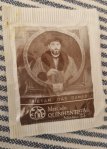
Este senhor, Tristão Vaz Teixeira, também conhecido por Tristão das Damas, aparece em pacotes de açúcar na Madeira. Ao ver o nome dele, assumi que haveria uma outra explicação pelo apelido. Por exemplo, uma dama é uma peça num jogo. “Talvez”, pensei, “os cabeços de amarração, que parecem estas peças, também sejam chamados por damas, e este homem era um capitão dum nave ” Mas enganei-me, ele era um poeta madeirense cortês, que fez vários motes a mulheres e por isso ficou conhecido por esse apelido. Contudo, o seu pai, Tristão Teixeira era navegador mesmo, portanto, eu não era assim tão longe da verdade!
Táxi – Chiclete
Portuguese Ska! Skaudade?
The lyrics of this one remind me of X-Ray Spex: the idea that consumer society means everything – and everybody – is plastic and disposable. I can’t say I enjoyed it as much as X-Ray Spex, unfortunately, but each to their own. Chiclete is one of those annoying words that’s feminine in European Portuguese and masculine in Brazilian Portuguese. I think “Pastilha Elástica” is a more common way of describing chewing gum, but I guess it doesn’t sound as good in the song, so here we are!
| Portuguese | English |
|---|---|
| E como tudo o que é coisa que promete A gente vê como uma chiclete Que se prova, mastiga e deita fora, sem demora Como esta música é produto acabado Da sociedade de consumo imediato Como tudo o que se promete nesta vida, chiclete | And like everything promising We see it like a chiclet That can be tasted, chewed and thrown away without delay Like this song is a finished product Of a consumer society Like everything promising in this life, chiclet |
| Chiclete Aua-aua-aua-aua-aua-aua-aua-aua-aua-aua Chiclete | Chiclet Aua-aua-aua-aua-aua-aua-aua-aua-aua-aua Chiclet |
| E nesta altura e com muita inquietação Faço um reparo e quero abrir uma excepção Um casse-tete* nunca será não, chiclete Pra que tudo continue sem parar Fundamental levar a vida a dançar Nesta vida que tanto promete, chiclete | And right now, and with a lot of agitation I make a correction and I want to make an exception It will never be a puzzle, chiclet So that everything continues without stopping It’s essential to go through life dancing In this life that promises so much, chiclet |
| Chiclete Aua-aua-aua-aua-aua-aua-aua-aua-aua-aua Chiclete | Chiclet Aua-aua-aua-aua-aua-aua-aua-aua-aua-aua Chiclet |
| E como tudo o que é coisa que promete A gente vê como uma chiclete Que se prova, mastiga e deita fora, sem demora Como esta música é produto acabado Da sociedade de consumo imediato Como tudo o que se promete nesta vida, chiclete | And like everything promising We see it as a chiclet That can be tasted, chewed and thrown away without delay Like this song is a finished product Of a consumer society Like everything promising in this life, chiclet |
| Chiclete Aua-aua-aua-aua-aua-aua-aua-aua-aua-aua Chiclete, chiclete, chiclete, chiclete Chiclete, chiclete, chiclete, chiclete Chiclete (Prova) Chiclete (Mastiga) Chiclete (Deita fora) Chiclete (Sem demora) | Chiclet Aua-aua-aua-aua-aua-aua-aua-aua-aua-aua Chiclet, chiclet, chiclet, chiclet Chiclet, chiclet, chiclet, chiclet Chiclet (Taste) Chiclet (Chew) Chiclet (Throw away) Chiclet (No delay) |
*=This is french. Boooooo!
Tio-Avôvôvô
A minha sobrinha deu à luz a sua terceira filha hoje de manhã. A bebé ainda não tem nome mas é muito fofinha claro; é uma simples questão de genética.
Natália Correia
I was hoping to get this proof-read, but I guess it’s not happening, so this goes out under the #uncorrectedportugueseklaxon
Toda a gente no meu círculo social online está a elogiar uma Açoriana que se chamava Natália Correia e muitas pessoas têm livros dela nas suas páginas do Goodreads. A razão por tantas pessoas lerem a mesma autora é que o centenário do nascimento dela já passou no dia 13 deste mês. Confesso que nunca ouvi falar dela mas li a sua biografia e uau, parece que ela viveu uma vida cheia de ação e animação. Participou no movimento contra o Estado Novo, e até fez parte na publicação das Novas Cartas Portuguesas. Escreveu vários livros que estende-se por géneros diversos, incluindo poesia, ensaio e romances. Após a revolução dos cravos, continuou a intervir ao nível da cultura e da política. Foi eleita e serviu como deputada na Assembleia da República a partir de 1980. Ui… Pretendia alistar todas as conquistas e os êxitos da vida dela mas há tantos e não quero escrever toda a noite. Faleceu em 1993 com 69 anos tendo vivido, tanto quanto constatei, 100 vidas.

Código Morse
I was hoping to get this proof-read, but I guess it’s not happening, so this goes out under the #uncorrectedportugueseklaxon
Ontem, descobri que existe um tradutor Online do código Morse, a sistema de representar palavras através de uma série de pontas, traços e espaços. Não é assim tão surpreendente que tal coisa existe em 2023, mas nunca antes pensei nisso.
— -. – . — –..– / -.. . … -.-. — -… .-. .. / –.- ..- . / . -..- .. … – . / ..- — / – .-. .- -.. ..- – — .-. / — -. .-.. .. -. . / -.. — / -.-. — -.. .. –. — / — — .-. … . –..– / .- / … .. … – . — .- / -.. . / .-. . .–. .-. . … . -. – .- .-. / .–. .- .-.. .- …- .-. .- … / .- – .-. .- …- . … / -.. . / ..- — .- / … . .-. .. . / -.. . / .–. — -. – .- … –..– / – .-. .- -.-. — … / . / . … .–. .- -.-. — … .-.-.- / -. .- — / . / .- … … .. — / – .- — / … ..- .-. .–. .-. . . -. -.. . -. – . / –.- ..- . / – .- .-.. / -.-. — .. … .- / . -..- .. … – . / . — / ..— —– ..— …– –..– / — .- … / -. ..- -. -.-. .- / .- -. – . … / .–. . -. … . .. / -. .. … … — .-.-.-
A Religião dos Livros – Carlos Bobone

Este audiolivro é um breve resumo do mundo dos livros: a paixão que os leitores sentem em relação às suas bibliotecas e as mudanças trazidas pela tecnologia: como sobreviverão os alfarrabistas face ao poder da Amazon?
Embora o foco do livro seja em Portugal, esta questão existe ao nível global, e o autor fala sobre, entre outras coisas, a famosa aldeia dos livreiros, Hay on Wye no país de Gales, que é um dos meus sítios favoritos.

