There are so many things to know, aren’t there? Today I found out how to say “round up”, not the kind of rounding up a cowboy does, but the kind a mathematician does
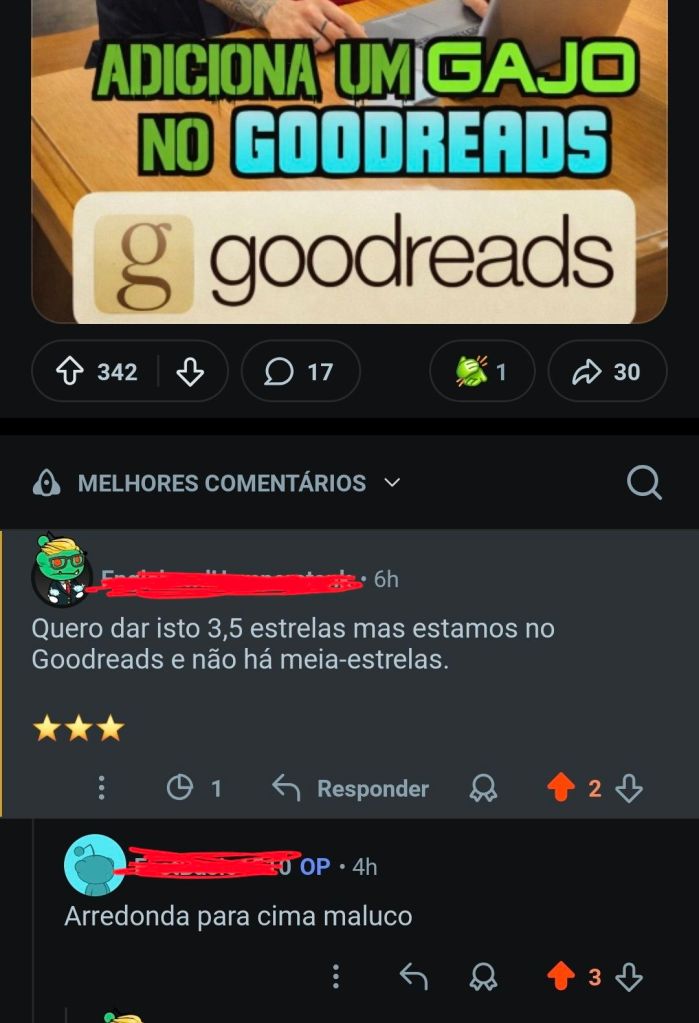
There are so many things to know, aren’t there? Today I found out how to say “round up”, not the kind of rounding up a cowboy does, but the kind a mathematician does
Oh! I must have accidentally unsubscribed to Say It In Portuguese’s email feed because I completely missed the notification about the last episode. I had been watching out for it because I’m in it, but I’ve just noticed it’s in my podcast app!
It’s this episode which deals with a song by Deolinda called Fado Toninho, and it was inspired by my attempt to grapple with the meaning of the song, in a post in February.
The podcast is definitely one you should be subscribed to if you are working toward B2 or over. It’s not the sort of thing you can listen to as a newbie, but if you already have decent skills, it gives you a wealth of knowledge about expressions and culture, all of which are essential for moving up to the next level. So, in other words, I can’t recommend it strongly enough! Cristina was my teacher for later C1 through to graduating C2, and she is very much a “friend of the blog”, but I would recommend SIIP even if that weren’t the case, because it’s excellent, it’s been around for ages and there’s nothing else like it, really.
Generally, the podcast picks an idiomatic expression and unpacks it for you, but in this one, we discuss the lyrics of a song, mainly trying to analyse the meaning of “Toninho” itself, but there are some expressions in the song too, and those are worth noticing. So if you don’t know the song already, I challenge thee: set aside some time to give the video and the podcast episode a listen and see how much you can learn in fifteen minutes.

Claro que a música em questão não é o verdadeiro hino da Madeira, mas Deslocado foi a canção selecionada no último Festival Eurovisão de Canção e continua popular naquela ilha lindíssima porque fala da saudade de um nativo longe da sua terra. A minha esposa usou várias vezes no seu insta durante a nossa estadia lá em Novembro.
Aliás, o gajo de barba, com o vape, que finge não reconhecer a canção é mais um criador de conteúdos, o @reijuliano do Insta, e suponho que o encontro não foi por sorte.
I like how this sentence is something that wouldn’t really make sense at all in English. You could say it of course, but it wouldn’t make as much sense in a language where we don’t really learn verb conjugations because our verbs are so straightforward.

He’s talking about those times in our lies when we do something for the first time ever – the first time you kiss someone, the first time you go out on your own and so on. In this paragraph, he goes onto say that those things don’t always work out as we might expect, and hoped-for first kiss turns into the first rejection.
And to do that he says the verbs “querer” and “ter” are conjugated with very different endings. I like that!
The book is Aqui Dentro Faz Muito Barulho by Bruno Nogueira
I keep seeing the expression “Tira-Teimas” pop up in my socials. Mainly, it’s on these short videos from The Voice Portugal. What can it mean?
Well, apparently, it can mean “objeto ou meio com que se castigam os teimosos” Er… Ok, that’s a very specific thing to have a phrase for, but sure. That’s clearly not what it means here though. I think the relevant definition here is “acontecimento ou circunstância que funciona como desenlace, pondo fim a disputa, competição ou controvérsia”. So a tie-breaker then? Hm, not quite that, because that would normally only involve two people. So maybe some sort of final battle where they shake out some of ghe weaker candidates and get it down to the finalists then? Something like that I think. I certainly don’t fancy watching the whole show to find out, I’m afraid, but I think that’s the gist of it.
There seems to be a brand of disgusting looking crisps called Tira-Teimas as well. I’m not sure why. Do people punish stubborn children with wheat-based snacks?

I posted a video on here of someone crying while trying to pronounce Portuguese. I realised later that she was just doing viral marketing, hyping up an app called Airlearn.
Since then, I’ve had loads more videos of people doing the same kinds of viral shenanigans. The best known is am American woman who has an elaborate story about how she went to visit her Portuguese boyfriend’s family and could tell they were being rude about her, even though she couldn’t speak Portuguese. LOL, yeah, because colloquial European Portuguese is soooo easy for an outsider to understand! The denouement is that she uses Airlearn to become fluent in Brazilian portuguese. Why Brazilian? Well, because she knew they would hate that because they are so racist. Not because Airlearn doesn’t even teach European Portuguese, oh no no no. Then a few weeks later she goes back and cusses them out in their own language. There were loads of aspects of the story that just didn’t make sense, and it also seemed like an infuriating slander on the Portuguese and their hospitality. Some people were saying she was native Brazilian anyway, so the whole thing was a con, and the video seems to have been deleted now.
So I was really happy to see this Instagram reel and even shared it on my own story… But then I clicked on her profile and I found out she’s an Airlearn shill too. This is a whole other dimension – the inception of rage bait marketing.
Anyway, this is all by way of saying I think we should just agree amongst ourselves to ignore Airlearn because they are a bunch of unscrupulous twats. If you’re looking for an app, start here instead.
O hotel no qual estivemos hospidades tem uma problema de dezenas de pombas ladrões. Todos os dias o pequeno almoço é uma cerca, com turistas aterrorizados a guardar as suas pratas para que as aves não consigam bicar a comida toda.
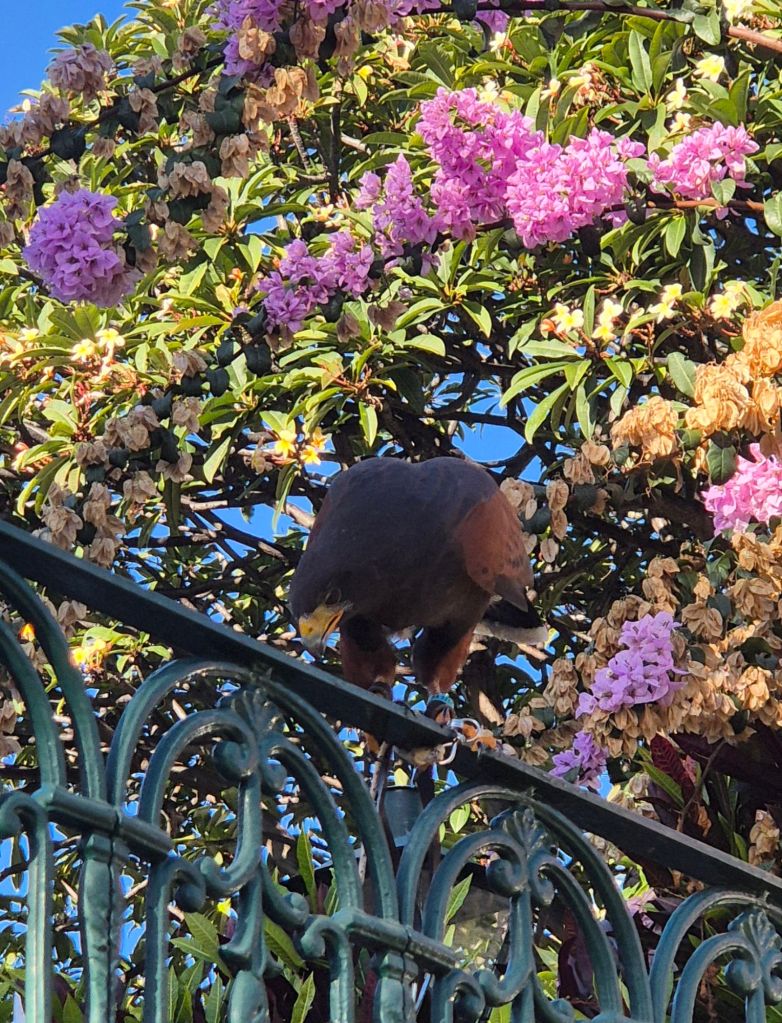
Mas o hotel tem uma arma segreda: uma ave de rapina. Infelizmente não está solta; acho o espectáculo de uma pomba a ser degolada entre as cereais seria ainda mais horripilante do que a alternativa, mas está empoleirada num corrimão, perto das mesas, com um homem a cuidar dela. E a ameaça da ave de rapina dissuade, em certa medida, as pombas cometerem atrocidades.
Coloquei uma foto da ave no subreddit r/whatisthisbird, e todos os entendedores-de-aves informaram-me que fosse uma gavião-asa-de-telha (o nosso Harris’s Hawk). Pedi mais informações do dono da ave mas ele disse que não, é uma águia e agora não sei, porque não quero contrariar o dono da ave mas também toda a gente no subreddit jura que o gajo não tem noção e que não existe uma espécie de águia com a plumagem que tem esta ave.
Deparei-me com esta chá enquanto procurava chá de hortelã, a qual estou desesperadamente viciado. Fiquei curioso sobre a origem do nome. Será que é uma planta que tem raízes fortes, capazes de rachar pedras sob o sol?
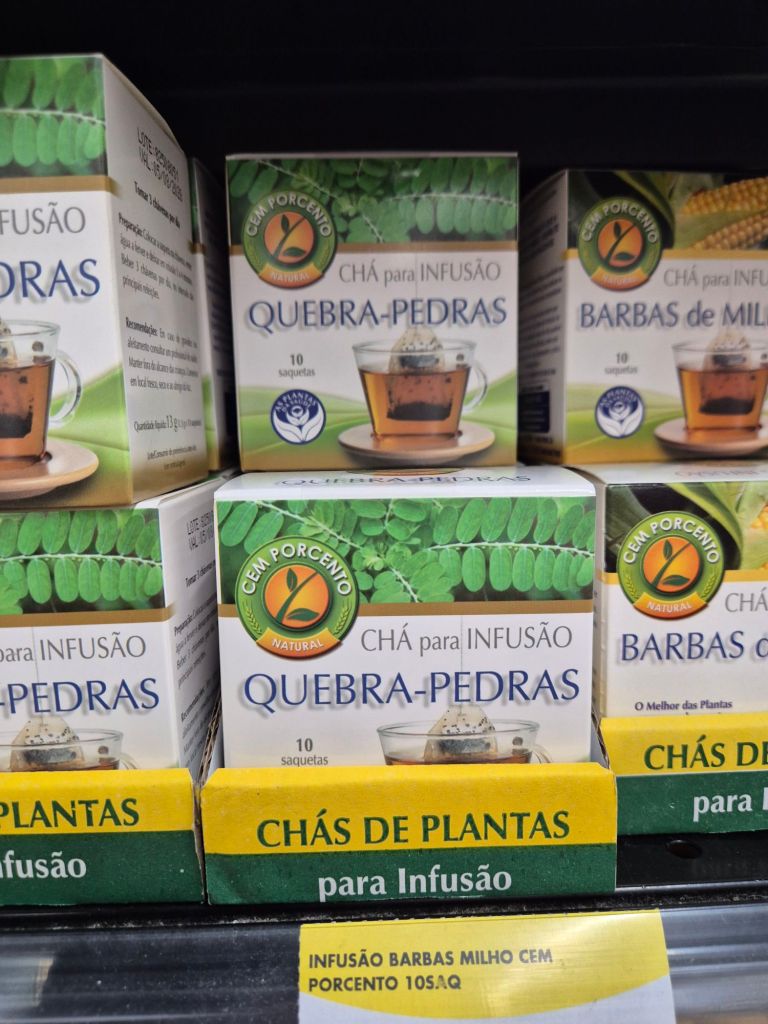
Nem por isso, a resposta é ainda mais improvável. A planta – Phyllanthus – tem a reputação de ser uma cura de cálculos renais (também conhecidos por “pedra nos rins”)
Como exemplo de como a Internet pode ser útil mas também enganosa, a página wiki (versão portuguesa) afirma que o subarbusto Phyllanthus acutifolius é “muito utilizado para prevenir a formação de cálculos dos rins e da bexiga.” e também Phyllanthus amarus “apresenta substâncias anti-cancerígenas e anti-inflamatórias, além de combater o vírus da hepatite B”
Entretento, na versão inglesa da mesma página, encontramos o seguinte:
A 2011 Cochrane review found that there is “no convincing evidence that phyllanthus, compared with placebo, benefits people with chronic hepatitis B virus infection.”
Extracts of the plant are common in herbal supplements marketed with the unproven claim of inhibiting the formation of kidney stones. The use of extracts from P. niruri for the treatment of kidney stones is not supported by scientific evidence.
Em Inglaterra, temos leis que exigem honestidade sobre os benefícios para a saúde do consumidor e adivinho que é por isso que a chá não se encontra no Waitrose.
Recebi os. Resultados dos primeiros “e-fólios” nos dois cursos. Não há nada preocupante. Uns erros gramaticos, um aviso sobre o uso de números de páginas com citações e um o dois outros conselhos mas em geral não havia problemas com os ensaios. Os docentes não desmentiram os meus argumentos. Nada disso.
Quanto às notas, a cotação de cada um tem 4 valores possíveis e as minhas avaliações foram 3,2/4,0 e 3,5/4,0. Se não me engano, são equivalentes a 80% e 87.5% respetivamente. Quem me dera que tivesse atingido notas desta nível durante as duas licenciaturas que fiz no meu próprio idioma!
Sinto otimista sobre o meu progresso até agora.
O e-Fólio B começa daqui a 10 dias.
Notes taken while listening to this video.
O movimento de descobrimento moldou a sua infância.
3 Março* 1455 Dom Afonso V e Dona Isabel
O narrador descreve um quadro no qual vemos várias notáveis, um clérigo e um multidão de pessoas de diversas classes sociais envolvidos na campanha de descobrimento. Sublinha-se as batalhas em Norte Africa que caracterizou esta época. Dom João participou numa expedição com 6 anos de idade!
Dom Afonso morreu 4 anos depois de regressar de uma viagem, tendo abdicado (temporariamente, ao que parece!) o trono antes de sair.
Os dois objetivos na sua policia externa era apoiar a igreja para consolidar o seu poder em África, e forjar uma nação unida entre Portugal e Castela. Este último foi assunto de várias conspirações, terminando com a morte de Afonso de Portugal…. ai, realmente tenho de saber mais sobre esta loucura. Encontrou resistência das grandes casas senhoriais ao seu projeto de centralização de poder.
A mapa mostra os limites do mundo deste rei.
Uma constante foi a tenção de dominar as rotas comerciais em certas produtos entre a Europa e a Asia. Construiu fortalezas e ergueu padrões nos territórios descobertos. Introduziu a obrigatoriedade de prestar serviço no exercito. Como resultado, o país alargar o seu alcance no palco mundial e quando o rei faleceu no Algarve estava a preparar para viajar para Índia, tendo já conquistado os cabos ao fundo da África e da America do sul

*WIkipedia gives a different date, but that’s definitely what he says!
 Luso
Luso 