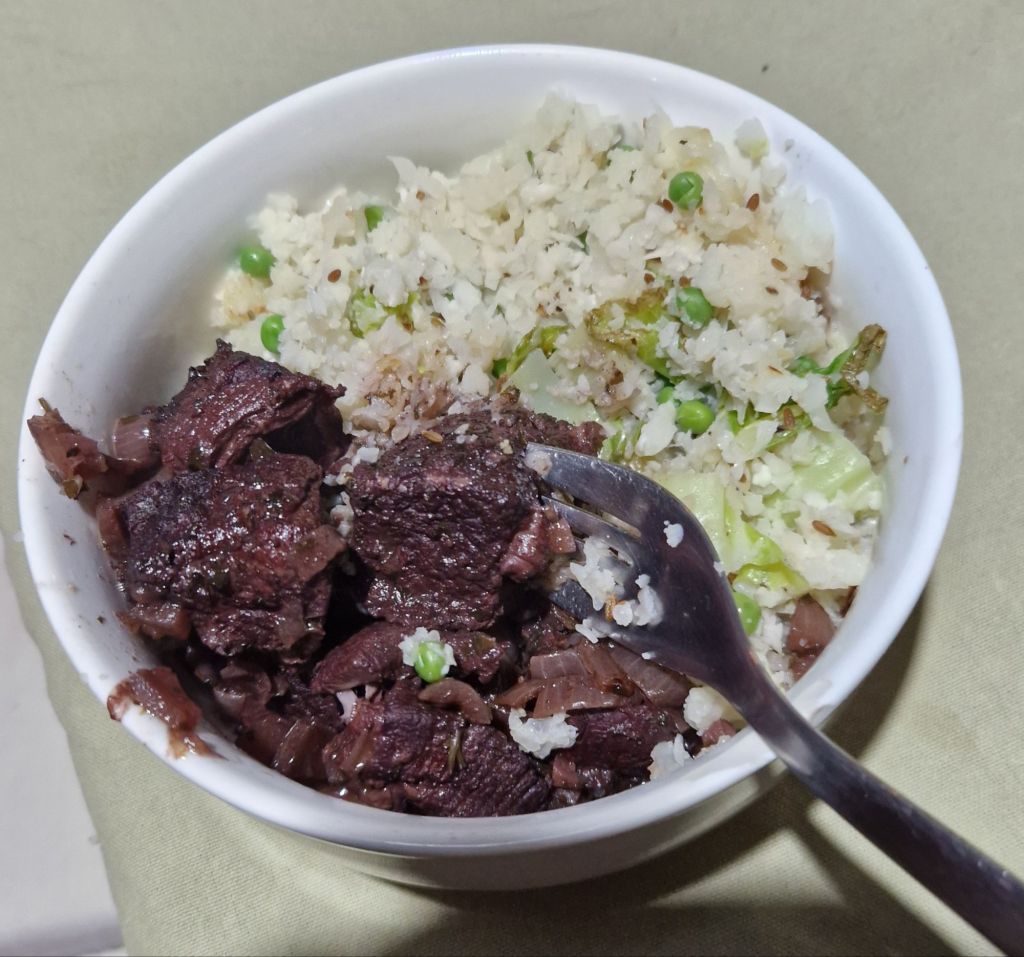
A segunda tentativa de fazer chanfana correu mil vezes melhor do que a primeira. A cozinha não acabou em chamas, ninguém morreu e enfim a carne era suculenta e deliciosa. Arroz de couve-flor não é o acompanhamento tradicional deste prato, mas não me importa: era preciso comer a couve-flor antes de ela ficar podre.
Translation time! I quite like this one, and it has some good expressions in it. It’s about how hard it is to be young. I checked, and in case you’re wondering he released it in 1990 when he was 33, so we’ll let it pass.
Portuguaês
Inglês
Não há estrelas no céu a dourar o meu caminho Por mais amigos que tenha, sinto-me sempre sozinho De que vale ter a chave de casa para entrar? Ter uma nota no bolso p’ra cigarros e bilhar?
There are no stars in the sky gilding my path No matter how many friends I have I always feel alone What’s the point of a housekey to get in? Or a note in my pocket for cigarettes and billiards?
A primavera da vida é bonita de viver Tão depressa o sol brilha como a seguir está a chover Para mim hoje é janeiro, está um frio de rachar Parece que o mundo inteiro se uniu p’ra me tramar
It’s beautiful to live in the springtime of life As soon as the sun shines, straight away it rains For me today is January, freezing cold It seems like the whole world is conspiring against me
Passo horas no café sem saber para onde ir Tudo à volta é tão feio, só me apetece fugir Vejo-me à noite ao espelho, o corpo sempre a mudar De manhã ouço o conselho que o velho tem p’ra me dar
I spend hours in the café, not knowing where to go Everything around is so ugly I just feel like escaping I see myself in the mirror at night, my body’s always changing In the morning I hear the advice the old man has for me
A primavera da vida é bonita de viver Tão depressa o sol brilha como a seguir está a chover Para mim hoje é janeiro, está um frio de rachar Parece que o mundo inteiro se uniu p’ra me tramar
It’s beautiful to live in the springtime of life As soon as the sun shines, straight away it rains For me today is January, freezing cold It seems like the whole world is conspiring against me
Vou por aí às escondidas a espreitar às janelas Perdido nas avenidas e achado nas vielas Mãe, o meu primeiro amor foi um trapézio sem rede Sai da frente, por favor, estou entre a espada e a parede
I’m going over there, secretly, to look in at the windows Lost in the avenues and found in the alleys Mother, my first love was a trapeze with no net Get out of the way please, I’m between the sword and the wall*
Não vês como isto é duro, ser jovem não é um posto Ter de encarar o futuro com borbulhas no rosto Porque é que tudo é incerto, não pode ser sempre assim Se não fosse o Rock and Roll, o que seria de mim?
You don’t see how hard it is, being young isn’t easy** You have to face the future with a spotty face Why is everything uncertain, it can’t always be like this If it wasn’t for Rock and Roll, what wojuld become of me?
A primavera da vida é bonita de viver Tão depressa o sol brilha como a seguir está a chover Para mim hoje é janeiro, está um frio de rachar Parece que o mundo inteiro se uniu p’ra me tramar
It’s beautiful to live in the springtime of life As soon as the sun shines, straight away it rains For me today is January, freezing cold It seems like the whole world is conspiring against me
Não há estrelas no céu (não, não, não, não há) Estrelas no céu (não, não, não, não há) Estrelas no céu (não, não, não, não há) Estrelas no céu (não, não, não, não há) Estrelas no céu (não, não, não, não há) Estrelas no céu…
There are no stars in the sky (no, no, no there aren’t) Stars in the sky (no, no, no there aren’t) Stars in the sky (no, no, no there aren’t) Stars in the sky (no, no, no there aren’t) Stars in the sky (no, no, no there aren’t) Stars in the sky…
*Nice expression! Obviously an equivalent of “between a rock and a hard place”
**The translation is simplified, I think: as far as I can tell, “ser x não é um posto” is a way of saying it isn’t just an easy job that comes naturally, implying you really have to be worthy, or to work hard for it. See here for example, or here.
Toda a gente terá ouvido falar disto, claro, não é nada novo, mas o Partido Democrata nos EUA já disse adeus ao seu candidato presidencial e está num processo de escolher um novo candidato para perder a eleição em Novembro*
A candidata mais provável tem um nome, Kamala, que dá (pelo menos) duas hipóteses de trocadilhos. O mais comum é “com mala”, mas acho que este vídeo sugere mais uma alternativa.
O nome do seu oponente, Trump, significa “Peido” em inglês (EN-GB), portanto fico feliz por ver que os democratas também têm um candidato cujo nome é uma fonte de risadas juvenis.
Boa sorte, Kamala (se for candidata mesmo), seja com ou sem mala, espero que venças aquele palhaço cor de laranja.
*I know this sounds negative, but if I’m pessimistic now it’ll be less of a shock later when the inevitable happens. We are, as they say on Dad’s Army, doomed.
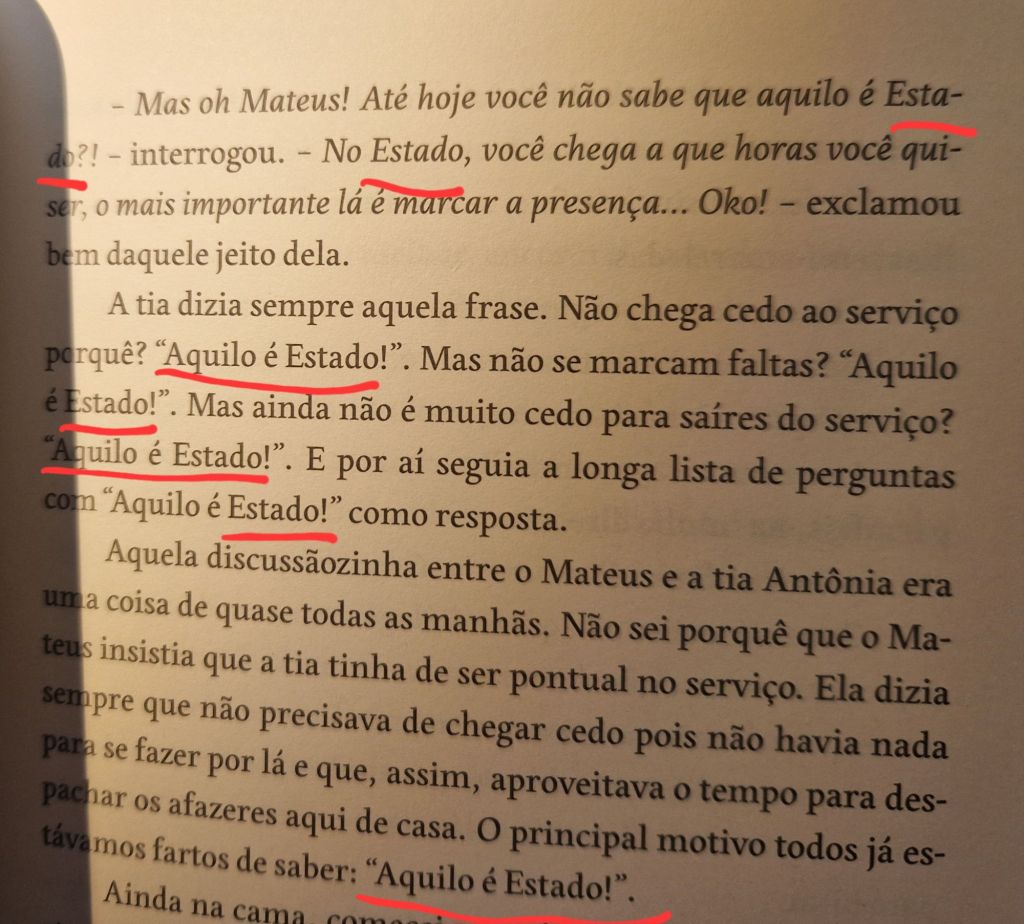
Mais uma expressão encontrada no meu romance angolano, “E O Céu Mudou de Cor”. Durante uma conversa entre a tia e o irmão do narrador e o filho dela, ela anda a repetir a expressão “aquilo é Estado”, com letra maiúscula na última palavra. Fiquei ligeiramente confuso porque não entendi o que significa Estado neste contexto, mas após ter perguntado à minha professora, e depois pedido conselho aos sábios do Reddit, parece-me óbvio, e mal acredito que o achei difícil.
A tia é um funcionário num serviço na administração pública (o governo, o estado) e por isso é pouco trabalhadora. Há quem ache que todos os funcionários no setor público têm esta atitude e sem dúvida existem também funcionários que realmente têm. A falta de responsabilidade por parte de uma pessoa cujo emprego é garantido, e a falta de financiamento disponível para desembolsar bens ao público dá num serviço que realmente não serve para nada. Os funcionários fazem orelhas moucas aos clientes.
Ou isso acontece mesmo ou um cliente que foi recusado por um funcionário culpa a preguiça e a arrogância dos funcionários. Mas é claro que, neste livro, a tia do protagonista é assim: uma funcionária que não funciona, um exemplo de corrupção do baixo nível.
Um membro angolano da comunidade r/Portugal confirmou que a frase e o sentimento são comuns em Angola.
Mas claro que Angola não é o único país que tem estes problemas. Existem por todo o lado, mas acho que o escritor pretende criticá-los na sua própria terra. Mais tarde na mesma história, o irmão diz que ele vai procurar trabalho e a tia responde com mais um exemplo de injustiça: “Não te preocupes(…) Nem vais ter que te dar ao trabalho de procurar por emprego nenhum. Já tenho uma cunha montada para ti (…) Já tá tudo acertado (…) podes até começar já amanhã se quiseres, o meu chefe não se importa”. A oferta é rejeitada porque o seu sobrinho não quer ficar metido num compromisso injusto: “Os tempos mudam e vão mudar, tia!”
Esta palavra “Cunha” já é conhecida porque surgiu no diálogo do “As Crónicas dos Bons Malandros” sobre o qual escrevi há 3 anos. Significa uma oferta de ajuda, emprego, ou outra bem, feita por uma pessoa influente, e é mais um exemplo de corrupção.
A única vez na minha vida que comi carne de cabra foi em Coimbra, num restaurante perto do centro comercial. O prato é chamado chanfana, e é uma receita tradicional à base de carneiro ou de cabra.
Chanfana
Se a carne for velha, não importa, porque será assada até se tornar tenra e por isso esta receita é vista como boa opção para carne dura de animais mais maduros. Tradicionalmente, a carne é assada numa caçoila de barro preto com vinho tinto, alho, pimenta e folhas de louro.
A receita é muito antiga mas existem diversas histórias sobre a origem. Como resultado, há duas regiões que disputam a coroa da terra da chanfana. O concelho de Miranda do Corvo é conhecido por ser a Capital de Chanfana. Entretanto, Vila Nova de Poiares é a Capital Universal da Chanfana e tem uma marca registada para demonstrar a sua supremacia no mundo da carne assada.
Quando estudas português durante anos e finalmente chegas na secção C-H-A-N-F no dicionário.
É muito importante não confundir “chanfana” com “chanfrado” porque ninguém quer pedir um prato de carne assada e receber um guru de auto-ajuda, mesmo se for bem passado com umas boas mãos cheias de alho.
I actually made chanfana the day after writing this. It was so bad it almost caused a diplomatic incident between Portugal and Britain. Halved the ingredients but didn’t reduce the cooking time enough and it was very, very dry.
I thought I’d try and collect together some of the uses of the word “tal”. Nothing definitive, but a sort of mood board or a pinterest page, gathering together some examples, because I know what it means, basically, but it’s quite a spongey word and it keeps popping up in unexpected places. Like here for example:
What is going on?
The standard meaning of tal given in most books when we first come across it is “such” but such is the confusion over words like “such” that its meaning only overlaps about 50% with the meanings of the english equivalent.
Hear are the meanings listed online. (“tal”, in Dicionário Priberam da Língua Portuguesa [em linha], 2008-2024, https://dicionario.priberam.org/tal.). I have colour-coded them by how “suchy” they are. Green = very like “such”, orange = similarish, red = nope.
quantificador existencial
1. Tão grande (ex.: a simpatia foi tal que voltaremos certamente). = TANTO [In english “the reaction to the announcement was such that the prime minister withdrew the policy 3 minutes later]
determinante e pronome demonstrativo
2. Igual, semelhante (ex.: nunca vi tal coisa; acho que nunca tal ouvi). [In english “I’ve never seen such such a thing!]
3. Este, esse, aquele, isto, aquilo.
4. Certo, não bem definido.
nome de dois géneros
5. Pessoa de que se fala sem nomear (ex.: este é o tal de que te falei).
I think this last one is the one in use in the meme. She could just say “who is that Uefa”, but but ading the “tal” it becomes more like “who is that Uefa person?” as if it’s slightly beaneath her to talk about such a person. You can imagine her curling her lip with distaste.
Asking around about this most people seemed to be sure that it would only be used if both the speaker and the listener already knew who was being talked about. Like in the António Zambujo song, Lambreta. “Come for a ride on my Lambreta … and stop thinking about that Vilela dude”. You know him, I know him, but really, I’d rather not.
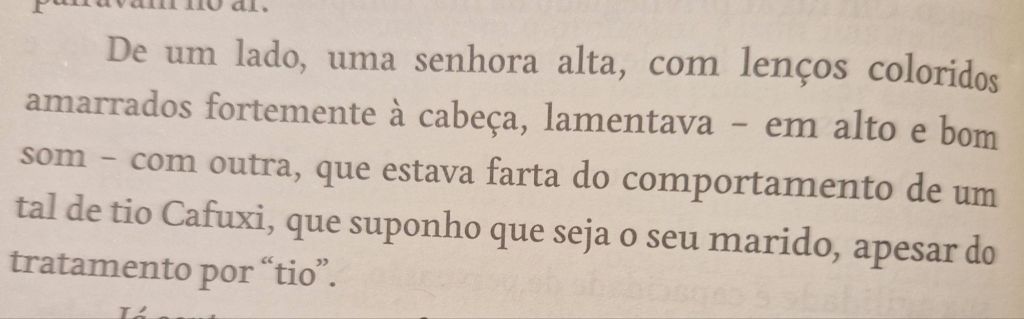
This next case is quite similar but the person isn’t known to the speaker. He’s describing someone complaining about a certain tio Cafuxi. I think this might be definition 4: Certo, não bem definido.
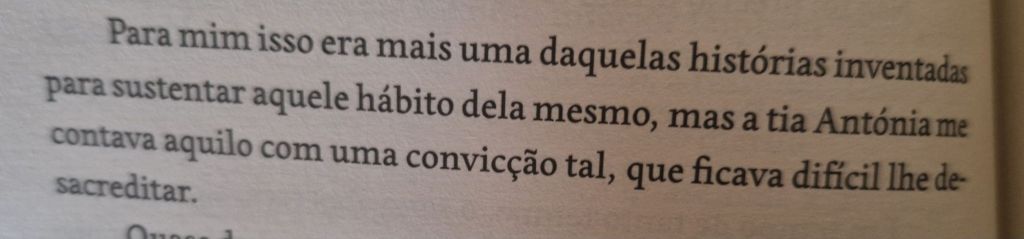
This next one is definition 1. Her conviction was such (so much) that it became hard to disbelieve her-
Tal also forms part of lots of little phrases that crop up in conversation
como tal
•Nessa qualidade, por esse motivo. (“as such”)
e tal
• [Portugal, Informal] Usa-se para indicar quantidade ou número indeterminado que excede um número redondo (ex.: ele tem trinta e tal anos; chegaram a casa às duas e tal da manhã). (in english this would be “Twenty-odd” or “Twenty or so”)
não há tal
•Isso não é verdade. (I guess we have “There’s no such thing” but it’s a bit of a stretch)
que tal!
•Exclamação para exprimir surpresa.
que tal?
•Expressão usada para questionar o estado ou a qualidade de algo. (What d’you think?”)
tal como
•Da mesma forma que ou à semelhança de. (In english “Such as”, but more often than not when you want to say “such as” you’re better off just writing “como” without the tal)
🤦 I assure you, we do not.
tal e qual
•Exactamente; do mesmo modo; assim mesmo.
tal qual
•O mesmo que tal e qual.
There isn’t really one translation for the word, or any one way of understanding what it means, you just have to sort of get used to the situations where it arises, I think.
Scratching – Note-taking on this chat show. Like the last one, it’ll be rough, just trying to understand it, and typing while they are talking so probably missing a lot, so the end result won’t be very polished
O chefe é o presidente da rota e veio fazer cabidela tradicional. Há duas galinhas na cesta
Uma cabidela não precisa de galinha – pode ser de coelho, cabrita, lampreia, leitão ou mais
Galo do campo, sangue, louro, sal, pimenta, vinho tinto, cebola, água… hum…. O chefe fala enquanto o rui corta a cebola e prepara o caldo com água, cebola e ossos
Uma espanta-espíritos – um presente dos fãs da programa?* Uma bandeja**
Coloca o caldo na panela com a cebola e depois a carne de galinha.
O rui trabalha num restaurante em Viseu. O apresentador tem ar desajeitado.
Arroz vai para a panela.
Mais caldo e o chefe está a falar de visitar mais de quarenta restaurantes. Gostou de ver as suas maneiras de cozinhar. Vinhos – todas as regiões. Importante ter a quantidade certa de sangue e de vinagre. Três colheres de sopa de vinagre num copo de sangue. Precisa de arroz bom e uma boa galinha. Qualidade de vinagre e de vinho conta.
Explica critérios de julgamento na concorrência – apresentação, qualidade das ingredientes, aspetos técnicos
Coloca o sangue, tempera o prato e dá um toque de vinagre.
Eh pá, está a servir a comida mas como é que o arroz já está cozido? No final. os apresentadores revêm a receita. Para ser sincero, não me parece assim tão saboroso mas o chefe é que sabe.
As I’ve probably said, I’m a bit of a philistine when it comes to poetry, but the book I am reading on-and-off at the moment, “atirar para o torto” by margarida vale de gato* “dá água pela barba” and my dictionary is taking a real beating. Translating this one in full because there are so many unknowns in it that I lost track. Words outlined in orange are the ones I had to look up
This galaxy will soon be a glowing coal
Our earth sparks - I think this
In the environ** of the street, feeling faint
Words beating in my head
About the cone*** of this planet - oh
warming marble with only one iris****
Fertilising the egg of the moon, steep
curdled, wounded***** red.
I'm going
when i arrive to lock myself out, key
inside, to sleep with the beasts in the dew
and just one bottle - I ought to break it
by the neck to heal
with a ruby in my mouth and anaesthesia
the bluff or another apocalypse
Incidentally, I happened upon a thesis published online where the author cites this poem in full as evidence of “an apocalyptic tone adopted recently in portuguese poetry”
*Should be in title case, I know, but she writes it in lower case on the cover so maybe it’s deliberate, I dunno.
**This is a pretty terrible translation since enlevo is more like enchantment, rapture, that kind of thing but I can’t quite find an english word that works in context. This is why I am not a professional translator!
***Another surprising one. The umbra and penumbra of an eclipse form cones, so she might be referring to that but it’s not clear to me
****I want “iris” to mean the little squiggle of colour inside an old-school marble, but I don’t see any evidence of that online.
*****Coalho was the only word I really didn’t know but it’s hard to see what she’s getting at here. Ingreme usually means steep but can be a high point, coalho means coagulate but can also be a thistle flower of all things. So maybe she means the blood moon looks like a thistle high up in the sky…. nah… i don’t see it.






 Luso
Luso 