
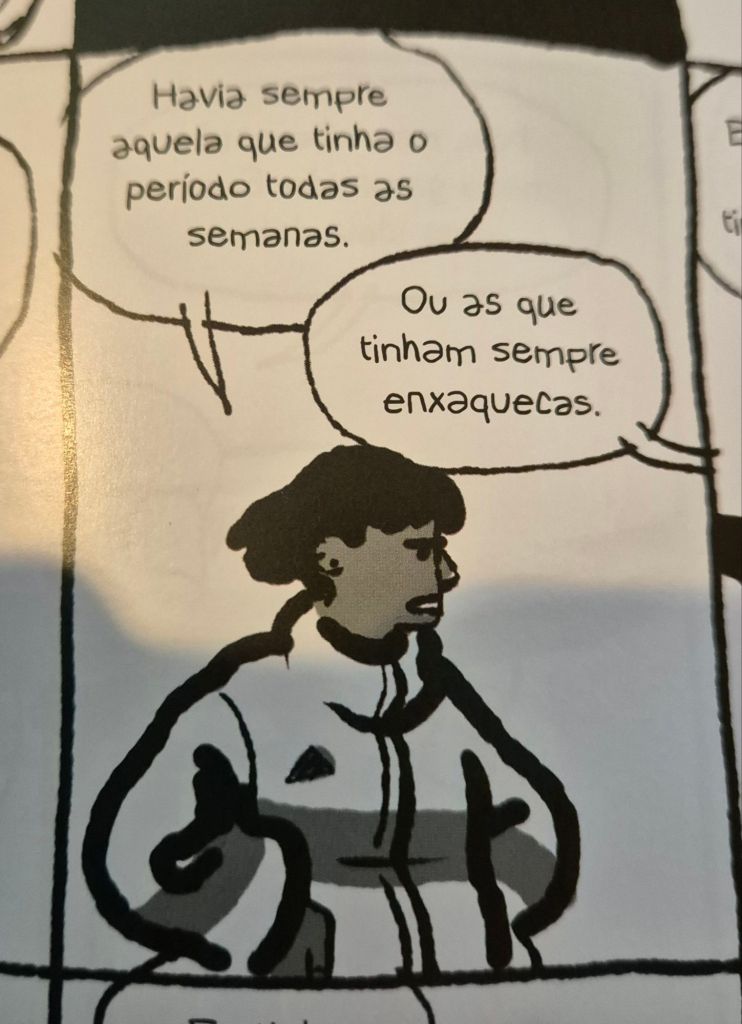
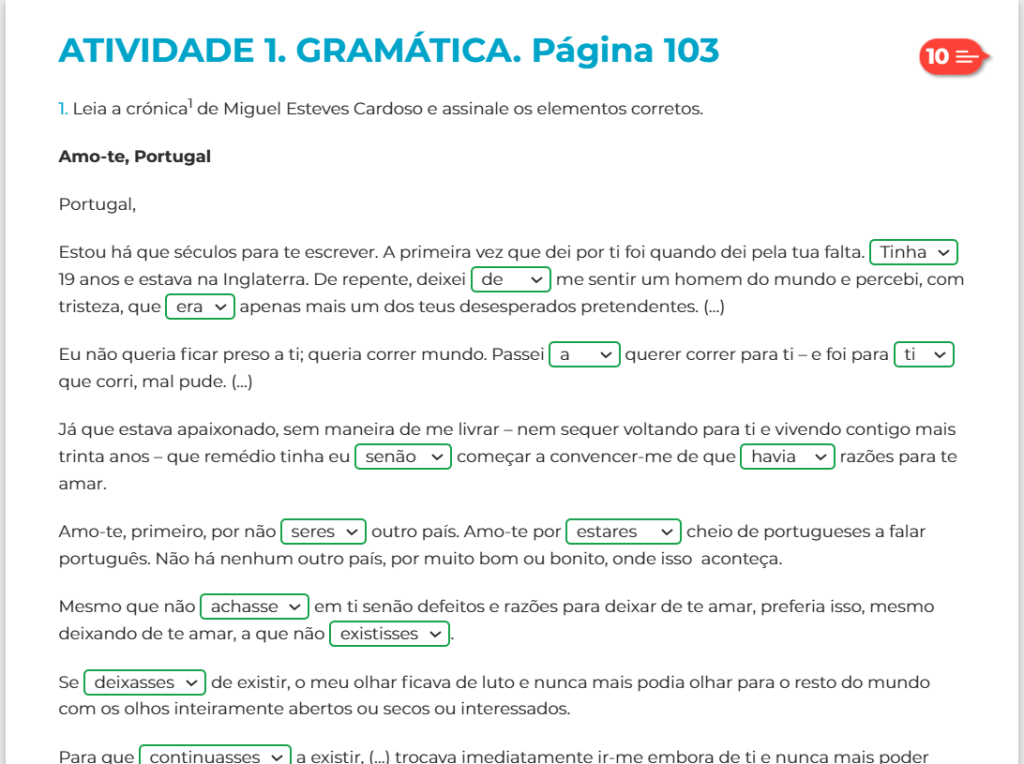
É-me interessante que chumbei dolorosamente em tantos exercícios mas logo que encontro um texto de um autor cujos livros conheço e cujo sentido de humor aprecio muito, não fiz um único erro. Será que a simpatia que eu sinto face ao autor me dá uma vantagem em desenroscar a gramática do texto? Faço figas na esperança de receber um exame com textos de Ricardo Araújo Pereira e letras dos Deolinda!
E o que fica por fazer na terceira?
This weekend
W/E 27-10-2024
W/E 03-11-2024
W/E 10-11-2024
Non-thorough run through of the paper exercise books I have, looking for grammar exercises that look like they might be beneficial.
Brazilian Portuguese is the easiest kind!
Usei a palavra “sutil” no Reddit e fui instantaneamente corrigido por um tuga. Escreve-se “subtil”. Um brazuca retorquiu “Vocês escrevem sutil com b? Caramba, que interessante.” e eu expliquei “É interessante, não é? Já sabia que as duas grafias existiam mas assumi que (em comum com quase todos os exemplos da diferença entre PT-PT e PT-BR) durante as negociações em volta do AO, a versão sem a letra calada teria vencido a batalha, mas segundo o Priberam, é um exemplo das diferenças que permanecem após o Acordo. Nós anglófonos também ficamos com o B silencioso com a nossa “subtle”
Mas provavelmente não expliquei bem: antes de mais, eu disse que o B é a letra “calada*” mas só queria dizer que é mais sossegada do que o seu vizinho, o T; não é completamente silencioso como o B do nosso “subtle”. Na grande maioria dos casos, palavras tipo “cacto” e “reacção” perderam o primeiro das duas consoantes, passando a ser escritos “cato” e “reação”, daí o título deste livro.
*I should have said “muda”
Tendo lido um excerto deste conjunto de poemas de Alberto Caeiro (um dos Heterónimos de Fernando Pessoa), decidi ler o resto, para acompanhar uma das minhas sessões de fazer um puzzle e ouvir audiolivros. Existe uma versão no youtube que é ótima, mas não pago pelo serviço sem anúncios e… ora bem, basta dizer que a poesia soa melhor sem anúncios…
Os poemas descrevem a sua vida solitária, a escrever poesia para estar sozinho, e a cuidar os seus pensamentos como se fosse um pastor a guardar um rebanho no campo. A filosofia deste poeta está em sintonia com a ruralidade no seu redor: “penso com os olhos e com os ouvidos / E com as mãos e os pés” e sente-se maior quando vê um céu aberto do que quando está numa cidade, rodeado por prédios. Um poema que me marcou é o número XX que compara o Tejo com o rio que corre pela sua aldeia. Ainda que o Tejo seja belo, é mais famoso, ou seja, mais público, e quando as pessoas o veem, pensam na sua história e no seu percurso da Espanha para o Atlântico e daí em direção à America. Mas o seu rio é o seu rio e mais nada, e “quem está ao pé dele está só ao pé dele”.
Acabei por ouvir três vezes, e acho que a gravação do poema seria um excelente acompanhamento para um passeio ou uma hora de jardinagem
Eis uma questão do caderno de exercícios do “Português em Foco”:
Selecione a resposta correta, de acordo com as informações fornecida pela frase
A. Mal estivessem na praia, eles faziam surf.
Tive de pedir ajuda da gente simpática do r/portuguese para entender porque é que a resposta dada é 2 mas, na verdade, não é assim tão difícil. Fiquei confuso porque a ação tem lugar no passado. Se o narrador falasse sobre eventos um tempo no futuro teria dito “quando estiverem” (when they get to the beach) e não haveria qualquer dúvida de que o narrador não sabia o resultado pois ainda não aconteceu! Mas “estivessem” é pretérito imperfeito, certo? Portanto isto já aconteceu? Sim, mas isso não significa que sabemos a história inteira. Não significa “as soon as they were at the beach they went surfing” (mal estiveram na praia…), mas sim “When they got to the beach they were going to go surfing”. Ou seja, o falante está a descrever os planos que o grupo tinham feito antes de partir, mas não tem a certeza de se vieram a pôr os planos em prática.
Alguns exemplos do cadernos de exercícios surpreenderam-me. Vamos dar uma espreitadela…


Oh shit, I meant to write all this on Portuguese. Meh, never mind, it made me think about the expressions so with a bit of luck il remember them now.
*… Is what it means in some contexts anyway, and I’m sure it’s what it meant in the example I did, although I am informed that it can also means “knock someone back” ie, gently turn down their romantic advances!
Esta é uma postagem cruzada*. Raramente escrevo no meu blogue profissional mas apetecia-me me desafiar para escrever um texto em inglês com palavras técnicas e tentar traduzi-lo em português.
Então, Adeus, Talend de Código Aberto
"Falha de conversão, convertendo o valor nvarchar para o tipo de dado int"
Isso é que era o teu bordão**
Más já a conversão é bem sucedida e foste convertido
Para uma plataforma caríssima de computação na nuvem
    -EJ Thribb
Estou longe do bloguista mais prolífico de sempre, ao menos no meu blogue técnico, mas sinto-me obrigado a escrever alguma coisa sobre a “passagem desta para melhor***” da aplicação livre mais útil que já encontrei: o Talend de Código Aberto. Se não conheces, é basicamente um gerador da linguagem de programação Java que era o irmão mais pequeno da mais cara plataforma Talend Nuvem. Quando dei por esta app, a versão nuvem ainda não existia e Talend consistia num leque de ferramentas para preparação de dados, integração e sei lá mais o quê mas ao longo dos anos, reduziram gradualmente esta seleção até só restar a ferramenta de integração (que era gratuita) e se precisasse de mais, tinha de comprar a versão da nuvem.
Acho que isto era inevitável por duas razões. Primeiro, foi criada para redes locais e embora pudesse interagir com fontes de dados na nuvem, não era capaz de lidar com sistemas de alta segurança tipo Amazon Web Services, portanto, já que muitas empresas migraram para a nuvem, chegou a hora para uma nova geração de software. E em segundo lugar: dinheiro. Já falei (num outro texto do blogue) sobre quando visitei a sede do Talend há algum tempo para discutir a versão paga da app. A equipa de vendas não estava lá, portanto acabei por falar com os programadores e eles disseram, “não te rales, apanha a versão grátis, é ótima!” E foi, mesmo, mas não se pode ganhar lucros para os investidores assim!
Era tão colorida que sentia-me como se estivesse a brincar com Lego e tinha ferramentas opcionais que também não custavam nada (ao contrário de SSIS) e era capaz de fazer ligações desde qualquer sistema para qualquer outro e de interagir com o sistema de ficheiros, e se ainda não teve sucesso, havia componentes capazes de executar mandamentos de MS-DOS ou de Java. Utilizei-a para criar ficheiros de pdf de respostas em formulários e para amalgamar ficheiros tiffs com diversas páginas e para transferir arquivos e estabelecer pastas e criar tabelas de bases de dados distribuir listas de erros em pastas etiquetadas com marcas temporais e… muito mais coisas. Foi incrível. O apoio ao cliente era sempre excelente, se precisasse, mas quase nunca acontecia porque o software era tão intuitivo e quase nunca entrava em travamento nem congelava. Posso continuar a usar o software porque tenho a versão mais recente neste portátil, mas já não tem apoio da empresa desde o início deste ano, acho que seria perigoso: com mudanças na linguagem de programação Java, o software tornar-se-á cada dia mais instável. Chegou a hora de passar a explorar novas ferramentas.
Pois, sem problemas, sou um burro velho mas consigo aprender novas línguas**** e estou a usufruir da oportunidade para conhecer melhor o Visual Studio/SSIS, o que também é poderosíssimo à sua própria maneira mas acho que custar-lhe-ia se fosse metido num projecto mais complicado com diversas fontes de dados heterogéneas. Preciso de passar uma mês a analisar o mercado quando tiver mais tempo livre, porque o meu conhecimento das aplicações informáticas está rigorosamente enferrujado e seria interessante ver o que está disponível durante os últimos 3 anos da minha carreira antes de alguém inventar uma IA capaz de fazer migrações de dados e que fica envergonhada durante festas da equipa e ir-me-ei reformar para desfrutar a minha obsolescência.

*Uma vez que contém tanto jargão que poderão não existir no Priberam, coloco uma lista de vocábulos ao fundo da página com pelo menos um enlace por palavra para ilustrar o seu uso.
**Bordão here means catchphrase but I’m told the word is “a cair em desuso e poderá não ser conhecido por falantes mais novos”, but I am delighted by the video so I’m reclaiming it. There’s also a word – estribilho – that someone mentioned but given that nobody else thought of it I’m not sure how common it is. There are equivalents in brasil, like “Chavão”, but in Portugal, apparently, most people just say Catchphrase and the anglicismo is “muito enraizado”. Thanks to MacacoEsquecido, UrinaRabugenta and Dani Morgenstern for their help, plus some random Brazilians for showing up and starting a side-discussion despite me specifically asking about PT-PT
***I’m not really sure if this works since the first draft was a bit confusing, but “passar/ir desta para melhor” is an expression meaning “going to a better place” – ie, die – so that’s what I’m driving at!
****Ah ah, soa como auto-depreciação, não é? Acabo de constatar que a expressão portuguesa equivalente a “You can’t teach an old dog new tricks” é “Burro velho não aprende línguas”. Por que carga de água estes Tugas ousam difamar-nos? Nós burros velhos temos não merecemos tamanho abuso. Somos capazes mesmo!
PS When I typed “SSIS” into the tag box it wondered if I meant Machado de SSIS 🙂
Thanks to Cristina for the corrections to this unusually long and shop-talky post.
Following on from the last post – this picture I took at the Museu do Fado contains Fazer falta, and it’s prohibited so I am drawn to translate it…. Pre-AO spelling though so ironically it’s just as illegal now as it was then 🙂
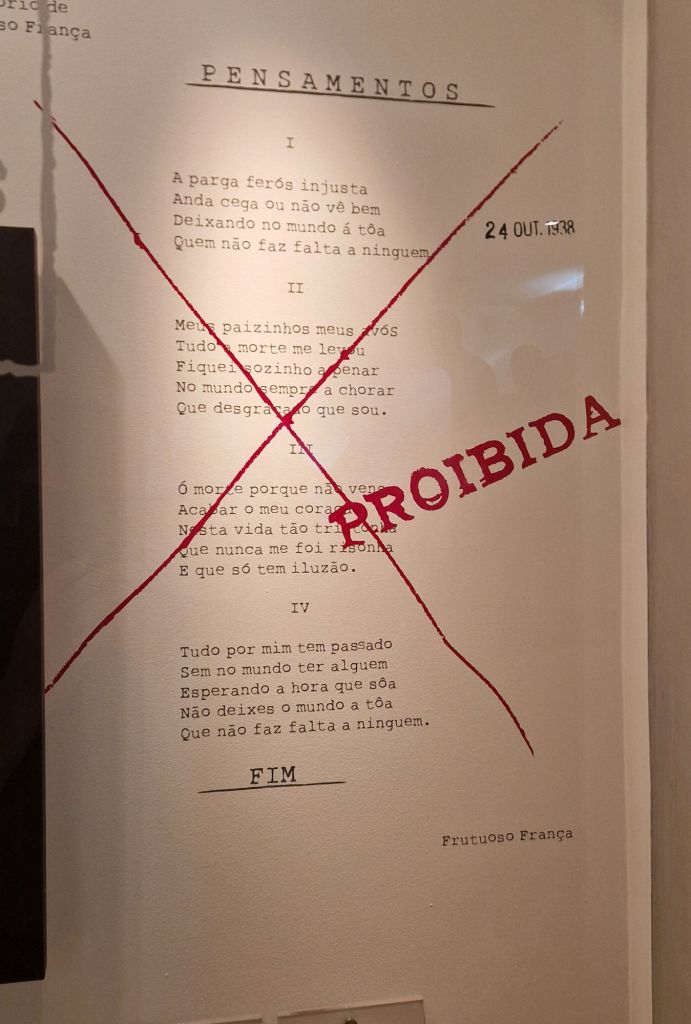
The fierce, unjust heap
Is blind or doesn't see well
Randomly leaving in the world
People who won't be missed
My parents, my grandparents
Death has taken everyone from me
I was left alone, suffering
In the world, always crying
What an outcast I am
Oh death, why don't you come for me
To stop by heart
In this sad life
That was never cheerful for me
And only has illusion
Everything is over for me
Without having anyone in the world
Weighting for the hour that sounds
Don't leave the world at random
That nobody will miss
It’s interesting isn’t it? First of all, that first word, parga, is quite unusual. It’s a heap of stored hay and grain stored away from the weather (silage?). I wonder if it had some other meaning on the 1930s. Alternatively, it might even be a typo, because praga (plague) would make a lot of sense.
I’m also interested in the slight shift in wording between the last two lines of the first verse and the last two of the last. I wonder what difference it makes. I feel like there’s a shift in emphasis there but I can’t quite put my finger on it.
 Luso
Luso 