I’ve finished the conjuntivo mind map I started a while back. It now includes all three tenses, along with some gotchas that might look like conjuntivo situations but aren’t. It’s here if you want to take a look.
We Don’t Know What We’re Doing
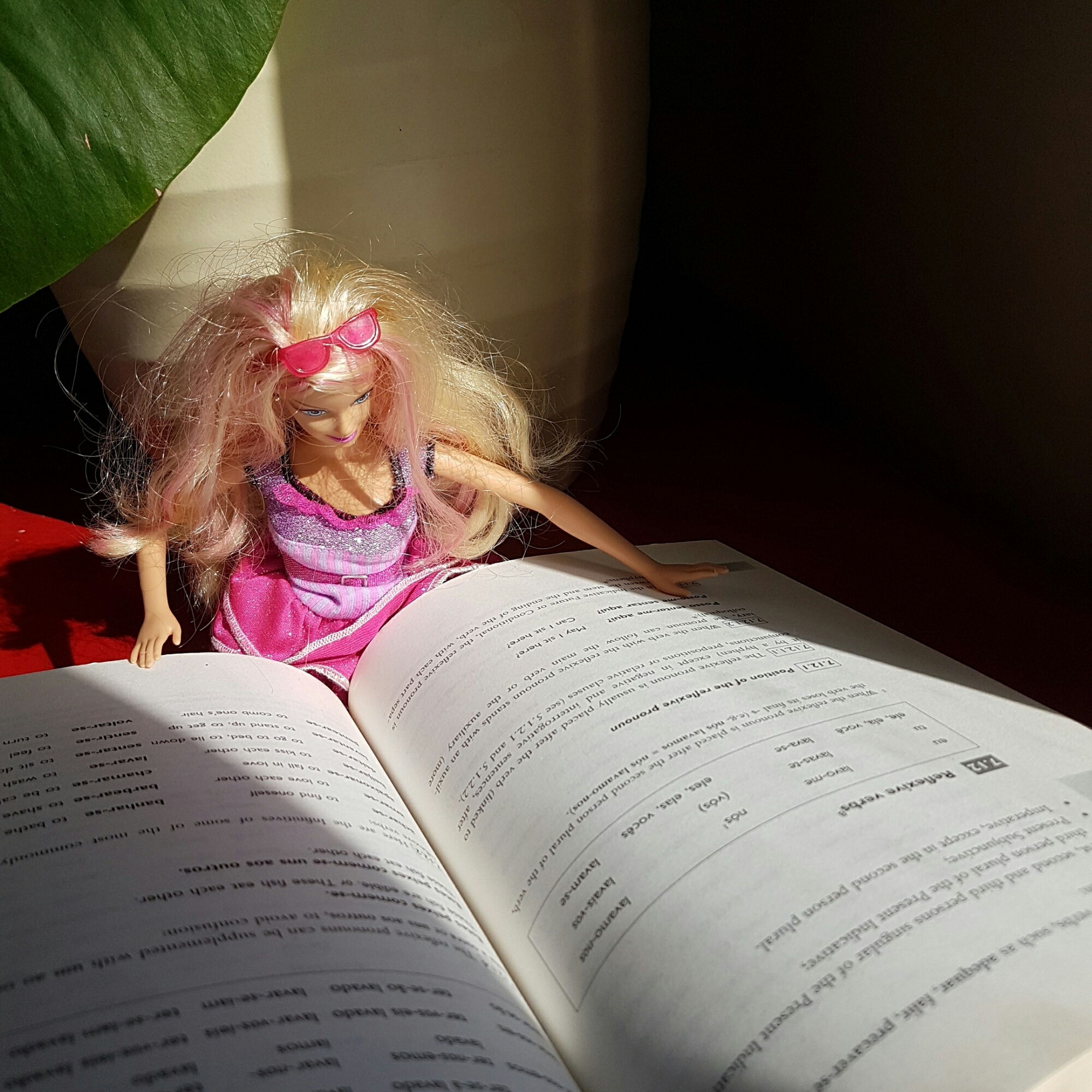
Language exchanges might just be the best thing about the Internet. We don’t need to go to lessons anymore, we can just reach out to other people through apps like Hellotalk or iTalki and learn from them as they learn from us, and it doesn’t cost a penny. It has taken me a while to get going but these days I have a really good network of people I chat to, or whose instagram and twitter feeds I read.
The aspect of it that might seem like a drag – having to answer other people’s questions for half the time – is actually one of the best bits because it makes you realise how utterly clueless most of us are about what we say and why. I’ve lost count of the number of times someone has asked me a question and I have been floored. For example, one of the most common questions I get from lusophones is when do we use the various types of of past tense:
I worked
I have worked
I was working
I have been working
On the face of it, this is quite simple, but the more you think about it, the more you realise that it’s not. We use them in ways that don’t seem to fit with their textbook definitions, and yet that use and misuse isn’t arbitrary or wrong. If someone uses the wrong tense, it stands out a mile. The whole business of tenses is much more involved than it seems. We also use the present tense in place of the past (in jokes mostly) and in place of the future tense (all the time) and don’t even realise it. We have different future tenses and different presents and they’re deployed in ways most of us can’t even begin to explain.
I’ve also been asked what we say at the end of conversations and online chats – the equivalent of the Portuguese “beijinhos” (kisses) or “um abraço” (a hug). I couldn’t answer because it’s so dependent on your age, how well you know the person, where you are, what you’ve been talking about and half a dozen other things. There must be some deep-seated rule that we’re all more-or-less aware of but writing them down would be impossible, and even if you could do it, it would be out of date within a year.
Portuguese people are the same. Quite often I’ll ask a question of three different people and get three different answers, or the person I’m speaking to will think for a bit and give a very hedged, ambivalent answer. I’ve recently written a couple of blog posts about grammar that are stitched together from several written and oral sources and I really got a sense of how subjective these things were.
Ultimately, though, it doesn’t really matter. Knowing the rules helps us to an extent but it’s not everything. We really need to use the language *a lot* to get familiar with it and get a sense of what feels right.
The Ballad of Ser and Estar
Ser and Estar are two little words that cause a lot of people a lot of pain because they both mean “to be” but they’re used in different situations. Usually they’re pretty straightforward but there are some weird hinterland cases I often struggle with so I am going to use this page to list some of them. I’ll add to it as they crop up.
Backing up a bit for the benefit of any newbies who are reading this (srsly dudes, you’re in the wrong place)
Ser
Ser comes from “Esse” in Latin and it’s cognate with the english word “Essence”. You use it when you are talking about some essential qualities a thing or a person has that are permanent and unchanging
- He is tall
- You are intelligent
- I am the Walrus
- It is made of wood
Are all examples of phrases that tell you something about someone’s or something’s essential nature so they all take “ser” in Portuguese
Estar
Estar is from the latin “stare” and it’s cognate with “status” so you use it when you’re talking about a situation that a person or thing is in now.
- He is in the bathroom
- He is ill
- It is on fire
Are all examples of phrases that tell you something about what state something is in at a fixed point in time, so they all take “estar” in portuguese.
Ficar
There’s a third word “ficar” which actually means “to remain” but it can also be use for geographical sentences
- Lisbon is in Portugal
- The shop is in Kingston
In each of these the portuguese would use Ficar because the geography is fixed and it ain’t moving.
You can also come across it in some other situations like “ficou feliz quando leu a carta”, which can be confusing since it looks like we’re using the “geographical is” to describe a very transitory emotion. Here, the person isn’t saying “he was happy” but “he became happy”.
Don’t blame me, I don’t make the rules.
So What Are the Weird Situations?
So far, so easy, but when you start to think about these things it starts to get a bit perplexing though. Here are some conundrums and the suggested solutions
Weather
“It’s a beautiful day”
Ser or Estar?
Well the weather changes, so that sounds like Estar. Ah, but today is today. The weather might change tomorrow but tomorrow is tomorrow. Today is beautiful. It was always destined to be beautiful. And when I look back on the selfies I took today I will remember how beautiful it was, from start to finish.
To cut a long story short, you’re basically safest using “estar” for anything weather-related. I have seen “é um dia muito bonito”, so the ser form isn’t completely crazy but estar seems to work in basically any situation, so I would suggest sticking to the idea that the weather is fleeting and slathering estar all over it.
The View Out the Window
Heraclitus said “You Can Never Step In the Same River Twice”. If you step into the Thames tomorrow, the water that was in it today will have flowed away and been replaced by new water. There’ll be new leaves, new ducks, new discarded coke cans. Every day, I thank the Lord that I don’t have the job of translating Heraclitus into Portuguese.
This past Tuesday, I was on the train and I wanted to describe the view. Is a view out the window a transitory phenomenon like Heraclitus would have said or a more permanent one like his pal Permenides might have said*? The hills and trees are as permanent as a thing can be, and the fact that the train is moving past doesn’t change them. Does that matter? I decided it was probably estar because the view from the window would sometimes be of the back of a Morrisons supermarket or a junkyard or a giant poster of Boris Johnson.

So are all views from all windows always estar? No matter where the window is, the weather will change and so the view will change from day to day? Well, I raised this in a discussion and my good friend Márcio helped me (as he always does) to get my head around all this, confirming and clarifying what I was trying to think through. If you live in a house on a hill, one of the selling points of that house might be its view across a lake or a meadow. In that case, it would be fair to say that the view from the house was a beautiful view always and ever, despite fluctuations. That’s it’s defining characteristic, even when the fog is temporarily obscuring it.
- A vista pela janela do comboio estava linda
- A vista pela janela do meu apertamento no 23° andar era linda
Jobs
Sou profissional de informática. That’s what I’m trained for, and if I move from place to place, that’s what I’ll remain. Even if I get a job as a postman, temporarily, because I have found myself between contracts in December when the Christmas rush is on, I will still be a profissional de informática who happens to be delivering your graze box this morning.That seems fine for people who have chosen a career path, or who have had specialist training of some sort. But what about transitory jobs we do for a few weeks? What about jobs we do but feel no affinity for and don’t identify with; jobs, in other words, that just pay the rent?
Again, there’s no room for estar here. Estar is never (?) used to just make a simple link between two nouns; if it’s not paired with an adjective then “ser” is what you need., so if you wanted to say you were a postman you’d still say “Sou Carteiro”. Does this seem odd that you can be both a Profissional de Informática and at the same time um carteiro? Well, apparently not, although if you wanted to stress the temporary nature of the gig you could rephrase it by saying “I am working as a postman” instead of “I am a postman”, which, thinking about it, is probably what you’d do in English, too.
*= I happen to know Parmenides used Southeastern Rail and long hours of being completely stationary were a formative influence on his views on this matter.
Infinitive Jest
Last week I identified four stubborn problems that – like Scott Pilgrim and the 7 Evil Exes – I had to battle to the death. One of those was to do with fiddly small words in front of infinitives. A lot of this seems to have to do with compound verbs vs ordinary, run-of-the-mill infinitives.
So let’s dive straight into compound verbs…
Compound Verbs
Compound verbs are verbs that are treated as one action but are made up of two verbs glued together. A familiar example is this harmless Pretérito Perfeito Composto
eu tenho chorrado*
You just take part of the verb “ter” and glue it onto your verb and magic happens. We have the same thing in English: “I have overslept”, “I had forgotten to set my alarm clock”. These are pretty easy to use so I’m not going to write any more about them because I don’t fund them confusing at all. In fact, their easier to use than most types of verbs. If you’re not familiar with them, don’t worry, you’ll meet them soon enough and you won’t have any trouble.
Where it gets trickier is when you have verbs made up of some other verb, followed by a short joining word and then an infinitive. There are lots of different ways of classifying them but I’m going to divide them up into groups according that have similar types in, and crucially, each member of the group uses the same joining words. If you don’t like the way I’ve done it, try this page from Ciberdúvidas instead. It has a totally different approach.
[A] Compound verbs showing an action that’s starting or ongoing:
Estar, Andar, Ficar, Começar or Continuar + a + infinitive
- Estou a escrever este blog
- Anda a aprender
- Ela continua a dar aulas
- Começo a ler a revista
- Ficar a olhar
I would think of these as “Starting to do…” or “Continuing to do” so the “a” fits nicely because it means “to”
[DE] Compound verbs describing an action that’s abandoned
Deixar, Acabar or Terminar + de + infinitive
- Deixa de fumar
- Acabou de ler o livro
- Terminar de tocar a guitarra
I would think of these as “leaving off of doing something” and “de” means “of” so that makes sense
[DE] Compound verbs describing something you have to do
Ter or Haver + de + Infinitive. In the case of haver it’s a slightly vaguer and more speculative kind of obligation: something you ought to do at some point rather than something you’ve got to get done right now.
- Hei-de ler “Matadouro Cinco”
- Tenho de cozinhar esta noite
I would think of these as “I have to do something”. I want to squeeze an “of” in there to make the “de” fit but I can’t, sorry… By the way, is it just me or is Haver the most freakishly unpredictable and incomprehensible verb in the language?
[] Compound Verbs Describing Potential for Action
Ir, Poder or Dever +[No joining word] + Infinitive
- Vou ganhar o prémio
- Posso ajudar?
- Deve estudar
I would think of these as “I’m gonna do something”, “I could do something” and “I should do something” so no joining word needed.
Things That Look Like Compound Verbs But Aren’t.
Some verbs can take an infinitive as their object and so the joining word will depend on the verb in question. So for example
- Gosto de ler
- Preciso de ler
both look a bit compound verby but Gostar and Precisar are the main verbs of the sentence and ler is basically being treated as a noun. Both take a de because the verbs are a bit strange. It’s easiest to understand gostar as meaning “to be pleased” so Gosto de ler means “I am pleased by reading” and Precisar is more like “Have a need” so precisar de ler means “I have a need for reading”
- Adoro ler
means the same as gosto de ler but it doesn’t need the de because it’s a bit more direct. “Adorar” means “to adore” and you don’t need to adore of something or adore by something, you just need to adore it.
Likewise in the song Deixa-Me Rir, I asked my teacher** why it wasn’t “Deixa-me de rir” like in the example above: “deixe de fumar” but here he’s not talking about letting go of something, he’s talking about being allowed to do it,so Rir is being treated as an object again
Some of the harder-working irregular verbs can be used with prepositions in a way that changes their meaning and in some cases they can be used with infinitives. These buggers are a law unto themselves
- Dar + para= to be suitable. Essa caneta não dá para escrever uma carta
- Ficar + por= to fail to do something: Fiquei por escrever o meu livro
- Passar + a= to change: Depois do desastre, passei a ser outra pessoa
Other Structures Involving Infinitives
In other situations, infinities can be preceded by joining words but it seems even more random.
Quem me dera falar português como a minha esposa
Who will give me speaking portuguese like my wife? (No joining word)
Estou contente por saber que a sua equipa ganhou o tri-campeonato, seja lá o que isso for.
I am content through knowing….
Or
Estou contente em saber que a sua equipa ganhou o tri-campeonato, seja lá o que isso for.
I am content in knowing…
It’s all a bit play-it-by-ear though.
*=Listed at http://www.conjugacao-de-verbos.com/verbo/chorrar.php
**=I’m grateful to Ana Cristina Silva for helping me understand this… or at least to be less confused!
—–UPDATE—–
I found exercises 48, 49 and 50 of Gramática Activa 1 useful for this – and similar preposition-related confusion.
Round 2
Whoop Whoop!
I finally managed to make my subscription for the Portuguese B2 exam, the intermediate Diploma. It feels like I have a long, long way to go but this should motivate me to work hard between now and November!

I considered…
 …using this graphic as a sort of site icon. It reminded me of something though, and I couldn’t think what. Then it clicked: the name Portugal doesn’t come from the Arabic word for orange at all, no matter what I said last week. It’s clearly a corruption of “Pokeball”
AmErrorca’s Most Wanted
There are a few really stubborn mistakes I just can’t seem to get past. They crop up again and again, and I never get around to addressing them because they are boring and too obscure to be easily addressed by googling “How to do ____ in Portuguese”. I think if I could sort them out a lot of the baseline problems with my sentence-construction would be sorted and I’d be a much stronger speaker.
Little Fiddly Words In Front of Infinitives
Infinitives are the definitive forms of a verb, normally translated as “to be”, “to know”, “to do” and so on. Because of this, when I write one in portuguese I expect it to not need anything in front of it but sometimes it does and sometimes it doesn’t. About the only rules here are to do with Gostar and Precisar, each of which takes a “de” after it
Ter can have a “que” or a “de”, depending what you’re doing and in other cases it might have an “a”, a “para” or just nothing. I need to get to the bottom of this and work out how it works once and for all.
Genders of Nouns
I think I’m right about 80% of the time but that’s not enough. Difficult to think how to do this without biting the bullet and learning them by rote. I considered making little stickers with lipstick on some and a moustache on others and sticking them on all the objects in my house, but that wouldn’t help me with abstract nouns. Have you ever tried sticking a moustache on despair?
Reflexive and Pseudo-Reflexive Verbs
First of all: there seem to be a hell of a lot of reflexive verbs – far more than in french – and I sometimes come across verbs that look like they have a reflexive pronoun but aren’t actually reflexive. They seem to be something to do with the passive voice – e.g. sabe-se que = “it is known that…” and yet my grammar book doesn’t show that as a way of constructing the passive voice. This sounds like one I will have to ask a teacher about.
Awkward Irregular Verbs
Things like Ser, Ir and Estar are easy because they get so much attention. The real killers are things like Dar, Pôr and of course the terrible twins, ver and vir, because they irregular and fairly common but not so common that you get a real familiarity with them day-to-day. I printed these buggers out ages ago, thinking I would just bruteforce it all into my head but somehow, whenever I think about it, there always seems to be something more pressing like picking fluff of the carpet with my bare hands, arranging my socks alphabetically or playing the national anthem on the teeth of a comb. Important stuff, you know.
So that’s what I’ll be working on this week in addition to my Hot Summer Reading. I’ll probably write blog posts about some of them as a way of motivating myself and getting them to stick.
New Look
Mixed feelings about this new site template, TBH. Don’t get too used to it because it might go away again soon…
—update—-
Ooh, now this is more like it, I could get used to this!
Hot Summer Reading
In my effort to step up my language learning and get it on a war footing again (only about two months left till the exams FFS!) I have joined a reading challenge called Hot Summer Reading, which is run by a book blogger I follow. I feel slightly out of place in it since the other participants all seem to be young, portuguese book bloggers who arrange their beautifully-colourful books like displays of fruit, and Instagram them to near perfection. My entries are a bit dingy by comparison. The idea is I’ll read two Portuguese books (“O Principezinho” and “O Mandarim”) and one in English (“The Puppet”) and at the end I’ll write a post or record a youtube video, describing them all, in Portuguese, of course.
There are some other challenges but I’m not sure I can fit those in on top of everything else. They mainly consist of making lists of favourite books, but since I’ve only read a handful of Portuguese books I don’t have much to say about those and it seems a bit obtuse to recommend a long list of books in English to a group of portuguese people, so I’ll just stick with doing it in my own way.
The Martian
The Martian é um filme baseado num livro de Andy Weir. Li o livro há um ano mas apenas anteontem vi o filme. Matt Damon protagonizou um astronauta americano. No começo, estava com uma equipa de astronautas na superfície de Marte. Veio uma tempestade violenta e partiu muitas coisas. Os Astronautas fugiram em cima de hora mas acreditaram que o Matt Damon tinha morrido, e por isso deixaram-no para trás.
Coitado do Matt Damon! Está sempre em perigo. Durante o filme inteiro, ficou encalhado na superfície sem amigos, sem rádio e com pouca comida, água e oxigénio. Felizmente, todos os astronautas são pessoas de ciência, pois o Matt conseguiu estabelecer um lote de terra fértil onde cresceram batatas. Também utilizou as materiais na base para sintetizar oxigénio e água.
Desta maneira, o Matt conseguiu sobreviver durante quase três anos até que uma nave espacial chegou no planeta para salvá-lo. O argumento é incrível – literalmente e figurativamente, mas afinal é um grande exemplo do poder da ciência para superar todos os problemas da vida. Gosto muito desta ideia!
 Luso
Luso 
