É impressionante que o criador deste vídeo conseguiu contar a lenda dentro de 35 segundos. É difícil entender tudo por causa da rapidez do falador mas depois de 4 vezes, compreendi tudo.
Exam Prep Review #5
Progress update on the list of topics to cover.
Speaking Goals
- Build Confidence: I need to speak clearly and confidently even when I get to a bit I’m not sure about. If I don’t know the word, just guess and keep on going rather than fretting and looking confused.
- Conversely, don’t be cocky: talk at a sensible speed to give myself time to think, and don’t go off at a tangent that seems interesting if I’m not sure where I’m going with it. Obviously this is in conflict with the point above. I haven’t really got anywhere with these first two but I’m planning to do a sort of portuguese version of “just a Minute” as a way of making myself do it. One for the next couple of days, I think.
Speak portuguese for at least 5 minutes every day between now and the exam.Crossing this one off – I have done loads and have 4 hours of conversation practice booked in the next 5 days, plus whatever I can coax out of Mrs Colin
Listening Goals
Listen to videos of people speaking in a range of accents from Alentejo, the rural centre of the country. and the islands (hence that Açoriano video I just posted).- Listen to at least 3 video films with subtitles. Not really a film but I’ll count “Na Ponta da Língua” for one and the Ricardo Araújjo Pereira thing as another. One to go.
Get to grips with the Raul Solnado “Guerra de 1908” sketchDone!
Cultural Goals
- Read at the very least:
-
- A Língua Portuguesa (Fernando Pessoa) I probably won’t get to finish this but it’s locked and loaded. I have read two extra (smaller) books in the meantime.
Mensagem (Fernando Pessoa)Done!Brevíssima História de Portugal (A.H. De Oliveira Marques)Maybe even A construção da democracia em Portugal (Kenneth Maxwell) although that seems a bit ambitious. No way is this happening.
-
Make a timeline of portuguese history to get a sense of how it hangs together.Done- Write about portuguese landmarks – the Padrão dos Descubrimentos,
Torre de Belém, Mosteiro dos Jerónimos and so on. I’ve done one and listened to some audio about the others
General Language skills
- I need to build my vocabulary – Memrise and Lingq daily goals – Still winning
- I
’m getting better at the ver/vir (which was one of the 4 Evil Exes I identified a year or so back) but need to step up my game on some of the other weirder irregulars like Por and Dar Finish the exercise book I’m on nowDone!- Do a couple of mock exams to get a feel for the speed I need to be working at to get in under the time limit Work still needed. Only half a one!
Practice writing legibly. I type so much these days I need to get my hand used to forming letters or I’ll be penalised for spelling errors.Crossing off. If I can’t do it now, I’m in trouble,- Letter format and forms of address Still one to do
- Learn – actually learn verbatim – one song. Still not done.
Plans for the next few days to make sure I hit all the remaining items
Sunday:
- Do the Just a Minute Challenge
- Watch “Gatos Nao têm Vertigens”
- Spend 15 minutes trying to commit the song to memory
- Do half an hour more on the transcript
- Go through DIPLE model exam
Monday:
- 1 hour lesson
- Do half an hour on the transcript
- Write about the Padrão dos descobrimentos
- Write about the Mosteiro dos Jerónimos
- Watch 1 episode of “O Ministério do Tempo”
Tuesday
- Read on the train
- 1 hour accent practice
- Write about o Mosteiro de Batalha
Wednesday
- Read on the train
- 1 hour lesson
- 1 hour conversation practice
- Write a letter of complaint
- Go to bed early
Thursday
- Exam
Pardington
 Uma das notícias mais interessantes nas últimas semanas é sobre a descoberta de vários estragos numa trilha no norte de Portugal, perto de Barroso, que foram feitos pelas patas de um urso pardo*. O percurso do animal foi detectado em Espanha, uns dias antes, portanto as autoridades ambientais ficaram à espera de sinais da sua viagem para sul.
O urso pardo é o urso mais comum do mundo, sendo encontrado em diversas países de Europa, mas o último exemplar português foi abatido em 1843 pelo povo do Gerês. Mas agora está de volta… ou seja, um deles está de volta.
*=Brown bear. In other news, I am suing Eric Carle for deceiving me with his book “Urso Castanho, Urso Castanho, O que é que tu vês?”
Thanks to Sophia for helping with the corrections
Já and Ainda
Another one I get wrong from time to time: Vamos a isso!
Translating from this question on Ciberdúvidas: Somos três alunos estrangeiros a estudar na Univ. do Minho. A pergunta é: qual a diferença na utilização de já e de ainda?
1. “Já” “ainda” are adverbs. I usually think of já as meaning “already” and “ainda” as “still”, but já has quite a few other meanings to do with immediacy, so it can be translated as “still” or “now” in some contexts.
a) When a question contains the word “já” and you want to reply in the affirmative, you always use “já” in the reply. If you want to reply in the negative, use “ainda não”.
“Já leste este romance?” (Have you read this book already?)
- “Sim, já o li.” (“Yes, I’ve already read it”)
- “Já, sim.”
- “Já.”
- “Não, ainda não o li.” (“No, I still haven’t read it”)
- “Não, ainda não.”
- “Ainda não.”
b) Likewise, a question that contains “ainda” is answered with “ainda” if it’s positive or “já não” if not
“Ainda vais sair?” (Are you still going to go out?)
- “Sim, ainda vou.” (Yes, I’m still going to”)
- “Sim, vou.”
- “Não, já não vou.” (No, I’m not going any more)
- “Não, já não.”
- “Já não.”
2. In plain speech, “ainda” can have the following meanings
a) up to the current time (english: “still”)
“Ele ainda não voltou.”
“Este velho carro ainda participa em corridas.”
b) up to that time (english: “still” again but about something in the past)
“Quando o filho nasceu, ele ainda morava em Lisboa.”
c) One day in the future
“Tu ainda hás-de ser muito feliz.”
d) Precisely, exactly
“Ainda ontem o vi.”
e) Also, furthermore (cf “ainda por cima”)
“Fui jantar, comi muito bem e ainda me diverti com a conversa do Miguel.”
f) Finally
“Tenho de arrumar a casa, ir às compras e, ainda, fazer o jantar.”
g) At least (surprised me but of course, we use “still” in this way in english too: “A meteior is about to strike the earth… still, mustn’t grumble, at least we won’t have to hear any more about Brexit”)
“Ainda se ele marcasse um golo, o dinheiro era bem gasto, mas assim…”
3. “Já” on the other hand, has the following meanings:
a) Now, at the moment
“O menino já sabe ler.”
“O pai já não tem paciência.”
b) Immediately, without delay
“Vou-me já embora.”
“Faz já isso!”
c) Before now, already
“Ele já tinha comido.”
“Eu já tinha visto este filme.”
d) Previously, before that time
“Eu já sabia que isso ia acontecer.”
Só Um Minuto
 Existe um programa de rádio, cá em Inglaterra, chamado “Só Um Minuto”, que consiste num jogo com quatro jogadores. O objectivo do jogo é simplesmente isto: falar sobre uma tema durante um minuto, sem hesitação, sem desvio, e sem repetição.
Ou seja, se uma jogador repetir uma palavra (com excepção de palavras pequenas tais como “e”, “para” ou “uma” – e o título do tema é permitido também) um outro jogador pode interromper o outro e assim ganha um ponto e continua o discurso. Se desviar do assunto, também perde a iniciativa a um outro jogador e finalmente, se hesitar (uma pausa notável entre duas palavras ou um “hum…”). No final* do minuto, quem estiver a falar ganha mais pontos e depois os três seguem para o próximo assunto.
Pode ser muito engraçado (depende dos concorrentes, claro!)
O meu único motivo para mencionar isto é que penso em tentar fazer um jogo a sós para praticar português falado, e tentar eliminar as pausas no meu diálogo! O que achas? Será um bom desafio?
Caso algum estudante de inglês tenha interesse neste programa, está aqui uma edição especial de televisão
*”No final do” or “ao fim dum”
Thanks to Sophia (again) and Israel. Good luck with all those people singing in you later this evening, Israel.
Irritating
When someone leaves a correction in iTalki but they don’t actually make any changes so you’re no further forward but now nobody will make proper corrections because they think you’ve already been done.
That.
By the way, having ranted about iTalki, I’ve started warming to them again. They’ve reintroduced the free bits of the site, so I have started using them again and stopped moaning.
Gente Que Não Sabe Estar
Another of those lessons I mentioned a couple of posts ago: we went through an episode of “Gente Que não Sabe Estar”, which is a sort of portuguese version of those american late night satire shows fronted by Stephen Colbert or Jimmy Kimmel or Seth whatsisface. In this case, it’s Ricardo Araújo Pereira, who has the requisite mixture of humour and ability to look credible in a suit. This is a challenging lesson for me because aside from the usual problems of trying to follow rapid-fiire portuguese, I have very little clue about who is who and what the hell it’s all about so I have had to do quite a lot of research. Here are some pointers, some from my teacher and some cribbed from Wikipedia and elsewhere
Joe Berardo (the creepy-looking dude in black, flanked by two very overworked lawyers) is a businessman who is somehow mixed up in a scandal regarding the recapitalisation of the Caixa Geral de Depósitos when it got in trouble a few years after the 2008 crash. It emerged that he had 980 million euros in debt to the bank and refused to pay interest because er… it would cause some sort of unspecified harm. He was fished out and dragged in front of the Comissão Parlamentar de Inquérito, and that’s what the footage is in the show. It’s a strange mixture of careful distancing of himself from the scene of the action and ridiculous failure to read the room. “This is costing the people a lot of money” / “Not me though!” being just one example.
Right at the start there’s a missed pun opportunity owing to this being in Portguese and not english, so “Bearardo” does not happen.
“Se queres ajudar um homem não lhe dês o peixe” at around 1:25 is the first half of the portuguese equivalent of the old saying “give a man a fish and he’ll eat for a day, teach him to fish and he’ll eat for life”
“pipa de massa” = “a load of dough”, where dough is money, just like in an old american gangster movie
“Os juros” = interest
“as dívidas” = debts
“As ações” = stocks and shares
“Os títulos” = share certificates
“a garantia” = collateral
Floribella is a sort of soap opera about a young singer. Lots of bright colours and shonky acting, but it has heart. I skimmed through the pilot (below) and was sort of fascinated by the spectacle of someone speaking portuguese with a strong german accent. I thought she was spanish at first but her name’s Helga Schneider apparently. The theme is “não tenho nada mas tenho tenho tudo” ( don’t have anything but I have everything), which as he says, is an astute allegory about high finance.
I thought the “coleção” was a charitable institution that collects money for good causes but it turns out, no, it’s an actual collection of artworks and he’s a bit confused about whether he owns it or the foundation he runs owns it. Hence the hand-waving from the lawyer. He also seems to have given share certificates as securities for the loan, but they are valueless because the paintings can’t be sold without his permission… oh god, my brain is starting to hurt.
There’s an analogy with “monopólio” (Monopoly, the game) around 11.00-11.30 just before the magic trick with the cups.
Spooky bit at 20:30. Where did the lady in the light jacket go after disappearing behind Margarida Mano?
“Comer” in the context of the bit about Rui Rio at around 21:35 means “shag”. He’s not talking about cannibalism.
Postscript. Apparently my wife met Berardo when she was young in Funchal and is far from impressed with him as a human being.
Brevíssima História de Portugal – A. H. de Oliveira Marques
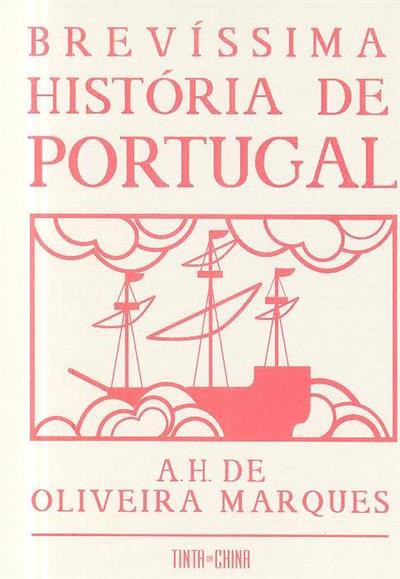
Li este livro durante um projecto que estou a fazer sobre a história portuguesa. Lê-se muito bem, e traz pormenores suficientes para um iniciante, tal como eu, e vamos ser honestos: escrever a história dum país inteiro de modo interessante e informativo ao mesmo tempo não é nada fácil! Dá para entender os factos básicos, e colorir a imagem preta e branca que eu obtive do livro escolar que li recentemente.
Como já disse (ontem, na opinião de “É de Noite que Faço as Perguntas”) o projecto está a ajudar-me entender a cronologia do país. Ajudou-me arrumar os factos que já sabia num ordem, ou seja, atou-os num fio: as batalhas, os reis, o terremoto, os motivos pela revolução dos cravos. Compreendi melhor o enredo da banda desenhada sobre a primeira republica, e a placa que já vi no Porto em Março, que comemora a perseguição do MUD.
Claro, existem ainda muitas, mas mesmo muitas coisas que não sei mas acho que vou parar, ou pelo menos fazer uma pausa porque não estou pronto para mergulhar-me dentro dos pormenores do declínio do império, o desenvolvimento de socialismo ou o pequeno almoço preferido do Infante Dom Henrique. Se calhar, no ano seguinte…
Exam Prep Review #4
Progress update on the list of topics to cover.
Speaking Goals
- Build Confidence: I need to speak clearly and confidently even when I get to a bit I’m not sure about. If I don’t know the word, just guess and keep on going rather than fretting and looking confused.
- Conversely, don’t be cocky: talk at a sensible speed to give myself time to think, and don’t go off at a tangent that seems interesting if I’m not sure where I’m going with it. Obviously this is in conflict with the point above. I haven’t really got anywhere with these first two but I’m planning to do a sort of portuguese version of “just a Minute” as a way of making myself do it. One for the next couple of days, I think.
- Speak portuguese for at least 5 minutes every day between now and the exam. Doing loads of this lately – and feeling my confidence grow again after a few weeks of bafflement.
Listening Goals
Listen to videos of people speaking in a range of accents from Alentejo, the rural centre of the country. and the islands (hence that Açoriano video I just posted).- Listen to at least 3 video films with subtitles. Totes counting my viewing of “Na Ponta da Língua” today for this
Get to grips with the Raul Solnado “Guerra de 1908” sketchDone!
Cultural Goals
- Read at the very least:
-
- A Língua Portuguesa (Fernando Pessoa)
Mensagem (Fernando Pessoa)Done!Brevíssima História de Portugal (A.H. De Oliveira Marques)Maybe even A construção da democracia em Portugal (Kenneth Maxwell) although that seems a bit ambitious. No way is this happening.
-
Make a timeline of portuguese history to get a sense of how it hangs together.Done- Write about portuguese landmarks – the Padrão dos Descubrimentos, Torre de Belém, Mosteiro dos Jerónimos and so on. Assembled some materials for this but not yet put pen to paper
General Language skills
- I need to build my vocabulary – Memrise and Lingq daily goals – Still winning
- I
’m getting better at the ver/vir (which was one of the 4 Evil Exes I identified a year or so back) but need to step up my game on some of the other weirder irregulars like Por and Dar Finish the exercise book I’m on nowDone!- Do a couple of mock exams to get a feel for the speed I need to be working at to get in under the time limit Did one with my teacher today. Probably a good one for the weekend, I think.
- Practice writing legibly. I type so much these days I need to get my hand used to forming letters or I’ll be penalised for spelling errors. No new work done.
- Letter format and forms of address I’ve written one formal letter to the Conservatório dos Registos Centrais, which was good practice.
- Learn – actually learn verbatim – one song. Printed out “Dia de Folga” but again, not much actual hard work done.
Awks!
A portuguese teacher I know has started a new informal lesson package where she lets the student choose a TV show, film, book, album, or whatever and you watch/ listen/ read/ whatever together, screen-sharing over skype and she explains the cultural references and obscure phrases and so on. I thought I’d give it a whirl so I chose Salvador Martinha’s Netflix Special “Na Ponta Da Língua”, which I’ve listened to before but ages ago and at the time “não entendi patavina” as they say.
TBH, I’m still struggling because like most stand-up comedians, he talks quickly, uses a lot of slang and so on. I got a pretty good chunk of it though – maybe 70%. I already knew a lot of the cultural references: Casper the Friendly Ghost, The Gypsy Kings, knocking on the cieling with a broom and pillow-fights are all universal experiences, and I’d come across DAMA (An unbearably bland Portuguese boy band), in my search for decent portuguese music, but they weren’t it.
It was a bit embarrassing at times though because I’d underestimated the awkward factor of having so much rudity in the dialogue. She explained “orgia” (an orgy, obviously) and Picha (“dick”: like english, there are more words for this than there are for snow in Innuit) but discreetly passed over other bits like “começaram sacar um broche”. I got from the context that this was probably a bit off colour. Sure enough “um broche”, which just means “a brooch” has a calão meaning too – common enough to be in my paper dictionary: “blowjob”. So, I’m glad I left it, really.

Saving other tips & vocabulary for later references:
Dakar – just the race. It’s a marathon, I think…?
The Aparição de Fátima… ask your priest
Bollycao – dodgy looking prepackaged cakes – they look like some sort of mutant hybrid between a twinkie and a swiss roll. They used to come with a free sticker (“cromo” – also mentioned) but not these days.
Elvas is a place in Portugal and so is Covilhã.
MEO is a cheap cable/phone package that has a few seconds delay on it – hence the joke about someone clapping at the wrong time
Picha = Dick. Like in english, there are more words for this than for snow in innuit.
Macacos – can mean bogeys as well as monkeys
Lixívia – some sort of bleach or disinfectant brand
Top = very cool
50 = average price of… Cocaine, I think, although to be honest, I’m not sure if it’s that or Coca Cola. I probably need to go back and watch that bit again
Pitas = teenagers
Caipirinha = a kind of cocktail from Brazil. You probably knew that already but I don’t get out much.
Rebenta a bolha – literally means ‘burst the bubble’ but it’s something kids say when they’re playing out and they have to suspend the game – say while one of them has dinner.
O jogo ao sério – a game where you have to stare each other out and make faces and the first one to laugh or show teeth loses.
 Luso
Luso 