Na esmagadora maioria das noites, durmo muito bem. Leio durante 20 minutos* e tal até ficar cheio de sono e as minhas pálpebras ficarem pesadíssimas. Nessa altura, fecho a capa e coloco o livro na mesa de cabeceira na expectativa de sonhos bonitos.
I don’t even understand this one but I get the gist, I think.
Mas ontem à noite, o sono nunca veio. Esperei umas horas. A minha esposa chegou, deitou-se, adormeceu. As raposas ladraram. Olhei o despertador. Duas horas. Esperei mais. Senti me sonolento mas não consegui dormir. Três horas e meia. Fechei os olhos à espera de um pouco descanso. Tocou o despertador.
Que chatice. Estava nos meus planos ir à piscina mas decidi ficar em casa. Vem mesmo a calhar que o concerto (Dulce Pontes) foi cancelado. Se assistisse um concerto neste estado eu adormeceria e a Dulce ficaria zangada por causa dos roncos.
*ainda bem que reli o texto. Tinha escrito “leio durante 20 anos”. Quem me dera!
This is a short text trying to fit in as many expressions of will, intention or desire as possible. The expressions are from the Camões Institute’s C1 course. Thanks to Dani for the corrections.
Está nos meus planos fazer uma corrida daqui a três semanas. Tenho ideias de melhorar o meu desempenho da última corrida. Morro de vontade de manter uma velocidade alta durante a corrida inteira. Não suporto (a idea de)que* os meus tempos possam voltar a ser de mais do que uma hora como nas corridas do verão passado. Fiquei eufórico quando corri dez quilómetros em 55 minutos em outubro. Claro que preferia correr ainda mais rápido! Tenho ganas de ganhar a corrida mas não é provável e no fim das contas, deliro com cada corrida na qual ultrapasso os meus limites. Um dia claro cairia muito bem, e viria mesmoa calhar** se houvesse um vento forte nas minhas costas. Queira Deus que o clima*** esteja bom porque morro de aborrecimento quando corro em condições cinzentas e ventosas.
*=”I can’t bear (the idea) that…” This construction needs a noun immediately after it and when the verb does come, it’s subjunctive.
**=”vir a calhar” is a weird one and I think I got it wrong in the original text. Calha is a gutter so I took “vir a calhar” as something negative but it’s more like “being channelled in the right direction” so, like “cair muito bem” it has a sense of things turning out well by good luck. There’s a ciberdúvidas article about the expression if you want to know more. Anyway, the long and the short of it is, I made such a mess of this sentence that the marker didn’t really get what I was driving at at all 😔
***=I wanted to write “o tempo” but since that means “time” as well as “weather” it seems like it would be super-confusing here! Clima is more like “climate” than weather of course, so it sounds a little bit off.
What the troubled brain is saying is “And what if we’re living in a simulation or matrix and the OVNIs are the mouse pointers”
OVNI is “Objeto Voador Não Identificado” – A UFO in other words. I’ve heard Disco Voador (flying disc, flying saucer) too, but that was easier to decipher. This one needed a bit more legwork.
I said, a few days ago, that the official C1 course I was taking through the Camões Instituto de Cooperação e da Língua was being hampered by network troubles. They’ve been sorted out now. It must just have been a temporary glitch. I’m still not convinced though. It’s not hugely expensive as these things go, so I’m not too traumatised or anything but it’s worth setting out the pros and cons for the benefit of anyone who is considering following the same path.
First of all, the pros: the course is designed by the same people who design the exams, so the topics it covers are likely to come up as discussion topics in the exam. So it’s a good way of getting familiar with that kind of vocabulary. It has several hours’ worth of content, intended to be studied week by week, but it’s delivered on demand so you can go faster if you like.
Now the cons: the app is broken. That’s OK though, you can take the course in a web browser and there have been a few times I’ve had to do that just to progress, because I simply couldn’t scroll to the answer in the app, or because it gave me an error message every time I tried to move onto a page. Just don’t even bother with it. Save yourself the headache and do it in the web browser instead.
The actual content isn’t especially challenging. For example, I’ve just done a quiz about health. You’re supposed to start with a text about healthy lifestyles then answer a series of questions like “Physical activity is essential for a healthy life – True/False”. Well um, I don’t really need to go back to the text to answer that, thanks.
The introduction to the first unit
Maybe the reason for the ease of the questions is that there’s quite a strong emphasis on culture. The health topic is perhaps not the best example to use, but in the very first section, there’s an exercise about local shops and their role in poor communities. The questions were sort of ridiculous, considered purely as a matter of language. In one, we’re shown a picture of a man, standing in a shop holding a book with people’s names and the various things they’d been given in credit, so he could keep track of who owed what. The challenge was to pick out words from a list that could be used as a caption for the picture. You’re not told how many to pick. I chose “mercearia” and “comerciante” but I should also have picked “proximidade”, “bairro” and “comércio local”
In the next question, you’re asked what makes it possible for a neighbourhood to feel like a large family. And the options are a confiança, o afeto, a proximidade or o tempo. The answer is not given in the text, you just need to think about it. The correct answer is “o afeto”
So… Okay… It felt a little random, and didn’t really challenge my vocabulary skills, but I suppose they’re trying to get you to think of what neighbourhood means in Portugal, and to understand the ties that bind local communities as well as just purely being able to use grammar correctly. So there’s an element of comprehension of the text, but also an expectation that you’ll use empathy to comprehend the actions of the individuals.
So I think my early review would be that the course is worth taking if you intend to take the exam seriously and want to be prepared for the conversation topics, and it’s definitely worth taking if you are considering citizenship and want to get to know the culture. But I don’t think it’s enough on its own, at least to judge from what I’ve seen so far, you’d also need to go through a textbook, because you’ll need something else to really stretch you linguistically and, from what I’ve seen so far, this ain’t it.
O exercício de anteontem no meu curso de português avançado explicou um pequeno escândalo que ocorreu em 2012. Um filme intitulado “A Beleza de Simplicidade” foi premiado com a medalha de ouro num festival de turismo ecológico e logo depois uma sucessão de medalhas e troféus em concorrências publicitárias. Já vi o vídeo e é mesmo lindo.
Mas depois do filme ter ganhado os prémios, alguns espectadores com olhos de lince viram algo estranho. Há uma cena na qual a cidade de Lisboa é vista duma grande altura, mas havia uma avenida desconhecida com árvores de cada lado, visível de forma muito óbvia. Descobriu-se que uma secção da Rua Braancamp foi editada e repetida e várias outras pequenas edições foram juntadas à imagem para construir uma paisagem urbana mais atrativa do que a Lisboa verdadeira.
Tanto quanto eu sei, os prémios não foram hum… Despremiados??? Retirados? Revogados, digamos. Não foram revogados, mas há quem pergunte porque é que quiseram mudar a imagem da cidade? Lisboa não é assim tão feia.
Thanks to ThisCatIsConfused and Dani Morgenstern for corrections
Provavelmente já alguma vez viste alguma vez uma fotografia do presidente da República portuguesa, Marcelo Rebelo de* Sousa ou um dos seus antecessores, vestido de modo formal durante uma cerimónia qualquer. Há um item muito curioso de roupa enfiado entre a camisola e o casaco: uma banda constituída por três faixas: uma roxa, uma vermelha e uma verde.
Presidente Marcelo Rebelo de Sousa
Porque é que o presidente se veste assim? Tem a ver com o Natal**? O Senhor Rebelo de Sousa é um pres(id)ente que alguém vai desembrulhar? Espero que não. A banda é uma condecoração chamada A Banda das Três Ordens. Cada faixa representa uma das três antigas ordens monástico-militares: a de Cristo, de Avis e de Sant’Iago da Espada. As três ordens têm as suas raízes na idade média e o Grão-Mestrado de todas foi concedida à coroa portuguesa pelo*** Papa Júlio III. Após a implantação da República, no início do século XX, esta honra passou para a presidência após uma um intervalo de 8 anos (1910-18). Acho isso ligeiramente estranho: o povo rejeitou a monarquia mas reteve os sinais de uma estrutura ainda mais antiga e ainda mais obscurantista, mas talvez faça sentido: demonstra a continuidade do estado português e a sua autoridade, apesar do afastamento da monarquia…?
A banda foi concedida a vários outros chefes de estado estrangeiro ao longo dos anos, incluindo Francisco Franco da Espanha, a Rainha Isabel II, Hailé Selassié da Etiópia, é o Rei Leopoldo III da Bélgica mas a partir de 1962, a banda passou a ser exclusiva do chefe de estado português.
*=I wrote this with a capital D but that’s a no-no.
**=natal with a lower case n is also a no-no. Or a No-No.
***=pelo, not por. Not “By Pope Francis”, but “By the Pope Francis”
O dia 25 de Abril de 1974 é bem conhecido como o dia em que a ditadura Salazarista foi derrubada mas hoje é o aniversário dum outro dia 25, nomeadamente, o dia 25 de Novembro de 1975. Nesse dia, um movimento de forças armadas pôs fim ao Processo Revolucionário Em Curso, que parecia estar em rumo a uma ditadura de outra cor.
Crise de 25 de Novembro de 1975
Quanto mais leio sobre a década de setenta, mais admiro como Portugal saiu daquela época de transtorno e com uma democracia estável apesar de os extremistas de ambas as alas políticas querem controlar o país.
I’ve been watching the reaction to this American child who ended up killing two people due to living in a place with terrible gun laws and worse ideas. Needless to say, most Brazilians think he’s a hero. Or most vocal twitter Brazilians think so anyway. The Portuguese tend to line up closer to the brits, utterly baffled and bewildered by the whole business and fairly sure something has gone wrong somewhere.
What’s interesting to me, from the political point of view, is how the word Liberal is used in Portugal. Of course, the word has a slightly different valence from country to country. Over here, liberals are well-meaning but ineffective. In the US the term is used as a derogatory label for anyone on the spectrum between Hillary Clinton and Lenin. But check out this tweet from Diogo Faro, the Owen Jones of Portuguese Twitter.
Liberais e fachos mais uma vez juntos a partilhar as mentiras desta feiticeira fascista. Tem sempre graça ver. https://t.co/TT8cqup3Fd
And that’s one of hundreds and hundreds I could have picked. Liberals and fascists seem often to be equated as if they were basically the same thing. I’m not sure exactly where this comes from: whether the Iniciativa Liberal are genuinely very right wing, or if its just a phenomenon of the parties being so fragmented that the IL end up in alliances with parties like Chega in the same way as the centre left has to shack up with the communists. Or maybe Portuguese political twitter is a minority that’s so far to the left that the remaining 99% of the political spectrum just seems like fascism from where they’re standing. I dunno.
Anyway, sorry for the politics. Ill get back to other things next.
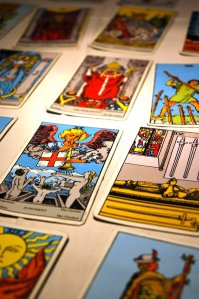
Alcina Lameiras era uma personalidade televisiva durante os anos noventa. Há poucas informações sobre a carreira dela na Internet e ainda menos vídeos mas tanto quanto eu consegui constatar, ela… Dava notícias sobre o futuro através de… um telefonema…? O único vídeo que encontrei foi um anúncio promovendo uma linha telefónica que “funciona todos os dias a qualquer hora”. Não tenho certeza mas não acho que ela fosse uma apresentadora com o seu próprio programa mas apesar disso, a gente do Twitter lembra-se dela e uma pesquisa dá luz a posts de Guilherme Duarte e entrevistas com Fernando Alvim nos quais ela é mencionada. Como perguntou o Senhor Duarte, “O que é feito dela?”
Na mesma altura, cá na Inglaterra, havia um crescimento de tais charlatães devido ao decreto lei de 1993 que pôs fim à antiga tradição de queimar os bruxos. Tínhamos a nossa Mystic Meg mas acho que Alcina é lembrada com mais afeto.
Dani, who kindly marked this, tells me there’s was another tarot reader at the same time called Maya who was a bit more showy. Alcina was less self-aggrandizing so people look back on her as more genuine… insofar (and this is me editorialising now) as someone whose job is saying nonsense can ever be regarded as genuine.
Lembras-te do pisco-de-peito-ruivo? Depois de eu ter escrito o texto de ontem, o pássaro ficou ainda mais valente. Esvoaçou do topo da janela até ao candeeiro e daí de volta à cortina e pela janela fora. Que lata!
I mean, how heavy must he be to tip the lampshade like that?
Após algum tempo, levantei os olhos do portátil e lá estava o pássaro na estante a espreitar os livros. Até me engasguei. Bati as palmas para afastar o meu novo “inamigo”. Mas pelo menos somos ambos fãs de leitura. Talvez tivesse sido um bibliotecário numa vida passada. Há quem não acredite na reencarnação mas não negue à partida uma ciência que não conhece*.
* This is a reference to a TV psychic from the 90s called Alcina Lameiras. I’ll probably do a text about it in a day or two.



 Luso
Luso 