Posted in Portuguese

Os Incêndios

Estou a ver vídeos nas redes sociais que mostram incêndios em Portugal. Até certo ponto, um aumento da taxa de incêndios é inevitável numa época de mudança climática mas há quem acredite que o governo é capaz de fazer mais para melhorar a situação. Não tenho opinião porque não moro lá mas parece que há muitas pessoas aflitas que culpam os responsáveis políticos por não terem introduzido leis para proteger o povo e a sua propriedade.

Claro que todos os cidadãos dum país têm alguma medida* de responsabilidade também: lixo descartado no chão é combustível. Uma beata pode causar um fogo, para não falar de churrascos e fogueiras.

Espero que este ano todos nós fiquemos seguros. E depois, espero que o mundo acorde para os perigos** que corremos com um aquecimento global descontrolado.

*I wrote “uma medida”, translating “a measure of responsibility” but it needs to be alguma – “some measure”

**I used “risco” on place of “perigo” here, but although “correr o risco” (run the risk) does exist in Portuguese, it doesn’t seem to be the natural choice here.
Posted in English

I’m a Lombo, Jack and I’m KO’ed.

The verdict on the most recent post was that the phrases “É nos lombos que elas nos doem” was referring to things being a wearisome, hard labour. It’s not as violent as my suggested “stab in the back”. Lombo generally gets used for the back of a beast of burden so the mental image is of hard work wearing someone out.

Posted in English

Ceca e Meca

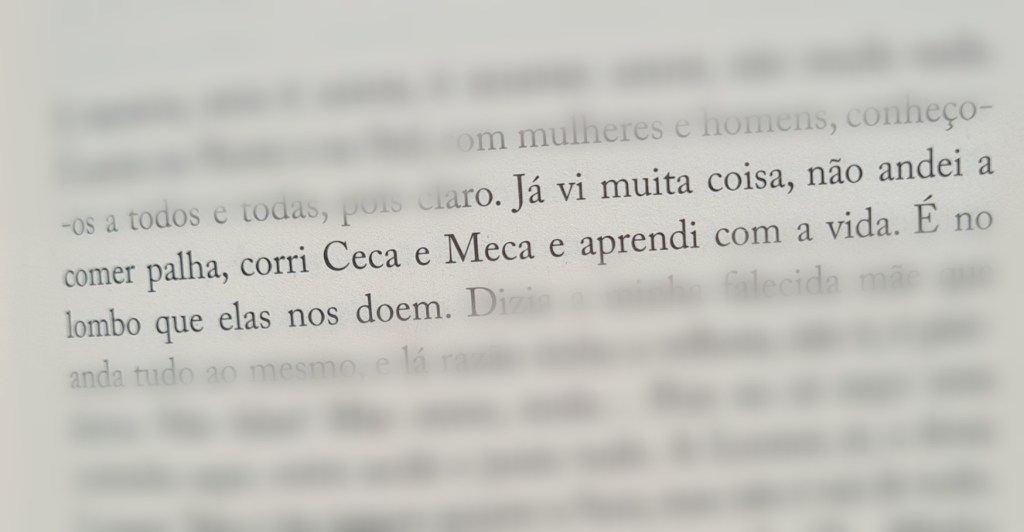
já vi muita coisa, não andei a comer palha, corri Ceca e Meca e aprendi com a vida.  É no lombo que elas nos doem
Ceca e Meca?

I was intrigued by this sentence. Ceca e Meca? What the heca… um… I mean what the heck’re those?

Meca is easy – it’s just what we would call Mecca. Ceca needs a little more digging: it’s an arab word that means treasure-house, but it was the popular name of the great mosque in Córdova during the muslim occupation of the iberian peninsula. So according to Ciberdúvidas, the expression “correr Ceca e Meca” recalls the pilgrimages made by arabs between the holy places in southern europe and in the middle east itself. In other words, it means you’ve been all over, you’re well-traveled.

What about the rest though? Já vi muita coisa – I’ve seen a lot. Não andei a comer palha – I haven’t just been eating hay (this seems to be related to the expression “todo o burro come palha” – she just means she doesn’t just believe what she’s told). Corri Ceca e Meca e aprendi com a vida – I’ve been all round the world and I’ve learned about life.

I’m not really sure about “É no lombo que elas nos doem”. Lombo is sometimes translated as loin, but it’s really about the area in the upper back, below the shoulder blades, either as a cut of meat or on the human body. So… i think she’s saying something like “They stab you in the back”. Not sure though. Doer means hurt, not stab. Maybe she just means things wear you out and make your back ache…? Hm, I think I might askabout that one. I’ll keep you posted.

Posted in English

É Uma Expressão Portuguesa Com Certeza

This beautiful gift was sent to me on Reddit and I went in search of the original. Its a blog post from a few years ago. As I have probably mentioned before, people who mark language exams live a good idiomatic expression, and the author of this piece has constructed an entire blog post out of nothing but expressions. There’s hardly a single word that isn’t part of one. It’s a magnificent achievement and certainly a lot more fun than the C1/C2 workbook I am ploughing through, where fully one third of the book is about expressions.

Posted in English

I heard you the first time

Right, I see WordPress have fixed that bug that was causing double posts and it’s now doing triple posts instead. Sorry if you got that last one three times. He is very dishy though, isn’t he. The eighties, man, what a decade.

Posted in English

Tia Angústia

I used the phrase “Tia Angústia” as the original title of yesterday’s post and that made me wonder if there really was a Portuguese equivalent to the English expression “Agony Aunt”, that would be better than my all-too-literal translation. I asked…

Acabei de usar esta frase no meu texto dia. Foi uma piada, porque aposto que a expressão não existe em português mas “agony aunt” em inglês significa alguém que dá conselho, principalmente sobre amor, por exemplo num jornal ou numa revista. Tipo: “Cara Tia Joana, Amo um rapaz mas é casado com um caranguejo. O que é que devo fazer?” / Já consideraste vestir-se a vermelho e andar de lado para chamar-lhe a atenção? Será que tais pessoas existem/iam lá? E se existem mesmo, qual é a… Sei lá… O título deste cargo…?

A Revista Maria
Yeah yeah, we believe you, José Nuno Martins

Anyway, it turns out that, no, agony aunt columns were never really a thing in papers, but that seems to have been largely because there was a magazine called Maria, launched in 1978 that absorbed all this action. People would address their letters to “Maria” and so having another personality, an agony aunt figure, wasn’t really necessary. A lot of this is based on people speculating so it’s not an authoritative answer or anything.

Maria still exists but it has modernised and moved on to fashion and lifestyle tips, but you an find old advice from it if you look around. Here, for example. Apparently the letters were real, and the people who answered them were psychologists, according to the magazine’s own account of itself.

So, bottom line, nobody will know what you’re on about if you refer to a Tia Angústia but if you need a cultural reference point in the same sort of area to drop into conversation, a revista Maria is probably the right one to reach for.

Posted in Portuguese

Uma Resposta A Uma Carta à Revista Maria

Today’s text is a reply to a social media post on which a woman asked what the hell is going on with men. She asked this because a guy she went on a date with told her he wasn’t going to walk her home and then, when she had mentioned this online she got a lot of grief from dudes who said that he was lucky to escape from such a selfish person. Weirdly she seemed unsure whether she did the right thing in refusing to see him again. I mean… Why would you?

Provavelmente o gajo não tinha interesse em continuar o relacionamento (a noite não correu bem?), mas ainda assim, devia oferecer-se para levar-te a casa por cortesia. A não ser que tivesse um compromisso (por exemplo, se já tivesse ficado de ir ao hospital visitar a mãe doente ou ao seu próprio casamento, logo depois do encontro), não há desculpa para não se oferecer, sobretudo se estivesse escuro e se te sentisses insegura. Acho que és tu que és sortuda. Não queres ficar com um javardo desses

Quanto aos comentadores, haverá sempre porcos entre nós. Não os deixes arruinar a tua opinião sobre o sexo em geral. Sou duma geração anterior à tua mas ainda assim… Tenho toda a certeza de que existem homens que são homens nesta geração também (mesmo que certos comentários nesta conversa pareçam desmentir o meu otimismo!)

Posted in Portuguese

A Corrida

Capítulo 1 (Domingo)

Vou participar numa corrida daqui a duas horas. Não me sinto em condições para correr. Acho que vai ser difícil… Vou na mesma, mas fica a dica: antes duma corrida, bolo de chocolate não vale a pena*. Existem rações mais nutritivas.

Capítulo 2 (Segunda feira

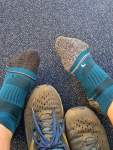
Meias de corrida

É provável que vocês estejam à espera duma atualização sobre a minha corrida de ontem e que não dormiram por se perguntarem “Mas conseguiu ganhar a medalha? E será que ele marcou um novo recorde da distância do seu grupo etário?”

Infelizmente, fiz uma série de escolhas pouco sábias. Fui de bicicleta até ao campo de corrida. Uma hora de ciclismo sob o sol abrasador não é aconselhável. Ainda por cima, antes de sair da casa, não bebi nada a não ser café. Tomei uns goles de água logo antes do início mas foi muito pouco e muito tarde. Rapidamente, fiquei desidratado e sobreaquecido e logo depois abrandei a minha velocidade e a corrida tornou-se uma caminhada. Nem sequer posso culpar o bolo de chocolate.

* It was rightly pointed out that this is crazy talk, chocolate cake is always worth it.

Posted in English

Foca à Doca

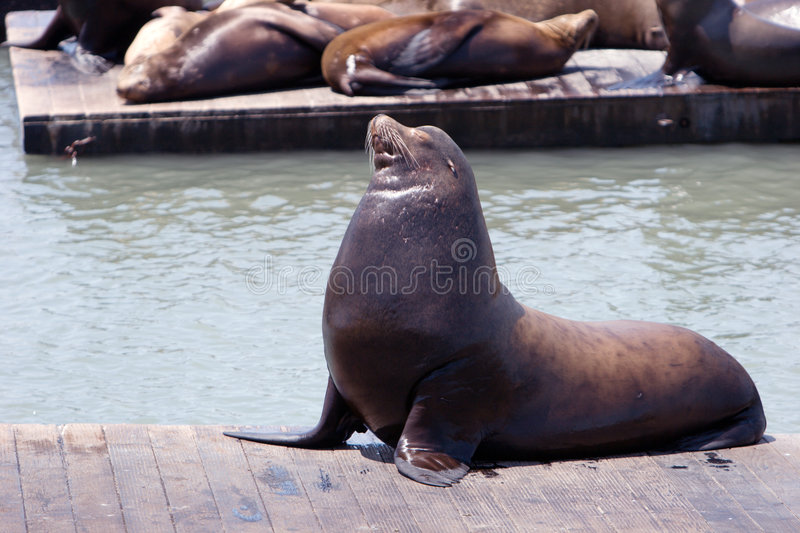
I managed to mistype “fica a dica” (“here’s a tip”) as “fuca a dica” which sounds vaguely rude. Anyway, here’s a foca (seal) at the doca (dock) to remind you to check your spelling.

Posted in Portuguese

O Primeiro-Ministro

Boris Johnson

Posso falar deste homem sem falar de política porque os seus defeitos são defeitos pessoais. Escrevi vários posts no meu blogue sobre o seu caráter: preguiçoso, gabarola, queque*, com falta de atenção aos pormenores do seu cargo. Fez parte da campanha contra a UE (mas não vou falar dessa decisão porque nunca mais me calaria**!) Recentemente, fez muitos erros de julgamento e mentiu aos deputados no parlamento e foi isso que precipitou o êxodo de ministros do seu gabinete e depois a sua… Demissão… Ou seja o que for.

*If you’re not sure what this means, it’s explained here

*I originally wrote “nunca pararia” (I would never stop) but stopping talking isn’t the same as stopping moving of course, so it’s calar, not parar.