One of the things I’ve been doing in my non-portuguese life is trying to learn poems. I had some idea that it would be nice to have more poetry in amongst the clutter of my brain, and also good mental exercise now that I’m well into middle age and finding myself forgetting stuff all the time. In the last couple of weeks I have memorised two. I can now recite Weathers by Thomas Hardy or The Subaltern’s Love Song by John Betjeman by heart. I like the Betjeman best; the rhythm of it is amazing, and it really conveys the sense of being giddy and excited and in love.
Anyway, I was thinking of doing “Mar Português” by Fernando Pessoa next. It’s shorter but I’m expecting it to be harder in anotgher language. So I was really excited to see this video drop into my Youtube recommendations today. Mar Português is the fifth of the five poems she reads. I have been subscribed to the channel for a while but not really following it closely but I can see I am going to have to keep a closer eye on it from now on, because I like this a lot!
I put up a “Buy Me a Coffee” link on the right-hand-side a few weeks back to cover costs of making this an ad-free blog and haven’t looked at it since but I went over there today and found that I’d been bought a coffee. Three weeks ago, actually, and I hadn’t seen the notification so I’m a bit embarrassed at how long it took me to thank the person for her generosity. I won’t embarrass her by naming her but thanks again!
This is a new milestone for me though and I have been smiling ever since! I will try and keep a better eye on it in future.
If you’re in London and want to learn more about Paula Rego, I can’t really recommend the exhibition I went to for the reasons I mentioned in the post: it’s a pain to get into and not a great seeing. But there’s a big retrospective of her work at the Tate starting later this month so if you can make it to that it’ll be well worth your while. It’s really intense.
I mentioned a few weeks back that I had backed out of a seminar on suffragettes in Portugal. Well, the tutor, seminar leader, whatever, sent out an email with some course materials. I was interested in the opening lines (In the image up there, 👆) Can you spot it?
As you probably know, portuguese has two genders, masculine and feminine, and all nouns have one or the other, even though physical objects and abstract concepts have no biological sex, they are all sorted into two categories too. And if referring to a group of – say – two women and two men, or even a thousand women and one male cat, the fact that there’s a mix of genders means you use the masculine as default so it would be “eles” not “elas”. Obviously this seems a bit silly on its face. I’m not going to get on my soapbox here because it’s not my language, but it seems like it would be fairer if you went with the majority or something. Anyway, what you have in the screenshot is the use of “querides” with an – es ending instead of either – as or – os.
It’s easy to see why this makes sense from a feminist point of view since mixed groups shouldn’t default to the masculine ending. It’s not just a typo either. At the end she says “beijinhos para todes”, which I keep pronouncing as “toads” and imagining a princess/frog situation.
I’ve had someone explain to me that e can be used as an ending for people describing themselves as “non-binary”. I haven’t seen any examples of this in the wild. For example, if you read the Wikipedia entry for Sam Smith you’ll find it carefully written to avoid any pronouns or gender-specific endings that refer to him directly. Where they do exist they are made to refer to other nouns. For example in the first paragraph it says “é uma personalidade britânica” where the a on the end of britânica refers to “personalidade” not to Smith himself. I think it would be kind of silly to squeeze gender-specific endings out of words referring to people, since a language that has gender for everything except people would be even sillier than a language that has gender for everything including people. IMHO one of the best things about English is that you don’t have the faff of remembering random genders for every single object and every single idea that has ever existed. If they don’t have a sex then they are all just “it”, and that’s beautifully simple.
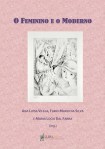
And one final thought on gender: I always find it odd that for example the idea of feminity itself is masculine. What do I mean? Well, there’s a book called “O Feminino e o Moderno” by Ana Luísa Vilela, Fábio Maria da Silva and Maria Lúcia Dal Farra. Why is The Feminine Masculine? Weird historical reasons, that’s why!
Equally surprising is the word “grávida” (pregnant) which, if you look it up, is defined as the feminine version of grávido, as if men could get pregnant and in fact pregnant men were the default. It’s all a bit Judith Butler if you ask me.
I’m moving some of my more useful blog post material into some fixed pages that I’ll update from time to time. I like the idea that it’s safe in one place and not spread around all over teh last 5 years of material.
If you’re reading this on a computer you should see a list over there on the right 👉
If you’re looking at it on the phone it’ll probably be a few page-lengths down there 👇
And if you’re reading it on an etch-a-sketch you probably aren’t seeing it anywhere so here are the ones I’ve done so far (but there will be more soon)
This is a bit of a silly one. Notes down at the bottom. Thanks again ThisCatIsConfused for correcting it (and having the patience to read my silly word games!)
Abbabo de ver um filme baseado nas músicas de aca. Hum… Quero dizer “Acabo de ver um filme baseado nas músicas de ABBA”. O seu título é Mamma Mia. A minha filha e a sua amiga fizeram uma festa ontem à noite. Abbastecemo-las… Hum… Ou seja Abastecemo-las com petiscos e abbandonámo-las… Abandonámo-las na sala de estar. Hoje de manhã estão com sono e estão só capazes de comer panquecas com xarope e ver filmes.
Abbasar de ser…. Hum… Apesar de ser de sexo masculino*, gosto do filme. Há muitas estrelas no elenco. Acima de todos, gosto de Christine Baranski que é abbasolutamente… Hum… absolutamente fantastica. O enredo é engraçado, e as canções… Tipo… Quem não abbora ada… Ou seja quem. Não adora ABBA?
*=i just wrote “apesar de ser masculino but you have to say” de sexo masculino”. Probably would have been easier to say “apesar de ser homem” really, eh?
So what’s the joke?
I’d better explain for the benefit of anyone who is confused by the unfamiliar vocabulary that this is a sort of long-running pun: I’ve swapped the word “abba” onto other similar words like “apesar”, “acabo” and “abandonámos” and occasionally swapped letters in the other direction too. In each case, I correct myself immediately after but if you’re still at an early stage of your journey it probably looks a bit confusing so I’m sorry about that!
I joined in one of the Bertrand training courses I mentioned a couple of weeks ago. It’s part of a series on feminism, looking at the subject of the portuguese suffragette movement. I thought I’d try and listen in on the lecture and learn something about history. However, the person running it asked people to put on their cameras and mics so they could participate and I thought well, I don’t really want to be the only foreigner and in all likelihood the only bloke if it’s going to be a round-table discussion, so I scarpered. Oh well, that’s fifteen euros down the drain!
Listening to A Morte do Papa earlier today I had a bit of a double take thinking they were talking about the Church of “A Mãe do Rebentor”. Rebentar means “burst” or “explode” so rebentor would be an exploder, I suppose. It was a weird image until a couple of minutes later my braincells kicked in and I realised it must be “redentor” (redeemer)



 Luso
Luso 