Author: Colin Lusk
O Mangusto

Who knew I’d have two posts mentioning mongooses less than a week apart? Well, here we are!
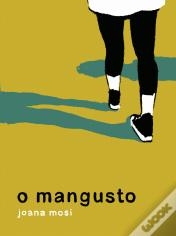
“O Mangusto” é uma banda desenhada sobre uma jardineira que está atormentada por um mangusto que destrui as plantas da* sua horta. O Mangusto nunca aparece na história e ao que parece não existe – ela está a passar por uma crise pessoal e acho que esta ideia fixa é um método de transferir os seus sentimentos para algo fora de si.
O livro foi escrito e desenhado por Joana Mosi (conhecida por “Mosi” no Goodreads mas sei lá eu por quê!) Embora seja mais simples (em termos de estilo artístico) do que um outro livro para o qual ela contribuiu – “O Outro Lado de Z” – este é muito melhor. Colaborou naquele livro com um escritor que, francamente, não tem o talento que ela tem. Neste livro, foi ela que criou tudo, e o produto tem ar de ser uma obra completa, realizada por alguém que sabia o que queria fazer.
*of her garden not in her garden – I make this kind of mistake all the time through thinking too englishly.
Uma Família Madeirense – João França
Here’s a review of the book that’s been doing my head in for a while. Not recommended for beginners, but very interesting if you’ve got the spoons to stick with it to the end. Special bonus, to encourage you to read the footnotes, there is a free book giveaway in one of them today. Oooh! Exciting!

Uau, este livro surpreendeu-me! Mais sinceramente, deu-me água pela barba: havia tantas palavras desconhecidas, tantos regionalismos e tantas personagens que me senti desesperado. Quase desisti, mas com ajuda do dicionário… e um mapa e uma árvore genealógica e a Wikipédia… consegui, por fim*, entender tudo.
A história desenrola-se entre duas épocas: 1936, durante a Revolta do Leite, um protesto popular sobre um decreto-lei que estabeleceu um monopólio na produção de laticínios nos primeiros anos do Estado Novo e 1975, durante o assim chamado “Verão Quente” que se seguiu à revolução e à queda do governo** de Marcelo Caetano. Como é óbvio, os protagonistas são os membros de uma família, encabeçada pelo Comendador Bonifácio de Oliveira, um homem conservador, monarquista e, acima de tudo, teimoso, que rejeita o seu amigo*** por não concordar consigo sobre a implantação da República.
O livro é curto, tendo pouco mais de 130 páginas, mas o autor consegue incluir**** grande parte da história do país: a transição da monarquia para a República que depressa tornou-se ditadura, e a restauração da liberdade por um golpe de estado, que parecia prestes a dar lugar a mais uma ditadura. Entretanto, os inimigos do estado desaparecem, emigram ou são presos, e a hipocrisia e o conservadorismo da burguesia madeirense são colocados em foco, destacados pelos acontecimentos no palco nacional, mas até eles têm de mudar ao longo das gerações.
Adorei o desenlace. Pareceu-me a conclusão perfeita para esta telenovela literária.
*I wrote “afinal” here and was challenged to explain why that was wrong but my brain is broken so I’ll make that the subject of a future blog post. Anyway, the TL;DR is – that’s wrong!
**I originally wrote “que seguiu a revolução e a queda do governo” thinking like an english speaker, thinking yeah, transitive verb, “it followed the revolution”, but no, in portuguese it follows itself to the revolution. This is one of those grammatical structures that I think if only I understood why it seems natural to put words in that order I’d be a lot closer to thinking like a native.
***The name of the friend (and of the friend’s son who also plays an important role) is Meireles, so it’s sort of spooky that in between drafting this review and publishing it I got an email from another Meireles, Devin Meireles, who has just finished writing his own book about Madeira. Quite a coincidence! Anyway, I don’t know if this Meireles holds unacceptable views on the implantation of the republic like his namesake, whether he is in fact a “jacobino sem vergonha”, but what I do know is that his book, Finding Madeira, is available free on Amazon this week (17-21 December). So if that sounds like something you’d be interested in, have a look and if you like it, drop him a review on Goodreads.
****I used capturar here but that’s too much of an english expression.
Thanks again to Cristina of Say it in Portuguese for her very helpful corrections which I am too addled to understand fully right now but will hopefully make more sense in the morning.
Mangas-de-Alpaca
I spotted this phrase in a book I’m reading, referring to “uma comissão de oficiais técnicos”. The speaker starts his rant by exclaiming “Baboseiras!” which I took as being related to “babar” (to drool) which it is, and so he obviously doesn’t have a high opinion of these people. OK, so I’m not expecting anything good, but what does it actually mean?

Mangas-de-alpaca were sleeves worn by clerks on their lower arms to protect their clothes from getting scratched and ink-stained during service. By extension, the term can be used pejoratively to describe a bureaucrat or a pen-pusher in general.
Whether or not you use hyphens is usually important and the AO tends to be quite prescriptive. I’ve used hyphens here because that’s how Priberam spells it but neither Wikipedia or the book use hyphens, so I’m not really sure who’s correct!
A Cancão de Lisboa

“A Canção de Lisboa” é o primeiro filme feito por portugueses segundo o cartaz e o segundo, depois d’”A Severa”, segundo a Wikipédia. O realizador foi José Cottinelli Telmo, um arquiteto, artista e cineasta que colaborou com o Estado Novo em vários projectos, incluindo a Exposição do Mundo Português e as escadas monumentais de acesso à Universidade de Coimbra (o pior crime de sempre, na opinião da minha filha).
O filme conta a história de Vasco Leitão (protagonizado por Vasco Santana) que é inexplicavelmente sortudo: tem uma namorada linda e atrai a atenção de outras raparigas, apesar de ser pobre, gordo e pouco jeitoso.
Mas a sério, canta bem e é encantador, que provavelmente ajuda-o a engatar as raparigas. Ainda por cima, do ponto de vista dos espectadores, tem qualidades tipicamente portuguesas que permitem uma audiência nacional identificar-se com o protagonista.
Há, sem dúvida, muitas cenas engraçadas no filme (a minha favorita é quando o Vasco se arma em veterinário no jardim zoológico para ganhar dinheiro), mas não é o mais fácil de entender. Os sotaques daquela época soam diferentes (assim como os filmes ingleses dos anos 40 do século passado) e a qualidade da gravação antiga estraga os tons mais altos e torna mais incompreensível o diálogo. Portanto, ainda que o filme seja um dos mais populares de sempre, não é muito acessível para nós estrangeiros. Talvez tivesse sido mais fácil entender a remake* de 2016, mas este blogue tem os seus princípios. Não suportamos remakes nenhumas. O que será a próxima? Se tolerarmos uma versão da Canção de Lisboa com César Mourão, teremos de aceitar uma versão do Ghostbusters com elenco feminino? Nunca!

*Wikipedia says refilmagem but our survey says (*uh erghhhh*). Might be a Brazilian thing?
Thanks as ever to Cristina of Say It In Portuguese for the helpful corrections
De Volta ao Português Em Foco
Hm, I’m not sure why I’ve written this in portuguese. I’ll write up the book in english on the study guides page too, for anyone who finds that easier.
Escrevi há algum tempo sobre um livro interativo chamado “Português em Foco”. Antes de mais: cuidado, Português em Foco não deve ser confundido com “Português em Foca”, que explica como pedir peixes, bater palmas e jogar bolas com no nariz na língua de Camões.
Português em foco está disponível em vários formatos mas eu comprei a versão interativa. Esta decisão tornou-se fonte de alguma confusão porque, dependendo de como se acede ao livro digital, partes do curso não estavam acessíveis. Falei disto neste blogue.
No entanto, persisti. Acabei por constatar que o livro funciona melhor num portátil ou num computador. As páginas abrem-se e revelam ícones dos capítulos relevantes do livro digital e as atividades interativas correspondentes. Depois vem o caderno de exercícios com ainda mais atividades interativas.

O melhor método é começar com o primeiro ícone (claro!). Lê e ouve o texto mas quando chegar a hora de fazer os exercícios, em vez de voltar ao ícone na página inicial, clica no botão ao lado do exercício no livro digital.

Os exercícios interativos abrem-se logo e permitem-te fazeres os exercícios. Geralmente, depois de completares cada um, a resposta aparece para que saibas quão bem compreendeste os conteúdos.

Mas existem exceções: nalguns casos, a tarefa é escrever um texto ou gravar áudio. Claro que estes exercícios não têm respostas certas. O sistema possibilita a intervenção de um professor que pode corrigir estes exercícios, mas um estudante a trabalhar sozinho achará a experiência um pouco limitada.

Mas seja como for, acho que o livro vale mesmo a pena. 24 capítulos com uma média de 15 páginas de exercícios (escritos e orais) cada, por 39€ é, na minha opinião, uma pechincha!
Thanks again to Cristina from Say it in Portuguese for sparing me from another typo-filled, grammar-challenged mess of a blog post!
Sopinha de Massa
New favourite expression just dropped. I was talking about a song from the eighties called “There’s No-one Quite Like Grandma”. If you’ve never heard of it, rush to listen, because it kept “Stop the Cavalry” by Jonah Lewie off the top slot in 1980, and you’re probably hearing that a lot in the run-up to Christmas, so you’ll want to know what you’re missing. Anyway, the expression, used to describe the soloist was “sopinha-de-massa” – Noodle soup. It just means someone who lisps and can’t pronounce their etheth… I mean their esses properly. As about 80% of all british comedians have pointed out, Lisp has always been a terrible word since people who have one can’t even say it. How much harder is it to say “Thopinha-de-matha?

If you’re curious, the more proper term for a lisp, used by speech therapists (this lady, for example), is “Sigmatismo” which isn’t much better!
Vocabulary Car-crash
I still have to reach for the dictionary a fair bit, especially when reading something high-brow, but it’s not often I hit a sentence that has four unknown words in it.
Não se lembrava ela de lhe ter visto os dentes, mas recorda-lhe as mãos gorilentas, as calças de seriguilha descaídas no ventre e em cujo cós deve estar enfiada uma podoa em jeito de faca recurva.
Check this out.
Gorilenta isn’t even in the dictionary but I think I can guess it…
She didn’t remember having seen his teeth but she remembered his gorilla-like hands, the trousers of rough wool, sagging in the belly, and in whose waistband is stuck a pruning shear in the form of a curved knife.
Ooof!
Vou Dar de Beber à Alegria
Translation!
I’ve had a couple of videos (here and here) that have made reference to a song called “A Casa da Mariquinhas”. It keeps appearing in the most unexpected of places, and I am planning to do a longer blog post about the history around it, but for today, here’s another “sequel” to the song. The title “Vou dar de Beber à Alegria” is not accidental – it’s a callback to an earlier title, “Vou dar de Beber à Dor”. The reason I’m interested in this video is that I don’t understand all the dialogue in between the verses, where she’s just having bantz with the audience. I can get quite a bit of it; my favourite bit is when she fancies singing a bit more she tells her guitarist “Anda Armando!” – oh yeah, she’s in charge. But I’m definitely missing huge chunks. I found a transcript online and it’s full of footnotes, so it seemed worth writing it out and decoding all the dialogue, with a view to sharpening my listening skills
OK (Rolls up sleeves) LET’S DO THIS!
Some aspects of this don’t really make much sense and I don’t know if it’s just me or what. Like what’s the mongoose stuff all about? There’s another version by Mafalda Arnauth which is really polished and leaves out the crazy backstory and there are a couple of other tweaks too – like she says “Umas Pinguinhas” instead of “Uma Macieirazinha”, maybe because that drink isn’t well-known now and people might wonder what she was talking about.
| Portuguese | English |
|---|---|
| [Também podia ser Yé-Yé, olha, Lembras-te, quando a gente fazia estas paródias? Ah, ah. Ela fazia um marinheiro americano depois voltámos: Eu fiz muitos marinheiros americanos, ela fez “um marinheiro americano” e eu fiz “um marujo português”, um dueto. É um sucesso!] Anda Armando! | It could be Yé-Yé* too, look. Remember when we used to do these parodies? She (Amália Rodrigues) was making an american sailor** and then we came back: I made lots of american sailors, she mas “An american sailor” and I made “a Portuguese Sailor”, a duet. It’s a hit! Go for it, Armando! |
| Passei ontem pela rua, onde morava, A cantada e recantada Mariquinhas, E qual não é meu espanto, Olho e, vejo por encanto, Outra vez, lá na janela, as tabuinhas. Corri e bati à porta E até fiquei quase morta, Quando ela se abriu p’las alminhas, Pois, quem veio a porta abrir e a sorrir, Era mesmo a Mariquinhas! | Yesterday I went down the road where lived The much-sung-about Mariquinhas And which isn’t my amazement I look and I see by magic Once again, in the window, the shutters. I ran and knocked at the door And I almost died When it opened by a mircacle Because who came to the door and opened it smiling It was Mariquinhas herself! |
| [Ai, a Mariquinhas ‘tá uma beleza, ‘tá tão linda a Mariquinhas! Ai que linda, ai que linda, ai que beleza! ‘Tá mais gordinha, pesa quatrocentos e cinquenta quilos, Não é brincadeira nenhuma, que é mais que o dobro! Mas como gordura é formosura, Ela não se importa nada com isso. ‘Tava a comer jaquinzinhos de escabeche, quando eu apareci. Ela assim que me viu: – Olha a Hermínia, eh pá! Ela sabe que eu gosto de carapaus fritos, coitadinha até fez ternura: Tinha lá o arranjinho dela, jaquinzinhos a 320 paus o quilo. Ela tinha lá cinco gramas, era para ela e para o «charmant», pró «Schatz»; depois apareceu esta intrusa; olha, foi à conta! O que vale é que os jaquinzinhos, é cabecinha, rabinho e tudo, vai tudo na enchurrada!] Anda Armando! | Oh, Mariquinhas is a beauty, she’s so lovely, Mariquinhas! Oh how lovely, how lovely, what beauty! She’s a little fatter, she weighs 450 kilos, It’s no joke, it’s more than double! But with fatness there’s gorgeousness, She doesn’t care about that at all She was eating Jaquinzinhos with escabeche*** when I appeared And as soon as she saw me: “Hello, Hermínia, woah, man!” She knows I like Fried mackerel, poor thing, she was even kind to me She had her little arrangement, jaquinzinhos at 320 paus (escudos) a kilo She had five grams, it was for her and for the “charmant”, for the “Schatz”****; then there was this intrusion; look, it was the bill! What matters is that the Jaquizinhos, heads, tails, everything, all go in together Go for it, Armando! |
| Eu entrei e abracei a Mariquinhas, Que me contou que um senhor de falas finas Lhe deu a casa que é sua, Pôs o prego na rua E correu com o tal senhor, que era lingrinhas. Mandou caiar as paredes, Pôr cortinas de chita Nas janelas tão bonitas, às bolinhas. E, por fora, p’ra chatear as vizinhas, Janelas com tabuinhas. | I went in and hugged Mariquinhas, Who told me that a sweet-talking man Had given her the house that is hers Put the nail in the road And ran with that man, who was skinny. She ordered the walls to be whitewashed Put up chintz curtains with polka-dots on the beatiful windows And outside, to annoy the neighbours Windows with shutters |
| [Bem-feita! Lá na rua, as amiguinhas ficaram todas danadas. E um peso de quatrocentos quilos em cada ponta das tabuinhas, que era para elas não poderem deitar para lá os mirones. Aquilo é um rés-do-chão. Antigamente aquilo era só lá chegar, e aquilo era canja, agora quem é que pode? Aguente-se oitocentos quilos, o que ela se havia de “alimbrar*****” hein! Mas é uma belíssima rapariga! Anda Armando! | Well done! There on the street, the little friends were all upset And a weight of 400kg on each corner of the shutter so the nosey-parkers couldn’t move them aside. That was on the ground floor Back in the day all you had to do was walk up and it was a piece of cake, now who could do it? 800kg is sturdy enough, which she must have remembered, eh? But she was a very beautiful girl! Go for it, Armando! |
| Ai, já tiraram os caixilhos às voltinhas E as janelas já estão todas catitinhas. E p’ra afastar os temores E o inguiço****** dos penhores, Defumou a casa toda com ervinhas. Pôs incenso das igrejas E, p’ra acabar com as invejas, Pôs um chifre atrás da porta, às voltinhas. E na cama, sobre a colcha feita à mão, Ai, debruada com borlinhas. | Oh they’ve already taken away the boxes And the windows are all looking good And to drive away fears And the bad luck of the debts She fumigated the whole house with herbs Put out church incense And to put an end to the envy Put a horn behind the door around about******* And on the bed, on the handmade quilt, oh, decorated with tassels |
| [Ela é muito prendada. ‘Tava a fazer colcha toda em caroché Diz que era para oferecer a mim Para eu estrear na noite de Natal: E tens qu’a pôr, e tens qu’a pôr, e tens qu’a pôr Tens qu’a pôr o quê, mulher? Tens que pôr a colcha na noite… ‘Tá bem, pronto, acabou-se! Faltavam très dias p’rò o Natal e a colcha ainda ‘tava em meio. E ela, coitadinha, ali, à fossanga, à fossanga… Ò mulher, pára lá com a costura! Quando entram as visitas de cerimónia assim como eu, pára-se logo com tudo! Nós éramos aprendizas de alfaiate, quando éramos miúdas, é claro que eu não percebia nada daquilo, nem queria, eu andava a apanhar alfenetes [alfinetes], agora ela não; ela já sabia “górnecer” [guarnecer], como ela dizia. Hoje é uma boa costureira de alfaiate e eu sou vedeta! De maneira que ela faz assim um bocadinho de cerimónia comigo, então respondeu: Ó filha, eu por acaso até nem percebo desses “protocóis” [protocolos]. Você não percebe destes proto quê? Então aprenda, eu é que sei! “Coltura” [Cultura] é comigo, sou eu e o Pedro Homem de Melo, só, mais nada! Uma bandida daquelas, da minha criação, a dizer «protocóis». Mas em que rimance [romance], em que rimance, é que ela aprendeu os protocóis, não foi na crónica feminina, concerteza. Eu, ali, cheia de punhos de renda, nhó, nhó, nhó, nhé, nhé, nhé, e ela, pimba, «protocóis»! Anda Armando! A colcha é linda! É toda aos “kódrados” [quadrados] de metro e meio Assim com rosinhas, todas em relevo; assim com cachos de uvas ferrais, pindurados assim à volta, uma fundura toda em «bois de rose» é uma beleza! Pesa cinquenta quilos. Aquilo não é sonho, é pesadelo! Agora eu, pela escada abaixo, com cinquenta manguços às costas… Eu disse escada abaixo? Ó Irene, eu disse escada abaixo, disse? Não é, é um rés-do-cháo! | She was very gifted. She was making the whole quilt with crochet She said it was to give to me For me to use for the first time at Christmas: And you have to put, have to put, have to put Have to put, what, woman? You have to put on the quilt at night That’s fine, right, it’s finished! It was three days before christmas and the quilt was still only half finished. And her, poor thing, there, working hard, working hard… O woman, stop your sewing! When they enter on cerimonial visits like me, everything stops! We were apprentices of needlework when we were kids, it’s clear that I didn’t understand any of that and didn’t want to. I was picking up pins, but not her. She knew how to decorate, as she would say. Today, she is a good seamstress and I’m a star! In that way she made a little ceremony with me, then replied: Oh, daughter, I as it happens don’t know of these “protocols”. You don’t understand these proto-what? Then learn, I’m the one who knows! Culture, that’s nmy department, me and Pedro Homem de Melo and nobody else! One of those bandits of my creation saying “protocols”, but in what novel, in what novel did she learn “protocols”? It wasn’t in the Crónica Feminina, that’s for sure! Here I am, walking on eggshells, nhó nhó nhó nhé nhé nhé********* and her – boom! “Protocóis!” Go for it, Armando! the quilt is lovely! It’s made up of squares, and a metre and a half in size Like that, with roses, all in relief and with bunches of iron grapes, hanging, like this around it, a background all in “rosewood” It’s a beauty! It weights 50 kilos That’s not a dream, it’s a nightmare! Now me, down the stairs with fifty mongooses********** on my back… Did I say down the stairs? Oh Irender, I said downstairs, didn’t I? No, it’s the ground floor! |
| Lá está tudo, tudo, tudo, até o xaile E a guitarra, enfeitada com fitinhas. E sobre a cama, reparo, Um peniquinho de barro, Bem bonito e pintadinho com florinhas. E eu fiquei tão contente! E ficámos, calmamente, A beber até de manhã, ai, ai.. uma macieirazinha, Pois dar de beber à dor é o melhor, Já dizia a Mariquinhas! Pois dar de beber à dor é o melhor, Já dizia a Mariquinhas! | There it is, everything, everything, even the shawl And the guitar, decorated with patches And on the bed, I notice, A clay chamber-pot All pretty, painted with flowers. I was so happy And we stayed, calmly Drinking until morning, oh oh… A little Macieira Because drinking the pain away is the best Said Mariquinhas Because drinking the pain away is the best Said Mariquinhas |
*Yé-Yé was a style of pop music in europe in the sixties, The name derives from Yeah-Yeah used by bands like the Beatles
**I definitely feel like I’m in double-entendre territory here, but for what it’s worth in the sixties, Hermínia Silva did in fact make a record called “Marinheiro American” and another called “Marujo de Lisboa, and Amália seems to have made one called “My Love is a Sailor” but whether that’s all she’s talking about, I couldn’t speculate!
***Jaquinzinhos are baby Carapaus (horse mackerel), eaten whole, and escabeche is some sort of vinaigrette style sauce. Basically, this is tasca food, although it’s difficult to see how she got that fat off eating fish, but OK.
****French and German words equivalent to Prince Charming
*****lembrar
****** I think this must be “enguiço” – and “penhores” on the same line means objects used as collateral, but debt seems to work better in the line so I have fudged it…
*******No idea what’s going on here – but they’ve already talked about burning incense to drive out bad luck so maybe some other kind of superstitious ritual???
******** Best I can do as a translation for “punhos de renda” which means taking extreme care to avoid giving offence
********* I think this is just the sound of someone jabbering like blah blah blah…?
********** Mongooses? Is mongoose a slang word for kilogram? This is baffling!