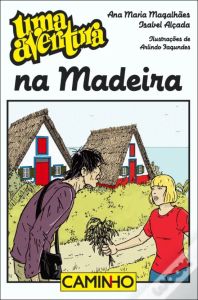
Comecei este livro no outono de 2024 e fiz uma pausa durante mais de um ano antes de terminar. É incrível! Como sempre, grande parte da ação tem lugar em sítios verdadeiros e as autoras explicam algumas coisas sobre os factos da zona onde os jovens estão. Mas este livro é mais divertido do que os outros que já li na série. Ri em voz alta. não me admira que os livros tenham tantos fãs.
If you click the link above, it’ll take you to Wook, but if you don’t want to pay postage, you can get it cheaper on Kobo and read it on your phone or tablet device for a lot less. I read this on a phone and it’s pretty easy to do. Takes a few hours and it’s a solid school-age read. -> Here’s Uma Aventura Na Madeira and the whole series.
Aqui Dentre Faz Muito Barulho é um livro desses que fazem um ninho na mesa de cabeceira durante umas semanas porque o formato (pequenos textos de 2-3 páginas) é perfeito para quem precisa de ler alguma coisinha antes de dormir. Não exige muito do leitor, não nos deixa perturbados, e se não nos lembrarmos o que limos no dia anterior, não importa, porque a leitura de hoje tem um novo assunto. Já li vários livros do mesmo género, escritos por Miguel Esteves Cardoso e Ricardo Araújo Pereira. Este não me fez soltar tantas gargalhadas como previsto. Achei-o inesperadamente pensativo.
Levei-o comigo à Madeira em Novembro e terminei-o nos últimos dias de Dezembro.
Acho que já falei do meu espanto ao ver, pela primeira vez, a expressão “El-Rei” para designar o rei de Portugal. Recentemente fiz uma pergunta no reddit para esclarecer uma dúvida mais específica.
——-
Acabo de ler uma peça de propaganda fascista (!) A História da Grande Batalha de Aljubarrota, publicado pelo Estado Novo em 1939. Claro que é muito patriótico, e este sentimento manifesta-se principalmente contra os castelhanos que ousam pisar a terra portuguesa. É interessante ver as diferenças entre as versões da lenda, mas neste caso o que mais me chamou a atenção é que a escritora refere à figura de Dom João I como “El-Rei”. Ora, já sabia que El-Rei é muito usado em contextos monárquicos, mas neste caso específico… O motivo da batalha é negar a pretensão, por parte da monarquia espanhola, de absorver Portugal no seu território. Então porque é que usam um termo tão obviamente emprestado da língua espanhola, e que contém um pronome espanhol, para designar o monarca do país que quer afastar-se da Espanha?
Não duvido que haverá uma explicação que terá a ver com a cultura ou com a etimologia da palavra mas não estou a ver. Pode alguém explicar sff?
Recebi uma explicação que falava da etimologia da palavra no século XIV. Eu voltei à carga porque todas as palavras no dicionário mudaram a etimologia desde então tirando esta. Já suspeitava que este assunto poderia chatear a gente mas a minha curiosidade é irreprimível…
Hm… Sim, mas o livro foi escrito em 1939 e a maioria das palavras tinham mudado a sua ortografia entre o século XIV e o século XX. Creligo já é clérigo*, mas El rei não é O rei. O propósito da série da qual fez parte era fomentar o patriotismo por parte dos cidadãos. Surpreende-me que, sobretudo neste contexto muito específico, a autora manteve a tradição de “rei” ser a única palavra que leva o artigo El.
Enfim, alguém recomendou este vídeo no Youtube, gravado por Marco Neves que sabe algumas coisas sobre a língua portuguesa,
Na verdade, acho o “fóssil” surpreendente, mas não deve espantar ninguém porque… olha a minha língua. Nós ingleses lutam contra os franceses mais do que qualquer outra nação, mas a nossa monarquia é “the royal family”. Royal é enraizado na francês normanda “roial”. Apesar de sermos enlouquecidos pelo brexit, temos uns vestígios linguísticos continentais no nosso dicionário também.
*This is a reference to something somebody said about Clérigo having once been spelled Creligo which, it was implied, was closer to another language but I have tried to find out more and I can’t so I wonder if it was a typo….
Este livro ficou para ler após a unidade curricular sobre a padeira de Aljubarrota, e já acabo de ler. É interessante por várias razões. A ortografia é muito diferente do que a de hoje (veja por exemplo o texto de ontem!) mas também vemos como a história é contada, realçando os aspectos que o contador quer reforçar na mente do leitor. Especificamente, nesta versão El-Rei Dom João I e o seu Condestável, Nuno Álvares Pereira vão visitar a padeira antes da batalha e ela fala muito da sua raiva contra os espanhóis que ousam pisar o chão bendito da sua terra, e declara a sua lealdade ao trono português. Evidentemente a ditadura queria educar os seus cidadãos nesta espécie dE patriotismo (apesar de Portugal já ser República!) Também omite o pormenor mais assustador da história: quando a padeira cozinha os espanhóis no forno com o pão de chouriço. Não me admira que não quisessem criar uma geração de filhos com imagens mentais tão horripilantes!
Ora bem, eu conheço os prejuízos do governo que lançou este livro, mas convém lembrar que todos os autores têm os seus próprios prejuízos, embora não sejam tão óbvios. É fácil imaginar uma versão deste história que enfatizar o papel da padeira como mulher independente e feminista, ou como representante do poder da classe operária, ou como empreendedora que queria defender o seu negócio contra uns criminosos, o seja ou que for. Sem perceber, absorvemos essas mensagens ao longo dos anos. Não é bom, não é mau, mas convém lembrar de vez em quando…
(if you’re interested in reading this book… Well, you can buy it, but it’s super-small and I have a copy that I downloaded and printed off the Internet. I can’t find the link, but it’s out there somewhere, so have a Google, you might save yourself a few quid)
I’m on The Storygraph now so of course when I review it there I had to add trigger warnings…
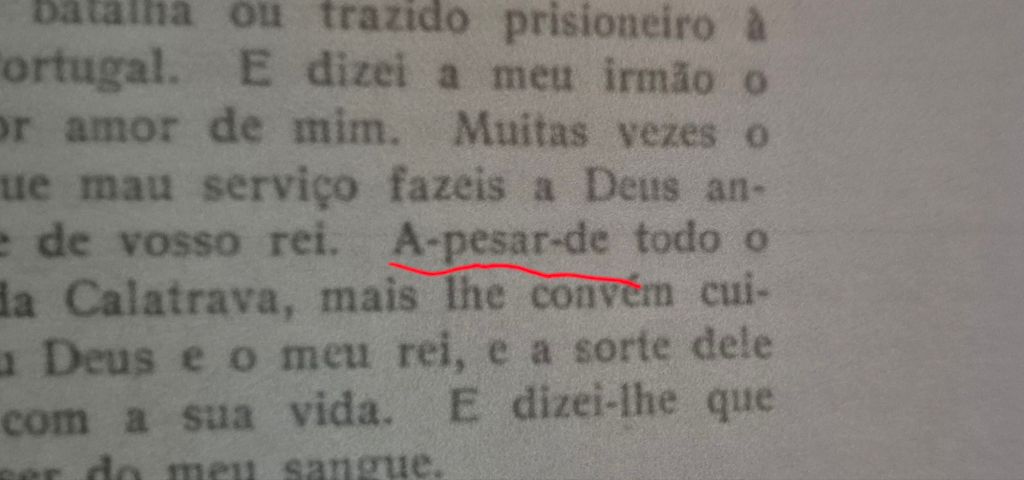
Reading actual fascist propaganda (well, the story of the Battle of Aljubarrota and a certain padeira of that parish, which was published by the ministry of propaganda in 1939) and of course it uses a lot of pre-acordo spellings. I was struck by the way they write “apesar de” as “A-pesar-de”. I suppose I could have guessed the etymology of the word “apesar” but it would never have occurred to me to think it was such a recent development that it was written with a hyphen within living memory!
A minha note é 2/3. Segundo o texto de Janeiro 1 de 2025, comprometi-me a…
Conquistar o DUPLE: E conquistei, mesmo!
Usar o DUPLE: quando tiver um diploma universitário, farei um curso universitário numa disciplina relevante, mas sobre um assunto fora da minha zona de conforto Estou tão feliz por ter realizado este objectivo. Foi muito difícil “navegar” o processo mas já estou no meio de dois unidades curriculares e aprendi um monte de coisas!
Falar mais: em geral, falar falo, mas para dar mais estrutura a este objectivo, vou gravar…. Digamos 6 mas espero que haja mais… Quanto isto… chumbei… Não passei de gravar um vídeo e a qualidade foi tão baixa que acabei por enterrá-lo numa pasta no meu computador onde ninguém vai encontrar.
I heard this on Instagram and I was entranced, and had to hear the whole thing. The name of the band is Rouxinol Faduncho, which is like “Bad Fado Nightingale”, which sets expectations right from the start. Let’s see what the hell is going on in the lyrics.
(Ora o público pediu, e mais aderiu e até ganiu nesta campanha internacional e até europeia intitulada: Help Me a Pôr os Cães de Loiça a Sorrir a “Gane”. A gane quer dizer a sorrir a gane ou a ganir. tem sido, Maravilhoso…)
Well, the public asked and even subscribed and even whined in this International, and even european campaign entitled Help me make china dogs smile a gane*. A gane means smile until whine or while howling. It has been marvelous.
Oi pra o sofrimento um bom remédio há afinal Ajudem os cães de loiça, esse pobre animal Ao vê-lo feroz no portão, eu sempre me comovo Se a tinta cair ao chão, dou-lhe mais uma demão** e ele fica como novo
Hey, finally there’s a remedy for suffering China dogs help, that poor animal When I see them, ferocious at the gate, i always feel moved If the paint falls on the flour, I’ll give it some more One more coat and he’ll be good as new
Se gostas de animais, cães de loiça Que não sujem os quintais, cães de loiça São “bobbies” bestiais, cães de loiça São cãezinhos mal tratados, de olhos esbugalhados e nada saltitões Nunca se vão babar, nem ganir, nem ladrar, nem ferrar os ladrões
If you like animals, china dogs That don’t dirty the garden, china dogs They are beastly “bobbies”, china dogs They are badly treated little dogs with googly eyes and not at all frisky They never drool or whine or bark or injure burglars
Por serem portugueses e parecidos com o Toy Que os restaurantes chineses não fazem deles “chopsói” Não largam pelos ou pena, nunca roem os sofás Reparem bem nesta cena, são estrelas de cinema Cento e um Dalmatás
Because they are Portuguese, and look like Toy Because chinese restaurants don’t turn them into chop suey*** They don’t drop hairs or feathers, they never chew sofas Pay attention to this scene, they are stars of cinema 101 Dalmatians
Se gostas de animais, cães de loiça Que não sujem os quintais, cães de loiça São “bobbies” bestiais, cães de loiça São cãezinhos mal tratados, de olhos esbugalhados e nada saltitões Nunca se vão babar, nem ganir, nem ladrar, nem ferrar os ladrões
If you like animals, china dogs That don’t dirty the garden, china dogs They are beastly “bobbies”, china dogs They are badly treated little dogs with googly eyes and not at all frisky They never drool or whine or bark or injure burglars
(Aquilo é uma maravilha, aquilo corre corre… é uma companhia… pfff! e aquilo tem que se fazer, tem que se levar um saquinho sempre para apanhar os cócós Depois… Há que manter… que isto da camada do ozoto está a acabar, não é? temos que manter isto… planeta limpo… mas são muito engraça… e fofos? ui!)
That’s amazing, it runs… it’s company… pff!! And you know what you have to do, you have to bring a little bag with you every time to hold its poo afterwards, you have to maintain… because of this thing about the ozogen**** layer disappearing, right? We have to keep this planet clean, but they are very funny… and cute? Ui!
Se gostas de animais, cães de loiça Que não sujem os quintais, cães de loiça São “bobbies” bestiais, cães de loiça São cãezinhos mal tratados, de olhos esbugalhados e nada saltitões Nunca se vão babar, nem ganir, nem ladrar, nem ferrar os ladrões
If you like animals, china dogs That don’t dirty the garden, china dogs They are beastly “bobbies”, china dogs They are badly treated little dogs with googly eyes and not at all frisky They never drool or whine or bark or injure burglars
*I actually googled “sorrir a gane”, but I’m pretty sure this is a pun. The name of the campaign starts with “help me” so I guess “a gane” is meant to sound like “again”. Help me make the dogs smile again, where “gane” is the third person singular of the verb “ganir” – to whine. I went and looked at the release date, confidently expecting it would be in or after 2016, so playing on a certain well-known catch-phrase of that absolute fuckwit the Americans have elected to pretend to be a president and plunge themselves further into decline. But no – it was released in 2007, so they obviously just hit on a pun that would become much more topical and more depressing 9 years later.
** Wow, I was sure this was a typo in the lyrics and it should be “de mão” (ie, he’s painting it by hand) but no, uma demão is a coat of paint or a retouch.
***😬
****I think the original “ozoto” is a deliberate mistake, mixing Ozono (ozone) and Azoto (nitrogen) so I have translated it in the same way.
Este blogue é o último da série sobre as bruxas de Portugal que começou aqui.
Ai, Jesús, o pior fica para o final… Segundo a Insta de Lola, “durante o século XX, em Aljezur, no Algarve, “mulheres de virtude” praticavam rituais de proteção e feitiçaria e muitos contos populares rel1ata eventos misteriosos na região”. Soa bem, não soa? Mais uma história de mulheres de boa vontade a viver em harmonia com a natureza que acabou mal-entendidas pela patriarquia, certo?
Ui… Nem por isso. Quando pesquisei BRUXA e ALJEZUR, o todos os resultados tiveram como assunto uma notícia de Maio de 1929 de Vidigal, uma vila perto de Alzejur. Os habitantes daquele lugar costumava de participar em “bailes”, onde não havia música mas sim uma poção alucinógena. Sob influência deste liquido, dançavam e participavam em atos de feiticeira incluindo um incidente no qual um gato, que a gente achava era possuído por um espírito maligno*, entrou na sala portanto alguém pegou nele e cortou-lhe as patas, As autoridade religiosas queixaram às autoridades civis, que prenderam cinco pessoas em Abril de 1929 mas. após umas semanas. os detidos, já soltos, foram convidados a mais uma baile.
If JK Rowling’s books were more realistic
E foi naquela baile, em Monte Velho, nos arredores de Vidiga, que um deles, Luís Tomé, matou a sua mulher, Adriana Marreiros, de machadada. Estava grávida de quatro meses. A mãe dela, Maria Marreiros tentou salvar-lhe a vida mas a intervenção costou-a a vida. Foi espancado até à morte pelo genro. A filha do Luís e da Adriana, que se chamava Custódia, estava escondido debaixo da cama. Viu tudo e (como é óbvio) recusou de sair. O pai lhe implorou e até encheu um copo com o sangue das mulheres, com qual pintou símbolos no seu próprio peito e bebeu o resto.
O pai foi detido e enforcou-se na cadeia. Bem feito. A filha, cujo terror mal podemos imaginar, não saiu e não morreu, e a filha dela finalmente contou a história da sua mãe aos jornais em 2018, quase um século depois.
E a bruxa? A mulher que organizou as bailes foi Maria Inácia Costa, visto pelos analfabetos daquela zona com uma mulher de virtude. porque sabia ler. Luís tinha a consultado e ela aconselhou´-lhe reunir a família toda porque a mulher tinha traído a bruxa e “era necessário desfazer o enguiço”.
This blog is the last in the series about the witches of Portugal that started here.
Oh, Jesus, I saved the worst for last… According to Lola’s Instagram, “during the 20th century, in Aljezur, in the Algarve, ‘virtuous women’ practiced protection rituals and witchcraft, and many folk tales recount mysterious events in the region.” Sounds good, doesn’t it? Another story of well-meaning women living in harmony with nature that ended up being misunderstood by the patriarchy, right?
Wow… Actually, no. When I searched for WITCH and ALJEZUR, all the results were about a news story from May 1929 about Vidigal, a village near Aljezur. The inhabitants of that place used to participate in “dances” where there was no music, but rather a hallucinogenic potion. Under the influence of this liquid, they danced and participated in acts of witchcraft, including an incident in which a cat, believed to be possessed by an evil spirit*, entered the room, so someone grabbed it and cut off its paws. The religious authorities complained to the civil authorities, who arrested five people in April 1929, but after a few weeks the detainees, now released, were invited to another dance.
And it was at this dance, in Monte Velho, on the outskirts of Vidiga, that one of them, Luís Tomé, killed his wife, Adriana Marreiros, with an axe. She was four months pregnant. Her mother, Maria Marreiros, tried to save her life, but the intervention cost her her own. She was beaten to death by her son-in-law. Luís and Adriana’s daughter, named Custódia, was hiding under the bed. She saw everything and (of course) refused to come out. Her father cajoled her and even filled a cup with the women’s blood, with which he painted symbols on his own chest and drank the leftovers. The father was arrested and hanged himself in prison. Good riddance. The daughter, whose terror we can scarcely imagine, stayed under the bed and didn’t die, and her daughter finally told her mother’s story to the newspapers in 2018, almost a century later.
And the witch? The woman who organized the dances was Maria Inácia Costa, seen by the illiterate people of that region as a “virtuous woman” because she could read. Luís had consulted her and she advised him to gather the whole family together because his wife had betrayed the witch and “it was necessary to undo the curse”.
*This is the only part of the story not mentioned in the article I’ve cited but it is mentioned by Diário das Notícias, just so you know I didn’t make it up!
Este texto é o quinto sobre As Bruxas de Portugal. Veja o primeiro aqui se não te lembras o motivo
No Alentejo, a bruxa mais famosa é a Bruxa de Évora. Hoje em dia, a bruxa está mais conhecida no brasil do que na sua própria terra.
Assim como as outras mulheres descritas nesta série, a passagem de anos anda acrescentando mais camadas à lenda, mas é provável que esta feiticeira, que viveu na época de Dom Afonso Henriques, teve descendência árabe, portanto era também conhecida por “Moura Torta”. Como resultado da antiguidade, a lenda teve tempo o suficiente para crescer e para se enfeitar com novos boatos. Segundo as lendas, ela “fazia os portugueses se arrepiarem” com o seu poder. Falava árabe, português e latim e andou com um mocho no ombro; mandava demónios; voava montada não só numa vassoura mas também em animais como camelos, cães, e carneiros; tinha dois animais de estimação* – um bode e um gato, ambos pretos; era proficiente na magia dos árabes e dos célticos mas ainda por cima sabia ler e fazer matemática, que, no século XII, provavelmente parecia uma forma da magia! E há ainda mais! Em suma, era o Capitão Marvel da bruxaria portuguesa. A poder dela estava quase sem limites!
Convém lembrar que, naquela altura, os invasores árabes tinham sido afastados da terra portuguesa mas permaneceram na vizinhança, na Espanha. Numa época com pouca ciência pouca educação e a ameaça dum exercito ao outro lados das fronteiras, não e admira que havia tanto medo no ar, que acabou por se colar á figura da bruxa de Évora. Por isso, o mais surpreendente é que apesar de tudo a gente buscava a sua ajuda no amor, na vida e para curar doenças.
A Bruxa de Évora confronts one of the few kinds of animals she never dared ride.
English Translation
In the Alentejo region, the most famous sorceress is the Witch of Évora although nowadays, she is better known in Brazil than in her own country.
Like the other women described in this series, the passage of years has added more layers to the legend, but it is likely that this sorceress, who lived during the time of King Afonso Henriques, had Arab ancestry, therefore she was also known as “Moura Torta” (Crooked** Moor). As a result of its antiquity, the legend has had enough time to grow and be embellished with new rumours. According to legends, she “made the Portuguese shudder” with her power. She spoke Arabic, Portuguese, and Latin and walked with an owl on her shoulder; she commanded demons; she flew riding not only a broomstick but also animals such as camels, dogs, and sheep; she had two pets – a goat and a cat, both black; she was proficient in Arab and Celtic magic but also knew how to read and do mathematics, which, in the 12th century, probably seemed like a form of magic! And there’s more! In short, she was the Captain Marvel of Portuguese witchcraft. Her power was almost limitless!
It’s worth remembering that, at that time, the Arab invaders had been driven away from Portuguese territory but remained in the vicinity, in Spain. In a time with little science, little education, and the threat of an army on the other side of the borders, it’s no wonder that there was so much fear in the air, which ended up clinging to the figure of the witch of Évora. Therefore, the most surprising thing is that despite everything, people sought her help in love, in life, and to cure illnesses.
*I checked if the word “familiar” was used in the same way as it appears in english, to describe a witch’s guiding animal, but it seems not.
**Interesting point about translation here. Torto means crooked, but when applied to a person in english “crooked” usually means “dishonest” whereas in portuguese the equivalent, torto, can mean drunk, cross-eyed, disloyal, stubborn or rude. I sort of love the idea that the witch was just a drunk lady of arab heritage walking around shouting mad stuff and being believed by everyone, but my guess would be that it’s similar to the way it’s used in “Que Mulher É Essa” by A Garota Não, when she lists all the kinds of women who are excluded from certain high-status roles.
A preta não entra
A baixa não entra, não
A velha não entra
A torta não entra, não
Quanto talento gasto em vão
So I think she’s talking about someone with a physical disability or deformity who is looked on as not meeting standards of beauty – but I am not 100% sure. This isn’t a super-original idea. a conventional reading of this would be that women with disabilities would be seen as witches because they were vulnerable and a liability and people wanted to push them out, say, so that they could inherit their house (Marxist interpretation) or because of misogyny (feminist interpretation) or to maintain the invisible power structures within society (postmodern toss interpretation) or because she understood that with very little ability to defend herself physically, cultivating an image of being a powerful ally of the devil is a good way of assuring nobody messes with you in a society where there’s no real rule of law (interpretation I am currently working up into a film script to pitch to Pixar).



 Luso
Luso 