Ou os directores deste centro comercial escrevem instruções às seguranças ao lado da escada rolante ou a palavra “atacador” tem mais de um significado.

Ou os directores deste centro comercial escrevem instruções às seguranças ao lado da escada rolante ou a palavra “atacador” tem mais de um significado.
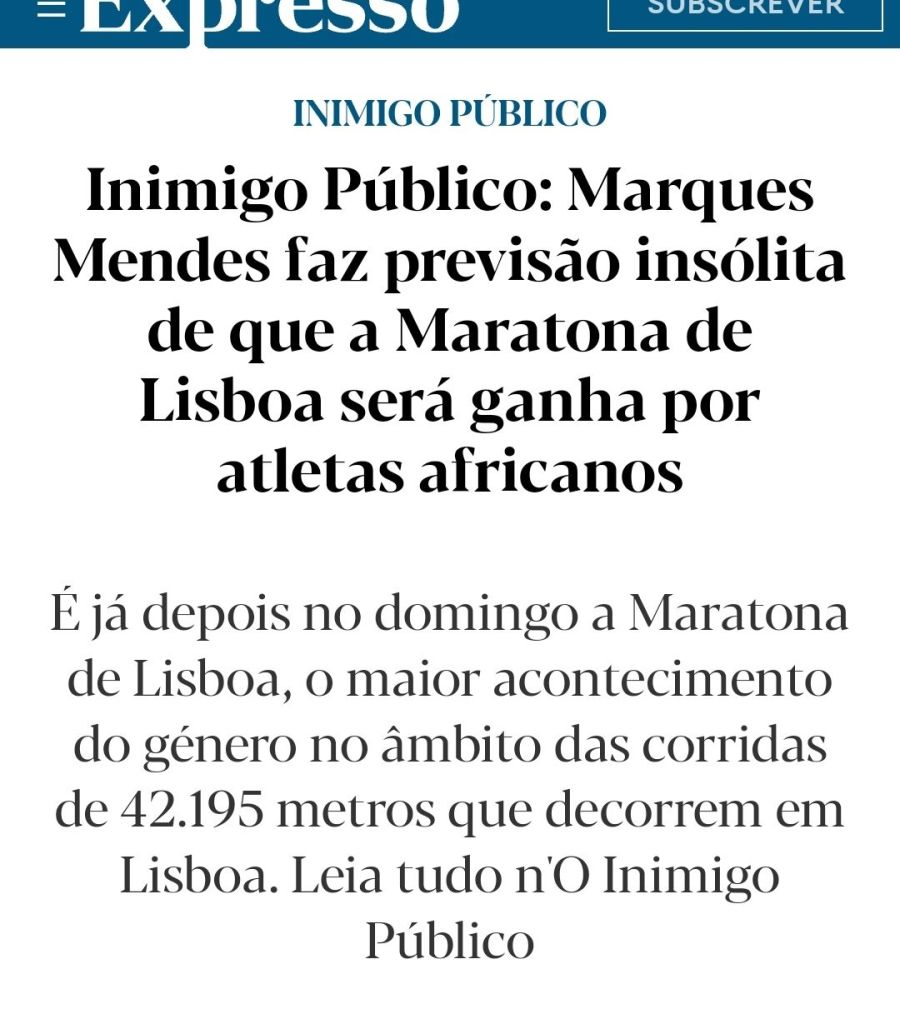
Someone or other once said that poetry isn’t a puzzle to be solved, but it annoys me to see someone clearly doing something clever and I don’t understand it so I thought I’d dig into this one and see what was going on. It’s from Atirar Para o Torto.
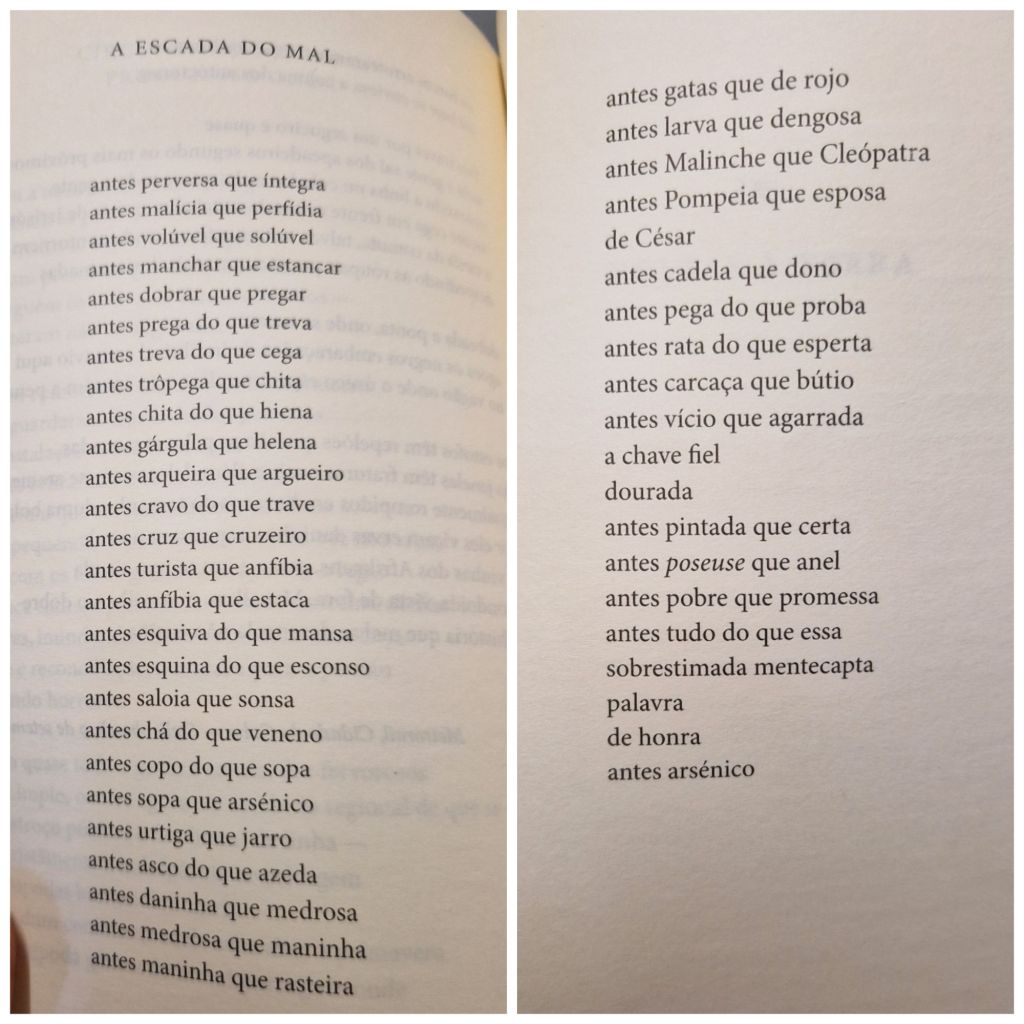
OK, let’s do this….
Most of the lines are in the form Antes ……….. (do) que ……. Which in english would be something like “Better a ………. than a ……..” or “I’d rather …………. than ………..” or “I’d prefer ……. to ……”.
Some lines use “do que” and some just “que” on it own, so i have one eye on this page which I usually use as a reference when I’m not sure which to use, and I’m curious to see how closely the poem follows the strict rules. Not very, I expect. Actually, not at all. If you look at the pattern, the presence or absence of the “do” depends on the number of syllables. Que sounds better with longer words, Do Que with shorter
Quite a lot of the words have multiple meanings so part of the game is working out which meaning the writer intends. In some cases the resulting sentence sounds ridiculous and I am pretty sure I have the wrong end of a few sticks, but for what it’s worth, here’s my best shot….
A ESCADA DO MAL
antes perversa que íntegra – better perverse than entire
antes malícia que perfídia – better malice than perfidy
antes volúvel que solúvel – better voluble than soluble
antes manchar que estancar – better to stain than to staunch
antes dobrar que pregar – better to fold than to pin
antes prega do que treva – better a fold than darkness
antes treva do que cega – better darkness than blind
antes trôpega que chita – better immobile than linen (um…. don’t get this one!)
antes chita do que hiena – better cheetah than hyena (second meaning of chita!)
antes gárgula que helena – better gargoyle than a hellenic
antes arqueira que argueiro – better a bowmaker than a speck
antes cravo do que trave – better a nail than a crossbar (assuming cravo is nail here, not a carnation)
antes cruz que cruzeiro – better a cross than a cruise
antes turista que anfíbia – better tourist than amphibian
antes anfíbia que estática – better amphibian than static
antes esquiva do que mansa – better a loner than domesticated
antes autista que sápida – better autistic than tasty
antes esquina do que esconso – better corner than garret
antes saloia que sonsa – better yokel than poser
antes chá do que veneno – better tea than poison
antes copo do que sopa – better a glass than soup
antes sopa que arsénico – better soup than arsenic
antes verbena que urtiga – better verbena than nettle
antes agreste que azeda – better bitter than sour
antes daninha que medrosa – better harmful than fearful
antes medrosa que maninha – better fearful than a little sister
antes maninha que rasteira – better a little sister than servile
antes gatas que de rojo – better on hands and knees than dragging
antes larva que dengosa – better maggot than brown-noser (dengoso has a lot of meanings – it could be a person with dengue fever!)
antes Malinche que Cleópatra – better Malinche than Cleopatra
antes Pompeia que esposa de César – better Pompey than Caesar’s wife
antes cadela que dono – better bitch than master
antes pega do que proba – better thief than honest person
antes rata do que esperta – better eccentric than astute
antes carcaça que bútio – better skeleton than lazybones
antes vício que agarrada – better addicted than hooked
a chave fiel – the faithful key
dourada – golden
antes pintada que certa – better painted than true
antes poseuse que anel – better poser than ring (than married?)
antes pobre que promessa – better poor than promise
antes tudo do que essa – better anything than that
sobrestimada mentecapta – overestimated brainless
palavra – word
de honra – of honour
antes arsénico – better arsenic.
And if you’re interested, here’s what Deepl has to say about it
rather perverse than upright
rather malice than perfidy
rather fickle than soluble
rather stain than stop
rather bend than preach
rather preach than darkness
rather darkness than blindness
rather stumble than cheetah
rather cheetah than hyena
before gargoyle than helena
before an archer
better carnation than beam
rather cross than cruise
before tourist than amphibian
rather amphibian than static
rather dodgy than meek
Translated with DeepL.com (free version)
Cheguei em Lisboa (quase) sem stresse. Estou a passar a primeira noite num barco no Tejo. O barco é um canal boat, construído em Liverpool. O nome do “hotel” é Tagus Marina e eu achava que Tagus era uma concessão às turistas anglófonas (nós também o chamamos Tagus) , mas (como devia ter adivinhado) foram os Romanos que deram a Olisipo o nome do seu rio.

Note-Taking again. This time in a Madeiran accent so strong it could cut glass. This isn’t a recent video – it came out in spring, so I’m really posting this at the wrong time of year. Look out the window and pretend that autumnal chill is the last departing wind of March and that those Michaelmas daisies are really hyacinths.
Quaresma tradição serrada de velha de origem antiga
vem do norte do pais de quaresma a maio
ritual de paisagem, a velha simboliza o inverno
dar boas vindas à primavera
fazer barulho com….???
3 semanas depois da quarta de cinzas*
antigamente foram homens que participaram no ritual mas hoje há mais mulheres e homens mais liberais e rebeldes. os conservadores não gostam
Pessoas a falar sobrea sua juventude e as diferenças
candeeiros de petróleo fazem parte da tradição ancestral – começou antes da luz elétrica
Nêsperas, bola de mel
mala de viagem…???
Tradições são boas para ajudar as pessoas lidar com as problemas,
um homem diz que nasceu lá, e tem orgulho em participar
A Biqueira diz que viu a alegria e a satisfação de das pessoas numa tradição neste cantinho … ela sentiu se “uma pedacinho, parte do povo da primeira lombada”
Ugh… there’s a real skill to note-taking. I find I start writing but then i tune out what’s being said so i can concentrate (especially if I need to do an accent or if, gawdelpus, I make a typo. And then when I tune back in again, they’re saying something else and it takes me a few seconds to get back to where i can see a through-line in the conversation. But I feel like this is an essential skill for the aural comprehension part of the exam, so I need to keep going, trying to relax about the typos and the good orthography, and just get down the pith of what’s being said, and do it word-for-word so I don’t lose time thinking about how to paraphrase it.
*ash wednesday
AKA Corelone é um artista português que cria quadros, murais e esculturas. A sua carreira começou como grafiteiro mas evoluiu para ser mais formal.
Tentei ler o seu site para resumir o que ele diz sobre si próprio mas a biografia (em inglês) usa palavras e frases que põem-me os cabelos em pé* portanto, tenho de explicar nas minhas próprias palavras: o artista sabe desenhar: não é um artista abstrato daqueles que só criam coisas feias ou sem semelhança com algo no mundo real. Em algumas obras, vejo um eco de Keith Haring. Outras parecem mais os desenhos gráficos do mundo das revistas ou da publicidade. Até trabalha com metal e com plástico para construir uma escultura ou um baixo-relevo.
Gostei de ver o seu site. Há uma larga variação de formas de arte em exibição. É evidente que o artista quer experimentar todos os meios da expressão artística!
*I was sure you can’t say “sets your teeth on edge” in portuguese, which is what I wanted to say, but I think this is a near equivalent. Other suggestions from Reddit** include “faz-me pele de galinha” which I knew already (Goosebumps, basically), “arrepia-me todo” (fair enough but not an expression) and “faz-me impressão” (boring)
**To try and explain what I was asking I asked about “o som de alguém a arrastar as unhas num quadro negro“, and I was ready for people to point out that interactive whiteboards are more common now and that anyway we say quadro de giz now and so on, but i was surprised that some of the young whipper-snapper didn’t know what a quadro negro even was and one of them did some research and found out that “o nome era comum aqui (🇧🇷) no século vinte” and now I feel about a brazillion years old.
… Has a 99p introductory offer on at the moment if you wanted to get in on the audiobook action. You could scoop 3 portuguese language audiobooks for next to nothing, like o Principezinho, A Morte do Papa, o Anibaleitor, o Mistério da Estrada de Sintra, or Portuguese Short Stories. I’ve raved about audiobooks a fair bit, because they’re books, but you can listen to them so what’s not to like? You’ve probably tried audible already but if you haven’t, what are you waiting for? I’ve been a member since the pre-amazon days, when you had to lie and pretend to be American to sign up. I used to download them to a scrappy mo3 player that could only hold one book at a time, and I think it was even dial-up. Oh god!
These are affiliate links by the way, so if you decide to take the plunge, I’ll get a few pence which I can use to pay the fines for all the grammar errors i make. It’s an expensive business, being this careless, so every little helps.

I enjoyed this. In case it’s not obvious, the subtitle writer has translated “illegal alien” as “Illegal space-alien”


Estou a ouvir um audiolivro, Walking Europe’s Edge, Reflections on Portugal de Stephen Powell. É muito fixe mas acaba de fazer uma afirmação que eu acho um pouco hum… fixy*. Segundo o autor, a palavra “fixe” tem origem em inglês. Turistas e outros visitantes que não falavam português costumavam comunicar-se em inglês com gestos. Se gostassem de um prato de peixe, colocavam um polegar para cima e diziam “Fish!” para dar a entender que o peixe (em inglês, “fish”) estava bem. Os empregados e clientes dos restaurantes adotaram esta nova palavra, com grafia alterada para “fixe”, e assim nasceu uma nova expressão, significando “bom” ou “porreiro”.
Mas acho isto muito duvidoso portanto fiz uma pesquisa. Um utilizador do site Quora aponta dois exemplos do uso da palavra nos anos 20 e 40 do século passado e analisa a pronúncia do x naquela altura, mas a sua conclusão é que a palavra fixe é uma forma de fixo, ou seja sólido, firme.
* Não entres em pânico, isto não é nada mais do que um trocadilho
It’s a good book, by the way, in spite of this weirdness. He talks about Portugal’s culture and history in an accessible way without centring himself like some travel writers do. It’s quite recent and, being british, he gets into the weird, dysfunctional relationship between Britain and Portugal: our enduring friendship and alliance, punctuated by power imbalances, imperial rivalries, betrayals and (this was a new one on me) library theft. I’d definitely recommend it if you’re interested in knowing more about Portugal’s history but don’t necessarily want to read a whole history book.
 Luso
Luso 