Posted in English

A Couple of Interesting Things Happening in London, One of of Which Might Not Be Happening, Who the Heck Knows?

Just by pure chance I heard about another two Lusophonic Occurrences here in London this week.

One is the Utopia Film Festival, which started yesterday and goes on till the twelfth. The films look quite serious and not exactly entertaining but if I can shake the lurgy, I might go and see one towards the end of its run.

And the other is a weird one. It’s a brand new international Portuguese literary festival in London, on Saturday the 7th. But hang on, haven’t we already had a brand new international Portuguese literary festival in London, FLILP, in June this year? I mean, I’m grateful for all these international Portuguese literary festivals you’re bringing to my town, but there must be other towns and other countries that need brand new international Portuguese literary festivals!

Anyway, it’s called Letras Lusas Em Londres and it was organised by Alcino Francisco, who I actually met and spoke to at FLILP in June, where he was one of the guests, and bought a copy of his book.

It’s surprisingly hard to find details of the festival though. I can see a few people on Insta refer to it, and even an interview with Alcino himself, but I can’t find an official account for the event on Insta. Alcino Francisco’s own Instagram account is dormant. If I Google the name of the festival, there’s a Facebook page right at the top of the ranking, but when I click on the link I land on some random video clip, so I think the page was deleted. This news article describes it, but there are two links to the organisers’ websites and both of them are deadlinks.* I can see there’s a reasonably full list of guests on this page, but nothing like this glossy publicity materials FLiLP put out in the run-up to their launch. It’s all weirdly hush-hush really. I dug around all over the place. I found another blogger who had done a couple of posts about it, so he must be better informed than I am, but, again, I’m not seeing anything linking to some central place on the Web where the organisers have set out a programme, or what to expect or… Well, anything really. The woman who put together FLiLP seems much better organised, as well as… Ahem… More original.

An old friend of the family has suggested we go together but even if I wasn’t full of cold germs, I don’t think I’d want to trek over there because I’m not even sure it’s actually happening. That’s how bad the lack of information is.

*By the way, it also contains the phrase “@s leitor@s” which almost made me want to take Solanium’s example and learn Spanish instead.
Posted in English

Ave Atque Vale, WritestreakPT

I just had a look in r/WritestreamPT on Reddit. It’s a forum I posted in more-or-less daily over a period of about two years. I assumed it would have just carried on regardless. When I left, I was having a bit of a crisis of confidence because I felt like I kept making the same mistakes over and over, and since there were only so many Portuguese volunteers around, I was hogging attention that other, less dim learners could have used.

I think the decline had already set in though. There were fewer and fewer teachers working. Even the Brazilian teachers left. People kept going anyway and didn’t seem to be bothered if nobody corrected what they write.

But when I looked today, the only recent posts were from a bot that posts the “Dia de Socializar” message each week. O scrolled down. There hadn’t been a human for 3 months. Even Solanium, a PT-BR learner, with an unbroken streak of 1182 days, hardly ever making a mistake, and so focused that he didn’t even make a big deal when his streak reached 666, just kept on going (I would have planned that post a month in advance I tell you!)… Even he had stopped. And just to twist the knife further, when I had a look at his profile, he has been posting in r/WritestreakES! Wut??? He’s learning Spanish now? I feel betrayed!, 😭

It’s a shame, but i have fond memories of the place. I guess I was lucky enough to be involved when it was in its heyday.

Posted in English

Blogger?

I just wrote to someone “I’m a language blogger” but I made a typo and autocorrect changed it to “I’m a language blocker”. It might have a point…

Posted in Portuguese

When You’re Not As Clever As You Think You Are

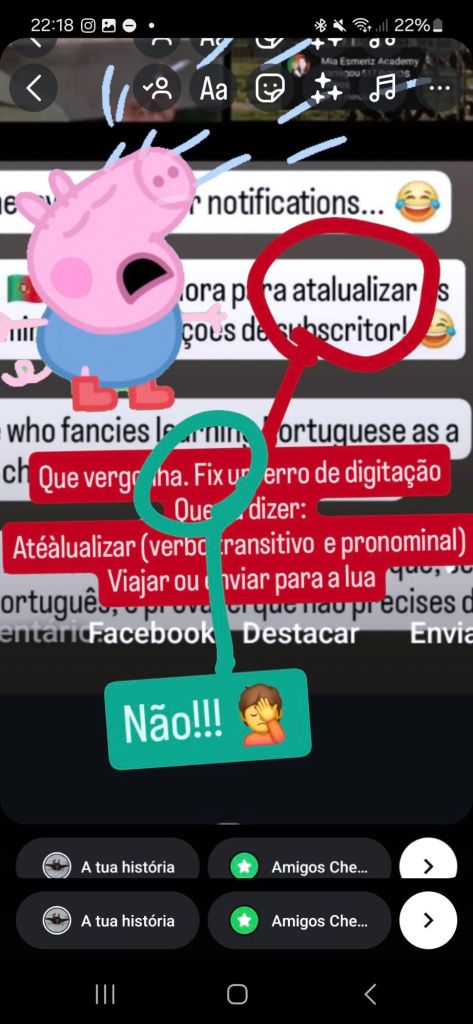
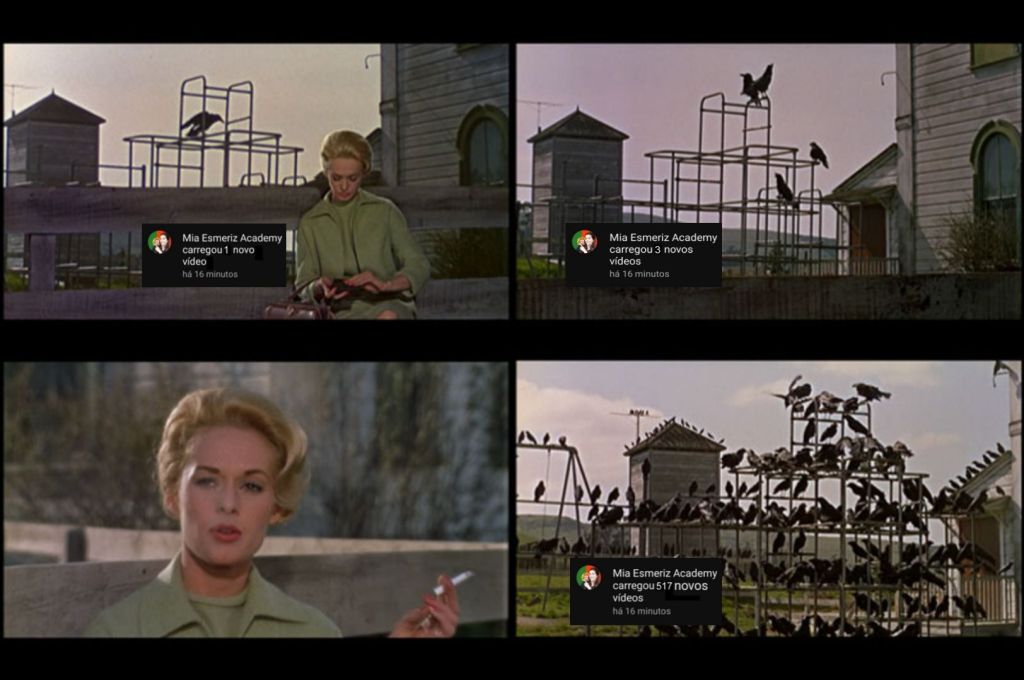
Enganei-me numa legenda no Instagram mas saquei uma resposta esperta para salvar a situação. Infelizmente… Fiz mais um erro ao corrigir o primeiro erro.

A foto original foi esta, sobre a experiência de ser subscritor de um canal que está a fazer um esforço para ganhar novos clientes. Gosto muito dos vídeos desta professora e espero que ela não fique ofendida; simplesmente achei engraçado que havia tantas novidades!

Posted in Portuguese

Chico Espirrtice

Há uma cena no meu livro preferido, o “Matadouro Cinco” de Kurt Vonnegut, na qual Billy Pilgrim e os outros soldados americanos recebem uma refeição grande num campo de prisioneiros após muito tempo sem comida e, como resultado, ficam muito doentes com diarreia violenta. O protagonista ouve um soldado (que nós leitores vimos saber é o proprio Vonnegut, o autor do livro), na casa de banho a gritar “caguei tudo excepto o meu ceeerrreeebbbrroooo”. Logo depois a mesma voz grita “láááá se vaaaiiii”

Eu estou igualzinho, mas espirrando em vez de defecando. Deixei a minha “matéria cinzenta” num lenço. Maldito vírus!

Posted in English, Portuguese

A Confusing Definition.

I’m still ill and missing David Fonseca as we speak. I woke up early feeling rubbish and was assailed by the definition of this word which was the answer to one of the word puzzles I do every day.

“que ou cavalo”? O meu primeiro pensamento foi que “que” se parece a um substantivo nesta frase. Ou seja existe um animal chamado “que”, e um alazão pode ser a cor dum cavalo ou a cor dum que. Uau… Mudei da página para a definição de que mas (como já adivinhaste) não existe tal significado.

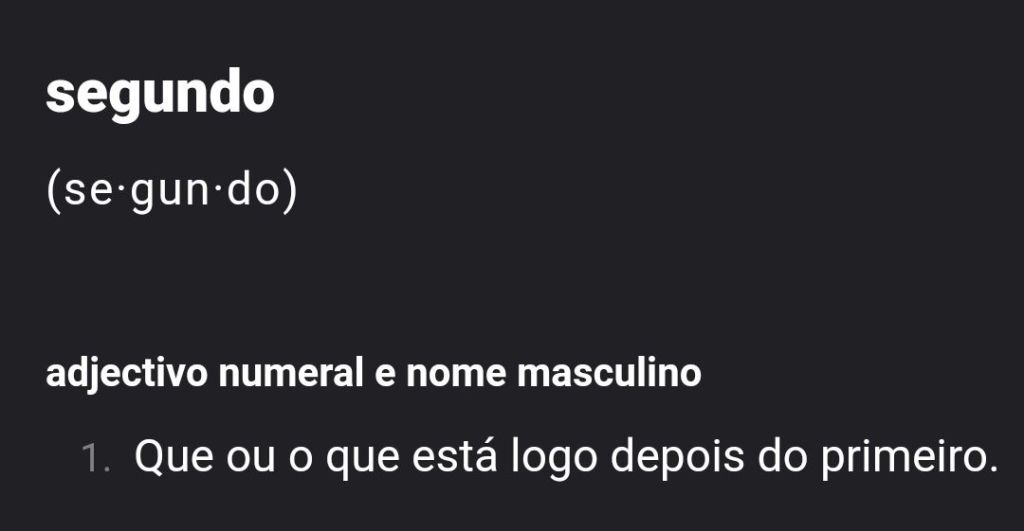
Devia ter-me lembrado das outras definições de palavras que funcionam tanto como substantivos como adjectivos, como por exemplo “segundo”

“Que ou o que” indica que a palavra significa “que está logo depois do primeiro” quando for um adjectivo numa frase, e “o que está logo depois do primeiro” na sua forma substantiva.

Preguiçoso é mais especifica porque apenas os seres humanos pode ser preguiçosos*, dai “que ou quem”

Mas um alazão não é uma pessoa cor de canela, nem uma cadeira cor de canela mas sim um cavalo daquela cor, portanto “que ou o que” não tem de mudar para “que ou cavalo”

Meu deus, não preciso de tanta confusão hoje. Deixem-me descansar, portugueses.

*então os lexicógrafos nunca antes encontraram um gato?

Posted in Portuguese

Hm…

Acho que estou doente. Isto começou ontem, enquanto limpava e arrumava tudo atrás da televisão. O meu esforço furioso suscitou uma nuvem sufocante de pó que irritou as minhas narinhas e garganta. Mas hoje estou ainda constipado*, a tossir e a espirrar, apesar de ter tomado duche e dado um passeio no ar fresco. Acho que apanhei um virus. Um resfrio? O bicho que todos nós conhecemos em 2020? Espero que não seja o segundo porque tenho bilhetes para dois espectáculos no Domingo e na Segunda feira e estarei muito desiludido se tiver de perder os concertos de David Fonseca e Hugo Sousa.

*This will never not sound wrong.

Posted in English

You and Non-U

One of the first things we learn in Portuguese classes is the difference between the various ways of addressing another person; that there are different second-person pronouns for strangers vs friends: Você, Tu, or you can just flip it to third person with something like “O Senhor”. But we tend to get the impression that it’s just a linguistic rule with no further importance, as if it were a puzzle to be solved or a code to be cracked.

But there are cultural differences that underlie these kinds of distinctions: language has a social meaning as well as a semantic one. English doesn’t really have the same hard-wired social distinction*: if we want to be snobbish or arrogant or condescending we have to resort to using tones of voice.

You can catch glimpses of this social distance in literature and films: people taking offence at being treated with too much or too little formality (as in the picture above, taken from Gente Remota) or asking permission to use different pronouns (which happens near the end of Os Gatos Não Têm Vertigens). And it makes me wonder to what extent this creates a barrier between people, or makes them think of themselves differently, as a result of this very clear social distance marker being applied to them by someone else.

There’s a new blog on Say It In Portuguese that aims to shed light on the cultural dimension of these kinds of interaction. Its Part 1 in a two part series, and I’m looking forward to the second part. If you’re looking to deepen your understanding of Portuguese culture, head on over and have a look.

Nancy Mitford. What? Why is there a picture of her here? Well, read the footnote, dummy!

*This was probably less true in the recent past. The title of this blog post alludes to a distinction made by Nancy Mitford in the 1950s between U and Non-U English. The satire boom of the sixties and seventies punctured that pomposity. But even then, it was much more common when I was young m to hear people addressing each other as Mr So-and-So as a mark of respect or formality. That’s getting increasingly rare. We’re all tus.

Posted in Portuguese

O Cão Bonzo é Brat.

Writing this in a hurry. God, how am I more busy now than when I was studying for an exam and training for a marathon? Has someone broken the space time continuum?

Anyway, that’s by way of saying expect errors…

Fui com o meu irmão mais novo ao Arena O2 no leste de Londres para assistir a uma celebração da vida e da obra de Neil Innes que faleceu há cinco anos. Neil Innes era membro dos Bonzo Dog Band e escreveu várias canções para a série Monty Python’s Flying Circus nos anos sessenta. Portanto havia músicos e humoristas da sua geração (com oitenta e poucos anos) e da minha (cinquenta ou sessenta) ou ainda mais novos, por exemplo Isabella Coulston, uma menina com… Sei lá… Menos do que trinta? Bebemos cerveja e assistimos ao Sempre-mudando elenco de gigantes no palco. Michael Palin e Terry Gilliam fizeram Karaoke com as canções do Monty Python and the Holy Grail, Emo Philips contou umas anedotas surrealistas, Roger McGough leu dois poemas, Adrian Edmundson cantou, e músicos de vários países tocaram as canções do falecido. Outros famosos, como Rick Wakeman, Aimee Mann e Stephen Fry enviaram mensagens de vídeo.

No final da noite o elenco inteiro cantou a canção mais famosa do Innes, o Urban Spaceman, e a esposa dele falou sobre uma carreira que abrangiu 6 décadas.

Quando saímos da sala de concertos, estávamos rodeados por uma multidão. O nosso concerto passou-se no O2 Indigo (uma sala pequena no O2) mas, ao mesmo tempo, havia um concerto da Charlie XCX, com milhares de jovens fixes, vestidos de verde, por todo o lado. Estavam muito felizes, e a atmosfera na fila de espera na estação estava descontraída, apesar de estar sobrelotada de adolescentes a usar vapes de vários sabores nojentos.

I’ve known this song for years but I never appreciated how great it was till I heard Kevin Eldon absolutely murder it. I love him but there’s a reason that man’s an actor not a singer I tell you.

O meu irmão voltou para Preston hoje de manhã. Temos passado mais tempo juntos neste ano desde a morte do meu pai que também era fã do Innes.

Posted in Portuguese

A Viúva – José Saramago

Pela segunda vez neste mês, encontro-me sentado à mesa a escrever uma opinião sobre um livro mas com mais vontade de escrever sobre as circunstâncias da leitura em vez do seu teor.

Deixem-me explicar: este é um Audiolivro mas li-o na aplicação da Bertrand e a app da Bertrand é um verdadeiro monte de merda. De vez em quando, fecha-se inesperadamente e quando se reabre, a app esqueceu-se de onde ia. Isto aconteceu centenas de vezes.

Como resultado, li grande parte do livro mais do que uma vez, provavelmente saltei uns parágrafos e perdi (a) o fio à meada e (b) a minha vontade de viver.

Nada disto é culpa de Saramago, mas ainda assim, responsabilizo-o por ter escrito um livro que acabou por me causar tanta dor. Passou a ser o meu inimigo.

O livro não é típico da obra dele. Escreveu-o em 1947, e foi publicado sob o título d’A Terra do Pecado. O estilo idiossincrático de Saramago não se tinha ainda desenvolvido. O enredo, as frases e a voz autorial, todos fizeram-me lembrar dos poucos romances do século XIX que já li. Um Eça de Queirós ou um Camilo Castelo Branco.