Posted in Portuguese

Deslocado

Tradicionalmente, faço uma tradução da canção portuguesa antes do Festival Eurovisão de Canção mas perdi a oportunidade desta vez. Eis as letras dois dias depois. Peço humildemente a vossa desculpa pelo atraso.

E afinal, vale a pena? Para mim, é bom, mas não é nada de especial. Não há nada que me chama a atenção; parece-me uma faixa assim-assim de um álbum que provavelmente abandonaria antes de chegar ao fim. Mas a letra fala de estar longe de casa e das saudades da terra. Apeteceu-me ouvir mais minuciosamente para entender a mensagem.

🇵🇹🇬🇧
Conto os dias para mim
Com a mala arrumada
Já quase não cabia
A saudade acumulada
do azul, vejo o jardim
Mesmo por trás da asa
Mãe olha à janela
Que eu ‘tou a chegar a casa
I count the days for myself
With my bag packed
There’s hardly enough room
For the weight of my sorrow
From the blue, I see the garden
Right behind the wing
Mum, look out the window
Because I’m coming home
Por mais que possa parecer
Eu nunca vou pertencer àquela cidade
O mar de gente, o Sol diferente
O monte de betão não me provoca nada
Não me convoca casa
No matter how much it might seem
I’m never going to belong to that city
The sea of people, the different sun,
The concrete mountain can’t move me
Doesn’t call me home
Porque eu vim de longe
Eu vim do meio do mar
Do coração do oceano
Eu tenho a minha vida inteira
O meu caminho eu faço a pensar em regressar
À minha casa, é ilha, paz, Madeira
Se eu te explicar, palavra a palavra
Nunca vais entender a dor que me cala
A solidão que assombra a hora da partida
Carrego o sossego de poder voltar
Mãe olha à janela que eu ‘tou a chegar
Because I came a long way
I came from the middle of the sea
From the heart of the ocean
I have my whole life
I make my way, thinking of returning
My home is an island, peace, Madeira*
If I explain to you, word by word
You’ll never understand the pain that quiets me
The solitude overshadowing the departure time
I bear the comfort of being able to go home
Mum, look out the window, I’m coming
Por mais que possa parecer
Eu nunca vou pertencer àquela cidade
O mar de gente, o Sol diferente
O monte de betão não me provoca nada
No matter how much it might seem
I’m never going to belong to that city
The sea of people, the different sun,
The concrete mountain can’t move me
Não me convo’ ah ah ah ah ah ahh uh uh uh
O mar de gente, o Sol diferente
O monte de betão não me provoca nada
Não me convoca casa
Doesn’t invite…
The sea of people, the different sun,
The concrete mountain can’t move me
Doesn’t call me home

* Ah, right, I hadn’t realised they were Mrs L’s homeboys!
Posted in Portuguese

D’Hondt Panic!

Já não falei sobre as legislativas (as eleições para a Assembleia da República Portuguesa) de 2025 mas hoje é o Dia D. Convém lembrar de que o preço da liberdade é a eterna vigilância (e a votação de vez em quando), portanto eis um vídeo da Mathsgurl que explica, de forma singela, como funciona a sistema de contar votos e porque é que a democracia importa tanto.

Posted in Portuguese

Guiana Brasileira

Surgiu há umas semanas um meme no qual vários tipos de sotaque carioca falaram de “Guiana Brasileira”. Isso enraiveceu os influenciadores portugueses tanto que não resisti investigar as origens da tendência.

Tanto quanto consigo constatar, o meme tem origem num vídeo da plataforma TikTok. Os brasileiros, percebendo que existem uma “Guiana Francesa”, uma “Guiana Britânica” (ou simplesmente “Guiana”) e uma “Guiana Holandesa” (o atual Suriname) na sua fronteira norte, pensaram “Oi galera, se estes gringos europeus têm Guianas no nosso continente, nós também devíamos obter uma Guiana no seu”.

E daí nasceu o meme: Portugal é a Guiana Brasileira, o 28° Estado daquele país e o único fora da América do Sul.

Para continuar a sua campanha de provocação, também atribuíram nomes a este novo estado, entre os quais o meu favorito é “Pernambuco em Pé”, porque o estado de Pernambuco tem a mesma forma de Portugal mas é horizontal em vez de vertical.

Como eu já disse, muitos portugueses ficaram indignados ao ouvirem deste fenómono mas o linguista Marco Neves, grande explicador de tudo sobre a língua de Camões (e não só essa língua), também gravou um vídeo sobre a Guiana Brasileira. O tom do seu vídeo é mais irónico, e acho que, nestas situações, a melhor estratégia é empregar a ironia em vez de raiva.

Posted in Portuguese

Serial Non-Attender

Olá! Lembras-te de mim? Entrei num learning slump e por isso peço imensa desculpa pela falta de conteúdos neste blogue. Mas apeteceu-me escrever sobre alguns tópicos. Portanto, aqui vou eu com o primeiro. Calma Colin, sem pressão, um texto hoje, mais um amanhã e quem sabe, talvez o “mojo” volte em breve…

Matar Aulas… Mas não são aulas, são espectáculos.

Adquiri o hábito de desperdiçar bilhetes. Já perdi a oportunidade de assistir aos espetáculos de vários comediantes por vários motivos, apesar de ter um bilhete. No domingo passado, não tive tempo suficiente para ouvir os Capitão Fausto porque andava a esvaziar o nosso apartamento antes da chegada dum mestre-de-obras que está a fazer várias mudanças no nosso lar. E ontem, por pura preguiça, eu e a minha esposa decidimos ficar em casa em vez de irmos ao teatro onde se grava a série “Have I Got News For You?”

Bem, a preguiça não é assim tão má mas, uma vez que eu esteja preguiçoso, por que raios é que insisto em gastar dinheiro em bilhetes???

Posted in Portuguese

O Dia 25 de Abril

Olá!

Já esqueceste deste blogue? Eu também? Sei lá porque. A vida não é assim tão atarefada hoje em dia. Ou seja na verdade, ando com um bico-de-obra, mas passei por tempos piores. Consigo escrever mais, mas falto-me a motivação.

Mas hoje o meu insta está cheio de fotos de manifestações contra o fascismo e celebrações da democracia portuguesa que, com 51 anos, é mais nova do que eu.

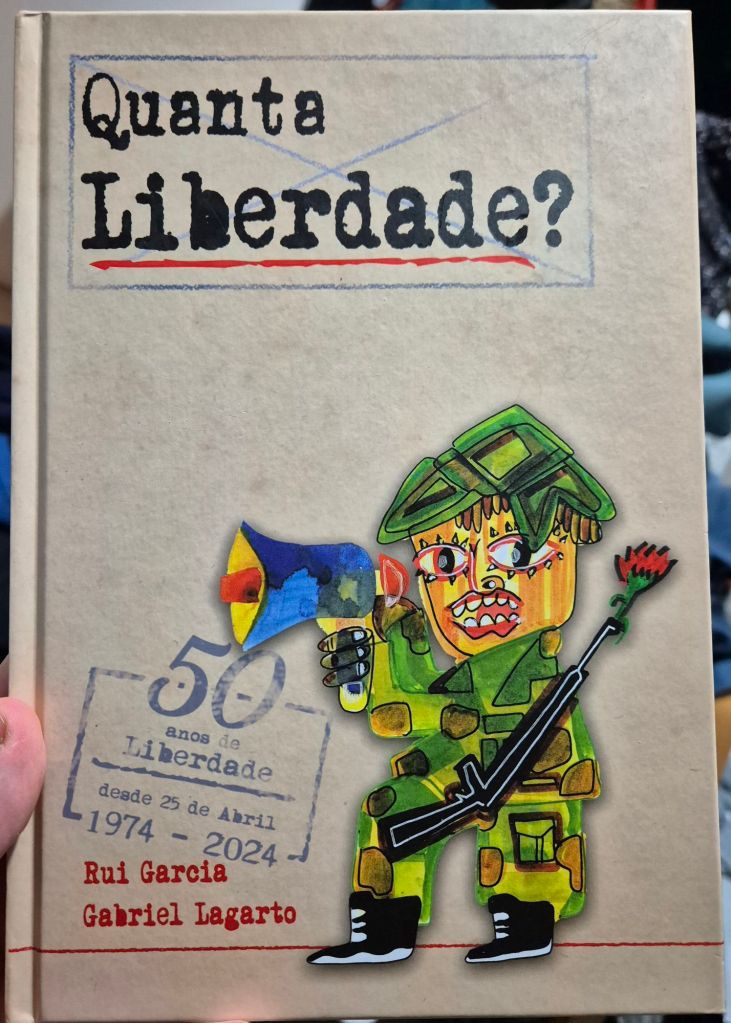
Para comemorar este aniversário da liberdade, tentei ler o livro “Quanta Liberdade” de Rui Garcia e Gabriel Lagarto mas não me chamou a atenção. Provavelmente escolhi mal: encontrei o livro numa loja de segunda mão em Setúbal mas ele nem sequer existe no Goodreads, o que significa que poucos portugueses já leram! Tratam-se de um conjunto de textos e de desenhos rabiscados, montados num formato remanescente de uma pasta, usando a tipografia daquela época e com os carimbos e o lápis azul do Estado Novo. Tem bom aspecto mas infelizmente, achei os conteúdos fracos e incoerente.

Posted in English

Égide

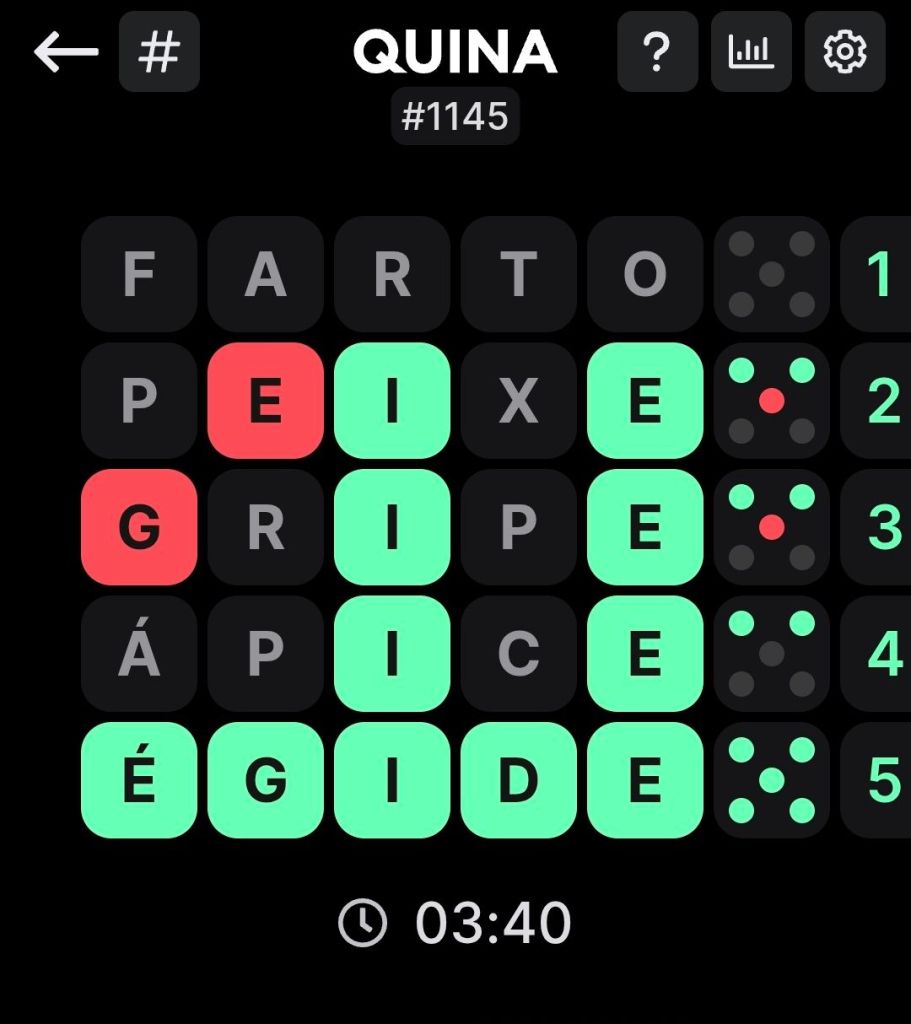
Quina keeps throwing out obscure words that I would never come across in the normal run of things. This one doesn’t even look like a Portuguese word, and in a way it isn’t, because it’s is adopted from Greek – it’s equivalent to Aegis. In other words, it’s the Greek word for shield, imported into modern usage, but only in very specific and niche contexts. “Sob a égide de…” is exactly equivalent to our “under the Aegis of”, meaning under the protection of, or within the sphere of influence of. I used that exact expression at work a couple of weeks ago. In English, not Portuguese, obviously, but it might as well have been in Portuguese because the person I was talking to had no idea what I meant and had never heard the word before. What are they teaching at school these days? O tempora! O mores!

Posted in English

A Brief, and Not Very Coherent Rant About Language and Racism

Sorry, it’s in English today.

A man waving a Portuguese flag and awkwardly balancing a Brazilian one. For some reason est understood by AI, his head is in backwards.
I hope the boffins can sort out AI soon. I don’t want to be in my sixties, going in for a hip replacement and the robot doctor decides I am in urgent need of a head reversal procedure at the same time.

After writing yesterday’s blog, I looked at some more posts by the same Instagram account. The guy’s missus, who is Brazilian, has a video here in which she talks about a shitty, racist flyer that was being handed out in downtown Lisboa. She makes a lot of good points, but she seems to have caught some negative attention from social media bottom-feeders, as you can see from the follow-up post here.

In some cases, the critics have dressed up their nonsense as a complaint about non-standard Portuguese, but obviously, the underlying problem here is just straight-up xenophobia. There are racists in every country, of course. This is as true in Portugal as it is anywhere else, and weirdly Portuguese racism even extends to Brazilians, which is surprising when you consider that Brazilians are not natives of a former colonised country, they are largely the descendents of Portuguese settlers (and their slaves). Brazil, as a state, only exists because the territory now known as Brazil was colonised by the Portuguese. In short, they are you, lads! They’ve been away longer than your sobrinha who moved to Luxembourg last year, but it’s the same principle, just with a bigger time lag.

Now, I’m not saying there shouldn’t be an immigration policy that works for the country as a whole, but it has to be one that treats people as people. The minute people get into this kind of hatred, they’re on the road to a very, very bad place.

This is all by way of getting to my main point, which is that I’ve made cracks about Brazilian Portuguese on here a few times and I’ve even shared the odd meme (here for example). But I hope it’s clear that it’s not meant to be hostile. As you know, I mostly try to stick to European Portuguese as much as possible so as not to get confused, so some of the gags are about that desire to keep the other dialect at bay. But there’s also some friendly intercontinental rivalry between Europe and America, which is, at root, born of the inferiority complex of smaller less powerful countries seeing their former colonies doing more business and having more fun than us. Taking the piss out of our erstwhile cousins’ spelling and accent helps us cope with the shame of being efete and irrelevant on the world stage.

Anyway, I thought I’d better get that clear in case anyone thought I was like these pamphlet yahoos. This is a European Portuguese blog, but we love our transatlantic friends too, despite the occasional bit of teasing.

Posted in Portuguese

Patuá Macaense

A minha esposa enviou-me este vídeo interessante sobre o crioulo que surgiu em Macau. Para quem não saiba, Macau é uma ex-colónia portuguesa na costa da China perto da Hong Kong e tendo o mesmo estado de “Região Administrativa Especial” no sistema politico daquele país.

O crioulo está quase extinto nos dias que correm, com a grande maioria dos seus falantes idosos e/ou bilingues. Noutras palavras, tem um número de utilizadores aproximadamente igual ao da Língua Corniça. O vídeo é ótimo e inclui exemplos de nativos de Macau a falar o idioma.