Posted in English

Pod

The podcast I recorded with Ângela of “Learning Portuguese is Fun” is out now and… well, it’s not as bad as I remember because she’s wisely edited out some of my waffly asides, but there are still a few embarrassing errors and a lot of umming and erring. She usually has two participants per episode so it was me and a Bosnian guy called Damir who is much newer to portuguese but is obviously a gifted student because he did fantastically well.

You can find the recording here and the interactive exercises here (needs an account)

Posted in English

YouTube Channels You Actually Want to Watch.

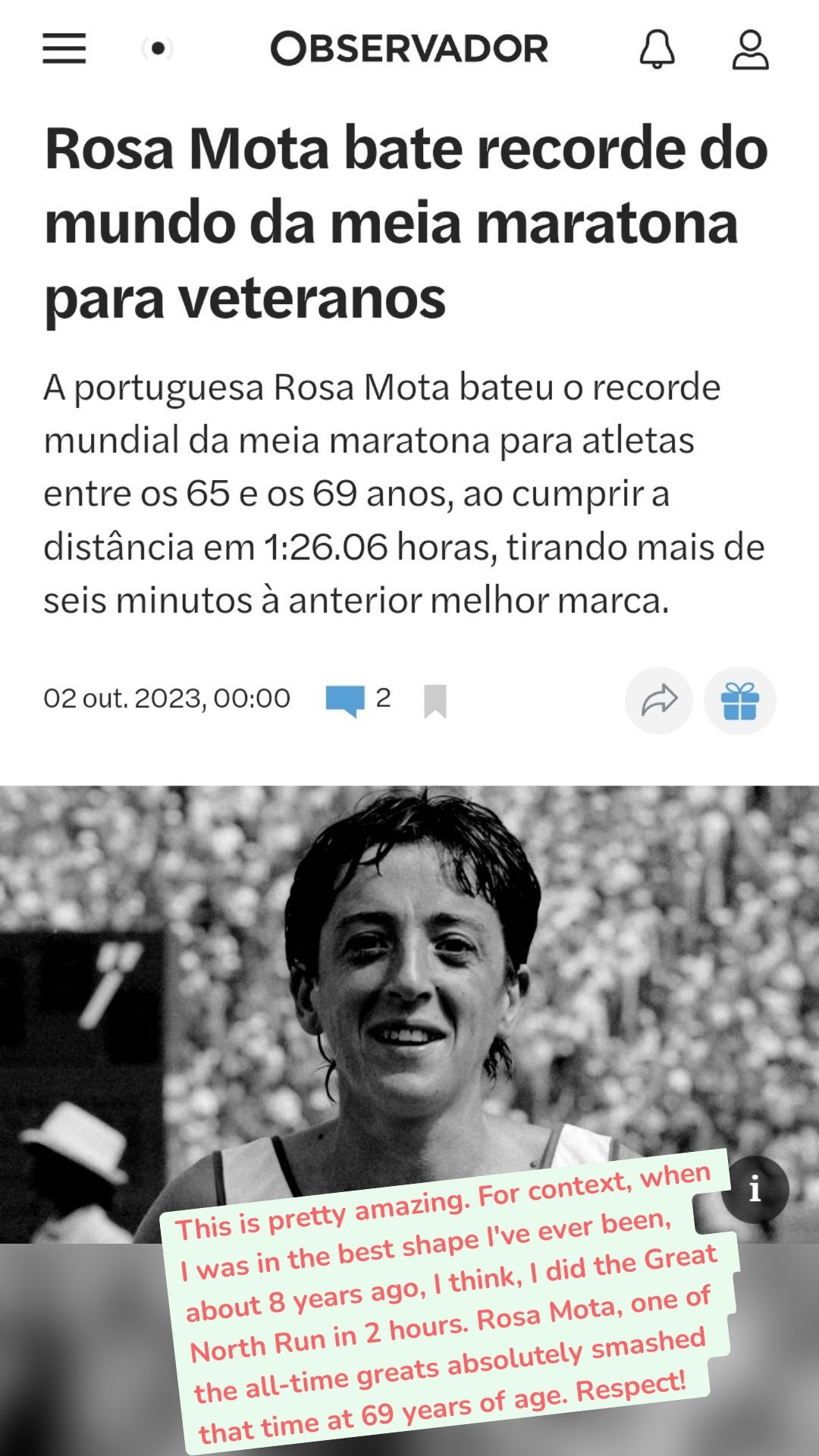
I tend to follow mostly Booktube channels when I want to watch a video in portuguese but I’m training for a half marathon at the moment, so I’ve started watching this guy’s videos. He’s quite good on how to prepare and train. I don’t have as much free time as him I think, so I won’t be following his tips religiously, but it’s a good way of getting both training tips and listening practice at the same time. It’s quite a hard listen but I can manage, only dropping the occasional word.

Not interested in running? No worries, I definitely recommend looking for portuguese words related to something you are interested in, because it’s easier to focus on something you like, using visual clues to work out what they mean, rather than listen to something that’s aimed at learners but the subject matter is dull as ditch water. Throw in something specifically portuguese so as to avoid the Brazilian channels. So, in my case, “Meia maratona Lisboa” scored some decent hits and gave me plenty of channels to choose from.

Posted in English

A Wobble and a Change of Direction

I’ve had a bit of a crisis of confidence recently, but it’s been quite useful in prompting me to reexamine my routine and make some changes.

I’ve been feeling for a while that, as much as I was enjoying the portuguese writing subreddit, I wasn’t really challenging myself very much. I tend to write the same kinds of things and yet I was making a lot of the same mistakes. Not only that, but the fact that it takes an hour or so each day means that I didn’t really have time for much else. Recently, some of the teachers have taken a well-earned break from correcting. There aren’t really enough to keep up with the number of students and so it seemed like a good time for me to withdraw, let some newer learners benefit from the experience, rather than hog it all for myself. Maybe I’ll go back to it later but for now, I think it’s time for a pause.

In the meantime, what I’ve decided to do is focus much more on book learning. I’ve been doing a couple of hours of grammar exercises in “Qual é a Dúvida” per day, just trying to get the nuts and bolts of the language right and firm up some of the things I’m still crap at.

I also – and I know I’ve said this a thousand times before – need to spend more time talking. It remains the achilles heel of my language learning. I’m an introvert anyway, so my smalltalk game is pathetic, even in English. When I try to speak Portuguese it’s even more stilted and unnatural. Actual, proper lessons are called for!

I’d like to do the DAPLE exam (that’s the C1, advanced diploma) in about 5 weeks but the experience on the podcast a few days ago has really shaken my confidence.

Posted in English

Quem Sai Aos Seus Não Degenera

I came across this fairly baffling sentence in an exercise. What on earth can it mean? Googled it to see if I could find anyone using it and apparently, yes, it’s an expression, the gist of which is that, if you follow your parents’ guidance you won’t go far wrong in life. There’s an example here, referring to sporty kids following in the footsteps of their sporty parents.

Posted in English, Portuguese

O Leilão da Casa da Mariquinhas

I saw this in the same compilation as yesterday’s. The style is a bit lighter. The singers are Fernando Maurício (left) and Francisco Martinho (right). For me, the best thing is the staring match between the guy on the portuguese guitar and the guy on the vanilla guitar. Neither of those lads is backing down.

The song seems to date from the thirties or forties, when a song with a similar name – A Casa da Mariquinhas – was written by João Silva Tavares and sung by Alfredo Marceneiro. It tells the story of a house with shutters on the windows, which we are meant to understand is a brothel, and it was so popular it inspired a whole lot of similar songs about whorehouses. This is one, and it talks about the auction held after the closure of the house. Oh no! So I’ve listened to the sequel without hearing the original!

There’s a lot more background on this page if you want to know more.

PortugueseEnglish
Ninguém sabe dizer nada
Da formosa Mariquinhas*
A casa foi leiloada
Venderam-lhe as tabuinhas
Nobody knew how to say anything
About the beautiful Mariquinhas
The house was auctioned
They even sold the shutters
Ainda fresca e com gajé
Encontrei na Mouraria
A antiga Rosa Maria
E o Chico do Cachené
Fui-lhes falar, já se vê
E perguntei-lhes de entrada
Pela Mariquinhas, coitada
Still cool and with swagger
I met in the Mouraria
Old lady Rosa Maria
And Chico do Cachené
I went to speak to them, as you see
And asked them right away
About poor Mariquinhas
Respondeu-me o Chico: E vê-la?
Tenho querido saber dela
Ninguém sabe dizer nada
As outras suas amigas
A Clotilde, a Júlia, a Alda
A Inês, a Berta, a Mafalda
E as outras mais raparigas
Aprendiam-lhe as cantigas
As mais ternas, coitadinhas
Formosas como andorinhas
Olhos e peitos em brasa
Que pena tenho da casa
Da formosa Mariquinhas!
And Chico replied: And to see her?
I was wanting to know about her
Nobody knew how to say anything
Her other friends
Clotilde, Júlia, Alda
Inês, Berta, Mafalda
And some other girls
They learned her songs
The most tender ones, poor things
Beautiful as swallows
Eyes like black coals
I feel such pity for the house
Of beautiful Mariquinhas
Então o Chico apertado
Com perguntas, explicou-se
A vizinhança zangou-se
Fez um abaixo-assinado
Diziam que havia fado
Ali, até madrugada
E a pobre foi intimada
A sair; foi posta fora
E por mor duma penhora
A casa foi leiloada
Then Chico, eager
To ask questions, explained
The neighbourhood got angry
And started a petition
They said there was fado
There until the small hours
And the poor woman was summoned
To leave; she was put out
And for the sake of a foreclosure
The house was auctioned
O Chico fora ao leilão
Arrematou a guitarra
O espelho, a colcha com barra
O cofre-forte e o fogão
Chico, outside the auction
Bid for the guitar
The mirror, the striped duvet
The safe and the stove
Como não houve cambão
Porque eram coisas mesquinhas
Trouxe um par de chinelinhas
O alvará e as bambinelas
E até das próprias janelas
Venderam-lhe as tabuinhas
Since there was no change
because they’re trivial things
He took a pair of slippers
The license and the awning
And from the windows themselves
They sold him the shutters

Mariquinhas seems to be a woman’s name here, but generally speaking mariquinhas is a diminutive of maricas, meaning sissy or effeminate, so probably to be used with care.

Posted in English, Portuguese

Vida Vivida – Argentina Santos

I saw this one in a compilation video and I’d never heard of the fadista but I thought it would make a good transation. And holy shit it’s heavy! Not the music, obviously, but the sentiment is raw and real. I don’t think it would even make sense sung by anyone younger than she is. It’s emo music for the older generation.

PortugueseEnglish
Volta atrás vida vivida
Para eu tornar a ver
Aquela vida perdida
Que nunca soube viver
Come back, life lived
So I’ll see again
That lost life
I never knew how to live
Voltar de novo quem dera
A tal tempo, que saudade
Volta sempre a primavera
Só não volta a mocidade
If only I could go back again,
to such a time, what sadness
Spring always returns
Just not youth
A vida começa cedo
Mas assim que ela começa
Começamos por ter medo
Que ela se acabe depressa
Life starts early
But as soon as it starts
We start fearing
That it will end soon
O tempo vai-se passando
E a gente vai-se iludindo
Ora rindo ora chorando
Ora chorando ora rindo
Time keeps passing
People keep deceiving themselves
Either laughing or crying
Either crying or laughing
Meu deus, como o tempo passa
Dizemos de quando em quando
Afinal, o tempo fica
A gente é que vai passando
My god, how time passes
We say, from time to time
But really, time stays
It’s the people who pass by

*